
TL;DR:
Therapy accessibility involves financial, geographic, interpersonal, and engagement barriers beyond just cost.
Digital therapy helps reduce certain practical barriers but introduces privacy, technology, and suitability challenges.
Systemic issues like provider shortages and long waits hinder effective mental health support for many populations.
Many people assume that finding a therapist is simply a matter of searching online and booking an appointment. The reality is far more complicated. Only a minority of adolescents with psychiatric disorders receive any form of treatment, which tells us something important: awareness of mental health needs has grown, but genuine access has not kept pace. Therapy accessibility is shaped by cost, geography, trust, and personal circumstances, and understanding each of these layers is the first step towards making support a real possibility for you or your family.
Table of Contents
-
The role of digital therapy: Does technology solve access problems?
-
A fresh perspective: Why the solution is not one-size-fits-all
Key Takeaways
| Point | Details |
|---|---|
| Accessibility is multi-layered | Therapy access depends on financial, practical, interpersonal, and systemic factors beyond just booking appointments. |
| Barriers affect everyone differently | Young adults, parents, and marginalised groups each encounter unique obstacles to care. |
| Technology is not a cure-all | Digital therapy can help but also creates new challenges, such as privacy and technical concerns. |
| Systemic issues matter | Workforce shortages and follow-up delays restrict access, even with personal effort. |
| Tailored solutions work best | Practical, individualised approaches are key for finding truly accessible mental health support. |
Defining therapy accessibility: What does it really mean?
To truly grasp the challenges, we must first define what makes therapy genuinely accessible. Most people think of access in simple terms: can you find a therapist, and can you afford them? But therapy access barriers are far broader than that, and reducing the problem to cost or availability alone leaves many people without the support they need.
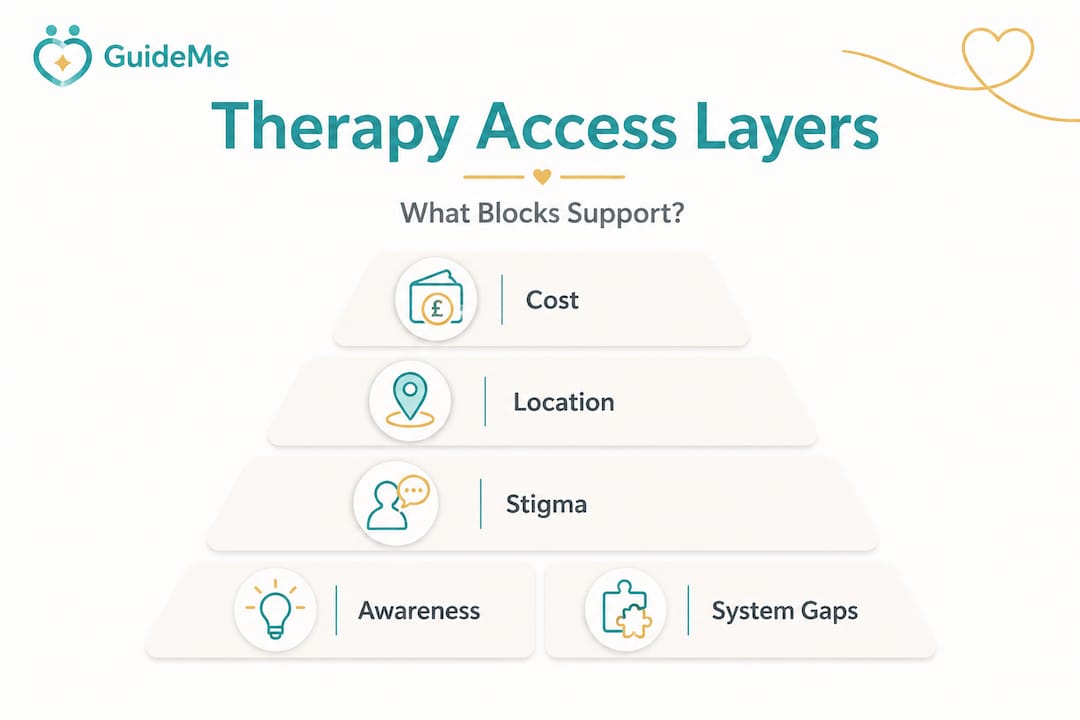
Therapy accessibility refers to the ease with which someone can obtain and continue effective mental health care over time. It is not just about whether a therapist has an opening. It is about whether care fits the realities, values, and practical situation of the person seeking it. Research confirms that accessibility must be multi-dimensional, covering financial, logistical, interpersonal, and engagement barriers simultaneously.
The table below outlines the four main dimensions of therapy accessibility:
| Dimension | What it means | Examples of barriers |
|---|---|---|
| Financial | Whether care is affordable | High session fees, limited insurance cover |
| Geographic and logistical | Whether care is reachable | Long travel times, no local providers, childcare costs |
| Interpersonal acceptability | Whether care feels safe and trustworthy | Stigma, cultural mistrust, fear of judgement |
| Engagement over time | Whether people can continue once started | Drop-out due to scheduling, loss of motivation, unmet expectations |
Several common misconceptions keep people from seeking the support they genuinely need:
-
Accessibility is only about cost. In fact, even free services go unused when stigma or mistrust is present.
-
More therapists automatically means better access. Supply alone does not address geography, acceptability, or engagement.
-
If someone drops out of therapy, they were not motivated. Structural and logistical barriers are far more often the cause.
-
Online therapy has solved the access problem. Digital options help, but they introduce new challenges of their own.
As one body of research on family-centred mental health puts it, care pathways must be “acceptable, accessible, and family-centred” to work in practice. Without meeting all three criteria, even well-resourced services will fail to reach the people who need them most.
Common barriers: Why do people struggle to access therapy?
Understanding the framework sets the stage for examining why therapy remains out of reach for so many. The barriers are real, varied, and often invisible to those who have not experienced them directly. They sit across structural, practical, and social categories, and they affect different groups in different ways.

Structural barriers include the cost of sessions, gaps in insurance coverage, and a shortage of providers in many regions. Practical barriers cover things like transport, childcare, inflexible working hours, and long waiting lists. Social barriers are often the hardest to see: stigma, cultural mistrust of mental health services, language differences, and previous negative experiences with care. Real-world access is limited by this full range of challenges, not just the most visible ones.
The table below compares how barriers differ across three key groups:
| Group | Most common barriers | Specific challenges |
|---|---|---|
| Young adults | Awareness, stigma, cost | Fear of being judged, uncertainty about whether they “qualify” for help |
| Parents and families | Scheduling, childcare, cost | Coordinating care for children while managing their own needs |
| Marginalised groups | Cultural mistrust, language, systemic inequity | Historic negative experiences with health systems, lack of culturally appropriate care |
Key challenges that affect families across all groups include:
-
Affordability: Sessions can cost between £60 and £150 per hour privately in the UK, which is prohibitive for many households.
-
Long waiting times: NHS waiting lists for talking therapies can stretch to several months or longer in many areas.
-
Lack of information: Many people do not know what type of therapy they need or how to evaluate a provider.
-
Stigma at home: Family members or communities may discourage seeking help, viewing it as weakness or unnecessary.
-
Drop-out after starting: Even when people begin therapy, interruptions in care are common without ongoing support structures.
For young people specifically, only 38% of affected adolescents actually receive care, despite clear need. Both intrinsic barriers, such as awareness and fear, and extrinsic barriers, such as cost and location, contribute to this gap. Addressing mental health obstacles means taking both types seriously at the same time.
Pro Tip: When reviewing barriers to therapy, think beyond the obvious. Cost and location matter, but invisible hurdles like shame, fear of stigma, or a past bad experience with a therapist can be just as powerful. Addressing only the practical side leaves the door half open.
The role of digital therapy: Does technology solve access problems?
With so many practical barriers, is technology actually bridging the accessibility gap? The honest answer is: partly. Digital therapy has made meaningful progress in reaching people who previously had no practical route to support, but it is not a complete solution.
Online and app-based therapy removes some of the most common structural obstacles. You can access a session from home, which eliminates transport costs and saves time. You have a wider choice of providers, since you are not limited to those within travelling distance. For people with physical disabilities, caring responsibilities, or unpredictable schedules, this flexibility is genuinely significant. Privacy is another benefit: speaking to a therapist from your own home can feel less exposing than sitting in a waiting room.
The main benefits of digital therapy options include:
-
Expanded provider choice: Access therapists from across the country rather than within a local radius.
-
Scheduling flexibility: Evening and weekend appointments are more common with online providers.
-
Reduced travel time and cost: No need to factor in commuting, which is especially important for rural communities.
-
Greater privacy: No risk of being seen entering a therapy clinic, which matters to those concerned about stigma.
-
Easier continuity: If you move house or travel, you can often continue with the same therapist.
However, digital mental health removes some barriers yet has real limitations. Privacy concerns around data security are legitimate, particularly on commercial platforms. Technical access is not universal: reliable broadband, a private space at home, and comfort with technology are all required. Some people find that the absence of in-person contact reduces the depth of therapeutic connection. And for complex or high-risk presentations, remote therapy may not be clinically appropriate.
A 2025 scoping review of digital mental health found that while technology reduces geographical and scheduling barriers, it simultaneously introduces new obstacles including digital exclusion, concerns about confidentiality, and reduced engagement for certain populations. This is particularly relevant for older adults, people in overcrowded housing, and those with low digital literacy.
Pro Tip: When considering online therapy, check two things before signing up. First, confirm the technical requirements and whether your internet connection and device are adequate. Second, research the platform’s data privacy policy and verify that any therapist listed holds recognised professional accreditation.
System-wide gaps: When supply fails to meet demand
So even as individuals and families work hard to break down personal barriers, larger system-level problems persist. These are not challenges that any one person can solve alone, but understanding them helps set realistic expectations and points towards where meaningful change is needed.
One of the most significant systemic issues is a national shortage of mental health professionals. Demand for therapy has grown considerably over recent years, driven by increased awareness of mental health needs, the lasting effects of the Covid-19 pandemic, and greater willingness to seek support. But the workforce has not grown at the same rate. Long waiting times result, which means that by the time an appointment becomes available, some people have disengaged, their situation has worsened, or they have simply given up.
Research examining America’s behavioural health crisis found that over half of patients do not receive specialist follow-up within 30 days of an emergency mental health episode, a critical window for recovery and continuity of care.
This statistic is striking, and it reflects a pattern seen across multiple healthcare systems, not just in the United States. The gap between an initial crisis or referral and meaningful ongoing support is one of the most dangerous points in the entire pathway.
Three critical ways systemic gaps affect real people:
-
Missed follow-up after crisis. When someone experiences a mental health emergency, the immediate response may be adequate, but the absence of structured follow-up leaves people vulnerable. Without a clear next step, many fall through the gaps entirely.
-
Community waitlists that discourage help-seeking. When people learn they face a wait of several months before receiving therapy, many decide not to join the list at all. The barrier is not just the wait itself but the feeling that help is not genuinely available.
-
Strain on overstretched services. When workforce shortages push therapists and services beyond their capacity, quality suffers. Practitioners carry heavier caseloads, supervision becomes less thorough, and the therapy experience is less effective for everyone. Workforce shortage solutions need to address both supply and smart matching of need to available resource.
Understanding these systemic realities matters because it helps individuals and families make sense of their experiences. Being turned away or placed on a long waiting list is not a reflection of the severity or validity of your need. It is a structural problem, and it is one that requires both systemic reform and smart individual navigation.
A fresh perspective: Why the solution is not one-size-fits-all
Given these complex realities, what does true accessibility look like in everyday life? The conventional answer focuses on funding more services, training more therapists, and reducing session costs. These are all important. But they are not sufficient on their own, and experience consistently shows that generic reforms miss large groups of people.
The evidence is clear. Even when services are free, available, and well-staffed, significant populations still do not engage. Why? Because accessibility is also about whether people feel the service is for them. A young person from a marginalised background may look at a traditional therapy setting and see nothing that reflects their experience. A parent juggling work and childcare may find that even a subsidised service is impractical if appointment times do not accommodate their reality. These are not failures of motivation. They are failures of design.
Family-centred and youth-specific approaches are frequently overlooked in mainstream reforms. Policy conversations focus on numbers: how many therapists, how many sessions, how much funding. But the families and young adults who most need support often require something more nuanced. Tailored mental health support that accounts for individual circumstances, cultural context, and family dynamics is consistently more effective than a standard referral pathway.
The uncomfortable truth is that improving access means accepting complexity. It means building systems and platforms that ask more questions before pointing someone towards a therapist. What is your living situation? What have your previous experiences with care been like? What are your specific barriers to engaging with support? These questions feel personal because they are personal, and that is precisely why they matter.
Pro Tip: Before trying to access therapy, take a moment to honestly assess your unique barriers. Is cost the main issue, or is it something less obvious, like fear of what therapy will uncover, or uncertainty about whether a therapist will understand your background? Tackling your most significant obstacle first leads to better outcomes than a generic approach.
How GuideMe helps you find accessible therapy
For those seeking support now, here’s how you can start finding the right path.
Knowing the barriers exist is only helpful if you have a practical route through them. GuideMe is built specifically for this challenge. It goes beyond a simple directory of therapists and instead helps you understand your mental health needs through an in-depth therapy plan before matching you with the right practitioner for your situation.
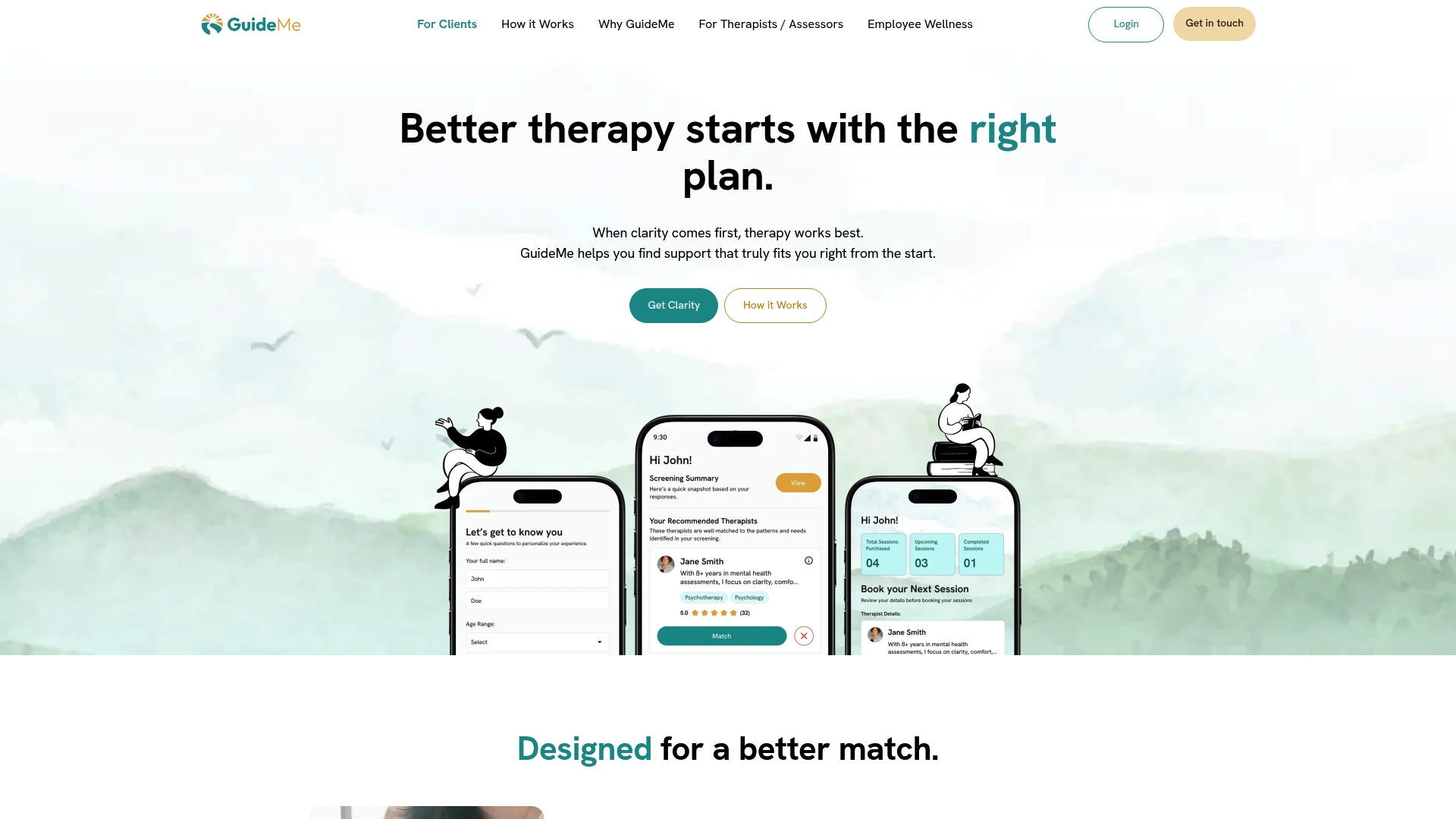
GuideMe uses a human-led, AI-powered approach to make find accessible therapy a realistic, supported process rather than an overwhelming task. Whether you are a young adult navigating your first experience of therapy, or a parent trying to find the right support for your family, GuideMe helps you identify and address your specific barriers, not a generic checklist. The platform provides curated guidance, provider options, and resources tailored to your needs, giving you clearer choices and greater confidence from the very beginning. Starting therapy should feel like a supported step forward, not a confusing ordeal.
Frequently asked questions
What is the most common barrier to therapy accessibility?
Affordability is the most cited barrier to therapy access, particularly for those without sufficient insurance cover or who face high private session fees.
Can online therapy truly replace face-to-face support?
Digital mental health removes some barriers but has real limits, particularly around personal connection, data privacy, and suitability for more complex presentations.
How does therapy accessibility differ for young people?
Only around 38% of young people with psychiatric disorders receive treatment, as they face both psychological barriers like fear and stigma, and practical ones like cost and location.
What can parents do to improve therapy access for their family?
Parents can seek out family-centred services that are designed around their circumstances, and proactively identify their most significant barriers, such as scheduling or cultural concerns, before beginning the search for support.