

Employee mental health challenges continue to escalate, with over half of workers reporting burnout annually. Corporate leaders and HR professionals face mounting pressure to implement therapy programmes that deliver measurable outcomes. This article reveals five evidence-based practices to enhance your workplace therapy initiatives, reduce absenteeism, and improve engagement through strategic programme design and cultural integration.
Table of Contents
- 1. Define clear criteria for selecting corporate therapy programmes
- 2. Offer diverse therapy options to meet varied employee needs
- 3. Compare common corporate therapy models and their benefits
- 4. Implement organisational culture change and leadership engagement
- 5. Measure outcomes and adapt programmes for continual improvement
Key takeaways
| Point | Details |
|---|---|
| Structured selection criteria ensure therapy programmes align with organisational goals and employee needs | Define clear objectives, assess stressor sources, and prioritise stigma reduction for maximum utilisation |
| Diverse therapy options accommodate varied preferences and schedules | Offer one-on-one counselling, group sessions, digital platforms, and flexible scheduling to boost engagement |
| Organisational culture and leadership commitment drive sustainable mental health improvements | Embed well-being into values, train managers, and model supportive behaviours to reduce stigma |
| Measuring outcomes enables continual refinement and demonstrates ROI | Track engagement rates, absenteeism, healthcare costs, and qualitative feedback to adapt programmes |
| Strategic investment in employee well-being delivers bottom-line business returns | Enhanced productivity, reduced turnover, and lower healthcare costs justify mental health spending |
1. Define clear criteria for selecting corporate therapy programmes
Establishing structured evaluation criteria ensures your therapy initiatives align with strategic business goals whilst addressing genuine employee needs. Start by identifying specific organisational objectives related to mental health, such as reducing absenteeism, improving productivity, or enhancing retention rates. These targets guide programme selection and enable measurement of success.
Conduct comprehensive employee surveys and focus groups to assess stressor sources and mental health challenges within your workforce. Understanding whether employees face burnout, anxiety, depression, or work-life balance issues shapes the types of support required. Implementation effectiveness varies based on organisational culture, leadership commitment, programme design quality, and stigma reduction efforts.
Secure visible leadership buy-in before launching any therapy programme. When executives champion mental health initiatives publicly, employees perceive these offerings as legitimate rather than superficial perks. This commitment must extend beyond verbal support to include budget allocation, policy changes, and accountability measures.
Prioritise stigma reduction in your selection criteria. Even the highest-quality therapy programmes fail when employees fear professional consequences or social judgement for seeking help. Evaluate potential providers based on their confidentiality protocols, communication strategies, and track record in creating psychologically safe environments.
Key criteria checklist:
- Alignment with specific business and workforce health objectives
- Evidence of measurable outcomes in similar organisational contexts
- Cultural fit with your workplace values and employee demographics
- Robust confidentiality and data protection standards
- Flexibility to adapt as organisational needs evolve
Pro Tip: Create a cross-functional selection committee including HR, leadership, and employee representatives to ensure diverse perspectives inform your criteria and prevent blind spots in programme evaluation.
2. Offer diverse therapy options to meet varied employee needs
Your workforce comprises individuals with different preferences, schedules, and mental health challenges. A one-size-fits-all approach inevitably leaves significant portions of employees underserved. Providing multiple therapy formats and access methods dramatically improves engagement and effectiveness.

Include individual counselling for employees who prefer private, personalised support alongside group therapy sessions that build peer connection and shared coping strategies. Digital platforms and self-help resources accommodate those who value flexibility or feel uncomfortable with face-to-face interaction initially. Workplace mental health programmes are associated with improved employee engagement, reduced absenteeism, enhanced productivity, and decreased healthcare costs.
Ensure availability of both in-person and virtual sessions to support remote workers, shift employees, and those with mobility constraints. Virtual options eliminate commute time and location barriers whilst providing equal access to quality care. This hybrid approach became essential during the pandemic and remains critical for modern workforce flexibility.
Tailor your offerings to address common workplace stressors including burnout, anxiety, depression, relationship conflicts, and work-life integration challenges. Different therapeutic modalities suit different issues, so partner with providers offering cognitive behavioural therapy, mindfulness-based approaches, solution-focused counselling, and other evidence-based methods.
Essential diversity elements:
- One-on-one counselling and group therapy options
- In-person and virtual session availability
- Digital mental health apps and self-guided resources
- Flexible scheduling including evenings and weekends
- Multilingual and culturally sensitive services
Promote flexible scheduling that accommodates diverse work patterns. Employees shouldn't sacrifice productivity or personal time to access mental health support. Consider providers offering extended hours, weekend appointments, and same-day crisis support.
3. Compare common corporate therapy models and their benefits
Understanding the strengths and limitations of different therapy delivery models helps you select the optimal approach for your organisation's size, culture, and budget. Each model serves specific needs and contexts differently.
Employee Assistance Programmes (EAPs) traditionally provide short-term confidential counselling, typically three to six sessions per issue. They offer broad accessibility and established confidentiality protocols but may lack depth for complex mental health conditions requiring ongoing care. Global corporate spending on wellness programmes is set to exceed $94.6 billion by 2026, reflecting growing recognition of mental health investments.
On-site therapy services place counsellors directly in workplace settings, offering immediate access and eliminating travel barriers. This model works well for large, centralised workforces but struggles to serve remote employees or those at satellite locations. The visible presence can also raise privacy concerns despite confidentiality assurances.
Digital mental health platforms provide scalable, cost-effective solutions through app-based therapy, messaging counselling, and self-help resources. They excel at reaching distributed workforces and younger employees comfortable with technology. However, effectiveness depends heavily on user engagement and digital literacy.
| Model | Primary Strengths | Key Limitations | Best Fit |
|---|---|---|---|
| Traditional EAPs | Established protocols, broad access, third-party confidentiality | Limited session depth, reactive rather than preventive | Small to mid-sized organisations seeking baseline coverage |
| On-site therapy | Immediate access, eliminates travel, normalises help-seeking | Limited remote coverage, potential privacy concerns | Large organisations with centralised workforces |
| Digital platforms | Scalable, flexible scheduling, cost-effective, data tracking | Requires engagement, less suitable for severe conditions | Distributed teams, tech-comfortable workforces |
| Hybrid models | Combines benefits, accommodates preferences, comprehensive | Complex coordination, higher initial investment | Large organisations prioritising comprehensive care |
Hybrid approaches combine multiple models to leverage complementary strengths whilst mitigating individual weaknesses. A meta-analysis of 42,148 participants across employer sizes demonstrates measurable healthcare cost reductions from enhanced behavioural health services.
Pro Tip: Pilot two or three models simultaneously with different employee segments, collect usage and satisfaction data after six months, then expand the highest-performing approach whilst refining or eliminating underutilised options.
4. Implement organisational culture change and leadership engagement
Therapy programmes alone cannot overcome toxic workplace cultures or leadership behaviours that create mental health problems. Sustainable improvements require embedding well-being into organisational values, policies, and daily practices.
Leadership must visibly champion mental health initiatives through authentic personal sharing, policy decisions, and resource allocation. When executives discuss their own mental health journeys or therapy experiences, it signals genuine commitment and reduces stigma more effectively than any communication campaign. Effective workplace well-being strategies extend beyond employee assistance programmes to include culture and leadership change.
Embed well-being metrics into performance management systems alongside traditional business indicators. Track and reward managers who create psychologically safe team environments, respect boundaries, and support employee mental health needs. What gets measured and incentivised shapes actual behaviour far more than mission statements.
Train all managers to identify early warning signs of mental health decline, conduct supportive conversations, and connect employees with appropriate resources. Front-line leaders have the greatest influence on daily work experiences and employee stress levels. Equipping them with mental health literacy and intervention skills multiplies your programme's reach.
Cultural integration strategies:
- Leadership storytelling and vulnerability modelling
- Mental health literacy training for all managers
- Well-being metrics in performance reviews and bonuses
- Flexible work policies that support work-life integration
- Regular pulse surveys measuring psychological safety
Reduce stigma through sustained, multi-channel communication that normalises help-seeking and challenges outdated attitudes. HR can rewrite culture around mental wellness with proven strategies including peer support networks, mental health champions, and success story sharing.
"Creating a mentally healthy workplace requires addressing systemic stressors like unrealistic workloads, poor work-life boundaries, and toxic management practices. Therapy helps individuals cope, but cultural change prevents problems at their source."
Create feedback mechanisms allowing employees to report cultural barriers, policy gaps, or leadership behaviours undermining mental health. Anonymous reporting tools and regular focus groups surface issues that formal channels miss.
5. Measure outcomes and adapt programmes for continual improvement
Systematic measurement transforms mental health initiatives from feel-good benefits into strategic business investments with demonstrable returns. Tracking quantitative metrics and qualitative feedback enables data-driven refinement and justifies continued funding.
Monitor employee engagement rates through regular pulse surveys measuring energy, commitment, and connection to work. Compare scores before and after therapy programme implementation, controlling for external factors. Engagement improvements signal that mental health support translates into workplace motivation and performance.
Track absenteeism patterns, both overall sick leave usage and frequency of mental health-related absences. Effective programmes should reduce both metrics as employees access preventive support before reaching crisis points requiring extended time off. Calculate cost savings from reduced absenteeism to demonstrate financial impact.
Analyse healthcare claims data for mental health service utilisation, prescription medication patterns, and total medical costs. Investing in employee well-being can deliver bottom-line returns through higher engagement and productivity, as demonstrated in major corporate case studies.
| Metric Category | Specific Indicators | Measurement Frequency | Target Direction |
|---|---|---|---|
| Engagement | Pulse survey scores, participation rates | Quarterly | Increasing |
| Absence | Sick leave days, mental health absences | Monthly | Decreasing |
| Healthcare costs | Claims, prescriptions, emergency visits | Quarterly | Decreasing |
| Productivity | Performance ratings, output measures | Biannually | Increasing |
| Satisfaction | Therapy feedback, Net Promoter Score | Per session | Increasing |
Collect qualitative employee feedback through confidential satisfaction surveys, focus groups, and exit interviews. Ask specific questions about therapy accessibility, quality, cultural sensitivity, and perceived value. This context explains quantitative trends and identifies improvement opportunities.
Continual improvement process:
- Establish baseline metrics before programme launch across all measurement categories
- Set specific, time-bound improvement targets aligned with organisational objectives
- Review data quarterly with leadership and programme providers to identify trends
- Conduct annual deep dives including employee focus groups and external benchmarking
- Adjust programme features, providers, communication, or policies based on findings
Use data insights to refine not just therapy offerings but also leadership training, cultural initiatives, and systemic workplace practices. If metrics show stress concentrated in specific departments or roles, investigate and address root causes rather than simply expanding therapy access.
Pro Tip: Create a dashboard visualising key mental health metrics alongside business outcomes like retention and productivity, making the connection explicit for stakeholders and maintaining executive support through data transparency.
How GuideMe supports effective corporate therapy initiatives
Navigating the complexity of corporate therapy programme design requires expertise in mental health, organisational psychology, and strategic implementation. GuideMe specialises in helping HR professionals and corporate leaders build tailored workplace therapy initiatives that drive measurable outcomes.
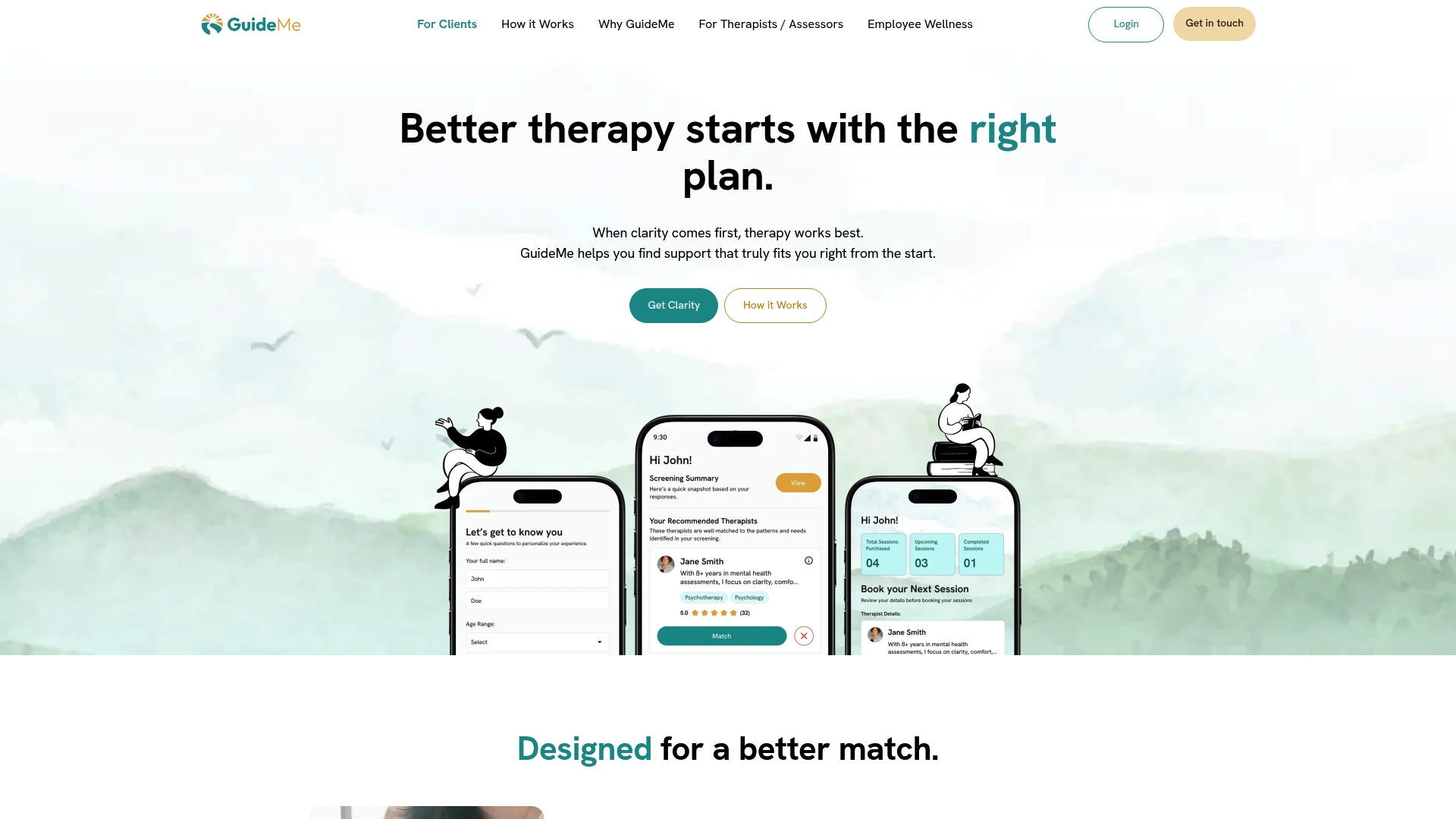
Our platform combines evidence-based frameworks with practical implementation tools to support every stage of your mental health strategy. From defining selection criteria to measuring outcomes, GuideMe provides resources, templates, and expert guidance ensuring your programmes succeed. We help you reduce stigma, train leadership, and create the cultural foundation necessary for therapy initiatives to thrive.
Connect with experienced mental health professionals through our corporate therapy support services who understand both clinical effectiveness and business requirements. Whether you're launching your first workplace therapy programme or refining existing offerings, GuideMe delivers the strategic support needed to improve employee well-being whilst demonstrating clear return on investment to stakeholders.
What are the main benefits of corporate therapy for businesses?
What are the main benefits of corporate therapy for businesses?
Corporate therapy improves employee engagement, reduces absenteeism, and enhances overall productivity across organisations. These programmes lead to measurably lower healthcare costs whilst boosting organisational performance through improved mental health and reduced turnover. When implemented strategically with leadership support, workplace therapy initiatives deliver substantial return on investment alongside human capital improvements.
How can leadership effectively support mental health initiatives?
Leaders must champion mental health openly through authentic personal sharing, visible resource allocation, and policy changes that prioritise well-being. Training managers to recognise warning signs and support struggling employees extends leadership impact throughout the organisation. Regular communication about mental health, accountability measures for creating psychologically safe teams, and role modelling help-seeking behaviours create stigma-free environments where therapy programmes thrive.
What metrics should HR track to evaluate therapy effectiveness?
Monitor employee engagement scores, absenteeism rates, turnover data, healthcare costs, and productivity measures to quantify programme impact. Collect qualitative feedback through satisfaction surveys and focus groups to understand employee experiences and identify improvement opportunities. Use this combined data to adapt programmes, demonstrate ROI to stakeholders, and maintain funding for mental health initiatives.
How do cultural factors affect corporate therapy success?
A supportive, stigma-free organisational culture dramatically boosts therapy programme utilisation and effectiveness. When employees trust confidentiality, see leadership support, and feel psychologically safe seeking help, they engage with available resources proactively. Conversely, resistance rooted in shame, fear of professional consequences, or toxic workplace norms limits benefits despite high-quality programme offerings, making cultural change essential for mental health success.