

TL;DR:
- Preparation, including identifying goals and practical needs, enhances therapy experiences and confidence.
- Asking key questions about credentials, approaches, and progress helps find the right therapist fit.
- Building trust and rapport significantly influences therapy success and should be prioritized alongside practical considerations.
Starting therapy is a significant step, and it is entirely normal to feel unsure about what to say or ask when you first meet a therapist. Many people walk into that first session feeling lost, wondering whether they are asking the right things or choosing the right person. Research consistently shows that asking informed questions from the outset leads to better outcomes and a stronger therapeutic relationship. This guide will walk you through exactly what to prepare, which questions matter most, how to build genuine trust, and what to do if things are not working. You deserve a therapist who truly supports you.
Table of Contents
- Preparing to meet your therapist
- The most important questions to ask
- Building trust and rapport
- Troubleshooting: Switching therapists and common pitfalls
- What most guides miss about choosing a therapist
- Find your best-fit therapist with GuideMe
- Frequently asked questions
Key Takeaways
| Point | Details |
|---|---|
| Preparation leads to clarity | Reflecting on your needs and goals before meeting a therapist improves communication and outcomes. |
| Ask evidence-backed questions | Questions about credentials, approach, and progress help you make informed choices and build trust. |
| Therapeutic alliance matters most | Your rapport with a therapist is the strongest factor in achieving positive results. |
| Switch therapists when needed | If you feel uncomfortable or stuck, it is normal and healthy to try a different therapist. |
Preparing to meet your therapist
Before your first session, a little preparation can make a significant difference. When you take time to reflect on what you are hoping to achieve, you give your therapist the clearest possible picture of how to help you. It also helps you feel more confident and less overwhelmed when the conversation starts.
Start by thinking about why you are seeking therapy. Are you managing anxiety, depression, relationship difficulties, grief, or something else entirely? Write it down. You do not need a polished explanation. A simple, honest list of your challenges and priorities is enough. If you have had therapy before, note what worked and what did not. That history is genuinely useful information.
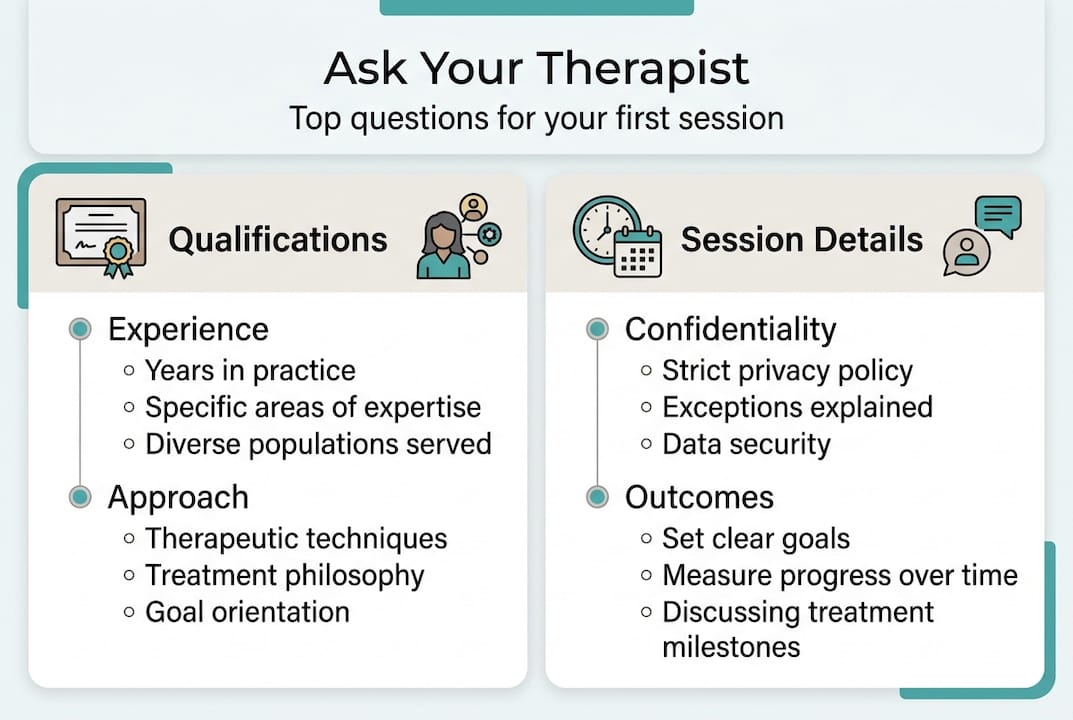
Next, consider the practical side. Think about session frequency, location preferences, online versus in-person options, fees, and whether you need a therapist who accepts your insurance. These details are not minor. If logistics become a barrier, you are less likely to attend consistently, and consistency is where progress happens.
Here are the key things to prepare before your first session:
- Your main reasons for seeking therapy and any specific symptoms or challenges
- A brief history of any previous therapy or mental health treatment
- Your goals, even if they feel vague at this stage
- Practical requirements such as budget, session times, and location
- Any preferences around therapist style, gender, or cultural background
It also helps to read up on types of psychotherapy so you have a basic sense of different approaches before your first conversation. A therapy methods overview can also help you understand what might suit your needs. The APA highlights that core questions to ask a potential therapist include their therapeutic approach, experience with specific issues, session structure, progress measurement, and logistics like fees and insurance.
Pro Tip: Write a short two or three sentence 'intro' you can read or paraphrase in your first session. Something like: "I am here because I have been struggling with anxiety for about a year. I have tried managing it on my own but feel I need more support. My main goal is to feel calmer in everyday situations." This simple step gives your therapist an immediate, clear starting point.
The most important questions to ask
Once you are prepared, it is time to ask targeted questions. These questions help you assess whether a therapist is the right fit and ensure your time and energy are well spent.
Here are the most important questions to ask:
- What are your qualifications and professional training?
- What therapeutic approaches do you use, such as CBT, DBT, or EMDR?
- Do you have experience working with my specific concerns?
- What does a typical session look like?
- How often would we meet, and for how long?
- How do you measure progress and set goals?
- What is your fee structure, and do you accept insurance?
- What is your confidentiality policy, and when might it be broken?
The APA emphasises verifying credentials, experience with specific problems, treatment approach evidence base, goals, confidentiality, and rapport as essential areas to explore. The NIMH recommends asking specifically about therapy specialisations, progress measurement, and typical session structure.

To help you compare what different therapists might offer, here is a simple overview:
| Question area | What to look for | Red flag |
|---|---|---|
| Credentials | Licensed and accredited | Vague or unverifiable answers |
| Therapeutic approach | Clear explanation of method | No clear approach mentioned |
| Experience with your issue | Specific examples or training | Generic responses only |
| Progress measurement | Clear goals and check-ins | No mention of tracking progress |
| Logistics | Transparent fee and policy | Unclear or inconsistent answers |
"The right questions do not just gather information. They reveal how a therapist thinks, communicates, and whether they will genuinely listen to you."
When you ask about matching therapy methods, you are not being demanding. You are being a responsible advocate for your own care. A good therapist will welcome these questions and answer them clearly.
Building trust and rapport
Practical questions are essential, but the quality of the relationship you build with your therapist may matter even more. The therapeutic alliance, which refers to the bond of trust and collaboration between therapist and client, is one of the strongest predictors of whether therapy will work.
A landmark meta-analysis covering more than 300 studies found that the therapeutic alliance correlates with successful outcomes at r=0.278 (d=0.579). That is a consistent, meaningful effect across different therapy formats and populations. In plain terms: how well you and your therapist connect matters enormously.
Here are signs to look for when assessing rapport:
- Do you feel genuinely heard without being judged?
- Does your therapist explain things clearly and check your understanding?
- Are they respectful of your values, background, and pace?
- Do they show empathy without being dismissive of difficult emotions?
- Do you leave sessions feeling somewhat better, or at least clearer?
Cultural competence is also worth considering. You can explore cultural competence in therapy to understand what it means and why it matters. A therapist does not need to share your cultural background, but they should demonstrate respect and awareness of how your background shapes your experience.
You can also ask your therapist directly about their philosophy on the client relationship. Something like: "How do you typically approach building trust with new clients?" or "How do you handle it if I feel stuck or frustrated in our sessions?" These questions reveal a great deal about how a therapist works and whether their style suits you. Exploring therapy success factors can help you understand what a strong therapeutic relationship looks like in practice.
Troubleshooting: Switching therapists and common pitfalls
Not every therapist will be the right fit, and that is perfectly normal. Recognising when things are not working is an important skill. Taking action is a sign of self-awareness, not failure.
Here are common warning signs that your current therapist may not be the right match:
| Warning sign | What it might mean |
|---|---|
| No progress after several weeks | Approach may not suit your needs |
| Feeling unheard or dismissed | Poor rapport or mismatched style |
| Dread before sessions, not just nerves | Deeper incompatibility |
| Therapist talks more than listens | Possible boundary or style issue |
| Logistics causing consistent stress | Practical barriers to progress |
If you recognise these signs, here is how to handle the transition thoughtfully:
- Reflect on whether the issue is temporary or persistent. A few difficult sessions are normal.
- Raise your concerns with your current therapist directly if you feel safe doing so.
- If nothing changes, begin searching for a new therapist before ending the current relationship.
- Give yourself time to adjust to a new therapist as well. A connection often builds over several sessions.
- Use what you learned from the previous experience to refine what you need next time.
NAMI confirms that it is normal to try more than one therapist before finding the right fit, and that switching is recommended if there is no progress after a reasonable period. Cultural competence and shared background can enhance comfort but are not mandatory when mutual respect is present.
Pro Tip: When finding a therapist, do not settle simply because you feel guilty about leaving. Your wellbeing is the priority. A good therapist will support your decision to seek a better fit if that is what you need.
What most guides miss about choosing a therapist
Most articles on choosing a therapist focus on checklists and credentials. Those things matter. But there is a deeper truth that often gets overlooked: no list of questions can fully replace your own honest feedback after a few sessions.
Research shows that therapist effects account for approximately 5% of outcome variance, while the alliance itself is far more influential. This means the individual therapist's skill and the relationship you build together matter more than any particular method or credential on paper.
At GuideMe, we believe that clarity about yourself is as important as clarity about your therapist. People who go into therapy knowing what they want, and who communicate honestly when something feels off, tend to make more progress. That is not something a checklist delivers. It comes from trusting your own experience and speaking up. Exploring a therapy matching guide can help you understand what to look for, but ultimately your gut response after a session is one of the most reliable signals you have. Persistence and open communication will always matter more than perfect preparation.
Find your best-fit therapist with GuideMe
Now that you are equipped with practical questions and a clearer sense of what to look for, taking the next step feels much more manageable. GuideMe is designed to make that step as straightforward as possible.
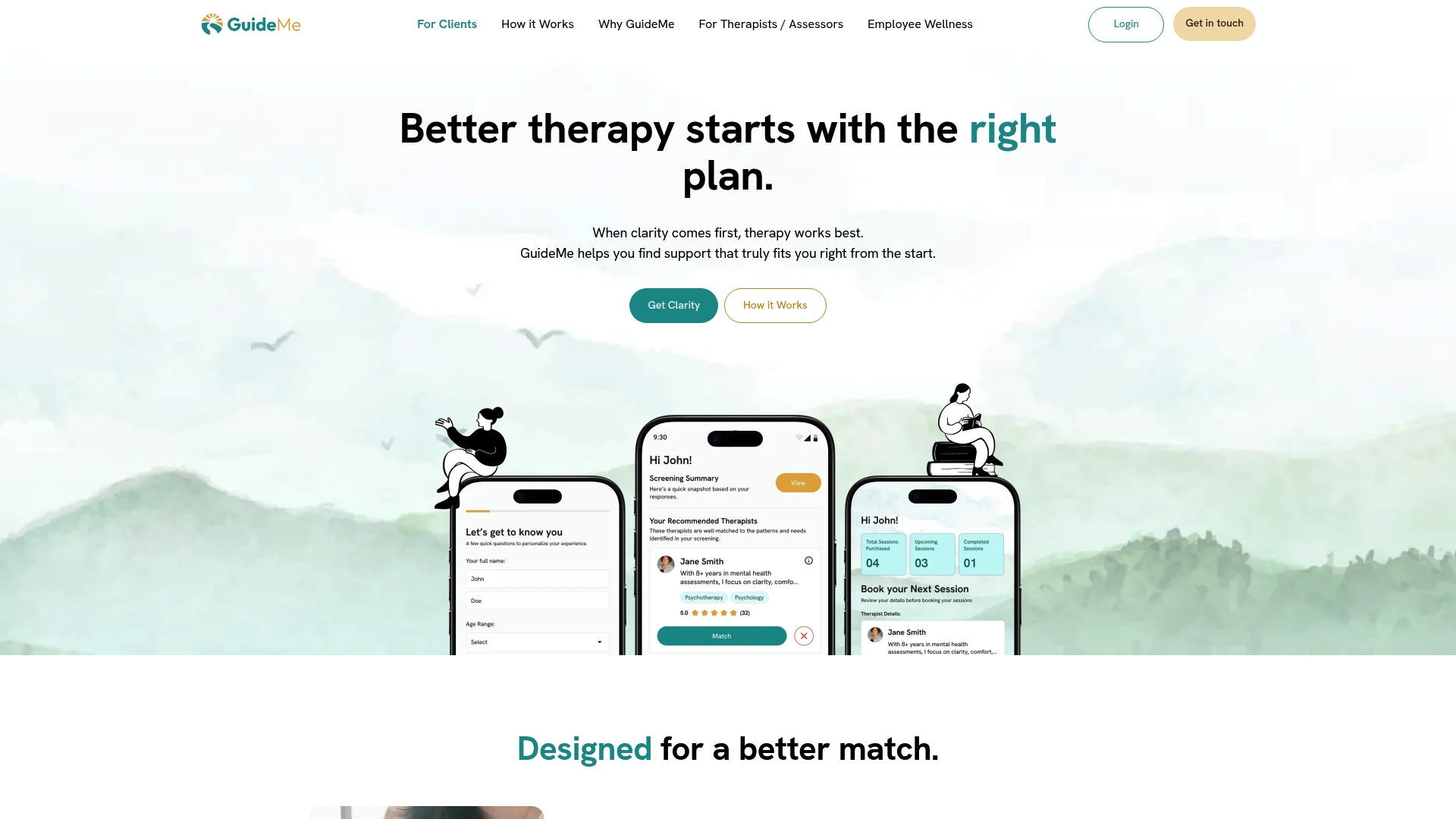
GuideMe is a human-led, AI-powered therapy navigation platform that helps you understand your mental health needs and get matched with the right licensed therapist from the beginning. Rather than searching blindly, you receive a personalised therapy plan and comparison tools that put you in control. When you are ready, start your therapist search and let GuideMe help you find someone who genuinely fits your needs, your values, and your life.
Frequently asked questions
What are the most important questions to ask a therapist?
Ask about their credentials, experience with your specific concerns, the types of therapy they offer, session logistics, and how they measure progress. The APA recommends covering therapeutic approach, session structure, and fees as core areas.
How do I know if a therapist is right for me?
Assess how comfortable and heard you feel after sessions, and whether you notice any progress in your concerns over time. A strong therapeutic alliance is the most reliable predictor of successful outcomes.
Is it OK to switch therapists if I do not feel a connection?
Yes, switching is normal and recommended when rapport or progress is missing after a reasonable period. NAMI confirms that trying more than one therapist before finding the right fit is common and encouraged.
What if my therapist does not understand my cultural background?
Cultural competence can enhance comfort and communication, but it is not the only factor that matters. Respect and genuine empathy are essential, and NAMI notes that a shared background is helpful but not mandatory when the therapist demonstrates care and understanding.