

Choosing a therapy technique can feel overwhelming. There are dozens of approaches, each with different methods, goals, and research behind them. Whether you are dealing with anxiety, depression, trauma, or simply want to understand yourself better, the right technique can make a real difference to your progress. Evidence consistently shows that matching therapy methods to your specific condition and readiness increases effectiveness. This article walks you through the most widely used, evidence-based therapy techniques, how to compare them, and how to find the approach that genuinely fits your needs.
Table of Contents
- How to choose the right therapy technique
- Top evidence-based therapy techniques
- Comparing therapy techniques: strengths and best uses
- Situational recommendations: finding your best fit
- Why matching therapy to the person matters more than the technique
- Take the next step with professional support
- Frequently asked questions
Key Takeaways
| Point | Details |
|---|---|
| No universal best | The most effective therapy depends on your unique needs and readiness for change. |
| Evidence matters | Choose approaches with a strong research base for your issue, such as CBT for anxiety. |
| Therapeutic fit is key | A good rapport and comfort with your therapist predict positive outcomes as much as the technique itself. |
| Blending techniques works | Many people benefit from flexible, integrated approaches guided by expert advice. |
How to choose the right therapy technique
With so many options available, knowing where to start is genuinely difficult. The good news is that there is a clear set of criteria you can use to narrow things down. No single therapy type works best for everyone. Effectiveness depends on your diagnosis, your personal goals, and the quality of your relationship with your therapist.
Here are the key factors to consider when evaluating a therapy technique:
- Evidence base: Is the approach backed by randomised controlled trials or meta-analyses? Strong research support matters, especially for specific conditions.
- Suitability for your goals: Some techniques focus on changing thought patterns, others on processing emotions or building skills. Match the method to what you want to achieve.
- Therapist qualifications: Ensure your therapist is trained and accredited in the approach they are using. Credentials vary by technique.
- Personal comfort: You are more likely to engage and benefit if the style of therapy feels right to you. Your instincts about fit are valid.
- Therapeutic alliance: Research consistently highlights that the relationship between therapist and client is one of the strongest predictors of positive outcomes, regardless of technique.
The recommendations for matching mental health interventions to individual needs reflect this reality. Choosing a technique is not a permanent decision. You can trial an approach and reassess after a few sessions without any long-term obligation.
It also helps to understand the role of evidence in this process. Randomised controlled trials (RCTs) test whether a therapy outperforms a control condition. Meta-analyses pool results across many studies to give a broader picture. When a technique has strong RCT and meta-analysis support, that is a meaningful signal. But evidence is only one piece of the picture. Readiness, context, and the quality of your therapeutic relationship all shape outcomes significantly. You can explore a broad therapy approaches overview to get a sense of the landscape before committing to anything.
Pro Tip: Trialling a therapy for four to six sessions does not mean you are locked in. Think of early sessions as an assessment period where both you and your therapist are evaluating fit.
Top evidence-based therapy techniques
With your selection criteria in mind, here is a practical summary of the most widely used approaches. APA PsycTherapy features over 50 approaches including CBT, DBT, ACT, Psychodynamic therapy, EMDR, and more. Below are the seven you are most likely to encounter.
Cognitive Behavioural Therapy (CBT) CBT focuses on identifying and changing unhelpful thought patterns and behaviours. It is structured, goal-oriented, and typically short-term. CBT shows large effect sizes (Cohen's d above 0.8) for depression and anxiety. Best for: anxiety disorders, depression, OCD, phobias. One limitation: it requires active participation and homework between sessions.

Dialectical Behaviour Therapy (DBT) DBT was originally developed for borderline personality disorder (BPD) and combines CBT with mindfulness and acceptance strategies. It builds skills in emotion regulation, distress tolerance, and interpersonal effectiveness. Best for: BPD, severe emotion dysregulation, self-harm. It can be intensive and time-consuming.
Acceptance and Commitment Therapy (ACT) ACT encourages psychological flexibility, helping you accept difficult thoughts rather than fight them, and commit to values-based action. Best for: chronic pain, anxiety, depression, and situations where rigid thinking is a barrier. It is less structured than CBT, which suits some people better.
Psychodynamic therapy This approach explores how past experiences and unconscious patterns shape current behaviour and feelings. It tends to be longer-term and insight-focused. Best for: relationship difficulties, recurring emotional patterns, complex depression. It may feel slower-paced for those wanting quick skill-building.
Eye Movement Desensitisation and Reprocessing (EMDR) EMDR uses guided eye movements to help process traumatic memories. It is strongly recommended for PTSD and trauma. Best for: PTSD, single-incident trauma, complex trauma. Some people find the process emotionally intense initially.
Interpersonal Therapy (IPT) IPT focuses on improving communication and relationships to reduce symptoms of depression. It is structured and time-limited. Best for: depression linked to grief, life transitions, or relationship conflict.
Narrative therapy Narrative therapy helps people reframe the stories they tell about themselves and their experiences. Best for: identity issues, cultural or social challenges, and those who find traditional clinical frameworks less relatable.
"Evidence-supported treatments should be the starting point for any therapy decision, but the quality of the therapeutic relationship remains a critical variable across all approaches." See evidence-supported treatments for a full ratings list.
Comparing therapy techniques: strengths and best uses
Since you have now surveyed the individual techniques, it helps to see their strengths side by side. The Society of Clinical Psychology rates empirical strength and use cases for major interventions, providing a useful reference point.
| Technique | Evidence strength | Best for | Main skills focus | Accessibility |
|---|---|---|---|---|
| CBT | Very strong | Anxiety, depression, OCD | Thought and behaviour change | Widely available |
| DBT | Strong | BPD, emotion dysregulation | Emotion regulation, mindfulness | Specialist training needed |
| ACT | Strong | Anxiety, chronic conditions | Acceptance, values-based action | Growing availability |
| Psychodynamic | Moderate to strong | Depression, relationship issues | Insight, self-awareness | Broadly available |
| EMDR | Very strong | PTSD, trauma | Trauma processing | Specialist training needed |
| IPT | Strong | Depression, grief | Communication, relationships | Moderately available |
| Narrative | Moderate | Identity, social challenges | Reframing personal stories | Less widely available |
To use this table effectively, start with your primary concern and look across the row. If you are dealing with trauma, EMDR and CBT variants stand out clearly. If your focus is on recurring emotional patterns in relationships, psychodynamic therapy or IPT may be more relevant.
One important finding worth noting: for depression, CBT and short-term psychodynamic therapy show broadly equivalent outcomes in research trials. This tells us that the type of therapy is not always the deciding factor. How well it fits you, and how well you connect with your therapist, often matters just as much.
There are also important cautions. CBT alone is generally not recommended as the primary treatment for psychosis or bipolar disorder without additional support. In those cases, medication and specialist care are typically needed alongside any talking therapy. Your needs are unique, and no table can replace a proper clinical assessment.
Situational recommendations: finding your best fit
Now that you have a comparative overview, here are practical recommendations based on real-life situations. These are starting points, not rigid rules.
- Struggling with anxiety or low mood: Start with CBT. It has the broadest evidence base and is widely available through both NHS and private routes.
- Dealing with trauma or PTSD: Consider EMDR or a CBT variant such as Cognitive Processing Therapy (CPT) or Prolonged Exposure. These are the most strongly supported options for trauma recovery.
- Experiencing intense emotional swings or self-harm: DBT is specifically designed for severe emotion dysregulation and is the recommended approach for BPD and related difficulties.
- Feeling stuck in rigid thinking patterns: ACT may be a better fit than standard CBT if you find it hard to simply challenge negative thoughts. It works with acceptance rather than against resistance.
- Recurring relationship or identity difficulties: Psychodynamic therapy or narrative therapy can offer deeper insight into long-standing patterns that shorter-term approaches may not fully address.
- Depression linked to a life event: IPT is a practical, structured option when depression is connected to grief, a major transition, or relationship breakdown.
What if your first choice is not working? That is more common than you might think. Switching approaches or therapists is not a failure. It is a normal part of finding what works. DBT has also shown promising evidence for PTSD in recent research, illustrating how techniques continue to expand their evidence base over time.
Pro Tip: If your difficulties feel complex or do not fit neatly into one category, ask your therapist about integrated approaches. Many skilled clinicians draw from multiple techniques rather than sticking rigidly to one model.
Why matching therapy to the person matters more than the technique
Here is something most therapy guides do not say clearly enough: the label on the therapy matters less than how well it fits you. Research on therapeutic alliance, the quality of the working relationship between therapist and client, consistently shows it is one of the strongest predictors of good outcomes across all modalities. A highly skilled CBT therapist who connects well with you will likely produce better results than a technically correct but poorly matched psychodynamic therapist.
Expert clinicians rarely practise one technique in pure form. They adapt, blend, and respond to what the person in front of them actually needs. That is not a lack of rigour. It is good clinical practice.
This matters for you as someone navigating therapy options. Do not get so focused on finding the "right" technique that you overlook how you feel in the room with your therapist. Your feedback after sessions, your sense of being understood, and your willingness to engage are all meaningful signals. Matching mental health support to the individual, not just the diagnosis, is what produces lasting change. Therapy is a process. Your needs may shift, and your approach can shift with them.
Take the next step with professional support
Understanding therapy techniques is a strong first step. But knowing which one is right for you requires a more personal conversation. That is exactly where GuideMe can help.
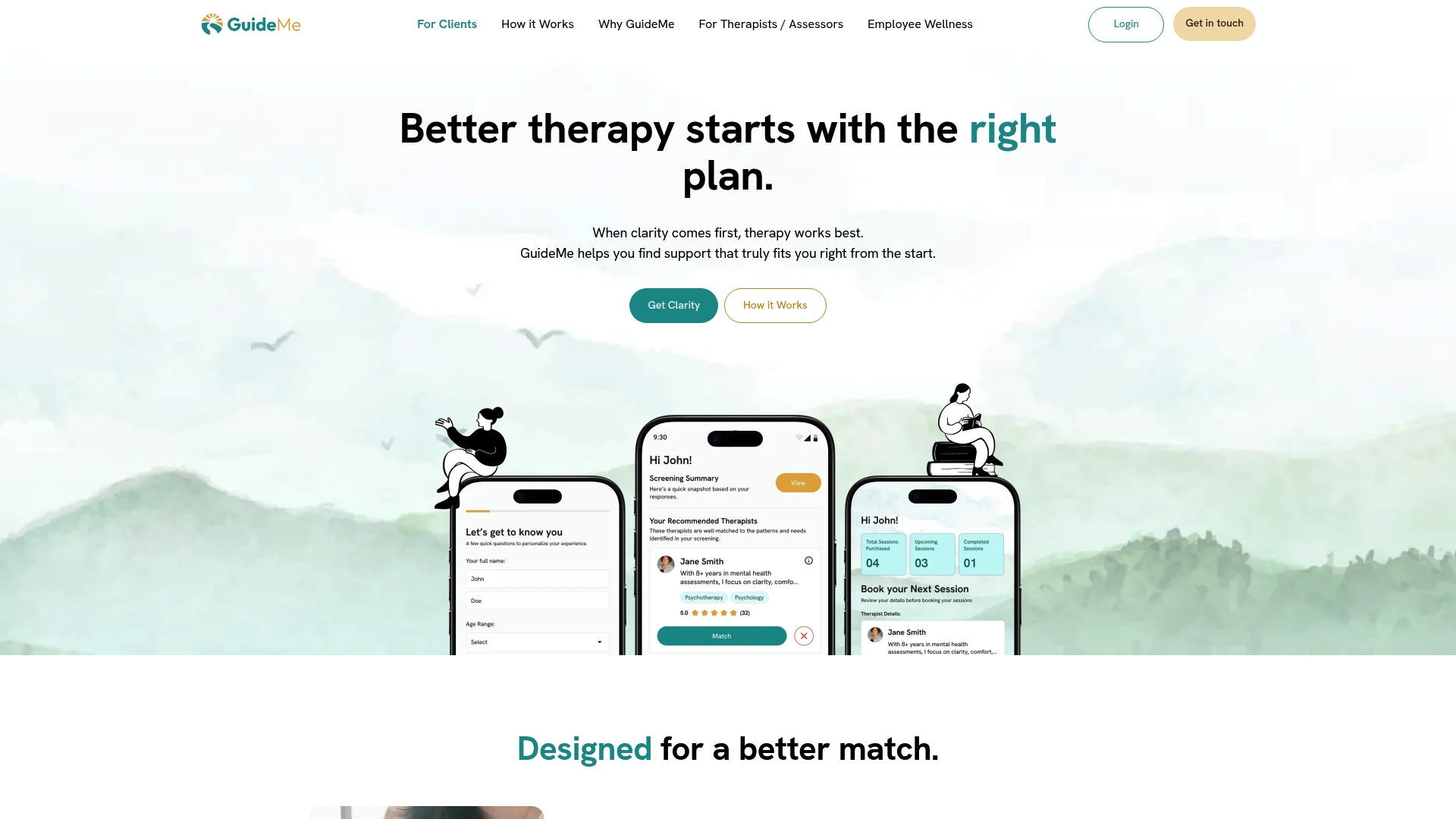
GuideMe is a therapy navigation platform that combines human expertise with AI-powered matching to help you understand your mental health and connect with the right therapist from the start. Rather than leaving you to search alone, GuideMe creates an in-depth therapy plan tailored to your needs and matches you with a therapist suited to your goals and preferences. If you are ready to move from reading about therapy to actually experiencing it, start your therapy journey with GuideMe today. Support is available at every step.
Frequently asked questions
What is the most effective therapy technique for anxiety?
CBT has strong evidence for anxiety disorders, with large effect sizes across multiple meta-analyses, making it the most widely recommended first-line approach. That said, ACT and other methods may suit those who do not respond to CBT.
Which therapy works best for trauma or PTSD?
The APA PTSD guideline recommends Cognitive Processing Therapy, Prolonged Exposure, and EMDR as the strongest evidence-based options for trauma recovery. Your therapist can help you decide which variant fits your specific experience.
Is there a difference between CBT and psychodynamic therapy?
Yes, their methods differ significantly, but for depression, CBT and short-term psychodynamic therapy show broadly equivalent positive outcomes in research trials. The best choice depends on your personal preferences and what you want to explore in therapy.
Can I try more than one therapy technique?
Absolutely. Many people benefit from blending or switching approaches if their first choice is not a good fit. Flexibility is a strength, not a sign that something has gone wrong.