

Choosing a therapist can feel like navigating a maze without a map. You know you need support, but where do you start? With thousands of practitioners offering different approaches, the search often becomes another source of stress. Research shows that therapeutic alliance predicts outcomes better than any specific technique, yet most people focus on credentials alone. This article provides a structured, evidence-based approach to finding your ideal therapist match, helping you move from confusion to confident action.
Table of Contents
- 1. Understand the importance of the therapeutic alliance
- 2. Reflect on your therapy goals and preferences
- 3. Explore therapist options and evaluate fit
- 4. Compare therapy options based on key criteria
- 5. Make your decision and know when to switch
Key takeaways
| Point | Details |
|---|---|
| Relationship quality matters most | The therapeutic alliance predicts success better than any specific technique or credential. |
| Trying multiple therapists is normal | Most people benefit from consulting 1-3 therapists before finding their best fit. |
| Self-reflection guides your search | Clarifying your goals and preferences beforehand makes the selection process more targeted. |
| Evidence-based matching improves outcomes | Personalised matching based on needs and preferences enhances therapy effectiveness. |
| Trust your gut feeling early | Comfort, trust, and feeling heard in initial sessions are reliable indicators of fit. |
1. Understand the importance of the therapeutic alliance
The therapeutic alliance refers to the quality of the relationship between you and your therapist. This includes trust, mutual respect, comfort, and a shared understanding of your therapy goals. Whilst credentials and training matter, research consistently shows that alliance predicts therapy outcomes more powerfully than the specific therapeutic approach used. A meta-analysis of 295 studies found a correlation of 0.278 between alliance quality and treatment success, making it the single most reliable predictor across all therapy modalities.

What does a strong alliance look like in practice? You feel heard and understood during sessions. Your therapist respects your perspective and collaborates with you on treatment decisions. You sense genuine care and investment in your progress. These interpersonal elements create the foundation for meaningful change, regardless of whether your therapist uses cognitive behavioural therapy, psychodynamic approaches, or other methods.
Many people mistakenly prioritise finding a therapist who specialises in a particular technique over finding someone they genuinely connect with. Whilst specialisation has value, the relationship quality ultimately determines whether you'll engage fully in therapy and achieve your goals. If you don't feel comfortable opening up, even the most evidence-based intervention will fall flat.
Pro tip: During initial consultations, pay attention to how you feel in the therapist's presence. Do you feel judged or accepted? Rushed or given space? These gut feelings often reveal alliance potential better than any credential on the wall. Exploring different therapy modalities matching your needs can help, but prioritise the human connection above all else.
2. Reflect on your therapy goals and preferences
Before you start searching, invest time in understanding what you actually want from therapy. This self-reflection transforms an overwhelming search into a targeted mission. Practical guides emphasise that clarifying your goals and preferences beforehand significantly improves your chances of finding the right match quickly.
Start by listing the specific challenges you're facing. Are you dealing with anxiety that interferes with daily life? Processing trauma? Navigating relationship difficulties? Managing depression? Each concern may benefit from different therapeutic approaches or specialisations. Next, consider what you hope to gain from therapy. Do you want practical coping strategies? Deeper self-understanding? Help making a specific decision? Healing from past experiences?
Your communication preferences matter too. Some people thrive with direct, structured feedback. Others need a gentler, more exploratory approach. Think about past helpful conversations and what made them work. Did you appreciate someone who asked probing questions or someone who listened quietly? Do you want homework between sessions or prefer keeping therapy work contained to your appointments?
Practical factors deserve equal attention:
- Availability: What days and times can you consistently attend sessions?
- Budget: What can you afford per session, and does insurance coverage matter?
- Format: Do you prefer in-person, video, or phone sessions?
- Location: If meeting face-to-face, how far can you reasonably travel?
Pro tip: Write your goals and preferences in a document you can revisit. This becomes your north star when evaluating options, helping you stay focused on what genuinely matters rather than getting distracted by impressive credentials or persuasive marketing. Understanding therapy modalities matching your specific needs creates a clearer search path.
3. Explore therapist options and evaluate fit
Once you've clarified your needs, it's time to find actual therapists to consider. Several reliable pathways exist for discovering qualified practitioners. Online directories maintained by professional associations offer vetted listings with detailed profiles. Your GP can provide referrals based on your specific concerns. Friends or family members who've had positive therapy experiences might recommend their therapists. University counselling centres and community mental health organisations often maintain referral lists.
Initial consultations serve as crucial evaluation opportunities. Many therapists offer brief phone calls or reduced-fee first sessions specifically for assessing fit. During these conversations, notice how the therapist responds to your concerns. Do they listen attentively or interrupt frequently? Do they ask thoughtful questions that show genuine interest? Do you feel comfortable sharing vulnerable information?
Expert advice suggests trying 1-3 therapists before committing long term is completely normal and advisable. This isn't therapist shopping; it's making an informed decision about a significant relationship. If something feels off after an initial session, trust that instinct. You're not being difficult or picky. You're recognising that fit matters.
Watch for these red flags during early interactions:
- Feeling judged or dismissed when sharing concerns
- The therapist talks excessively about themselves
- Lack of clear boundaries or professional demeanour
- Pressure to commit to long-term treatment immediately
- Discomfort that doesn't ease after the first session
Pro tip: Prepare specific questions before consultations. Ask how they typically work with someone facing your particular challenges. Inquire about their approach to measuring progress. Request clarification on logistics like cancellation policies and session frequency. These questions reveal professionalism and help you evaluate the client-therapist relationship potential systematically. Exploring therapy modalities matching your situation provides additional context.
4. Compare therapy options based on key criteria
Systematic comparison prevents decision paralysis. Create a simple framework for evaluating your options across factors that genuinely impact therapy success. This structured approach transforms subjective feelings into clearer choices.
Key criteria to compare:
| Criterion | Why it matters | What to assess |
|---|---|---|
| Specialisation | Relevant experience improves effectiveness | Does the therapist regularly work with your specific concerns? |
| Approach | Different methods suit different people | Does their therapeutic style align with your preferences? |
| Interpersonal skills | Critical for alliance and outcomes | Do you feel comfortable and understood with this person? |
| Practical logistics | Convenience affects long-term commitment | Can you realistically attend sessions consistently? |
| Cost and insurance | Financial sustainability matters | Is this affordable for the duration you'll likely need? |
Research indicates that therapist interpersonal skills become especially important for people with more severe symptoms or complex presentations. For straightforward concerns, a wider range of therapists might work well. For complicated situations, prioritising exceptional relational skills and relevant specialisation becomes crucial.
Evidence-based matching improves outcomes particularly for complex cases or people from minority backgrounds who benefit from culturally informed care. If you're dealing with multiple concerns, trauma history, or identity-specific challenges, investing extra time in finding a therapist with relevant training and lived understanding pays dividends.
Don't underestimate practical factors. A brilliant therapist whose office is 90 minutes away or whose fees strain your budget creates unsustainable conditions. Consistency matters more than perfection. A good-enough therapist you can see regularly beats an ideal therapist you can only afford occasionally.
Pro tip: Create a simple spreadsheet comparing your top 2-3 options across these criteria. Rate each factor on a scale of 1-5 based on how well each therapist meets your needs. This visual comparison often reveals a clear frontrunner and helps you articulate why one option feels right.
5. Make your decision and know when to switch
After initial consultations and comparison, trust yourself to make a choice. Perfectionism paralyses many people at this stage. Remember, you're choosing a starting point, not making an irreversible lifetime commitment. Most therapeutic relationships evolve, and switching therapists if needed is completely acceptable.
Give your chosen therapist a fair trial. Research suggests evaluating fit after 3 sessions provides enough data whilst avoiding prolonged mismatches. During this trial period, assess honestly:
- Do you feel increasingly comfortable sharing difficult topics?
- Does the therapist remember details from previous sessions?
- Are you noticing any small shifts in perspective or coping?
- Do you feel respected and heard, even when challenged?
Positive indicators to continue include feeling understood, noticing collaborative goal-setting, experiencing moments of insight, and sensing genuine care from your therapist. You don't need dramatic breakthroughs immediately. Small signs of progress and deepening trust suggest you're on the right path. Evaluating early therapy experiences honestly helps you make informed decisions.
When to consider switching:
- Persistent discomfort that doesn't ease after several sessions
- Feeling judged, dismissed, or misunderstood regularly
- No sense of progress or connection after 4-6 sessions
- Major misalignment in therapy goals or approach
- Boundary violations or unprofessional behaviour
"The therapist's interpersonal skills and ability to form a strong alliance matter more than their theoretical orientation, especially for patients with more severe impairment. If you don't feel that connection developing, it's worth trying someone else."
Pro tip: Set a specific check-in date after your third session to evaluate the relationship honestly. Ask yourself whether you'd recommend this therapist to a close friend facing similar challenges. If the answer is no, that clarity gives you permission to explore other options without guilt. Finding the right fit sometimes requires trying therapy modalities matching your needs with different practitioners.
GuideMe: your partner in finding the right therapy
Navigating the therapist search alone can feel overwhelming, even with a clear framework. GuideMe simplifies this process by offering personalised therapist matching based on the evidence-based criteria discussed throughout this article. Our platform combines expert knowledge with comprehensive therapist databases to connect you with practitioners who genuinely fit your needs, preferences, and circumstances.
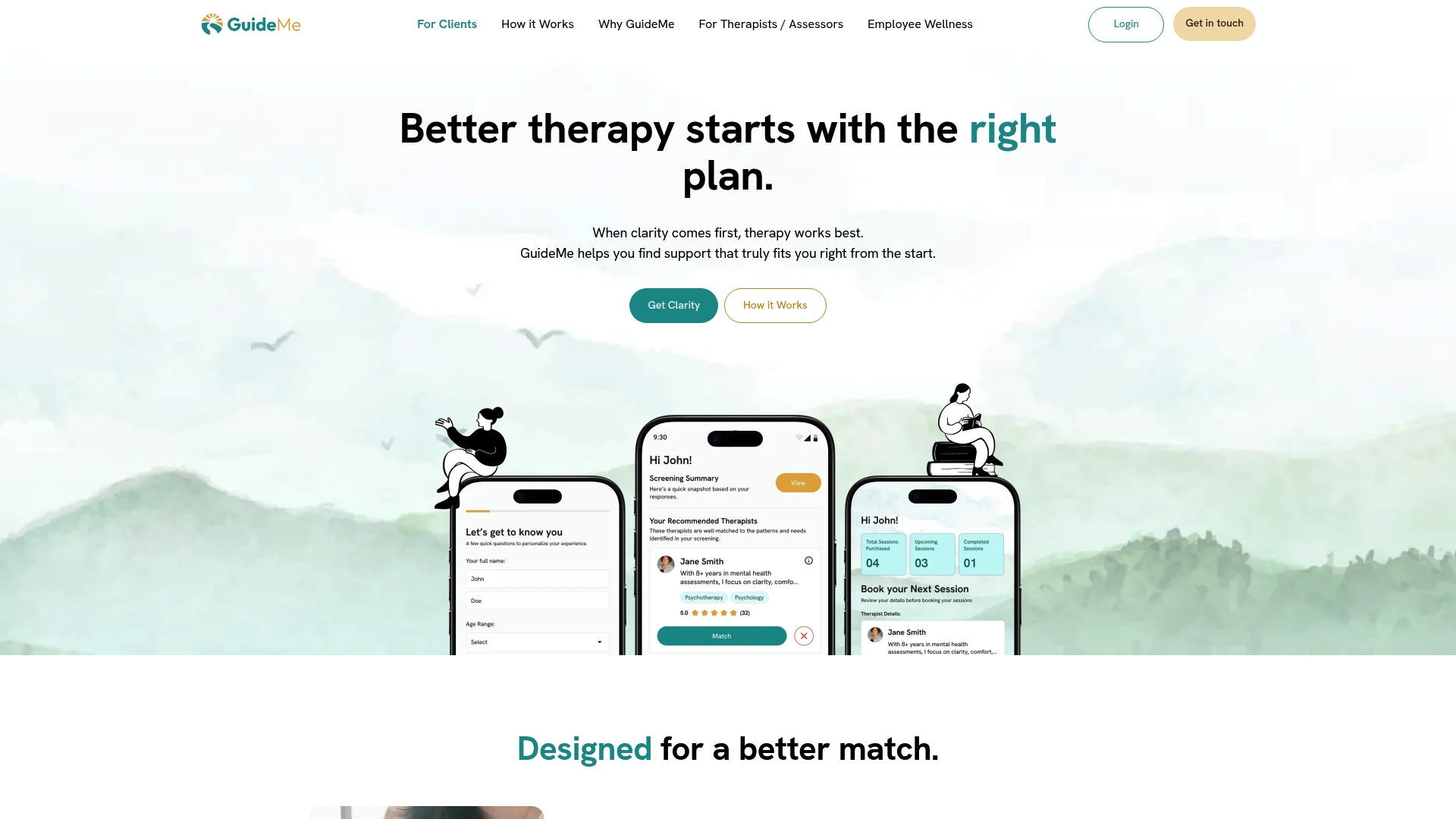
Whether you're beginning your mental health journey or seeking a better therapeutic match, GuideMe provides the structure and support that transforms confusion into confident action. Our human-led, AI-powered approach ensures you find the right therapist from the beginning, creating a more supportive and comfortable therapy experience. Visit GuideMe today to start your search with the clarity and confidence you deserve.
Frequently asked questions
How many therapists should I try before deciding?
Trying 1-3 therapists before committing is completely normal and advisable. This isn't being picky; it's making an informed decision about a significant relationship. Trust your gut feeling about comfort and connection. If something feels persistently off after an initial session, that instinct is valuable data worth honouring.
What should I ask during an initial consultation?
Ask how the therapist typically approaches someone with your specific concerns. Inquire about their experience working with issues similar to yours and their general therapeutic style. Clarify practical matters like session format, frequency, availability, fees, and cancellation policies. These questions reveal both clinical competence and logistical compatibility.
How important is a therapist's technique versus relationship?
Relationship quality predicts outcomes more reliably than specific therapeutic techniques across all modalities. Whilst evidence-based approaches matter, the alliance between you and your therapist determines whether those techniques actually help. Feeling safe, understood, and respected creates the foundation for meaningful change regardless of the specific method used.
How can I tell if therapy is working?
Positive signs include making progress towards your stated goals, feeling increasingly heard and understood, developing new coping strategies, and experiencing shifts in perspective. You should notice growing trust in the therapeutic relationship and feel comfortable sharing difficult topics. If you're feeling worse, experiencing no connection after several sessions, or sensing persistent misunderstanding, it may be time to reassess the fit.