

Listening is often mistaken as a passive act, but in therapy, it is an active, deliberate skill that opens the door to healing. Many assume therapists simply hear words, yet effective listening involves empathy, reflection, and intentional engagement that fundamentally shapes therapeutic outcomes. Understanding how listening works in therapy can transform your experience, deepen trust with your therapist, and accelerate your mental health progress.
Table of Contents
- Understanding Listening In Therapy: Definitions And Types
- How Listening Strengthens Therapeutic Relationships
- The Mechanisms Behind Listening's Power In Therapy
- Common Misconceptions About Listening In Therapy
- Listening Techniques Therapists Use To Empower Clients
- Barriers To Effective Listening In Therapy And How They Are Addressed
- Listening's Role In Trauma-Informed Therapeutic Approaches
- Applying What You Have Learnt: How Clients Can Engage In The Listening Process
- How Guide Me Supports Your Therapy Journey
- Frequently Asked Questions
Key takeaways
| Point | Details |
|---|---|
| Listening is active | Effective listening involves empathy, reflection, and deliberate attention, not passive hearing. |
| Builds therapeutic alliance | Strong listening creates trust and emotional safety, improving therapy outcomes and reducing dropout rates. |
| Therapists use specific techniques | Open-ended questions, reflective statements, and silence deepen client understanding and engagement. |
| Barriers exist but are manageable | Distractions and time pressures can reduce listening quality, but training and awareness improve effectiveness. |
| Clients can enhance listening | Recognising good listening and providing feedback strengthens the therapeutic relationship. |
Understanding listening in therapy: definitions and types
Therapy demands more than passive hearing. Listening goes beyond hearing: it requires attention, reflection, and emotional connection that validates your experience. When therapists listen effectively, they create a foundation for understanding that drives meaningful change.
Three primary listening types shape therapeutic interactions:
- Active listening focuses on attentively hearing your words, paraphrasing key messages, and checking understanding to ensure accuracy.
- Reflective listening mirrors your feelings and thoughts back to you, validating your emotional experience and helping you gain clarity.
- Empathic listening adds deep emotional connection and compassion, allowing your therapist to resonate with your struggles and strengths.
Each type serves distinct purposes. Active listening ensures your therapist grasps the facts and details you share. Reflective listening helps you feel truly seen and understood. Empathic listening creates the emotional bond necessary for vulnerability and growth.
The importance of listening in therapy cannot be overstated. Your therapist's listening style directly influences the quality of your therapeutic alliance, which research consistently links to better outcomes. When you feel genuinely heard, you engage more deeply, share more honestly, and progress more rapidly.
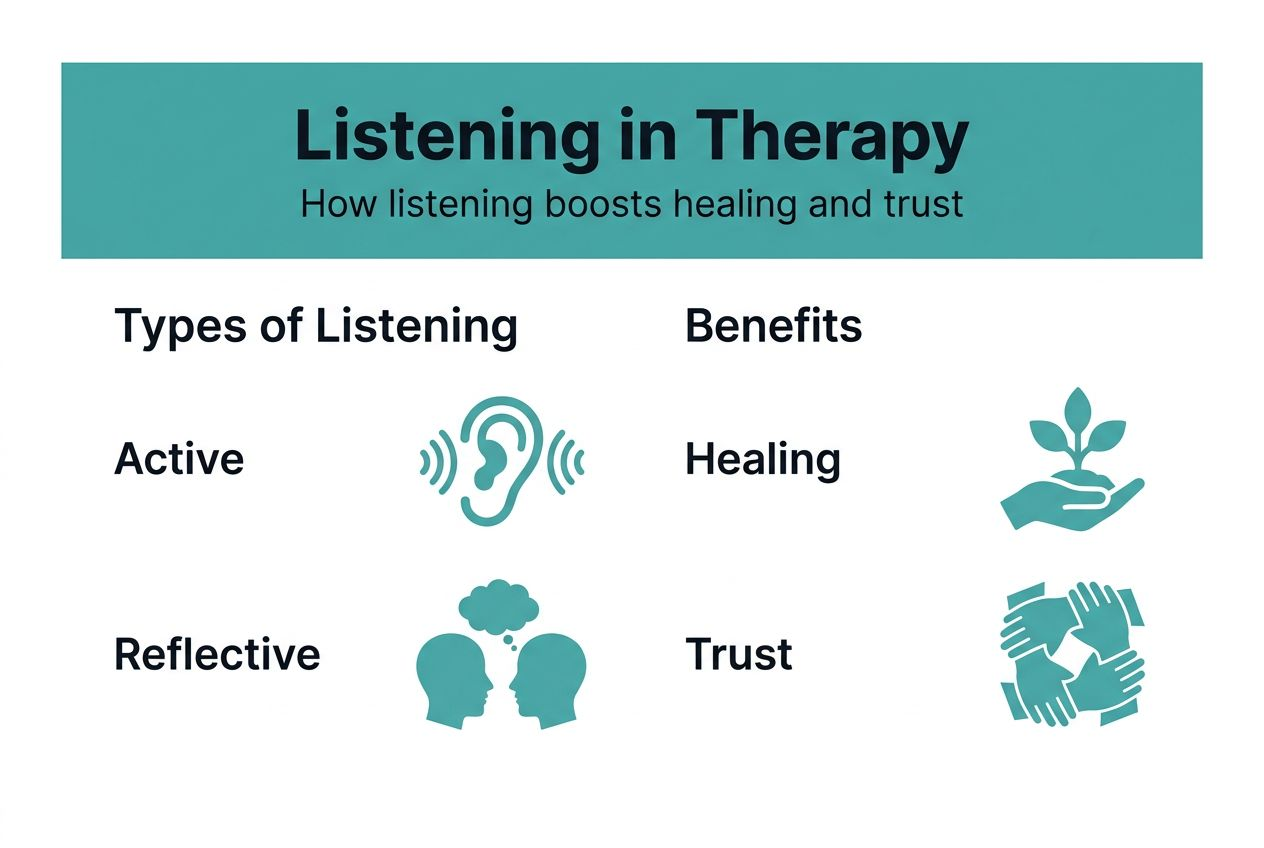
Recognising these listening types empowers you to notice when your therapist employs them. This awareness helps you appreciate the deliberate work happening in sessions and enables you to communicate if you need a different listening approach. Guide Me connects you with therapists trained in these essential listening skills, ensuring your therapy experience starts with strong communication foundations.
How listening strengthens therapeutic relationships
Listening is a core skill in mental health practice, forming the bedrock of effective therapeutic relationships. Without deep listening, trust cannot develop, and therapy becomes a superficial exchange rather than transformative work.
Effective listening builds trust through several mechanisms:
- Validation of experience occurs when therapists reflect your emotions accurately, confirming your feelings matter and deserve attention.
- Emotional safety emerges as you realise your therapist genuinely wants to understand rather than judge or rush you.
- Increased openness follows naturally when you feel heard, leading you to share deeper concerns and vulnerabilities essential for progress.
- Lower dropout rates result from strong listening because clients feel invested in relationships where they feel understood and valued.
Research on empathic listening reveals its predictive power for psychotherapy outcomes. When therapists listen with empathy, clients experience greater engagement, reduced resistance, and accelerated healing. This connection transforms therapy from a clinical transaction into a collaborative partnership.
"Listening creates the relational bridge that allows healing to occur. Without it, even the best therapeutic techniques fall flat."
Emotional safety deserves special emphasis. Many people enter therapy carrying shame, fear, or uncertainty about sharing painful experiences. When your therapist listens without interruption, maintains eye contact, and responds with compassion, that safety allows you to explore difficult territory. You begin to trust that your therapist can handle your story without recoiling or dismissing your pain.
Clients who perceive good listening report feeling more hopeful about therapy outcomes. They describe sessions as productive rather than frustrating, and they persist through challenging moments because the therapeutic relationship feels sturdy. This persistence directly correlates with achieving therapy goals.
Understanding therapeutic relationships in therapy helps you recognise that listening is not incidental but central to your healing journey. When you choose a therapist through Guide Me, you gain access to professionals who prioritise this foundational skill.
The mechanisms behind listening's power in therapy
Listening produces measurable emotional and neurological benefits that extend beyond subjective feelings of being heard. Values-driven listening marked by presence, curiosity, and compassion creates trust that enhances patient care and accelerates healing processes.
Neuroscience research illuminates why listening feels so powerful:
- Brain reward centres activate when we feel genuinely heard, releasing neurotransmitters associated with pleasure and connection.
- Emotional regulation improves as the prefrontal cortex engages during empathic exchanges, helping you process difficult feelings more effectively.
- Stress hormones decrease when listening creates safety, allowing your nervous system to shift from threat response to healing mode.
- Relational neural circuits strengthen through repeated experiences of being listened to, building capacity for healthier relationships beyond therapy.
Values-driven listening involves more than technique. It requires therapists to bring full presence, suspending judgement and agenda to genuinely understand your unique perspective. This presence communicates respect and worth, particularly vital when you have experienced dismissal or invalidation elsewhere.
"The therapist's ability to listen with curiosity rather than assumption transforms how clients view themselves and their possibilities for change."
Listening creates a relational bridge especially important in trauma-informed care. Trauma often involves experiences of not being heard or believed. When your therapist listens attentively to your trauma narrative, it provides corrective emotional experience that begins to repair relational wounds. You learn that your story matters and deserves witness.
Therapeutic listening supports emotional repair by allowing you to externalise internal chaos. Speaking your experience to an engaged listener helps organise overwhelming thoughts and feelings into coherent narratives. This process itself becomes healing, separate from any interventions your therapist might suggest.
Present and engaged listening enhances trust and therapeutic effectiveness by demonstrating your therapist values your time and experience. When you notice your therapist remembering details from previous sessions, asking thoughtful follow-up questions, and connecting themes across your story, you recognise genuine investment in your wellbeing. This recognition strengthens your commitment to the therapeutic work.

Understanding these values-driven listening benefits empowers you to seek therapists who prioritise this approach. Guide Me helps you find professionals trained in these evidence-based listening practices.
Common misconceptions about listening in therapy
Several misunderstandings cloud public perception of listening's role in therapy, leading to unrealistic expectations or undervaluing this critical skill.
Misconception one: Listening is passive. Many assume therapists simply sit quietly while clients talk. In reality, listening is not passive but requires active engagement, curiosity, and mental effort to track themes, emotions, and patterns.
Misconception two: Listening alone cures mental health issues. Whilst listening is essential, it works in concert with other therapeutic interventions. Listening creates the relationship foundation that allows techniques like cognitive restructuring or exposure therapy to succeed.
Misconception three: More therapist talking equals better therapy. Some clients worry when sessions involve significant silence or minimal therapist input. However, a therapist speaking less often indicates deeper listening, creating space for client self-discovery rather than imposing expert solutions.
Key points to understand:
- Effective listening involves mental activity including pattern recognition, emotional attunement, and hypothesis formation.
- Silence from your therapist often signals intense focus rather than disengagement or lack of ideas.
- Quality listening allows you to hear yourself think, leading to insights you might not reach if your therapist filled every pause.
- Therapists balance listening with appropriate interventions based on your needs and session goals.
Pro Tip: If you feel your therapist is not listening well, address this directly rather than assuming therapy cannot help. Most therapists welcome feedback about their listening and will adjust their approach.
Recognising listening as dynamic process helps you set realistic expectations. You understand that productive sessions may involve long periods where your therapist primarily listens, punctuated by targeted questions or reflections. This rhythm allows deep exploration rather than superficial problem-solving.
Understanding common misconceptions of listening prepares you to recognise quality therapy. When you work with therapists from Guide Me, you benefit from professionals who understand listening's active, intentional nature.
Listening techniques therapists use to empower clients
Therapists employ specific listening skills that actively empower you to express yourself, validate your emotions, and discover your own solutions. Active listening skills in university counselling increase students' sense of being valued and empower them to address challenges effectively.
Key techniques include:
- Open-ended questions encourage elaboration rather than yes/no answers, prompting you to explore feelings and thoughts more deeply.
- Reflective statements paraphrase your words to confirm understanding and help you hear your own perspective from another angle.
- Silence and pauses provide space for you to process emotions, gather thoughts, and reach insights without interruption.
- Nonverbal cues like nodding, maintaining eye contact, and leaning forward signal attentive engagement even without words.
- Minimal encouragers such as "mm-hmm" or "tell me more" keep dialogue flowing without interrupting your train of thought.
These techniques serve distinct purposes. Open-ended questions like "What does that experience mean to you?" invite deeper reflection than "Did that upset you?" Reflective statements such as "It sounds like you felt abandoned when she cancelled" validate your emotional experience whilst ensuring accurate therapist understanding.
Silence deserves particular attention. Many clients initially find therapeutic silence uncomfortable, interpreting it as awkward or indicating their therapist has nothing to offer. However, skilled therapists use silence strategically to:
- Allow emotional processing after you share something difficult
- Create space for insights to emerge naturally
- Communicate confidence in your ability to find answers
- Avoid rushing you through important realisations
Pro Tip: When your therapist pauses after you speak, resist the urge to fill silence immediately. Use that space to notice what you are feeling or thinking, as important insights often emerge in these moments.
Minimal encouragers maintain conversational flow whilst centring your voice. Rather than lengthy therapist monologues, these brief affirmations signal "I am with you, keep going" without redirecting focus away from your experience.
Therapists adapt these techniques based on your needs and session flow. Some clients benefit from more questions to help organise thoughts, whilst others need primarily reflective listening to feel validated. Skilled therapists read your cues and adjust accordingly.
Learning about active listening skills in therapy helps you recognise when your therapist employs these empowering techniques. Guide Me connects you with therapists trained in these evidence-based approaches to maximise your therapy experience.
Barriers to effective listening in therapy and how they are addressed
Even skilled therapists face obstacles that can impede deep listening. Barriers to effective listening include time constraints, distractions, and organisational systems which can diminish therapeutic quality.
Common barriers include:
- Time pressures from scheduling demands that rush sessions and prevent therapists from fully engaging with complex client presentations
- Environmental distractions such as noise, interruptions, or uncomfortable therapy spaces that break concentration
- Therapist fatigue from back-to-back sessions that reduces capacity for sustained attention and emotional presence
- Personal biases or assumptions that filter what therapists hear rather than receiving your message cleanly
- Organisational constraints including documentation requirements that divide therapist attention during sessions
These barriers affect listening quality and session flow, potentially leaving you feeling unheard or rushed. However, therapists employ several strategies to mitigate these challenges:
Training and mindfulness practices enhance therapist listening skills by building awareness of attention lapses and developing capacity to return focus quickly. Many therapists engage in regular supervision where they discuss cases and receive feedback on their listening effectiveness.
Awareness and client feedback help improve listening effectiveness. Therapists who regularly check in ("Am I understanding you correctly?" or "What am I missing?") demonstrate commitment to accurate listening and create opportunities for course correction.
Pro Tip: If you notice your therapist seems distracted or rushed, mention it kindly. Most therapists appreciate feedback and will address the issue rather than feeling defensive.
Clients can advocate for attentive listening to optimise therapy. You might request sessions at times when your therapist is likely less fatigued, ask for clarification when responses seem off-target, or discuss whether session length feels adequate for your needs.
Organisational barriers prove most challenging for therapists in agency settings with rigid scheduling or heavy caseloads. Understanding these systemic pressures helps you approach listening issues with empathy whilst still advocating for quality care.
Recognising barriers to effective listening empowers you to collaborate with your therapist in addressing them. When you choose therapy through Guide Me, you access therapists who prioritise creating optimal listening conditions.
Listening's role in trauma-informed therapeutic approaches
Attentive listening becomes especially critical in trauma therapy, where safety, empowerment, and emotional repair form essential healing components. Trauma survivors often carry experiences of not being heard, believed, or protected, making therapeutic listening a corrective emotional experience.
Listening conveys safety and control vital for trauma survivors by:
- Allowing you to pace disclosure rather than feeling pressured to share before you are ready
- Validating your perception of events which may have been denied or minimised by others
- Demonstrating that your therapist can handle your story without becoming overwhelmed or rejecting you
- Giving you control over the narrative since you decide what, when, and how much to share
Active and reflective listening validate and empower clients with trauma histories. When your therapist accurately reflects the emotions embedded in your trauma narrative ("That sounds terrifying and deeply unfair"), it confirms your reactions make sense given your experiences. This validation counteracts self-blame and shame common in trauma survivors.
Attentive listening prevents re-traumatisation and supports emotional healing by ensuring your therapist follows your lead rather than pushing into territory you are not ready to explore. Trauma-informed therapists listen for signs of overwhelm and adjust pacing accordingly, prioritising your sense of safety over therapeutic agenda.
Therapists adjust listening to individual trauma needs sensitively, recognising that some survivors need primarily validation whilst others benefit from gentle questions that help organise fragmented memories. This flexibility requires skilled, attuned listening that tracks your verbal and nonverbal cues.
Clients articulating needs feel supported and understood through listening. When you can say "I need you to just listen without offering solutions right now" and your therapist honours that request, it builds trust that your needs matter and will be respected.
Trauma-informed listening creates the foundation for other trauma therapies to succeed. Whether you engage in EMDR, somatic experiencing, or narrative therapy, the underlying relationship built through quality listening determines whether you feel safe enough to do the difficult work these modalities require.
Understanding listening's role in trauma therapy helps you seek therapists with trauma-informed training. Guide Me connects you with professionals skilled in these sensitive, empowering listening approaches.
Applying what you have learnt: how clients can engage in the listening process
You play an active role in fostering effective listening and maximising your therapy outcomes. Recognising good listening and communicating about it strengthens your therapeutic relationship.
Notice therapist using active and empathic listening skills during sessions:
- Pay attention when your therapist paraphrases your words accurately, demonstrating they tracked your message
- Observe nonverbal cues like sustained eye contact, appropriate facial expressions, and body language that signals engagement
- Notice when your therapist remembers details from previous sessions, showing they retain and value your story
- Recognise moments when reflections capture not just your words but the emotions beneath them
Encourage dialogue by responding openly and asking questions about listening. You might say "It really helped when you reflected back what I was feeling" or "Could you help me understand what you are hearing in what I just shared?" These comments reinforce effective listening and invite collaboration.
Discuss concerns about listening early with your therapist for clarity. If you feel misunderstood or notice your therapist seems distracted, address it directly rather than letting resentment build. Most therapists welcome this feedback and will work to improve the dynamic.
Pro Tip: Prepare for sessions by jotting down key points you want to discuss. This helps you stay focused and makes it easier for your therapist to listen effectively to your priorities.
Foster an environment of mutual listening for stronger therapeutic alliance. Whilst your therapist's primary role is listening to you, therapy works best as collaborative dialogue. Listen when your therapist offers reflections or observations, considering them thoughtfully rather than dismissing them reflexively.
Understand your role in shaping therapy through engagement with listening:
- Be honest about what listening style helps you most (more questions, more reflection, more silence)
- Provide feedback when listening feels particularly helpful or when something is missing
- Recognise that building a listening relationship takes time and patience from both parties
- Trust that quality listening creates the foundation for meaningful change
Your engagement directly influences listening quality. When you respond to your therapist's reflections, elaborate on their questions, and share feedback about what helps, you create a feedback loop that enhances therapeutic communication.
Applying these insights empowers you to be an active participant in your therapy rather than a passive recipient. When you choose therapy through Guide Me, you begin with therapists who value this collaborative, listening-centred approach.
How Guide Me supports your therapy journey
Finding a therapist skilled in effective listening can feel overwhelming, but Guide Me simplifies this crucial first step. The platform offers accessible therapy options tailored to your individual needs, ensuring you connect with professionals who prioritise the listening skills discussed throughout this article.

Guide Me connects you with therapists skilled in active listening and trauma-informed care, recognising that these foundational competencies determine therapy success. The platform's matching process considers your preferences, concerns, and therapy goals to identify professionals whose listening style aligns with your needs.
Discover resources through Guide Me therapy platform to understand therapy better and improve your engagement. The service provides guidance on what to expect, how to communicate with your therapist, and how to recognise when the therapeutic relationship is working well.
Start a supportive therapy journey with trusted professionals who understand that listening forms the bedrock of healing. Rather than trial-and-error searching, Guide Me's thoughtful matching process increases the likelihood you will find the right therapeutic fit from the beginning, creating a more comfortable and effective therapy experience.
Frequently asked questions
What is active listening in therapy?
Active listening involves fully focusing on you as the speaker, paraphrasing your words, and providing feedback to ensure accurate understanding. It helps therapists grasp both the content and emotional meaning of your messages. This technique builds trust and encourages you to share more openly, creating the foundation for effective therapeutic work.
How does listening improve therapy outcomes?
Listening helps build trust and emotional safety, leading you to engage more deeply in the therapeutic process. This engagement improves progress towards your goals and reduces the likelihood of dropping out prematurely. Research consistently shows that clients who feel genuinely heard experience better outcomes across all therapy modalities.
Can clients do anything to help their therapist listen better?
You can respond openly to your therapist's reflections, share feedback about what listening approaches help you most, and ask for clarification when needed. Discussing listening openly strengthens the therapeutic relationship and helps your therapist adjust their approach to your preferences. Finding the right match from the start through Guide Me therapy platform also increases the likelihood of strong listening connection.
What is the difference between hearing and listening in therapy?
Hearing is passive receipt of sound, whilst listening is active engagement with meaning, emotion, and context. Therapeutic listening involves attention, empathy, reflection, and intentional effort to understand your unique perspective. This distinction matters because therapy requires deep understanding, not just auditory processing of your words.