

TL;DR:
- Remote therapy supports remote workers by addressing mental health challenges like isolation, blurred boundaries, and digital fatigue. It offers effective, accessible, and structured care that enhances well-being, reduces absenteeism, and improves organizational stability. Integrating ongoing, tailored therapist support into HR strategies ensures better mental health outcomes for dispersed teams.
Remote work was supposed to reduce stress. No commute, flexible hours, and the comfort of home all sounded like a recipe for happier, healthier employees. Yet the reality for many workers is quite different. Isolation, blurred boundaries, and digital overload have created a distinct set of mental health pressures that organisations are only beginning to address properly. Therapists, particularly those delivering evidence-based teletherapy through Employee Assistance Programmes (EAPs), are proving to be one of the most powerful tools available to HR teams looking to protect their people’s well-being at scale.
Table of Contents
-
HR strategies: Maximising therapist impact for remote well-being
-
What most guides miss: The therapist’s evolving role in remote-first cultures
Key Takeaways
| Point | Details |
|---|---|
| Therapists are essential | Remote therapists address key challenges like isolation, stress, and burnout for distributed teams. |
| Remote therapy is evidence-based | Leading digital therapies achieve similar results to in-person for most common workplace mental health concerns. |
| There are limitations | Not all cases are suited for remote therapy; severe or complex situations may need in-person support. |
| HR plays a crucial role | Human Resources should facilitate therapist access and embed ongoing support for long-term team well-being. |
Why therapist support matters for remote teams
The assumption that remote workers are automatically better off mentally is one of the most persistent myths in modern HR thinking. Yes, flexible working offers genuine benefits. But when employees are dispersed across locations, separated from colleagues, and working from kitchen tables or spare rooms, the conditions for poor mental health can develop quickly and quietly.
Remote employees face a distinctive set of challenges that on-site workers rarely encounter in the same intensity:
-
Isolation and loneliness: Without casual office interactions, remote workers can go entire days without meaningful human contact, which research consistently links to increased anxiety and depression.
-
Blurred work-life boundaries: When the home becomes the office, it becomes genuinely difficult to switch off. This fuels chronic stress and burnout over time.
-
Digital fatigue: Constant video calls, instant messaging, and always-on communication tools are cognitively demanding and contribute to exhaustion.
-
Reduced access to informal support: In an office, a conversation with a colleague or manager can catch problems early. Remotely, these moments rarely happen naturally.
Therapists step into this space with structure and clinical expertise. Teletherapy is non-inferior to in-person care for conditions including depression and anxiety, with patient preference data also strongly favouring remote access. This finding is significant because it removes one of the most common hesitations HR managers have about digital mental health provision.
“The question is no longer whether remote therapy works. The evidence is clear. The real question is whether your organisation is making it genuinely accessible.”
Research also shows that occupational health professionals reduce the duration and variation of mental health sickness absence when they provide structured guidance and return-to-work support. For HR managers, this translates directly into reduced absenteeism, improved team stability, and faster recovery times for employees who do experience mental health difficulties.
Understanding therapist roles for remote staff is increasingly central to effective HR planning. Offering a basic counselling helpline is no longer sufficient. Teams need embedded, ongoing access to qualified therapists who understand the specific demands of remote and hybrid work. Many forward-thinking organisations are now recognising that offering a telemedicine employee benefit is a practical and cost-effective way to start building this provision.
How therapists deliver effective support remotely
With the core importance clarified, it is useful to understand what remote therapy actually looks like and how it delivers measurable value for employees and organisations alike.
Therapists working with remote employees typically use secured, video-based platforms to deliver short-term, structured sessions. The two most commonly used approaches are Cognitive Behavioural Therapy (CBT) and Acceptance and Commitment Therapy (ACT). CBT helps employees identify and reframe unhelpful thought patterns, which is particularly effective for work-related anxiety and stress. ACT supports employees in developing psychological flexibility, helping them respond to workplace pressures without becoming overwhelmed.
The evidence for digital EAP delivery is striking. Digital EAP programmes show large effect sizes for both depression (d=1.61) and anxiety (d=1.82), exceeding the benchmarks typically seen in broader psychotherapy research, with a 61.7% remission rate recorded across participants. These are not marginal improvements. They represent clinically significant change that translates into real-world benefits for employees and their teams.
| Feature | Traditional EAP | Digital EAP |
|---|---|---|
| Access speed | Days to weeks | Often same week |
| Remission rate | Variable | 61.7% (research-based) |
| Employee engagement | Under 5% typical use | Significantly higher |
| Session format | In-person only | Video, messaging, app |
| Productivity impact | Limited data | 67% increase reported |
| Therapist specialism match | Limited | Broader matching possible |
The table above illustrates why digital EAPs benefits are attracting serious attention from HR leaders. The combination of higher engagement, faster access, and superior clinical outcomes makes digital provision a compelling choice for remote-first organisations.
Here is how a well-structured remote therapy programme typically operates in practice:
-
Initial screening: Employees complete a structured mental health assessment to identify their primary concerns and therapy needs.
-
Therapist matching: Based on the assessment, employees are matched with a therapist who has relevant experience and a compatible approach.
-
Session scheduling: Employees book video sessions at times that suit their working patterns, including options for different time zones where international teams are involved.
-
Evidence-based treatment: Therapists deliver short-term CBT or ACT-based interventions focused on stress, burnout, and work-life balance, with clear goals established from the outset.
-
Progress monitoring: Regular outcome measures allow both the therapist and employer (in aggregate, anonymised terms) to track well-being improvements over time.
-
Stepped care: Where needs are more complex, therapists can signpost to higher-level support, including in-person care.
Pro Tip: When rolling out a digital therapy programme, ensure employees across all time zones have equal access to session slots. A therapist roster that covers multiple regions prevents the benefit from feeling exclusive to head office staff and reinforces a genuinely inclusive well-being culture.
Understanding therapist methods for remote teams in this level of detail helps HR managers move beyond vague well-being intentions and design something that actually works.

Limitations and nuances of remote therapy
Knowing the strengths creates a solid foundation, but it is just as important to understand where remote therapy needs caution or careful adaptation.
Remote therapy excels in many areas, but it is not a universal solution. HR managers who recognise its boundaries make better decisions about when to refer employees to alternative or supplementary support.
| Area | Remote therapy | In-person therapy |
|---|---|---|
| Depression and anxiety | Clinically equivalent outcomes | Clinically equivalent outcomes |
| Mild to moderate stress | Highly effective | Highly effective |
| Burnout | Very well suited | Well suited |
| Severe mental illness | Not recommended | Preferred option |
| Trauma processing (EMDR) | Possible with adaptations | More straightforward delivery |
| Non-verbal communication | Reduced cues available | Full cues available |
| Digital fatigue risk | Present | Absent |
There are specific scenarios where remote therapy is particularly well suited and others where in-person support is the more appropriate choice:
Remote therapy works well for:
-
Employees experiencing mild to moderate anxiety, stress, or low mood
-
Workers managing burnout or work-life boundary difficulties
-
Individuals in geographically isolated locations or with accessibility needs
-
Employees who express a preference for the privacy and convenience of remote access
Remote therapy is less suited for:
-
Severe cases such as schizophrenia or acute psychosis, which require in-person clinical assessment and ongoing monitoring
-
Trauma treatments such as Eye Movement Desensitisation and Reprocessing (EMDR), which require therapist adaptations for issues like dissociation and screen monitoring
-
Employees who are currently in crisis or at risk, where face-to-face contact provides a safer environment
-
Individuals who find technology itself a barrier or source of distress
Beyond these specific cases, there are broader nuances to consider. Digital fatigue is a genuine concern. Asking an employee who already spends eight hours a day on video calls to attend a therapy session via the same medium can feel counterproductive. Reduced non-verbal communication also means therapists must work harder to read emotional cues, which requires specific skill and experience. Boundary blur, where employees contact therapists outside session times through messaging platforms, is another issue that organisations need to address through clear programme design.
It is also worth noting that traditional EAPs are underutilised, with fewer than 5% of eligible employees typically accessing them. Modern digital versions significantly improve this, and engagement data shows productivity increases of around 67%. However, hybrid working environments may offer additional mental health benefits compared to fully remote setups, which HR managers should factor into broader well-being planning.
Pro Tip: When an employee presents with complex needs or a history of severe mental health difficulties, use your limitations of remote therapy knowledge proactively. Have a clear referral pathway to in-person clinical support ready so that remote therapy supplements rather than replaces appropriate care.
A smart remote-friendly benefits strategy always includes both digital and in-person options, giving employees the choice that suits their individual circumstances.
HR strategies: Maximising therapist impact for remote well-being
With limits understood, HR teams can take targeted action to make therapist support genuinely transformative and sustainable across remote teams rather than just a box-ticking exercise.
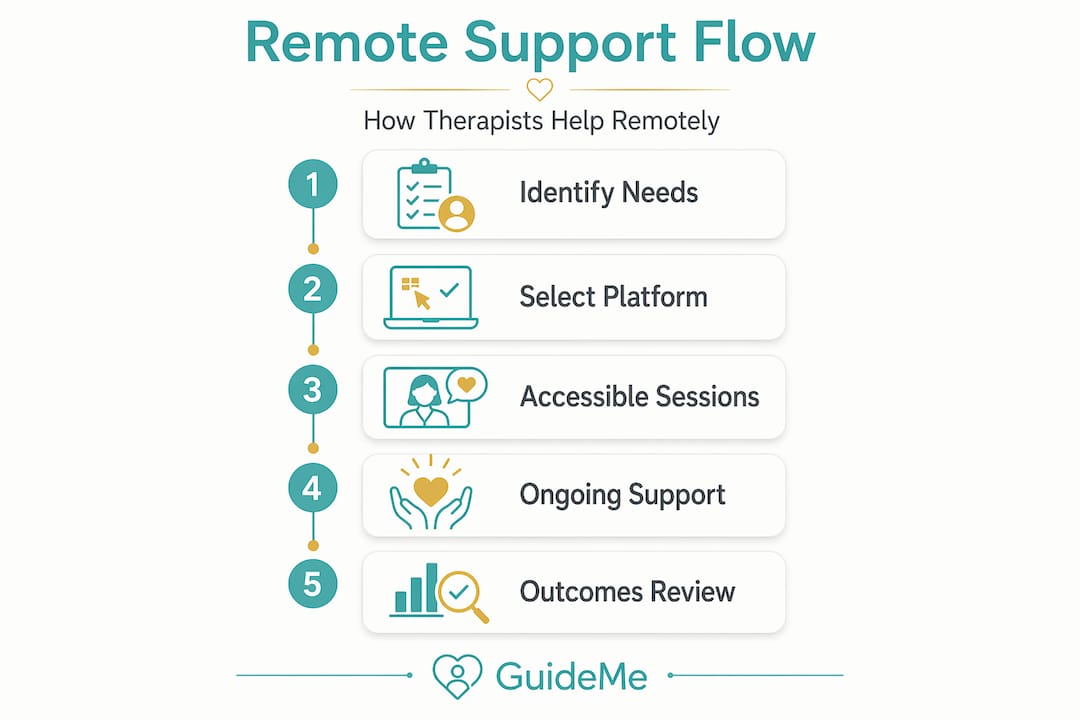
Organisational interventions in telework settings have been shown to improve positive affect and well-being in the short term, which makes the case for proactive HR investment rather than reactive crisis management. The key is to build therapist access into the fabric of your people strategy, not to treat it as an emergency resource.
Here are the most effective practices for HR managers to embed therapist support across remote teams:
-
Audit current provision: Assess what mental health support already exists, how accessible it is for remote employees, and what the actual uptake rates are. Low uptake often signals poor communication or difficult access rather than low need.
-
Partner with a specialist provider: Choose a mental health platform that offers qualified, vetted therapists with experience in workplace and remote-specific issues, not a generic self-help app.
-
Communicate openly and regularly: HR provides access to remote-friendly resources like virtual therapy most effectively when communication is consistent, destigmatising, and clear about how to access support.
-
Train managers as signposters: Equip line managers with the knowledge to recognise distress and direct employees to therapist support early, before difficulties escalate.
-
Measure and adapt: Collect anonymised, aggregate data on uptake and outcomes. Use this to refine your provision and demonstrate return on investment to senior leadership.
-
Build cultural awareness into your therapist roster: Ensure employees from diverse backgrounds can access therapists who understand their cultural context, language preferences, and any relevant lived experience.
-
Integrate well-being into wider HR policy: Link therapist access to performance support, parental leave planning, and return-to-work processes so that mental health is woven into every stage of the employee lifecycle.
Statistic spotlight: Research confirms that structured organisational interventions for remote workers produce measurable improvements in well-being and positive affect in the short term, reinforcing the value of proactive, planned approaches over ad hoc support.
Pro Tip: Explore zero-cost remote support options that can complement your paid provision. Some well-being resources carry no additional cost to employers and can meaningfully extend your mental health offering without stretching budgets.
Embedding HR mental health strategies at this level of intentionality positions organisations to retain talent, reduce absence costs, and genuinely improve the lives of their people.
What most guides miss: The therapist’s evolving role in remote-first cultures
Most discussions about remote mental health support stop at the basics. “Offer an EAP.” “Share mental health resources.” “Encourage open conversations.” These are fine starting points, but they are increasingly insufficient for organisations that are serious about their people.
The real gap is not in awareness. It is in integration. The therapist’s role in a remote-first organisation in 2026 is not simply to provide crisis support when an employee finally breaks down. It is to be part of an ongoing, proactive system that supports performance, resilience, and connection throughout the working year.
Many organisations are still operating with a reactive mindset. They purchase a digital EAP, communicate it once during onboarding, and assume the job is done. Then they are surprised when utilisation remains low and burnout rates stay high. The problem is not the tool. It is the approach.
What the evidence and practitioner experience both show is that the evolving therapist role in remote workplaces demands genuine integration. Therapists who understand remote-specific stressors, who collaborate with HR teams on policy, and who are positioned as ongoing resources rather than emergency services deliver meaningfully better outcomes. This is the shift organisations need to make.
There is also a real risk that digital provision becomes another source of fatigue. A poorly designed platform, a mismatched therapist, or an inaccessible booking system can put employees off seeking help entirely. The quality of the matching process matters enormously. Getting someone to the right therapist, at the right time, with the right approach is where the real value lies.
Hybrid working adds another layer of complexity. Fully remote teams have different dynamics to hybrid teams, and therapists supporting them need to understand both contexts. Organisations that recognise this and build flexible, responsive provision are the ones seeing the strongest outcomes. Those still treating remote therapy as a one-size-fits-all add-on are leaving significant value on the table.
Find the right support for your remote team
Understanding what good therapist support looks like is one thing. Putting it into practice is another. Many HR managers know they need to do more, but the process of finding qualified therapists, assessing fit, and building a structured programme feels overwhelming.
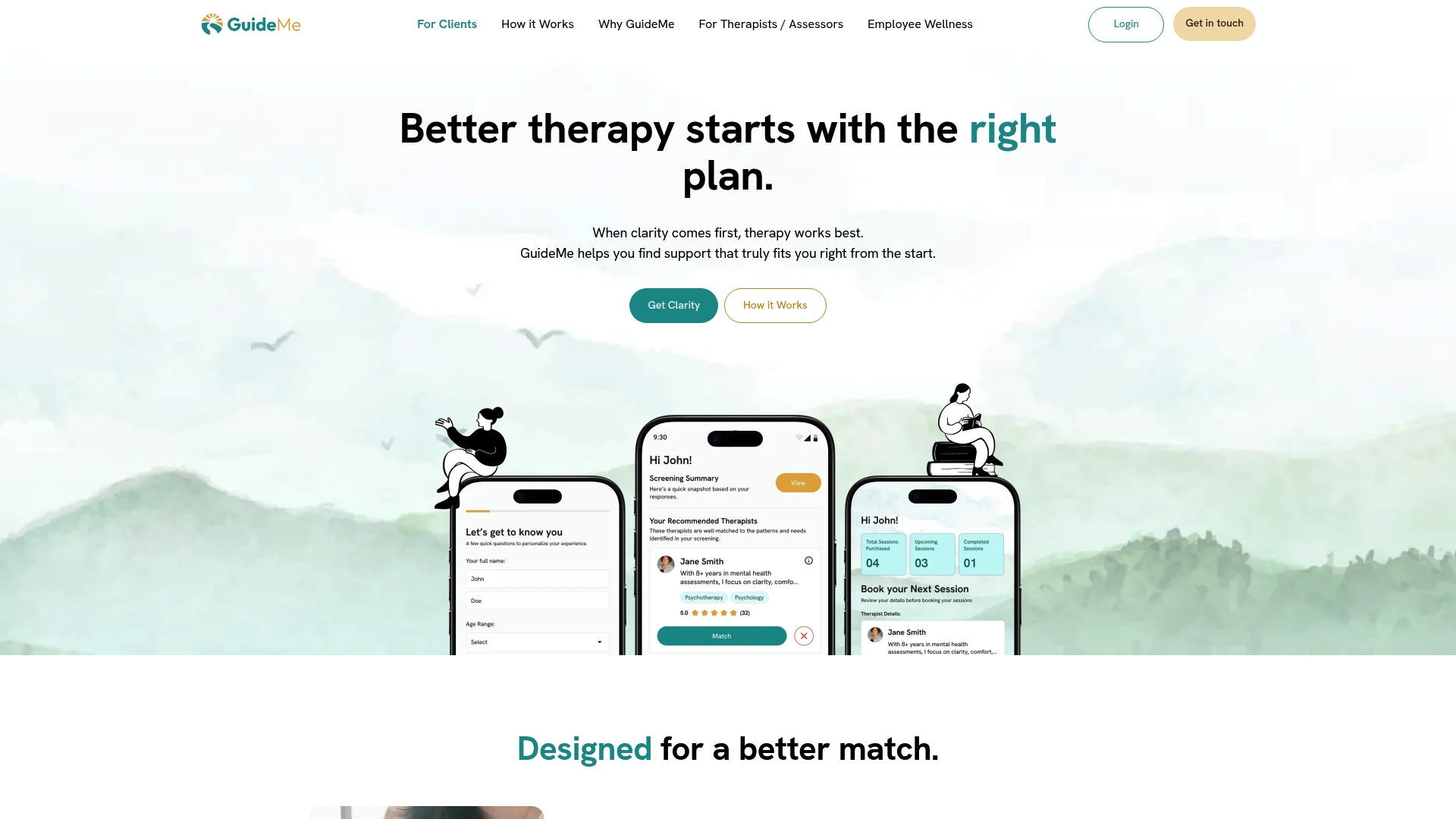
GuideMe makes this process straightforward. Guide Me Therapy is a human-led, AI-powered platform that helps organisations connect their people with the right therapist from the outset, reducing the time, frustration, and uncertainty that so often delay access to support. Through in-depth therapy plans and careful therapist-client matching, GuideMe creates a more supportive and comfortable therapy experience for remote workers. If you are ready to move beyond generic well-being initiatives and build something that genuinely works for your team, GuideMe is the place to start.
Frequently asked questions
Are therapists as effective remotely as in-person for remote workers?
Yes, research shows teletherapy is non-inferior to in-person care for conditions like depression and anxiety, with high patient preference reported in pragmatic trials.
What mental health issues can therapists address for remote teams?
Therapists commonly support remote workers with stress, burnout, isolation, and work-life balance challenges, often using short-term evidence-based methods such as CBT and ACT delivered via video.
Can remote therapy replace all in-person therapy needs?
No, remote therapy is not suitable for every situation. Severe cases and some trauma treatments require in-person sessions, and therapists must adapt their approach for complex presentations.
What specific role should HR play in remote therapist support?
HR should provide access to virtual therapy and remote-friendly resources to combat isolation and promote healthy boundaries, communicating options consistently and reducing stigma around seeking help.
What evidence shows digital EAPs work for mental health?
Studies show digital EAP programmes deliver large effect sizes for depression and anxiety, with a 61.7% remission rate and productivity improvements that exceed standard psychotherapy benchmarks.