

Finding the right therapist can feel overwhelming, especially when you're unsure whether your current match truly supports your needs. Many people struggle with recognising whether their therapist is the right fit, yet therapist-client compatibility influences around 30% of therapy outcomes. This guide offers practical, evidence-backed steps to assess your therapeutic relationship, recognise signs of strong or poor fit, and make informed decisions about continuing or switching therapists to enhance your mental health journey.
Table of Contents
- Key takeaways
- Understanding why therapist fit matters
- Preparing to assess therapist fit: what you need to know
- How to evaluate therapist fit during therapy
- Troubleshooting common challenges and when to switch therapists
- Why choose Guide Me for finding your right therapist
- Frequently asked questions
Key Takeaways
| Point | Details |
|---|---|
| Alliance drives outcomes | The therapeutic alliance explains about thirty per cent of therapy success, making compatibility more predictive of outcomes than the specific techniques used. |
| Assess fit factors | Evaluate how you feel with your therapist, the therapist's approach, and the strength of your alliance. |
| Switch if misfit is evident | If there is clear misfit after a few sessions you can switch therapists to protect your progress. |
| Know learning preferences | Identify whether you prefer directive guidance or client led exploration and match this to the therapist approach. |
Understanding why therapist fit matters
The therapeutic alliance, the collaborative bond between you and your therapist, serves as a major predictor of therapy success. This relationship quality matters far more than many realise. Meta-analyses confirm the alliance accounts for approximately 30% of therapy success, with a robust correlation across over 30,000 patients demonstrating its consistent impact on outcomes. This evidence base establishes fit as a critical factor, outweighing differences between therapeutic techniques in many cases.
Your personal characteristics and your therapist's style both influence alliance quality significantly. Patient attachment patterns, particularly avoidance, negatively impact early alliance formation, whilst therapist attentiveness becomes more influential in later treatment stages. These dynamics mean compatibility involves both what you bring to therapy and how your therapist responds to your needs. When patient and therapist factors align well, engagement deepens and progress accelerates naturally.
Mismatch creates tangible barriers to treatment effectiveness. You might feel misunderstood, struggle to open up, or notice your motivation waning between sessions. These reactions aren't simply about discomfort with therapeutic work itself but signal fundamental incompatibility that can slow or stall your progress. Recognising this distinction helps you assess whether challenges reflect growth or indicate a poor fit requiring action.
Empirical matching systems now leverage this research to pair clients with compatible therapists from the start, reducing trial and error. Understanding why fit matters equips you to evaluate your therapeutic relationship actively rather than assuming any qualified professional will work equally well for your situation.
The quality of the therapeutic relationship explains more outcome variance than the specific techniques therapists employ, making compatibility assessment essential for treatment success.
Preparing to assess therapist fit: what you need to know
Before evaluating your therapist relationship, gather foundational self-knowledge about your preferences and needs. Understanding your attachment style provides valuable insight into how you typically form connections and what makes you feel secure in relationships. If you tend towards anxious attachment, you might need more frequent reassurance and responsiveness. Avoidant patterns might mean you require a therapist who respects boundaries whilst gently encouraging openness. These patterns aren't fixed limitations but awareness helps you recognise what therapeutic approach suits you best.

Familiarise yourself with different therapist communication styles and session structures. Some therapists offer highly directive guidance with specific homework and structured sessions. Others take a more exploratory, client-led approach with open-ended conversations. Neither style is inherently superior, but one likely resonates more with your learning style and comfort level. Consider whether you prefer concrete action plans or reflective exploration, scheduled check-ins or flexible pacing.
Gather baseline expectations before your first session. What do you hope to achieve in therapy? How do you prefer to receive feedback? What past relationships or support systems felt particularly helpful or challenging? These reflections create reference points for evaluating whether your therapist meets your needs. Keep brief notes after each session about your emotional responses, what felt helpful, and any concerns that arose.
Pro Tip: Reflect on a time when you felt truly heard and supported by someone. What specific behaviours or qualities made that person effective? Use these insights to clarify your fit criteria and recognise similar qualities in potential therapists.
- Identify your communication preferences: direct feedback versus gentle suggestions
- Recognise your comfort level with emotional expression and vulnerability
- Clarify whether you prefer structured treatment plans or flexible exploration
- Note any cultural, identity, or experiential factors important for feeling understood
Research shows patient factors like attachment significantly predict alliance quality, making self-awareness a practical tool for compatibility assessment. Empirical matching systems often incorporate these preference factors, but your own preparation enhances any matching process. Understanding rehabilitation therapy workflows can also inform your expectations about treatment structure and progress tracking.
How to evaluate therapist fit during therapy
Active evaluation during sessions provides the clearest picture of therapist compatibility. Track your feelings about specific therapist behaviours rather than vague impressions. Does your therapist demonstrate attentiveness by remembering details from previous sessions? Do they show empathy through validating responses when you share difficult experiences? Notice whether their communication style matches your preferences. Some clients appreciate direct, challenging feedback whilst others need gentler, more exploratory dialogue.
Use structured tools to gauge alliance quality objectively alongside your subjective impressions. The Working Alliance Inventory (WAI) measures three dimensions: agreement on therapy goals, consensus on tasks or methods, and the emotional bond between client and therapist. You can complete brief versions after sessions to track alliance development over time. Declining scores or consistently low ratings in any dimension signal potential fit issues requiring attention.
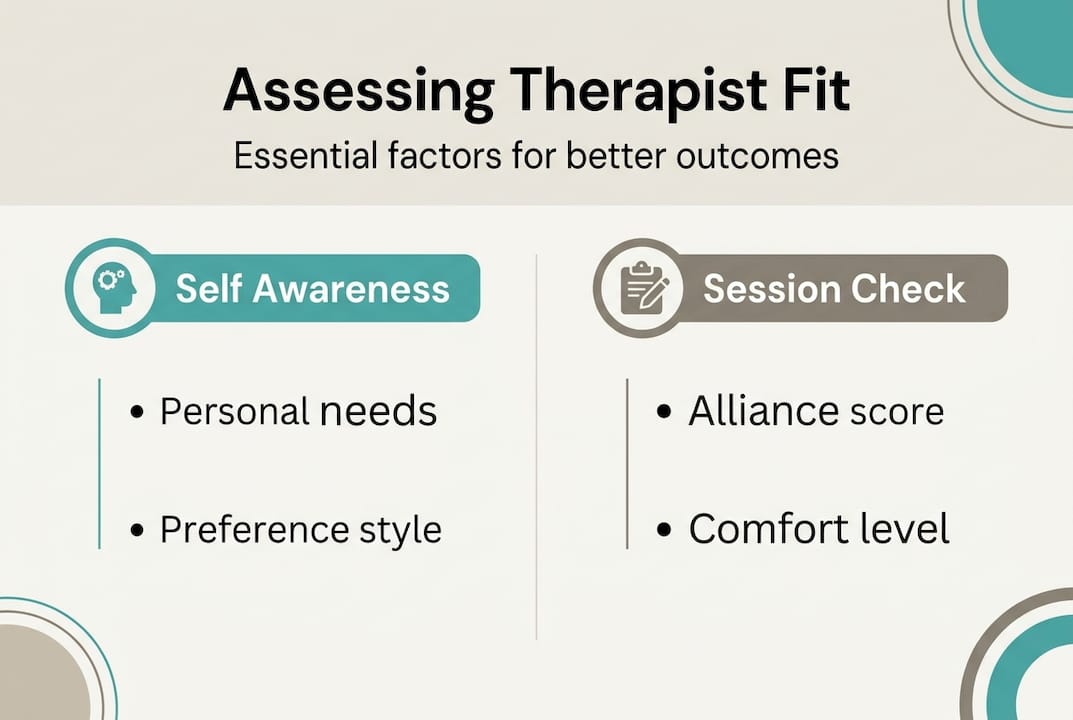
Recognise that initial discomfort doesn't necessarily indicate poor fit. Therapy often involves discussing painful topics or confronting unhelpful patterns, creating natural discomfort that drives growth. Differentiate this productive challenge from persistent feelings of being misunderstood, unsafe, or unmotivated. Strong fit includes feeling challenged yet supported, uncomfortable yet respected. Poor fit manifests as feeling dismissed, judged, or consistently disconnected despite your engagement efforts.
Research indicates switching therapists after 3-4 sessions is acceptable if you experience persistent misfit. This timeframe allows initial adjustment whilst preventing prolonged ineffective treatment. Patient and therapist rating discrepancies are normal, so trust your assessment if the relationship consistently feels wrong despite your therapist's qualifications.
Pro Tip: Keep an open dialogue with your therapist about fit concerns. Many compatibility issues can be addressed through direct communication, and quality therapists welcome feedback about what's working or needs adjustment. If concerns persist despite discussion, they may offer referrals to better-matched colleagues.
- After each session, rate your sense of being understood on a scale of 1-10
- Note whether you feel motivated to engage with therapy work between sessions
- Track whether your therapist remembers important details and builds on previous conversations
- Assess whether you feel safe expressing disagreement or difficult emotions
- Evaluate whether therapy goals align with your priorities and adjust collaboratively
| Fit Indicator | Strong Fit | Moderate Fit | Poor Fit |
|---|---|---|---|
| Feeling understood | Consistently feel heard and validated | Sometimes feel understood, occasional misses | Frequently feel misunderstood or dismissed |
| Session engagement | Look forward to sessions, actively participate | Neutral feelings, variable engagement | Dread sessions, minimal participation |
| Progress perception | Notice meaningful changes in target areas | Some improvement, unclear progress | Stagnant or worsening symptoms |
| Communication ease | Comfortable sharing difficult topics | Hesitant but manage to open up | Consistently guarded, unable to be vulnerable |
| Alliance quality (WAI) | Scores consistently above 5/7 | Scores fluctuate between 4-6/7 | Scores consistently below 4/7 |
Empirical matching systems like TOP Match demonstrate improved outcomes with greater symptom reduction when implemented across multiple clinics. These systems reach tens of thousands of patients by prioritising compatibility factors. Empirical matching systems incorporate similar evidence-based approaches to enhance initial therapist selection, reducing the need for switching.
Troubleshooting common challenges and when to switch therapists
Distinguishing normal therapy discomfort from true misfit requires careful attention to your emotional patterns. Therapeutic work naturally involves challenge, pushing you to examine painful experiences or change entrenched behaviours. This discomfort often signals growth rather than incompatibility. However, persistent negative feelings that don't ease over multiple sessions, feeling consistently unsafe or judged, or noticing your mental health declining rather than improving all suggest misalignment requiring action.
Common compatibility challenges include cultural or identity mismatches where your therapist lacks understanding of your lived experience. A therapist unfamiliar with your cultural background might misinterpret behaviours or miss important context shaping your struggles. Style mismatches occur when your therapist's approach, whether highly directive or entirely non-directive, conflicts with your learning preferences. Attachment-related difficulties might mean you struggle to trust any therapist initially, requiring patience to distinguish attachment patterns from genuine incompatibility.
Keep detailed notes about your emotional responses during and after sessions. Do you feel energised and hopeful, or drained and discouraged? Does your therapist's feedback feel helpful and motivating, or critical and discouraging? Consult trusted friends, family, or patient advocates if you feel uncertain about whether your concerns reflect normal adjustment or signal problems. Outside perspectives can help clarify whether your reactions seem proportionate to the therapeutic relationship.
Research demonstrates fit and relationship quality influence outcomes more than specific techniques, with therapist effects having greater impact than treatment modality differences. This evidence supports switching therapists when alliance quality remains poor despite your engagement efforts. Maintaining your wellbeing and progress justifies therapist changes as a normal part of finding effective support.
Switch after a few sessions if progress stalls and alliance feels consistently weak. Three to four sessions typically provide sufficient information to detect persistent fit issues whilst avoiding premature judgement. Communicate your decision respectfully, as quality therapists understand compatibility varies and often maintain referral networks for better matches. Your therapeutic journey benefits from prioritising fit over loyalty to any individual provider.
- Cultural or identity mismatch: therapist lacks familiarity with your background or experiences
- Communication style incompatibility: preference for directive guidance versus exploratory dialogue
- Emotional attunement gaps: therapist misses or dismisses your emotional cues
- Theoretical approach misalignment: treatment methods don't resonate with your values or goals
- Attachment-related barriers: your patterns make connection difficult regardless of therapist quality
Understanding therapy success factors helps contextualise when switching serves your treatment goals rather than avoiding necessary therapeutic work.
Why choose Guide Me for finding your right therapist
Navigating therapist compatibility challenges becomes significantly easier with evidence-based matching support. Guide Me offers a platform specifically designed to pair you with compatible therapists from the beginning, reducing trial and error whilst improving outcomes. The system integrates proven compatibility factors, including communication preferences, treatment approach alignment, and personal background considerations, to suggest therapists likely to suit your needs.
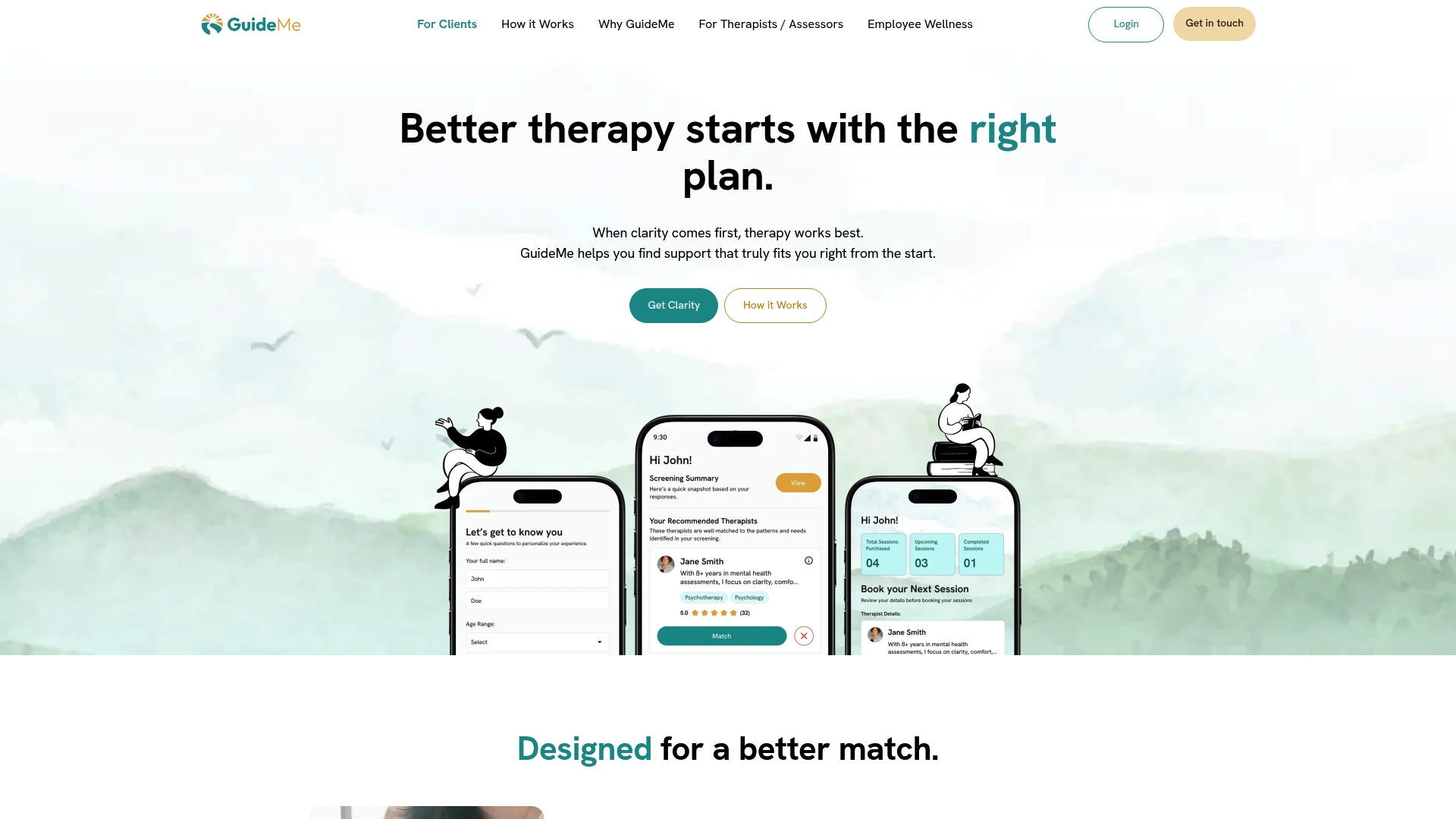
You can explore detailed therapist profiles, filter by specific preferences such as specialisation areas or session formats, and access guidance throughout the matching process. This approach addresses the common frustration of choosing therapists based solely on availability or generic credentials. Guide Me's methodology draws from the same research demonstrating that empirical matching improves symptom reduction compared to random assignment.
Guide Me therapist matching simplifies your journey to better mental health by focusing on compatibility alongside clinical expertise, helping you invest your time and emotional energy in therapeutic relationships positioned for success.
Frequently asked questions
How many sessions should I give to judge therapist fit?
Around three to four sessions usually provide enough insight to detect persistent fit issues whilst allowing for initial adjustment discomfort. Switching therapists after 3-4 sessions is acceptable if misfit becomes clear through consistent negative feelings or lack of progress. Initial sessions involve both parties adjusting to each other's style, so consider trends over multiple appointments rather than single session impressions. If you feel consistently disconnected, unsafe, or unmotivated after this timeframe, trust your assessment and explore other options.
What if I feel uncomfortable but the therapist seems qualified?
Discomfort in therapy can signal either personal growth through challenging work or fundamental misfit between you and your therapist. Qualifications alone don't guarantee compatibility, as therapeutic effectiveness depends heavily on relationship quality. Persistent negative feelings that don't ease over several sessions, feeling judged rather than challenged, or noticing your mental health declining suggest the latter. Communicate your concerns directly to your therapist first, as many issues can be addressed through open dialogue. If discomfort continues hindering your progress despite discussion, consider switching to a better-matched provider regardless of credentials.
Are therapist techniques less important than fit?
Research shows relationship quality and therapist effects explain far more outcome variance than specific therapeutic techniques. Whilst evidence-based treatments matter, the alliance quality between you and your therapist typically influences success more than whether they use cognitive-behavioural, psychodynamic, or other approaches. Choosing a therapist you connect with tends to improve treatment effectiveness across different modalities. This doesn't mean technique is irrelevant, but compatibility should be weighted heavily in your selection process alongside clinical expertise.
Can I assess therapist fit before starting sessions?
You can gather preliminary information through initial consultations, therapist profiles, and intake conversations to predict compatibility, though actual sessions provide the clearest assessment. Many therapists offer brief phone consultations where you can ask about their approach, communication style, and experience with concerns similar to yours. Notice whether their responses resonate with your preferences and whether you feel comfortable asking questions. However, the therapeutic relationship develops through interaction, so even positive initial impressions require verification through several sessions to confirm genuine fit.
What should I do if my therapist dismisses fit concerns?
A quality therapist welcomes feedback about the therapeutic relationship and takes fit concerns seriously, viewing them as important information rather than criticism. If your therapist dismisses your concerns, becomes defensive, or pressures you to continue despite persistent discomfort, this response itself signals poor fit and validates your need to switch. You're entitled to seek a better match without justifying your decision extensively. Therapeutic relationships should feel collaborative, with your input valued as essential to treatment planning and alliance building.