

Selecting a therapist from countless options can feel overwhelming, especially when you're already struggling with mental health challenges. Yet research shows that the therapeutic alliance accounts for approximately 8% of variance in therapy outcomes, making your choice genuinely consequential. This guide provides evidence-based steps to help you identify and verify the right mental health professional for your unique needs, ensuring you start therapy with confidence and clarity from your very first session.
Table of Contents
- Key takeaways
- Why choosing the right therapist matters
- Preparing to select a therapist: what you need to know first
- How to evaluate and choose your therapist step by step
- Monitoring progress and knowing when to change therapist
- How Guide Me can simplify your therapist selection
- Frequently asked questions
Key Takeaways
| Point | Details |
|---|---|
| Therapeutic alliance matters | A strong therapeutic alliance between you and your therapist is linked to better outcomes and should be prioritised alongside qualifications. |
| Verify licences and fit | Check therapists licences through official registers to confirm proper accreditation and assess whether their approach suits your needs. |
| Directories and consultations | Use trusted directories and arrange a short consultation to assess compatibility before committing. |
| Watch red flags | Be alert to signs such as lack of transparency, pressure to move quickly, or poor responsiveness during initial contacts. |
| Cultural fit matters | Ensure the therapist respects your values and communication style and can work with your background. |
Why choosing the right therapist matters
The therapeutic alliance represents the collaborative relationship between you and your therapist, characterised by mutual trust, agreed goals, and emotional connection. Research demonstrates this alliance predicts outcomes better than any specific therapeutic technique or impressive credentials. A therapist's individual skill in building rapport and adapting to your needs often matters more than their theoretical orientation or years of experience.
Common factors shared across therapy approaches, such as empathy, warmth, and genuine care, frequently outweigh the specific methods used. This means two therapists with identical qualifications might produce vastly different results based solely on how well they connect with you personally. When you prioritise personal fit alongside professional competence, you create conditions for meaningful change.
Pro Tip: During initial sessions, notice how you feel after each appointment. A good therapeutic relationship should leave you feeling heard and hopeful, even when discussing difficult topics.
Monitoring your rapport helps you recognise whether therapy is progressing or whether you need to seek a better match:
- You should feel comfortable sharing vulnerable thoughts without judgement
- Your therapist should remember important details about your life and concerns
- Sessions should feel collaborative rather than prescriptive or one-sided
- You should notice gradual shifts in perspective or coping abilities
The quality of the therapeutic relationship matters more than the specific therapy model. When you feel genuinely understood and supported, you're far more likely to engage fully in the therapeutic process and achieve lasting change.
Understanding why therapist fit matters sets the stage to learn how to prepare and identify the right professional for your needs.
Preparing to select a therapist: what you need to know first
Before beginning your search, gather essential information that will streamline your decision-making process. Start by understanding the qualifications that legitimate therapists hold. Licensed professionals typically include clinical psychologists, counselling psychologists, clinical social workers, marriage and family therapists, and licensed professional counsellors. Each credential requires specific training and ongoing supervision.

Verifying licence status through official channels protects you from unqualified practitioners. Most regulatory bodies maintain online databases where you can confirm a therapist's active licence and check for disciplinary actions. This simple step eliminates significant risk and ensures you're working with someone accountable to professional standards.
Therapy specialties vary widely, from trauma-focused approaches to addiction counselling to relationship therapy. Identifying your primary concerns helps narrow your search to professionals with relevant expertise:
- Anxiety and depression specialists often use cognitive behavioural therapy or acceptance and commitment therapy
- Trauma therapists may employ EMDR or trauma-focused cognitive behavioural therapy
- Relationship counsellors typically practise emotionally focused therapy or Gottman method
- Addiction specialists often integrate motivational interviewing with other approaches
Pro Tip: Don't assume a therapist's specialty from their website alone. During consultation calls, ask specifically about their experience treating concerns similar to yours and request approximate numbers of clients they've helped with those issues.
Logistical considerations matter as much as clinical expertise. Assess whether the therapist accepts your insurance or offers sliding scale fees if cost is a concern. Determine their availability and whether it aligns with your schedule. Consider whether you prefer in-person sessions, video therapy, or phone sessions, as different formats suit different needs and lifestyles.
| Preparation factor | What to check | Why it matters |
|---|---|---|
| Licence verification | Active status, no sanctions | Ensures professional legitimacy and accountability |
| Specialty match | Experience with your specific concerns | Increases likelihood of effective treatment |
| Insurance coverage | In-network status, out-of-pocket costs | Determines affordability and sustainability |
| Availability | Session times, cancellation policies | Affects consistency and commitment |
| Format preference | In-person, video, phone options | Impacts comfort and accessibility |
Reputable directories like Psychology Today, GoodTherapy, and therapist search platforms offer filtering options for these criteria. These tools allow you to search by location, specialty, insurance, and therapeutic approach, significantly reducing the overwhelming number of options to a manageable shortlist.
Prepare questions for consultation calls before you begin contacting therapists. Effective questions explore their approach to treatment, typical session structure, how they measure progress, and their experience with clients facing similar challenges. This preparation ensures you gather comparable information across multiple candidates, making your final decision more straightforward.
With a solid foundation, you are ready to execute a step-by-step search to find your ideal therapist.
How to evaluate and choose your therapist step by step
Begin your evaluation by systematically verifying each candidate's credentials through official licensing boards. This non-negotiable first step confirms professional legitimacy and protects you from potential harm. Most licensing boards provide online search tools where you can enter a therapist's name and view their licence status, issue date, and any disciplinary history.
- Search the therapist's name on their state or national licensing board website
- Confirm the licence is active and matches the credentials they advertise
- Check for any sanctions, complaints, or restrictions on their practice
- Verify their speciality certifications through relevant professional organisations
- Cross-reference their stated experience with publicly available professional profiles
Once you've verified credentials, schedule consultation calls with your top candidates. Most therapists offer brief phone consultations to assess mutual fit before committing to paid sessions. These conversations provide invaluable insight into their communication style, theoretical approach, and interpersonal warmth.
During consultation calls, ask targeted questions that reveal how they work:
- What therapeutic approaches do you typically use, and why do you favour them?
- How do you typically structure sessions, and what should I expect in our first meeting?
- How do you measure progress, and how will we know therapy is working?
- What experience do you have treating concerns like mine, and what outcomes have you seen?
- How do you handle situations where a client isn't making progress?
- What are your policies on cancellations, communication between sessions, and emergencies?
Pro Tip: Pay attention not just to what therapists say but how they say it. Do they listen actively to your concerns? Do they answer questions directly without excessive jargon? Do you feel comfortable in the conversation?
Cultural competence deserves specific attention, particularly if you belong to marginalised communities or have cultural considerations affecting your mental health. A culturally competent therapist acknowledges how identity, background, and systemic factors influence wellbeing. They should demonstrate awareness of their own biases and willingness to learn about your unique context.
Assess cultural fit by observing:
- Whether they ask about your cultural background and its relevance to your concerns
- How they discuss identity factors like race, gender, sexuality, or religion
- Their openness to feedback about cultural misunderstandings
- Evidence of ongoing education about diverse populations
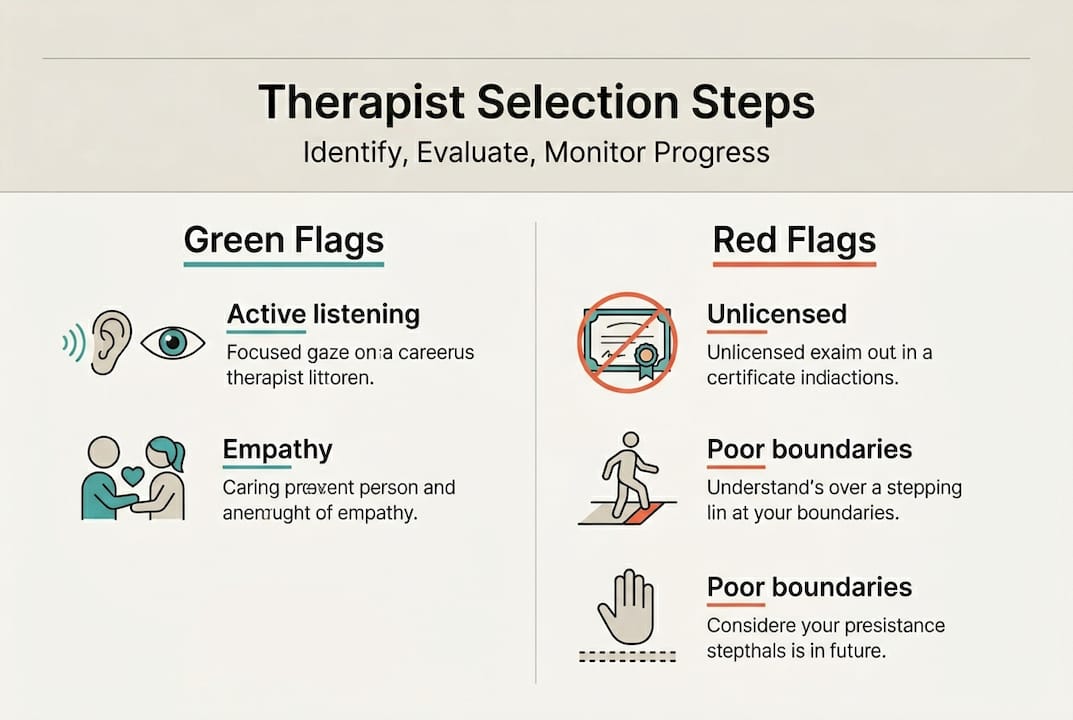
Recognising red flags early saves time and prevents potential harm. Warning signs include unlicensed status, boundary violations like inappropriate physical contact or dual relationships, defensiveness when you raise concerns, and imposing personal beliefs or political ideology onto your treatment.
| Green flags | Red flags |
|---|---|
| Active listening and empathy | Excessive talking about themselves |
| Clear treatment plans with measurable goals | Vague or constantly changing approach |
| Respect for your autonomy and choices | Imposing their values or decisions |
| Professional boundaries maintained | Boundary violations or dual relationships |
| Openness to feedback and collaboration | Defensiveness or dismissing your concerns |
Compare your options systematically using a simple framework. Create a spreadsheet or notes document listing each therapist alongside key factors: credentials, specialty match, consultation call impression, logistical fit, cost, and overall gut feeling. This structured comparison prevents decision paralysis and helps you weigh factors objectively.
After evaluation, you'll need to monitor your experience to ensure ongoing progress and satisfaction.
Monitoring progress and knowing when to change therapist
Therapeutic progress follows predictable patterns that help you assess whether your therapist match is working. Most clients experience initial rapport building during the first three to four sessions, where you establish trust and clarify goals. Noticeable symptom relief typically emerges by sessions eight to twelve for common concerns like anxiety or depression, though complex trauma or personality patterns may require longer timelines.
Track your own progress using concrete markers rather than vague feelings. Notice whether you're implementing coping strategies between sessions, whether distressing symptoms are decreasing in frequency or intensity, and whether you're gaining new insights about your patterns and triggers. Effective therapy should produce tangible changes in your daily functioning, relationships, or emotional regulation.
Pro Tip: Keep a brief therapy journal noting your mood before and after sessions, insights gained, and homework completed. This record provides objective data about whether therapy is helping and reveals patterns you might otherwise miss.
The therapy dropout rate of approximately 19.7% indicates many clients struggle to continue when the therapeutic fit is poor. This statistic isn't a failure but a reminder that finding the right match sometimes requires trying multiple therapists. Staying in ineffective therapy wastes resources and can worsen hopelessness, whilst changing to a better fit often reignites progress.
Signs of poor therapeutic fit include:
- Consistently dreading sessions or feeling worse after appointments
- No noticeable improvement in symptoms after three months of regular sessions
- Feeling misunderstood, judged, or dismissed when sharing concerns
- Your therapist seems distracted, forgetful about your history, or disengaged
- Fundamental disagreements about treatment goals or approaches
- Boundary violations or ethical concerns emerging in the relationship
Changing therapists isn't a sign of failure or disloyalty. It's an informed decision to prioritise your wellbeing and find a professional who can genuinely help you progress. Most therapists understand this reality and will support your transition if you communicate your decision respectfully.
When you decide to change therapists, communicate your decision clearly and request a final session for closure if appropriate. Ask for referrals to other professionals who might be better suited to your needs. Request that your records be transferred to your new therapist to maintain continuity of care. This professional transition honours the work you've done whilst opening space for more effective support.
Consider switching therapists if benchmarks aren't met after a reasonable timeframe, if red flags appear, or if your circumstances change in ways that require different expertise. Trust your instincts about the relationship quality whilst also giving therapy adequate time to work before making changes.
With progress monitoring in place, you feel more confident that your therapist choice is working or know when to seek a better match.
How Guide Me can simplify your therapist selection
Navigating therapist selection alone can feel overwhelming, particularly when you're already managing mental health challenges. Guide Me offers a structured platform that streamlines every step of finding your ideal therapist, from initial assessment through ongoing progress monitoring. The platform combines human expertise with intelligent matching to connect you with professionals who genuinely fit your needs.

Guide Me provides curated therapist directories with verified credentials, specialties, and availability, eliminating hours of research and verification work. The platform's step-by-step guidance walks you through preparation, evaluation, and decision-making, ensuring you consider all relevant factors before committing. Access resources for understanding therapy types, formulating consultation questions, and recognising quality therapeutic relationships.
The service particularly benefits individuals who feel paralysed by options or unsure how to assess therapist quality. By offering expert guidance and reducing decision overwhelm, Guide Me helps you start therapy with confidence, knowing you've made an informed choice based on evidence and personal fit.
Frequently asked questions
How do I verify a therapist's licence and credentials?
Visit your state or national licensing board website and search for the therapist's name in their online database. Confirm the licence is active, matches their advertised credentials, and shows no sanctions or disciplinary actions. This verification confirms professional legitimacy and protects you from unqualified practitioners who might cause harm.
What are common red flags that mean I should leave a therapist?
Watch for unlicensed status or unverifiable credentials, which indicate lack of accountability to professional standards. Boundary violations like inappropriate physical contact, personal relationships outside therapy, or excessive self-disclosure warrant immediate departure. Defensiveness when you provide feedback, imposing their personal ideology or beliefs onto your treatment, and using excessive jargon without explanation also signal poor therapeutic fit.
How long should I give therapy before expecting results?
Expect to build basic rapport and comfort within three to four sessions, where you feel heard and establish collaborative goals. Noticeable symptom improvement typically emerges by sessions eight to twelve for common concerns like anxiety or mild depression. If you're not seeing any progress after three months of consistent weekly sessions, discuss your concerns with your therapist or consider seeking a second opinion.
Should I choose a therapist based on their credentials or personal connection?
Prioritise both factors equally, as credentials ensure professional competence whilst personal connection predicts therapeutic outcomes. Verify the therapist holds appropriate licences and relevant specialty training for your concerns. Then assess whether you feel comfortable, understood, and hopeful after consultation calls and initial sessions. The combination of legitimate credentials and strong therapeutic alliance produces the best results.
Can I switch therapists if the first one doesn't feel right?
Absolutely, and you should switch if the therapeutic relationship isn't working after giving it adequate time. Most therapists understand that fit matters and won't take your decision personally. Communicate your decision respectfully, request a final closure session if appropriate, and ask for referrals to other professionals. Changing therapists demonstrates self-advocacy and commitment to finding effective support rather than settling for inadequate care.