

Finding the right therapist and making therapy work can feel overwhelming. Many people struggle with feeling truly heard or engaged during sessions, which can hinder progress and leave them questioning whether therapy is right for them. The good news is that improving your therapy experience is within your control. By focusing on better communication, building trust, and actively participating in your treatment, you can significantly enhance outcomes and feel more supported throughout your mental health journey. This guide provides actionable steps to help you strengthen the therapeutic relationship, navigate challenges, and personalise your therapy for lasting results.
Table of Contents
- Key Takeaways
- Preparing to improve your therapy experience
- Steps to enhance communication and build trust in therapy
- Navigating challenges and personalising your therapy experience
- Monitoring progress and maintaining a strong therapeutic alliance
- Enhance your therapy journey with GuideMe
- How to improve therapy experience FAQ
Key Takeaways
| Point | Details |
|---|---|
| Therapeutic alliance strength | A strong therapeutic alliance predicts better treatment outcomes and should be actively nurtured throughout therapy. |
| Patient centred communication | Patient centred communication enhances engagement and treatment adherence by validating preferences and fostering collaboration. |
| Active listening builds trust | Practising active listening in sessions demonstrates engagement and deepens the therapeutic bond. |
| Ruptures are growth opportunities | Ruptures in therapy can be used as opportunities to renegotiate understanding and strengthen the alliance. |
| Personalised approaches matter | Tailoring approaches to individual needs supports progress in difficult situations and promotes lasting change. |
Preparing to improve your therapy experience
Before diving into specific techniques, it's essential to grasp what makes therapy effective. The therapeutic alliance is the collaborative bond and trust between you and your therapist. This relationship forms the bedrock of successful treatment. Research shows that alliance strength predicts positive outcomes with a meta-analytic correlation of r=0.278, accounting for about 8% of therapy outcome variance. Whilst this might seem modest, it's a robust predictor across different therapy types and mental health conditions.
Your agency as a client matters enormously. Therapists who accommodate your preferences and involve you in treatment decisions create stronger alliances. This collaborative approach respects your autonomy and recognises you as an active participant rather than a passive recipient of care. When you feel heard and valued, you're more likely to engage fully and see meaningful progress.
Cultivating the right mindset before starting or continuing therapy helps maximise benefits:
- Openness to sharing your thoughts, feelings, and concerns honestly
- Active participation in sessions by asking questions and providing feedback
- Patience with the process, recognising that building trust takes time
- Willingness to discuss what's working and what isn't
These attitudes create fertile ground for a strong therapeutic relationship. They signal to your therapist that you're invested in the work and ready to collaborate. With this foundation in place, you can move forward with concrete strategies to enhance communication and deepen trust.
Steps to enhance communication and build trust in therapy
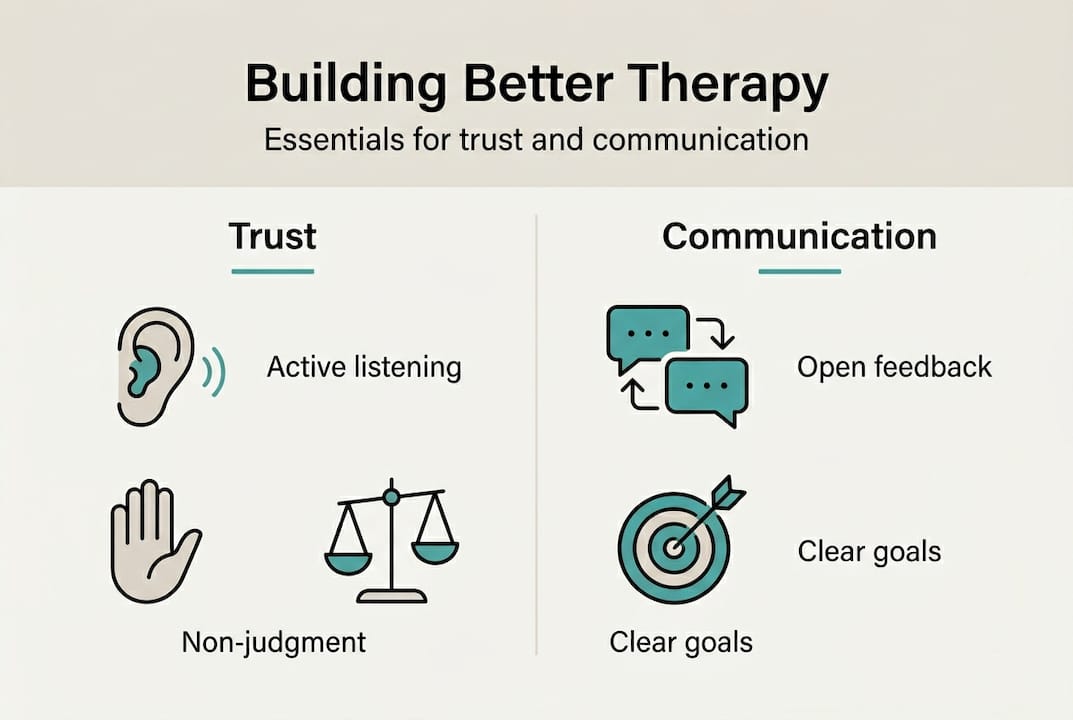
Effective communication transforms therapy from a one-sided conversation into a dynamic partnership. Start by practising active listening during sessions. This means fully concentrating on what your therapist says, reflecting back what you've heard, and asking clarifying questions. When your therapist shares an observation or suggestion, paraphrase it in your own words to confirm understanding. This simple technique prevents misunderstandings and shows you're engaged.
Expressing empathy and validating emotions works both ways in therapy. Whilst therapists are trained to do this for you, acknowledging their efforts and the therapeutic process itself can strengthen your bond. Share when something resonates or helps you feel understood. This positive feedback reinforces what's working and guides your therapist in tailoring their approach to your needs.
Asking open-ended questions encourages deeper dialogue and exploration. Instead of yes or no questions, try phrases like "Can you help me understand why..." or "What would it look like if...". These invitations create space for nuanced discussions and demonstrate your commitment to understanding yourself better. Patient-centred communication enhances alliance, treatment adherence, engagement, and satisfaction across therapeutic contexts.
Here's a practical framework for improving communication:
- Prepare for sessions by jotting down topics or concerns you want to discuss
- Share your preferences about therapy style, pace, and goals early on
- Provide honest feedback about what's helping and what isn't
- Ask for clarification when something feels confusing or unclear
- Express appreciation for progress and insights gained
Being open about your preferences and goals creates alignment from the start. If you prefer structured sessions with clear homework, say so. If you need more time to process emotions before problem-solving, communicate that. Therapists can't read minds, and they genuinely want to know what works best for you. This transparency prevents frustration and ensures therapy matches your learning style and comfort level.
Address misunderstandings promptly and honestly rather than letting them fester. If something your therapist said felt off or hurtful, bring it up in the next session. Most therapists welcome this feedback and view it as an opportunity to repair and strengthen the relationship. Avoiding difficult conversations only creates distance and undermines trust.
Pro Tip: Keep a brief therapy journal between sessions. Note moments of insight, questions that arise, or emotions that surface. This practice helps you arrive prepared and makes sessions more productive by ensuring important topics don't slip through the cracks.
These communication strategies lay the groundwork for navigating tougher moments and personalising your therapy experience to meet complex individual needs.
Navigating challenges and personalising your therapy experience
Even in the strongest therapeutic relationships, ruptures occur. A rupture is any moment of misunderstanding, empathic failure, or disconnection between you and your therapist. These might manifest as feeling dismissed, misunderstood, or frustrated with the direction of therapy. Rather than viewing ruptures as failures, recognise them as inevitable and valuable opportunities for growth.

Repair involves acknowledging mistakes, validating feelings, and realigning goals to enhance alliance. When you notice a rupture, name it. You might say, "I felt hurt when you suggested that approach because it didn't match my experience". This honesty gives your therapist the chance to understand your perspective, apologise if needed, and adjust their approach. The repair process often deepens trust more than if the rupture had never occurred.
Steps to collaboratively repair ruptures with your therapist:
- Identify and articulate what felt wrong or uncomfortable
- Listen to your therapist's perspective without defensiveness
- Work together to understand what happened and why
- Agree on adjustments to prevent similar issues
- Acknowledge the repair and move forward
Therapist flexibility and validation play crucial roles in successful rupture repair. A skilled therapist will validate your feelings even if they didn't intend harm, and they'll adapt their approach based on your feedback. This responsiveness demonstrates genuine care and commitment to your wellbeing. If a therapist becomes defensive or dismissive when you raise concerns, that's a red flag worth noting.
Personalised therapy plans become especially important for individuals with complex needs or those who haven't responded well to standard approaches. Customised plans and adaptive communication improve outcomes in challenging cases by accounting for unique circumstances, trauma histories, cultural backgrounds, and personal preferences. Personalisation might involve integrating multiple therapeutic modalities, adjusting session frequency, or incorporating creative elements like art or movement.
| Personalisation element | How it helps |
|---|---|
| Flexible session structure | Accommodates varying energy levels and processing speeds |
| Cultural adaptation | Respects values, beliefs, and communication styles |
| Trauma-informed pacing | Prevents retraumatisation through careful titration |
| Multi-modal integration | Addresses different aspects of wellbeing holistically |
Pro Tip: If standard talk therapy isn't resonating, discuss alternative or complementary approaches with your therapist. Options like EMDR, somatic experiencing, or narrative therapy might suit your needs better. A good therapist will either adapt their practice or help you find someone with the right specialisation.
Navigating challenges and personalising your approach ensures therapy remains relevant and effective as your needs evolve. This adaptability supports long-term progress and prevents stagnation.
Monitoring progress and maintaining a strong therapeutic alliance
Tracking your therapy progress helps you stay motivated and ensures you're moving towards your goals. The relationship between alliance and symptom improvement is bidirectional. Stronger alliance predicts symptom relief, and improvement strengthens alliance in a positive cycle, particularly robust in major depressive disorder. This means that as you feel better, your bond with your therapist deepens, which in turn supports further healing.
Self-assessing progress doesn't require formal measures, though standardised questionnaires can help. Pay attention to changes in your daily functioning, emotional regulation, relationship quality, and overall life satisfaction. Are you handling stress differently? Do conflicts feel more manageable? Are you sleeping better or engaging more with activities you enjoy? These concrete indicators reveal whether therapy is making a real difference.
Sharing feedback with your therapist about progress keeps treatment on track. Discuss what's improving and what still feels stuck. This dialogue allows for goal adjustment and ensures therapy remains focused on what matters most to you. Regular check-ins prevent drift and maintain momentum even when progress feels slow.
Signs of a strong therapeutic alliance versus warning signs:
| Strong alliance indicators | Warning signs |
|---|---|
| Feeling safe to share vulnerable thoughts | Consistently feeling judged or misunderstood |
| Therapist remembers details about your life | Therapist seems distracted or disengaged |
| Collaborative goal-setting and adjustments | Rigid adherence to one approach despite lack of progress |
| Open discussion of what's working and what isn't | Defensiveness when you raise concerns |
| Sense of being genuinely cared for | Feeling like just another appointment |
If warning signs persist despite your efforts to address them, it may be time to consider finding a different therapist. This isn't failure. It's recognising that fit matters enormously in therapy, and sometimes the right match takes time to find.
Encourage regular review and adjustment of goals with your therapist every few months. Life circumstances change, symptoms evolve, and new challenges emerge. Your therapy should adapt accordingly. Setting aside time specifically to evaluate progress and recalibrate ensures treatment remains dynamic and responsive rather than following a predetermined script that no longer serves you.
Maintaining a strong alliance requires ongoing effort from both parties, but the investment pays dividends in better outcomes and a more satisfying therapy experience. When you feel supported, understood, and actively involved in your treatment, healing becomes not just possible but probable.
Enhance your therapy journey with GuideMe
Finding the right therapist who truly understands your needs can transform your mental health journey. GuideMe is a therapy navigation platform designed to help you better understand your mental health with an in-depth therapy plan and get matched with the right therapist from the beginning. This human-led, AI-powered approach creates a more supportive and comfortable therapy experience by considering your unique circumstances, preferences, and goals.
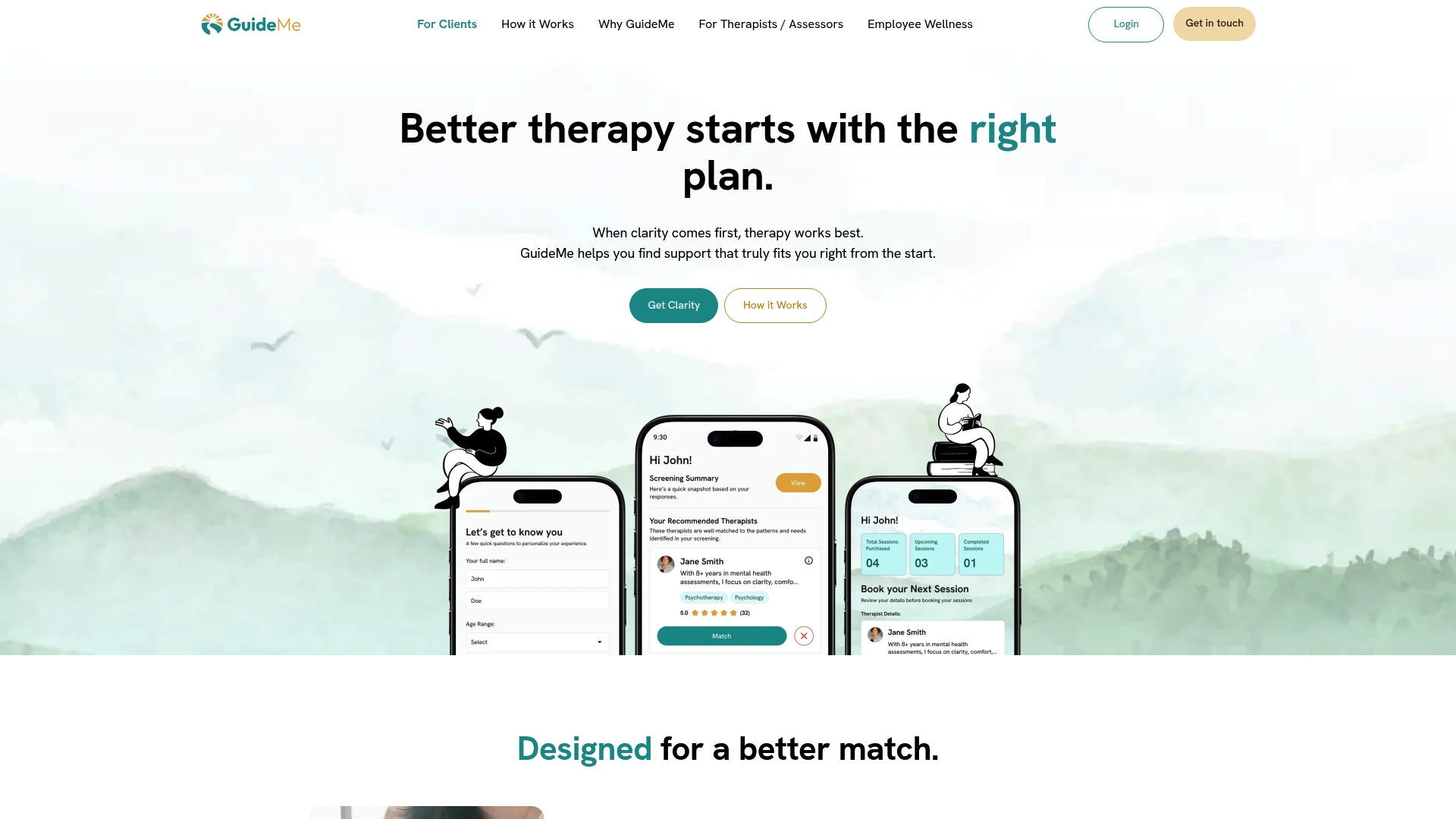
GuideMe connects you with qualified therapists who specialise in the areas most relevant to your situation. The platform supports personalised therapy matching and provides communication guidance to help you build strong therapeutic relationships. By facilitating feedback and adaptation throughout your treatment, GuideMe ensures your therapy evolves with your needs, maximising the benefits of every session and helping you achieve lasting positive change.
How to improve therapy experience FAQ
What is therapeutic alliance and why is it important?
Therapeutic alliance is the collaborative bond, trust, and mutual understanding between you and your therapist. It's important because research consistently shows that stronger alliances predict better therapy outcomes across different treatment types and mental health conditions. A solid alliance creates the foundation for honest communication, effective treatment, and lasting change.
How can I talk to my therapist about dissatisfaction?
Be direct and specific about what isn't working for you. Use "I" statements to express your feelings without blame, such as "I feel like we're not addressing what matters most to me". Most therapists appreciate this feedback and will work with you to adjust the approach. If they become defensive, that's valuable information about whether they're the right fit.
What if therapy sessions feel challenging or uncomfortable?
Some discomfort is normal and even productive in therapy, especially when exploring difficult emotions or experiences. However, you should still feel fundamentally safe and supported. Distinguish between productive discomfort that leads to growth and harmful discomfort that signals a poor fit or inappropriate approach. Discuss these feelings with your therapist to determine which you're experiencing.
How do I know if therapy is working for me?
Look for concrete changes in your daily life, such as improved mood, better relationships, increased ability to handle stress, or progress towards specific goals you set. Therapy doesn't always feel good in the moment, but you should notice positive shifts over time. If you've been in therapy for several months without any improvement, discuss this openly with your therapist.
Can I switch therapists if it doesn't feel right?
Absolutely. Therapeutic fit is crucial for success, and not every therapist will be right for every person. If you've genuinely tried to address concerns and the relationship still isn't working, seeking a different therapist is a healthy choice. Many people try several therapists before finding the right match, and this persistence often leads to much better outcomes.