

Starting therapy for the first time can feel overwhelming. You might not know where to begin, which type of therapist to look for, or even whether therapy is the right choice for you. The good news is that a clear, practical process exists to help you move forward with confidence. This guide walks you through every stage, from understanding your needs and preparing the right questions, to finding a suitable therapist and measuring your progress. With the right information, taking that first step becomes far less daunting.
Table of Contents
- Understanding if therapy is right for you
- Preparing to start: what you need to know before choosing a therapist
- How to find a therapist: step-by-step process
- What to expect in your first session and beyond
- Measuring progress and deciding if therapy is working
- Next steps: start your therapy journey with confidence
- Frequently asked questions
Key Takeaways
| Point | Details |
|---|---|
| Therapy benefits most | Research shows up to 80 percent of people see real improvement from therapy. |
| Fit matters most | Choose a therapist you connect with—rapport is as important as credentials. |
| Preparation helps success | Knowing your goals and the basics about therapy makes first sessions smoother. |
| Progress is individual | Expect to review your goals regularly and adjust your approach as you go. |
Understanding if therapy is right for you
Before searching for a therapist, it helps to reflect on why you want support. People seek therapy for many different reasons, and there is no single threshold you need to meet before it becomes appropriate. If something is affecting your daily life, your relationships, or your sense of wellbeing, therapy is worth considering.
Common reasons people seek therapy include:
- Persistent anxiety, worry, or panic
- Low mood or depression
- Relationship difficulties or communication problems
- Grief, loss, or major life changes
- Trauma or past experiences affecting the present
- Stress related to work, family, or finances
- A general sense of feeling stuck or unfulfilled
Therapy has a strong evidence base. Research shows that 75 to 80% of people who attend therapy experience significant improvement. That is a meaningful figure, and it reflects decades of clinical research across a wide range of conditions and approaches.
"You do not need to be in crisis to benefit from therapy. Many people start simply because they want to understand themselves better or build healthier habits."
It is also completely normal to feel nervous or uncertain at the start. Those feelings do not mean therapy is wrong for you. They usually mean you care about getting it right, which is a good sign. When you are choosing a therapist, having clarity about your reasons for seeking help gives you a stronger foundation to work from.
Preparing to start: what you need to know before choosing a therapist
Once you have decided therapy could help, the next step is getting informed. There are many different therapy approaches, and understanding the basics helps you make clearer choices.
Here is an overview of the most common therapy types, what they are typically used for, and the credentials you might expect:
| Therapy type | What it treats | Typical credentials |
|---|---|---|
| Cognitive behavioural therapy (CBT) | Anxiety, depression, OCD, phobias | LPC, LCSW, PhD, PsyD |
| Dialectical behaviour therapy (DBT) | Emotional dysregulation, borderline personality disorder | LPC, LCSW, PhD |
| Eye movement desensitisation and reprocessing (EMDR) | Trauma, PTSD | Certified EMDR therapist |
| Person-centred therapy | General wellbeing, self-esteem, life transitions | LPC, LCSW, MFT |
| Psychodynamic therapy | Long-standing patterns, relationship issues | PhD, PsyD, LCSW |
These structured therapy approaches are designed to address specific issues, and many therapists are trained in more than one. The types of therapy and credentials listed above are a starting point, not a rigid checklist.
Credential abbreviations can feel confusing at first. LPC stands for Licensed Professional Counsellor. LCSW means Licensed Clinical Social Worker. PhD and PsyD are doctoral-level qualifications in psychology. All of these professionals are trained to provide therapy, though their backgrounds and specialisms differ.
Pro Tip: Do not get too caught up in letters after a therapist's name. Research consistently shows that the quality of the relationship between you and your therapist matters more than their specific qualification. Focus on finding someone whose therapy approaches align with your needs and with whom you feel comfortable.
Before you start searching, write down your goals. What do you want to feel or do differently? What has been getting in the way? Having this clarity makes it easier to assess whether a particular therapist is a good fit.

How to find a therapist: step-by-step process
With some background knowledge in place, you are ready to start the practical search. Here is a straightforward process to follow:
- Search accredited directories. Use reputable sources such as professional association directories or platforms that verify therapist credentials. Filter by location, speciality, and availability.
- Screen for practical factors. Consider cost, whether the therapist accepts your insurance or offers a sliding scale fee, and whether sessions are available at times that suit you.
- Check their specialities. Look for therapists who have experience with the issues you want to address. A therapist who specialises in trauma will approach sessions differently from one who focuses on relationship counselling.
- Book a consultation. Many therapists offer a short introductory call. Use this to ask questions, get a sense of their style, and assess whether you feel at ease.
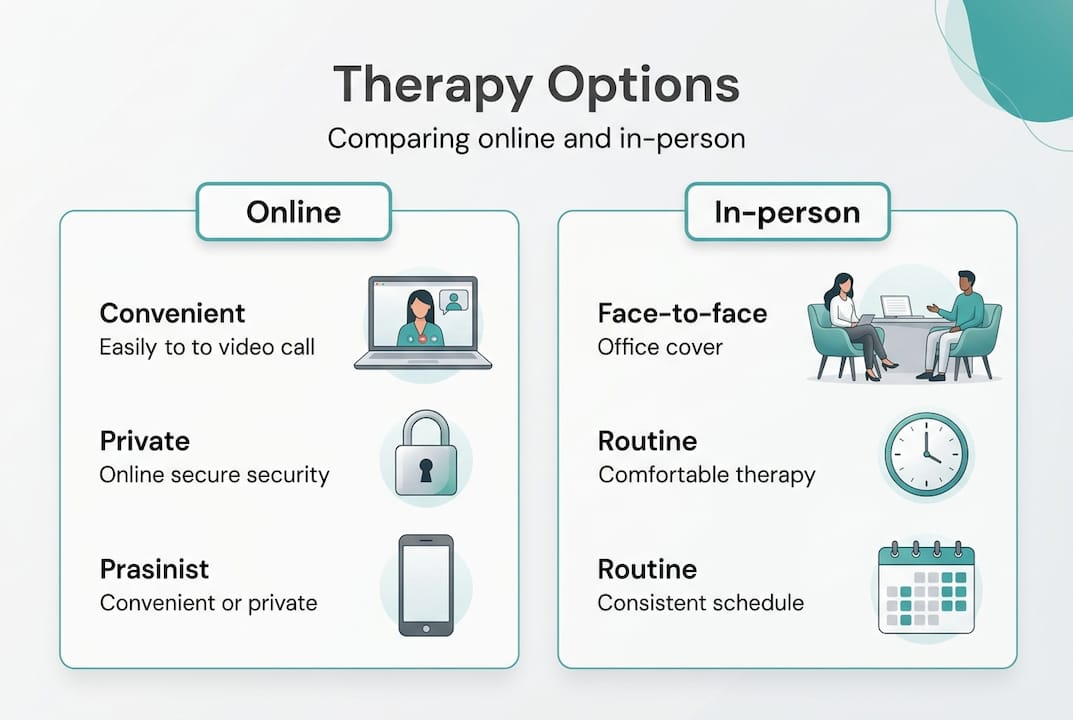
When finding a therapist, one of the key decisions is whether to see someone in person or online. Both options are valid, and the right choice depends on your circumstances.
| Factor | Online therapy | In-person therapy |
|---|---|---|
| Convenience | High, accessible from home | Requires travel |
| Cost | Often lower | Can be higher |
| Rapport building | Possible, though some find it slower | Many find it easier face-to-face |
| Availability | Wider choice of therapists | Limited to local area |
| Suitability | Good for most concerns | May be preferred for complex trauma |
For people managing therapy for mental health concerns such as anxiety or low mood, online therapy has been shown to be just as effective as face-to-face sessions for the majority of people.
Pro Tip: Try to speak with two or three therapists before committing. Pay attention to how you feel during the conversation. Do you feel heard? Do you feel judged? Your instinct about rapport is a reliable guide.
What to expect in your first session and beyond
Knowing what happens in a first session can ease a lot of the anxiety around starting. Most first sessions follow a similar structure, regardless of the therapist's approach.
A typical first session will include:
- Introductions and context. Your therapist will explain how they work, what confidentiality means in practice, and what you can expect from the process.
- Your history and current concerns. They will ask about what has brought you to therapy, your background, and any relevant history. You do not need to share everything at once.
- Goal setting. Together, you will begin to identify what you want to work towards. This does not need to be perfectly defined at this stage.
- Practical arrangements. Session frequency, duration, and any paperwork will be confirmed.
Most first sessions last 45 to 60 minutes and are structured but welcoming. You are not expected to have all the answers.
"Feeling nervous before your first session is completely normal. Most people find that the session itself feels far more manageable than the anticipation."
Knowing what to expect in therapy from the outset helps you arrive prepared rather than anxious. Bring a few notes if it helps, including your main concerns, any questions you have, and what you are hoping to achieve.
Measuring progress and deciding if therapy is working
Therapy is not always a straight line. Progress can feel gradual, and it is not always obvious at first. Knowing how to assess whether therapy is working helps you stay engaged and make informed decisions.
Signs that therapy is having a positive effect include:
- Feeling more able to manage difficult emotions
- Noticing changes in your day-to-day behaviour or reactions
- Gaining insight into patterns that were previously unclear
- Feeling more confident or less overwhelmed in situations that used to feel unmanageable
- A general sense of moving forward, even if slowly
Research consistently shows that the therapeutic alliance, meaning the quality of the relationship between you and your therapist, is one of the strongest predictors of positive outcomes. This matters more than the specific method used. Studies also show that CBT, DBT, and EMDR each have strong effectiveness rates for the conditions they target, but the relationship remains central.
If therapy does not feel right, here are some signs it may be time to reassess:
- You consistently feel worse after sessions with no sense of progress
- You do not feel safe or respected in the therapeutic relationship
- Your therapist does not seem to understand your concerns or cultural background
- You have been attending for several months with no noticeable change
Switching therapists is not a failure. It is a practical step towards finding the right support. When evaluating therapy progress, focus on the overall direction of change rather than expecting dramatic shifts after every session.
| What to track | Why it matters |
|---|---|
| Symptom frequency and intensity | Helps identify gradual improvement |
| Goal progress | Keeps sessions focused and purposeful |
| Day-to-day functioning | Reflects real-world impact of therapy |
| Relationship with your therapist | Predicts long-term outcomes |
Next steps: start your therapy journey with confidence
You now have a clear picture of how to approach therapy, from understanding your needs to finding the right person and tracking your progress. Taking the first step is often the hardest part, but you do not have to navigate it alone.
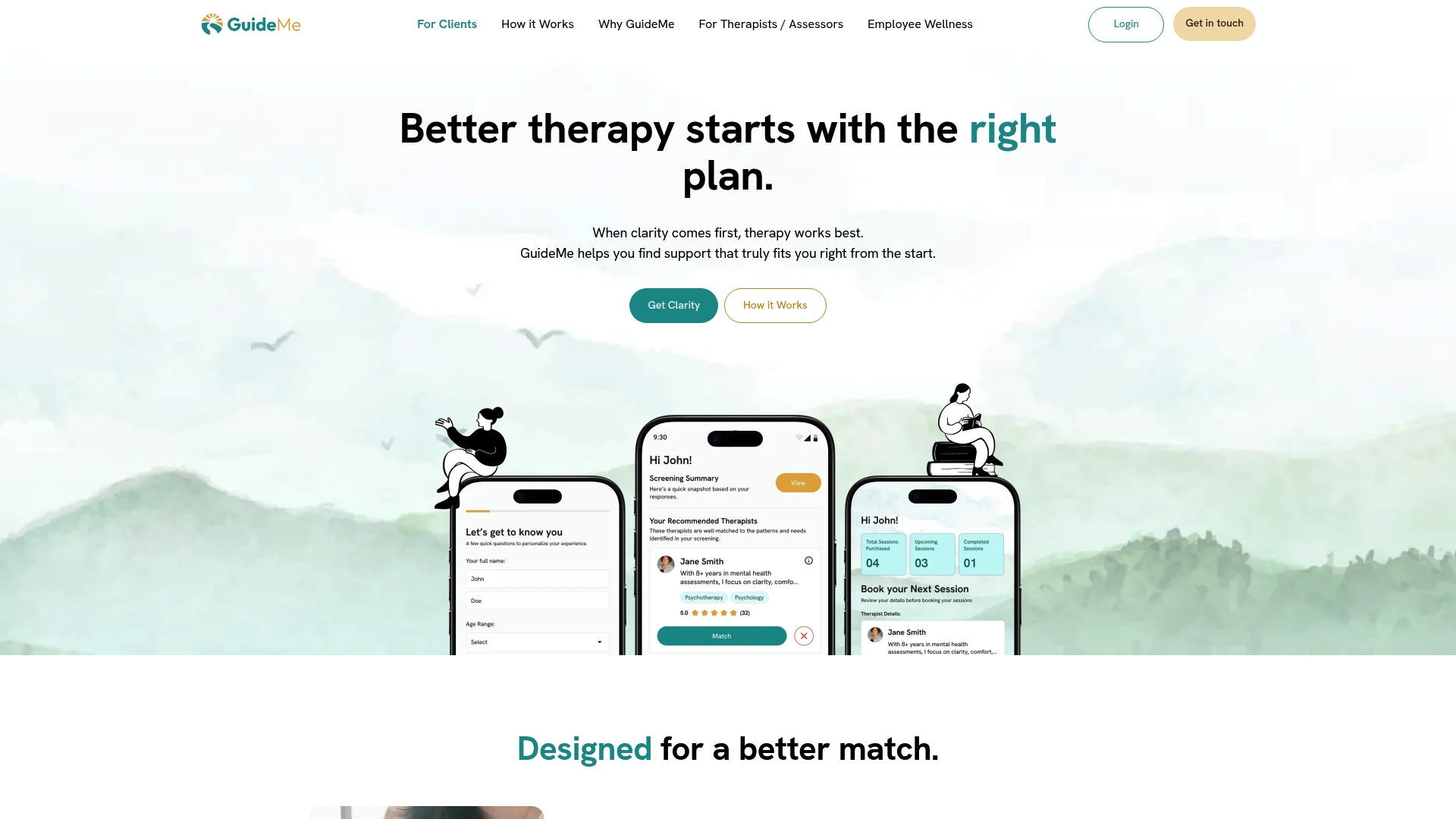
GuideMe is a therapy navigation platform that combines human expertise with AI-powered matching to help you find your therapist from the very beginning. Rather than leaving you to search through endless directories, GuideMe creates an in-depth therapy plan based on your needs and matches you with a therapist who is genuinely suited to you. It is designed to make the process feel less overwhelming and more supported, so you can focus on what matters most: getting the right help.
Frequently asked questions
How long does it usually take to see results from therapy?
Many people notice some improvement within 4 to 6 sessions, though this varies depending on the individual and the approach being used. Some people benefit more quickly, while others working through longer-standing issues may take more time.
What if I do not feel comfortable with my therapist?
It is entirely normal to try a few therapists before finding the right fit. The therapeutic alliance is one of the most important factors in therapy outcomes, so prioritising rapport and switching if needed is a sensible and supported choice.
Is online therapy as effective as in-person therapy?
For most people and most concerns, online and in-person therapy deliver comparable results. The most important factor remains the quality of the relationship with your therapist, regardless of the format.
How do I prepare for my first therapy session?
Write down your main goals, any symptoms you have been experiencing, and questions you want to ask. Preparing for your first session in this way helps you make the most of the time and feel more settled when you arrive.