

TL;DR:
- Emotional distress lasting over two weeks or impairing daily life indicates a need for therapy.
- Common signs include persistent sadness, withdrawal, unhealthy coping strategies, and relationship issues.
- Validating your feelings and trusting your instincts are key to seeking timely professional support.
Knowing when to seek therapy is not always straightforward. Many people dismiss their feelings, telling themselves they are not struggling enough to warrant professional support. Yet emotional distress that lingers for more than a few days can be a genuine signal worth taking seriously, according to guidance from SAMHSA. This article sets out a clear, evidence-backed framework to help you recognise the signs that therapy could benefit you. Whether you are dealing with persistent sadness, relationship difficulties, or simply feeling lost, you deserve clarity and support.
Table of Contents
- How to distinguish normal stress from signs you need therapy
- Five common signs you might benefit from therapy
- Comparing personal experiences and professional guidelines
- Barriers to seeking therapy and why validation matters
- Why the biggest sign is trusting yourself
- Finding the right support with GuideMe
- Frequently asked questions
Key Takeaways
| Point | Details |
|---|---|
| Persistent distress | Emotional symptoms lasting more than two weeks should be taken seriously. |
| Functional impact | When emotions interfere with daily life, therapy can help restore balance. |
| No crisis required | Therapy is for anyone facing distress or self-doubt—not just emergencies. |
| Barriers are common | Stigma and scepticism often block action, but seeking help shows strength. |
| Self-trust matters | Listening to your own concerns is the most important sign to act. |
How to distinguish normal stress from signs you need therapy
Everyone experiences stress. Deadlines, arguments, and difficult news are part of life. The key question is: how long does the distress last, and how much does it affect your daily functioning?
Psychologists draw a clear line between normal emotional fluctuations and conditions that warrant professional attention. Normal stress is temporary; distress that persists beyond two weeks or begins to impair your ability to work, maintain relationships, or care for yourself is a different matter entirely. That distinction matters, because many people wait far too long before reaching out for help.
Here are the core criteria that suggest your stress may have crossed into territory where therapy could genuinely help:
- Persistent sadness or low mood lasting more than a couple of weeks
- Anxiety or worry that feels uncontrollable and intrudes on daily tasks
- Hopelessness or a sense that things will not improve
- Irritability or anger that feels disproportionate to the situation
- Difficulty concentrating or making decisions at work or home
- Physical symptoms such as disrupted sleep, fatigue, or unexplained aches
One of the most well-researched therapeutic approaches for these experiences is cognitive behavioural therapy (CBT). CBT is the most researched treatment for anxiety and depression, with strong evidence supporting its effectiveness across a wide range of presentations.
"If you are questioning whether your feelings are 'bad enough' for therapy, that question itself is worth exploring with a professional."
Many people avoid seeking help because of barriers to seeking therapy such as self-doubt or the belief that their problems are not serious enough. In reality, curiosity about your own mental health is a perfectly valid reason to start the conversation.
Pro Tip: You do not need to be in crisis to benefit from therapy. If you are noticing any of the signs above, even mildly, it is worth speaking to a professional.
Five common signs you might benefit from therapy
With the criteria now clearer, it helps to see how these patterns show up in real life. The following five signs are among the most commonly reported by people who later found therapy genuinely helpful.
-
Overwhelming emotions that disrupt daily life. When feelings of sadness, fear, or anger become so intense that you struggle to get through the day, this is a significant signal. Persistent emotional distress, including constant worry, hopelessness, or irritability that impacts your functioning, is a recognised sign that professional support may be needed.
-
Withdrawal from people and activities you once enjoyed. Pulling away from friends, family, or hobbies you used to love is a common early warning sign. It often happens gradually, making it easy to overlook until the isolation becomes significant.
-
Relying on unhealthy coping strategies. Using alcohol, food, overworking, or other avoidance behaviours to manage difficult emotions is a sign that your current coping tools are not enough. Therapy helps you build healthier, more sustainable strategies.
-
Relationship difficulties that keep repeating. If you notice the same conflicts, communication breakdowns, or feelings of disconnection arising across different relationships, therapy can help you understand and shift those patterns.
-
Symptoms lasting longer than a few days. Symptoms persisting beyond two weeks and changing your ability to function are a clear indicator that professional guidance is advisable. This applies to mood, sleep, appetite, concentration, and energy levels.
If you recognise yourself in any of these descriptions, seeking help for emotional distress is not an overreaction. It is a sensible, informed choice.

Pro Tip: Therapy is not only for crisis situations. Many people use it to build self-awareness, improve relationships, and grow personally, well before things reach a breaking point.
Comparing personal experiences and professional guidelines
It can be useful to see how your own experience maps onto what mental health professionals actually recommend. The table below compares common self-reported experiences with formal psychological guidelines.
| Personal experience | Professional guideline |
|---|---|
| Feeling sad or anxious for a few days | Normal fluctuation; monitor and practise self-care |
| Low mood or worry lasting two or more weeks | Seek professional assessment |
| Difficulty sleeping occasionally | Common stress response; usually temporary |
| Persistent sleep disruption affecting function | Warrants professional attention |
| Occasional irritability or tension | Expected human experience |
| Frequent anger or hopelessness affecting relationships | Meets threshold for therapeutic support |
| Feeling overwhelmed during a specific event | Situational; likely to resolve |
| Ongoing overwhelm with no clear cause | Consider therapy promptly |
Professional guidelines consistently distinguish normal fluctuations lasting days from conditions that impair function and persist over time. The two-week mark is frequently cited as a meaningful threshold, though this is a guideline rather than a rigid rule.
What the table makes clear is that there is often a significant gap between when people feel they should seek help and when guidelines suggest they should. Most people wait considerably longer than necessary. If your experience aligns with the right-hand column in even one or two rows, that is meaningful information.
The goal here is not to diagnose yourself, but to give you expert mental health guidance that helps you make a clearer, more confident decision about your next step.
Barriers to seeking therapy and why validation matters
Even when the signs are clear, many people still hesitate. Understanding why can help you move past the hesitation.
Common barriers include:
- Stigma: Worrying about what others will think if they find out you are seeing a therapist
- Scepticism: Doubting whether therapy actually works or whether it is right for you
- Fear of judgement: Feeling that a therapist will think less of you for your thoughts or feelings
- Cost and access: Uncertainty about affordability or how to find the right professional
- Minimising your own experience: Telling yourself your problems are not serious enough to deserve support
Barriers like stigma and scepticism are extremely common, and they prevent many people from accessing care that could genuinely improve their lives. Recognising these barriers as normal, rather than as personal failings, is an important first step.
Validation plays a powerful role here. When you receive confirmation that your feelings are real and that seeking help is appropriate, it becomes easier to take action. Without that validation, self-doubt can keep you stuck for months or even years.
"Seeking help is not a sign of weakness. It is one of the most courageous and self-aware choices a person can make."
Thinking of therapy as strength rather than a last resort changes the entire experience. People who seek support early tend to recover more quickly and develop stronger long-term coping skills. Waiting until you are at breaking point is not a requirement, and it is rarely helpful.
Why the biggest sign is trusting yourself
Conventional wisdom tends to focus on reaching a certain threshold before therapy is considered worthwhile. We hear phrases like "it is not that bad yet" or "everyone feels like this." But this framing is counterproductive, and we think it is worth challenging directly.
The truth is, self-doubt or curiosity about your own mental health is itself a valid reason to explore therapy. You do not need to wait for a crisis. You do not need to meet a specific checklist of symptoms. If something feels off, that feeling matters.
Early action is consistently more effective than delayed action. People who seek support before reaching crisis point often need fewer sessions, experience less disruption to their lives, and build resilience more quickly. Waiting is not patience; it is often avoidance dressed up as practicality.
Trust your instincts. If you are reading this article and recognising yourself in any part of it, that recognition is enough to take the next step.
Finding the right support with GuideMe
If any part of this article has resonated with you, the most important thing you can do now is take one small step forward. You do not need to have all the answers before reaching out.
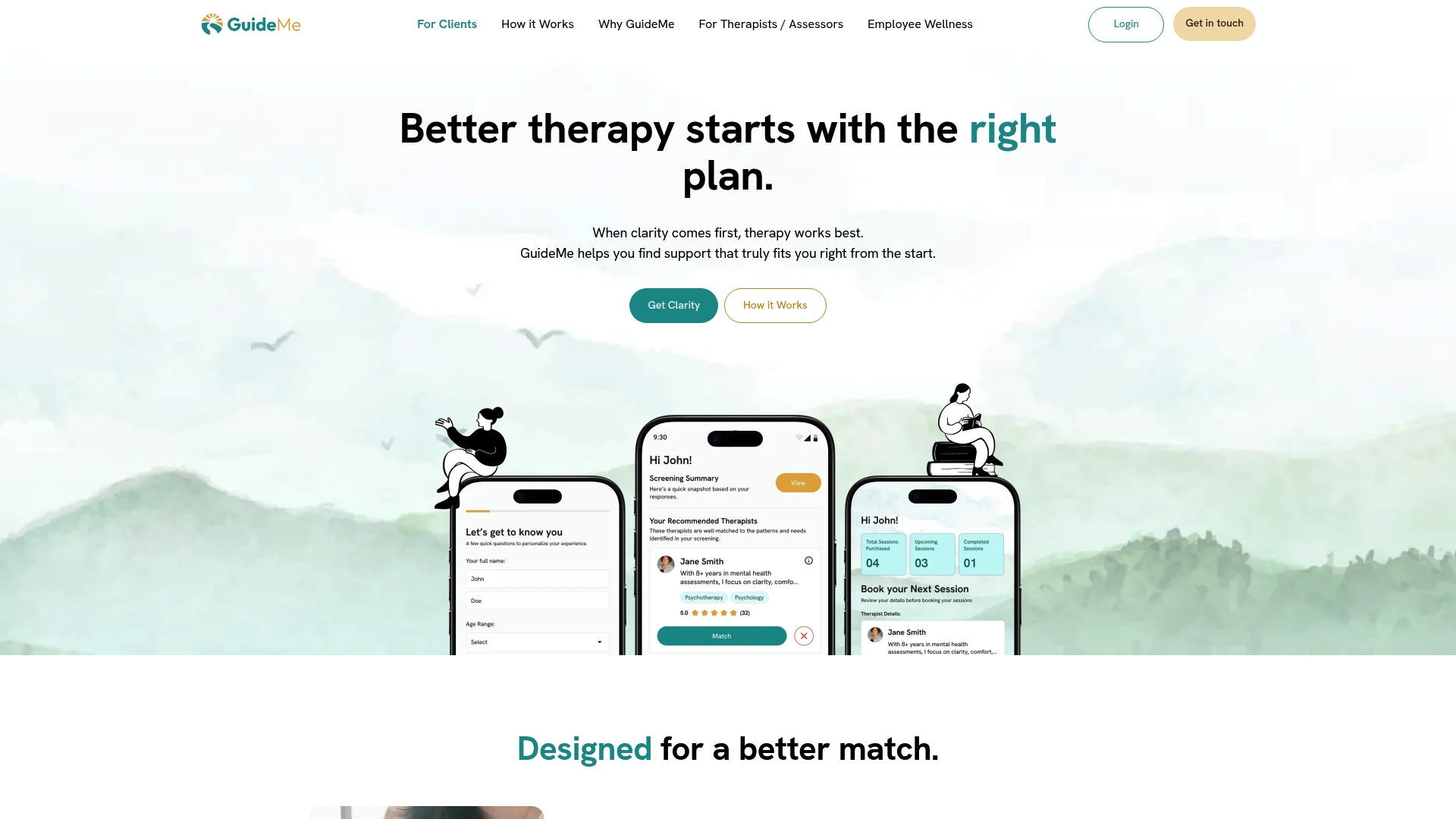
GuideMe is a therapy navigation platform that helps you understand your mental health with an in-depth therapy plan and connects you with the right therapist from the start. It is human-led and AI-powered, designed to make the process feel less overwhelming and more personal. Whether you are dealing with emotional distress, relationship challenges, or simply want to understand yourself better, you can find a therapist who is genuinely suited to your needs. Taking that first step is an act of strength, and GuideMe is here to support you through it.
Frequently asked questions
How long should emotional distress last before considering therapy?
If distress persists for more than two weeks or begins to impair your daily functioning, it is advisable to seek a professional assessment rather than waiting to see if it resolves on its own.
Is therapy only for people in crisis?
Therapy benefits anyone experiencing emotional distress, relationship difficulties, or a desire for personal growth. There is no minimum threshold required, and self-doubt or curiosity alone is a valid reason to explore it.
How do I know if my anxiety is severe enough for therapy?
If anxiety interferes with daily functioning over an extended period, it is severe enough to warrant professional support, regardless of whether it feels dramatic or not.
What is the biggest barrier to seeking therapy?
The most common barriers are stigma, scepticism, and fear of judgement. However, seeking help is a sign of self-awareness and strength, not weakness, and recognising these barriers is the first step to moving past them.