
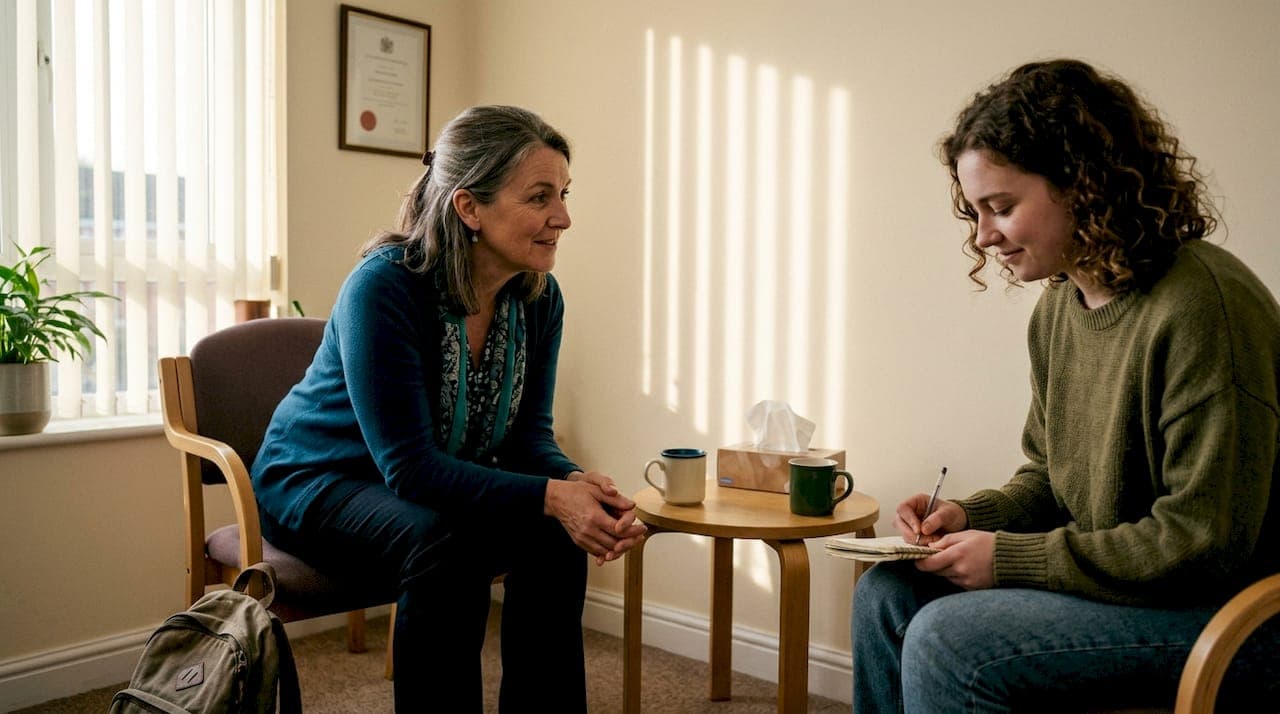
Not all counselling works the same way, and that distinction matters more than most people realise. Supportive counselling is a specific therapeutic approach that prioritises emotional reinforcement, practical guidance, and a strong client-counsellor relationship, rather than restructuring thought patterns or exploring deep-rooted trauma. If you have ever felt unsure about which type of therapy might suit you, or wondered what actually happens in a counselling session, this article will give you clear, honest answers. We cover what supportive counselling is, how it works, how effective it is, and how it compares to other approaches.
Table of Contents
- Defining supportive counselling
- How supportive counselling works: Techniques and process
- How effective is supportive counselling?
- Supportive counselling vs other approaches: Key similarities and differences
- Is supportive counselling right for you?
- Explore supportive counselling with expert guidance
- Frequently asked questions
Key Takeaways
| Point | Details |
|---|---|
| Practical emotional support | Supportive counselling helps you navigate daily challenges with guidance and encouragement for emotional stability. |
| Comparable effectiveness | Research shows supportive counselling can match CBT’s impact for depression and anxiety when delivered consistently. |
| Empowering client alliance | A strong, trusting relationship with your counsellor is central to positive outcomes in supportive counselling. |
| Best for immediate or ongoing needs | It suits those needing direct support, especially after a crisis or during periods of high stress. |
Defining supportive counselling
Supportive counselling is a structured yet flexible form of therapy built around one central idea: that feeling genuinely heard and supported can itself be therapeutic. Unlike cognitive behavioural therapy (CBT), which focuses on identifying and changing unhelpful thought patterns, or psychodynamic therapy, which explores unconscious processes and past experiences, supportive counselling stays grounded in the present. It focuses on what you are facing right now and how to manage it more effectively.
At its core, supportive counselling is about building a safe, trusting relationship between you and your counsellor. That relationship is not just a backdrop to the work; it is the work. Research confirms that active listening and validation are among the key mechanics that make this approach effective, alongside structured problem-solving, reality testing, clear guidance, and encouragement of realistic thinking.
Here are the core techniques used in supportive counselling:
- Active listening: Your counsellor gives full, focused attention to what you share, without judgement.
- Emotional validation: Your feelings are acknowledged as real and understandable, not minimised or dismissed.
- Structured problem-solving: Together, you identify challenges and work through practical steps to address them.
- Reality testing: Your counsellor gently helps you assess whether your perceptions of a situation are accurate.
- Clear guidance: You receive direct, practical advice when appropriate, rather than being left to figure everything out alone.
- Encouragement of realistic thinking: You are supported in developing a balanced, grounded view of your circumstances.
- Building a therapeutic alliance: The relationship itself is treated as a core component of your progress.
This approach does not dig into childhood experiences or attempt to restructure your core beliefs. It is designed to support you through current difficulties with compassion and practical tools.
How supportive counselling works: Techniques and process
Knowing what supportive counselling aims for is one thing. Understanding what actually happens in a session is another. Sessions typically follow a consistent structure, though your counsellor will adapt the process to your individual needs.
A typical session moves through these stages:
- Connection: Your counsellor creates a calm, welcoming space and checks in on how you have been since your last session.
- Understanding: You share what is on your mind. Your counsellor listens carefully and reflects back what they hear.
- Support: Your counsellor validates your experience and helps you feel less alone with your challenges.
- Guidance: Together, you explore practical strategies or perspectives that may help you cope more effectively.
- Review: You close the session by summarising what was discussed and identifying any steps to take before the next meeting.
The therapeutic relationship foundation underpins every stage of this process. Research consistently shows that the strength of the therapeutic alliance is one of the strongest predictors of positive outcomes in therapy, regardless of the specific approach used.
"The quality of the therapeutic relationship is among the most reliable indicators of whether therapy will be successful."
Pro Tip: Consistency between sessions helps reinforce new coping skills and emotional confidence. Even small actions taken between appointments, such as journalling or practising a breathing technique, can strengthen the progress made in the room.
Supportive counselling is also notably flexible. It can be used for a wide range of life challenges, from managing work stress and relationship difficulties to coping with grief, illness, or ongoing anxiety. It suits people who need steady, reliable support over time as much as those seeking short-term help during a crisis.
How effective is supportive counselling?
Effectiveness is a fair question to ask of any therapy. The evidence for supportive counselling is genuinely encouraging. Studies confirm that it is evidence-based and effective for reducing symptoms of anxiety and depression, improving daily functioning, and producing reliable outcomes across a range of psychiatric conditions when delivered consistently.

One particularly notable finding: short-term supportive therapy shows large effect sizes above 0.8, comparable to CBT for depression, with 76 to 79% of participants showing reliable improvement. That is a significant result. It is worth noting, however, that 6 to 10% of participants experienced some deterioration, and not all patients achieve full remission.
| Outcome measure | Supportive counselling result |
|---|---|
| Reliable improvement in depression | 76 to 79% of participants |
| Effect size compared to CBT | Large (above 0.8) |
| Deterioration rate | 6 to 10% |
| Impact on daily functioning | Significant improvement observed |
| Suitable for anxiety symptoms | Yes, evidence-based |
These figures place supportive counselling firmly in the category of well-supported, clinically meaningful treatments. It is not a lesser option compared to CBT; for many people, it is equally effective and often a better fit.
Pro Tip: When choosing a therapist, look for someone who delivers their approach consistently and prioritises the therapeutic relationship. These two factors are among the strongest predictors of a good outcome, regardless of which therapy type you choose.
Supportive counselling vs other approaches: Key similarities and differences
Understanding how supportive counselling compares to other therapies helps you make a more informed choice. The table below outlines the key differences between supportive counselling, CBT, and psychodynamic therapy.
| Feature | Supportive counselling | CBT | Psychodynamic therapy |
|---|---|---|---|
| Primary focus | Emotional support and practical help | Thought patterns and behaviours | Unconscious processes and past experiences |
| Core methods | Validation, guidance, problem-solving | Cognitive restructuring, behavioural experiments | Free association, dream analysis, interpretation |
| Session style | Collaborative and conversational | Structured and skills-based | Exploratory and reflective |
| Best suited for | Crisis, ongoing stress, fragile clients | Specific phobias, OCD, anxiety disorders | Long-standing relational patterns, identity issues |
| Evidence base | Strong, comparable to CBT for depression | Very strong across multiple conditions | Moderate to strong for certain presentations |
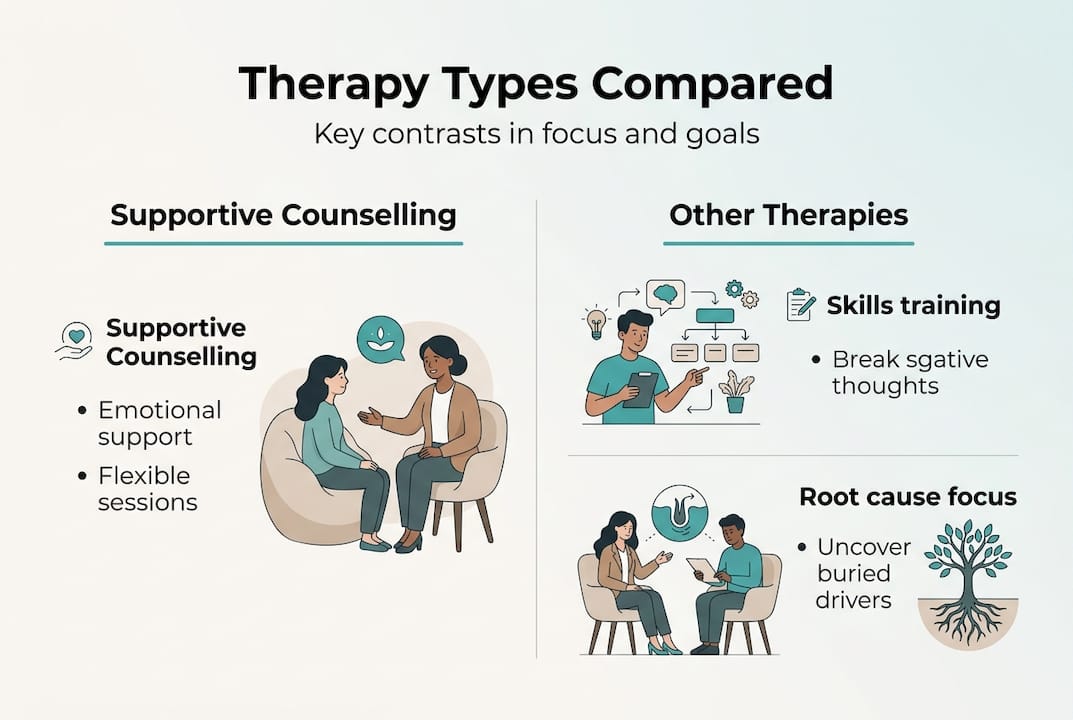
Research confirms that supportive counselling is as effective as CBT for depression in many cases, but the two approaches differ significantly in style and aim. CBT is more structured and skills-focused, while supportive counselling is more relational and present-centred.
Key strengths of supportive counselling:
- Immediacy: It addresses current concerns without requiring lengthy exploration of the past.
- Relationship-based: The therapeutic alliance is central, which many clients find more comfortable and accessible.
- Flexible: It adapts to a wide range of presenting issues and client needs.
Limitations to be aware of:
- It does not deeply address root causes or long-standing psychological patterns.
- It may be less suitable for conditions that respond specifically to structured, skills-based interventions.
- It works best for those who need reassurance, practical support, or help navigating a specific life challenge.
Is supportive counselling right for you?
With a clearer picture of what supportive counselling offers, the practical question becomes: is it the right fit for you? Here are some signs that it may be a strong match for your needs.
- You are going through a difficult period and need steady emotional support rather than a structured skills programme.
- You are in or recovering from a crisis and need a safe space to process what has happened.
- You prefer practical guidance over open-ended exploration of your past or unconscious mind.
- You value encouragement and reassurance as part of your therapeutic experience.
- You have ongoing emotional challenges, such as chronic stress or low mood, that benefit from consistent, long-term support.
Pro Tip: If you are dealing with complex trauma or deeply rooted psychological patterns, combining supportive counselling with an insight-oriented approach often produces the best outcomes. A skilled therapist can help you determine the right combination.
It is also worth considering that supportive counselling has limitations when used alone for complex cases. It is most powerful when matched thoughtfully to your specific needs and delivered by a qualified, experienced counsellor. Always check your practitioner's credentials and, just as importantly, trust your own sense of comfort with them. The relationship matters enormously.
Explore supportive counselling with expert guidance
Deciding that supportive counselling might be right for you is a meaningful step. The next step is finding a counsellor who is genuinely well-matched to your needs, not just available.
At GuideMe, we combine human expertise with smart technology to help you understand your mental health needs and get matched with the right therapist from the start. Rather than leaving you to search through endless profiles feeling uncertain, we create a personalised therapy plan and connect you with verified, experienced counsellors who are suited to your specific situation. If supportive counselling feels like the right direction, we can help you find supportive counsellors who are equipped to provide exactly that kind of care.
Frequently asked questions
What is the main goal of supportive counselling?
Its main aim is to help you cope practically and emotionally, building resilience and daily functioning through emotional reinforcement and guidance. It focuses on your present circumstances rather than exploring the past.
How long does supportive counselling typically last?
It can be either short-term or long-term, depending on your goals and the issues you are addressing. Its flexible, client-centred structure means it adapts to what you need.
Is supportive counselling as effective as CBT for depression?
For many people, yes. Evidence shows that supportive therapy effect sizes are comparable to CBT for depression, with 76 to 79% of participants showing reliable improvement.
Who benefits most from supportive counselling?
Those seeking immediate emotional relief, practical guidance, or help during a crisis tend to benefit most. It is also well-suited to fragile clients needing reassurance and those managing ongoing stress or life challenges.