

TL;DR:
- Executives face unique mental health challenges due to their demanding roles, often avoiding or defaulting to unsuitable therapies. Evidence-based approaches like structured CBT, schema therapy, mindfulness, coaching, and systems-psychodynamics offer tailored solutions based on time, goals, and organizational needs. Choosing the right therapy requires assessing fit critically to ensure genuine progress aligns with leadership realities.
Executives carry an unusual weight. Decisions that affect hundreds of people, schedules that leave little room to breathe, and a persistent expectation to perform with clarity and composure under sustained pressure. Yet when it comes to mental health and performance support, many senior leaders either avoid therapy altogether or default to whatever approach is most widely recommended, regardless of whether it actually fits their leadership reality. This guide covers the main evidence-based therapeutic approaches available to executives, sets out clear criteria for evaluating them, and helps you make a more informed decision about what will genuinely work for your situation.
Table of Contents
- How to evaluate therapeutic approaches for executives
- Cognitive behavioural therapy (CBT): Efficient, practical, and results-driven%3A-efficient%2C-practical%2C-and-results-driven)
- Schema therapy: Addressing leadership blocks at their roots
- Mindful leadership and mindfulness-based interventions
- Executive coaching: Driving performance through structure and feedback
- Systems-psychodynamic approaches: Navigating leadership dilemmas
- What most guides miss: Fit trumps fashion in executive therapy
- Take the next step with executive-focused therapy
- Frequently asked questions
Key Takeaways
| Point | Details |
|---|---|
| Structure matters most | Structured and measurable approaches like CBT and executive coaching best suit busy executives. |
| Root causes vs. skills | Schema and psychodynamic methods uncover core beliefs, while CBT and coaching target immediate skills. |
| Evidence trumps trend | Choose therapy based on proven outcomes for leadership, not just popularity. |
| Fit is individual | Selecting the right approach depends on your challenges and leadership context. |
How to evaluate therapeutic approaches for executives
Not every therapeutic approach is built for the realities of executive life. Before you commit time and resources to any method, it helps to have a clear set of criteria to assess your options against.
Key evaluation factors for executives:
- Time commitment: Does the approach fit within a demanding schedule, or does it require extended availability that simply is not realistic?
- Measurable outcomes: Can you track progress against specific leadership or performance goals?
- Practical application: Will you leave sessions with tools you can use immediately, not just insights to sit with?
- Confidentiality: Is the provider genuinely independent from your organisation?
- Evidence base: Is the approach backed by clinical research, not just positive testimonials?
- Flexibility: Can sessions be adjusted to suit travel, time zones, or shifting priorities?
Structured, goal-focused psychotherapy consistently suits executives better than open-ended talk therapy, because it mirrors the way high-performing leaders already operate: with agendas, targets, and accountability. You are not looking for a space to simply vent. You are looking for an approach that produces real change in your thinking, behaviour, and decision-making.
Pro Tip: Look for therapists and coaches who have direct experience working in leadership-focused programmes or corporate settings. Clinical skill alone is not sufficient at this level.
With selection criteria established, we will explore the most effective therapeutic approaches for executives one by one.
Cognitive behavioural therapy (CBT): Efficient, practical, and results-driven
CBT is one of the most researched psychological treatments available, and its structure makes it particularly well suited to executives. It operates on a clear principle: your thoughts influence your feelings, which in turn influence your behaviour. By identifying and adjusting unhelpful thought patterns, you can change outcomes in a direct, measurable way.
What CBT offers executives:
- Structured sessions with a clear agenda, so time is used efficiently
- Skill-based learning that transfers directly into work situations
- Homework and practice between sessions to reinforce progress
- Short to medium term duration, typically 12 to 20 sessions
- Direct feedback on specific challenges such as perfectionism, stress, or conflict avoidance
CBT generally includes fewer sessions than other psychotherapies and may include homework to practise skills between sessions, making it a realistic option for leaders with limited time. Unlike approaches that explore childhood experiences at length, CBT focuses on present patterns and practical change.
"The most effective executive support is not about talking more. It is about thinking differently and practising that difference until it becomes second nature."
CBT-style executive support is often delivered as a structured, agenda-driven alternative to open-ended talk therapy, which is precisely why it resonates with executives who value outcomes over process. Whether you are managing performance anxiety before a board presentation, restructuring how you respond to conflict, or addressing the thought patterns driving burnout, CBT provides a clear and practical framework.
CBT effectiveness is well documented across stress, anxiety, and performance-related challenges. Leaders who want to understand how mental health and performance connect will find CBT gives them both the insight and the tools to act on it.
Pro Tip: Combine CBT tools with leadership coaching for greater results. The two approaches complement each other well, with CBT addressing underlying thought patterns and coaching focusing on behavioural goals.
While CBT offers a proven structure, some executives seek approaches targeting leadership identity and underlying patterns, which brings us to schema therapy.
Schema therapy: Addressing leadership blocks at their roots
Schema therapy goes deeper than CBT. It targets what are called schemas: stable, core beliefs about yourself and the world that formed early in life and continue to shape your reactions, even when they no longer serve you. For executives, these schemas often operate silently in the background, driving behaviour that can derail leadership effectiveness.
Common executive schemas include:
- Fear of failure: Driving overwork, perfectionism, and difficulty delegating
- Unrelenting standards: Expecting the same extreme output from everyone around you
- Mistrust: Difficulty building genuine relationships with peers or direct reports
- Self-sacrifice: Consistently prioritising organisational needs over personal boundaries
- The belief that everything depends on you: Making it almost impossible to let go of control
Schema therapy concepts can be translated into workplace wellbeing by focusing on how stable schemas shape leaders' reactions and relationships, particularly under pressure. When a senior leader consistently struggles with delegation, repeatedly clashes with the same type of colleague, or finds that their leadership style creates problems despite good intentions, schema-level work can provide real answers.
"When the same problem keeps coming back despite your best efforts, the answer is rarely more effort. It is usually a belief that needs examining."
A useful example: an executive who micromanages despite wanting to trust their team may be operating from a schema around mistrust or the belief that only they can maintain quality. CBT might help manage the anxiety in the moment, but schema therapy addresses why the belief exists in the first place, which creates more durable change.
Schema therapy for leaders works especially well at senior levels, where entrenched patterns have often been reinforced over years of success. Explore schema therapy for leaders to understand whether this approach fits your current challenges.

Having addressed structural and schema-based approaches, mindfulness-based methods provide a different lens for executives seeking improved focus and wellbeing.
Mindful leadership and mindfulness-based interventions
Mindfulness-based approaches, including mindfulness-based stress reduction (MBSR), have become increasingly common in executive development. It is worth being clear-eyed about both their genuine benefits and their limitations.
What mindfulness training typically involves:
- An eight-week structured programme with guided practice and group sessions
- Skills in focused attention, self-awareness, and emotional regulation
- Tools for managing reactive decision-making and stress responses
- Practice designed to reduce rumination and improve clarity
Mindful leadership training has been tested in executive populations, and a 2026 non-randomised controlled trial reported descriptive improvements in work engagement, transformational leadership, and mental wellbeing indicators. This is encouraging, though the evidence base is still developing and results vary across individuals.
Mindfulness-based interventions including MBSR have also shown measurable changes in executive-function planning skills after eight weeks, including reduction in the time-to-execution ratio on the Trail Making Test, a cognitive assessment measuring mental flexibility and processing speed.
| Mindfulness approach | Primary focus | Time requirement | Best suited for |
|---|---|---|---|
| MBSR (8-week programme) | Stress reduction, attention | High (8 weeks structured) | Burnout, chronic stress |
| Mindful leadership training | Leadership presence, engagement | Moderate | Senior teams, culture change |
| Brief mindfulness practice | Daily regulation, focus | Low (10 to 20 minutes daily) | Ongoing maintenance |
Practical mindfulness tips can help leaders start with simple, consistent habits before committing to a full programme.
Mindfulness is not a universal fix. Executives who prefer highly structured, goal-directed methods may find traditional mindfulness practice frustrating. The key is matching the approach to your current leadership context and stress profile rather than defaulting to it because it is widely discussed.
Alongside individual-focused approaches, many executive programmes now use coaching models that combine structure with group and feedback-based techniques.
Executive coaching: Driving performance through structure and feedback
Executive coaching is not therapy, but for many leaders it is the most direct route to measurable performance improvement. It operates at the intersection of psychology and professional development, using structured frameworks and real-world feedback to drive change.
A typical executive coaching process:
- Assessment: Psychometric tools, leadership style inventories, and background discussion to establish a clear starting point
- Goal setting: Specific, time-bound objectives aligned with both personal and organisational priorities
- Coaching conversations: Structured sessions using frameworks such as GROW (Goal, Reality, Options, Way forward)
- Feedback integration: Including 360-degree input from colleagues, direct reports, and stakeholders
- Review and recalibration: Regular evaluation of progress against agreed metrics
Executive coaching methodologies commonly emphasise structured goal-setting and assessment-driven target setting, which produces outcomes that are directly relevant to leadership performance. The GROW model, in particular, gives leaders a repeatable structure for approaching both coaching conversations and real-world decisions.
Multi-source 360-degree feedback produces stronger outcomes than relying on self-perception alone, because it surfaces blind spots that even highly self-aware leaders cannot see from the inside.
| Factor | Executive coaching | Traditional therapy |
|---|---|---|
| Primary focus | Performance and goals | Psychological wellbeing |
| Session structure | Agenda-driven | More open-ended |
| Time frame | 6 to 12 months | Variable |
| Measurability | High | Moderate |
| Suitable for | Skill gaps, leadership challenges | Deeper psychological issues |
Understanding how to use support strategically is important, particularly for leaders navigating what their organisation provides versus what they need personally.
Pro Tip: Before committing to a coaching programme, ask the provider for specific outcome metrics from previous clients. Effective coaching should be able to demonstrate change, not just describe the process.
Finally, a small but insightful set of executives turn to systems-psychodynamic approaches for an in-depth lens on leadership dilemmas.
Systems-psychodynamic approaches: Navigating leadership dilemmas
Systems-psychodynamics is the least well-known approach on this list, but for certain leadership challenges it offers something the others cannot. It draws on psychodynamic thinking to examine not just individual behaviour but the hidden dynamics of groups, organisations, and roles.
When systems-psychodynamics is most useful:
- CEOs and senior leaders managing complex team dynamics or board-level tension
- Major leadership transitions, mergers, or organisational restructuring
- Persistent group conflicts that resist straightforward resolution
- Leaders experiencing a strong sense of role confusion or identity strain
- Situations where rational analysis alone has not resolved the problem
A systems-psychodynamic approach uses psychodynamic thinking to enhance leadership, illustrated by case reflections from organisational leaders and CEOs who have navigated complex systemic dilemmas. The approach treats the organisation as a system with its own unconscious dynamics, and helps leaders see how their own role and behaviour are shaped by forces that go beyond individual choices.
"Some leadership problems are not individual problems. They are systemic patterns that express themselves through individuals. Addressing only the person without addressing the system produces limited results."
This approach is slower and less directly measurable than CBT or coaching. It is not suited to executives who need rapid, tangible outcomes. But for those grappling with deep-seated organisational tensions or recurring dynamics that resist change, it provides a genuinely different and insightful perspective.
Now that you have heard how the main approaches compare, let us cut through the noise with a direct editorial perspective.
What most guides miss: Fit trumps fashion in executive therapy
Most articles on this topic present therapeutic approaches as a menu to browse rather than a genuine decision to make. They list the options, describe the features, and leave the choosing to you. That is not enough.
Here is the uncomfortable reality: executive therapy is not prestige-driven, and the most talked-about approach is rarely the most effective one for a specific leader at a specific moment. Mindfulness is not the answer for every burned-out executive. CBT is not always sufficient for someone whose leadership patterns run decades deep. And executive coaching, however sophisticated, cannot replace genuine psychological support when the underlying issues are clinical.
The most effective leaders we see combining support approaches are those who use structure where they need it, depth where the pattern demands it, and evidence to assess whether anything is actually changing. That means taking CBT or coaching seriously for performance issues, turning to schema or psychodynamic work when the same problem keeps recurring, and using mindfulness as a maintenance tool rather than a solution in itself.
Push for real outcomes. Ask your therapist or coach what change looks like in measurable terms, and revisit that conversation regularly. Find practitioners who understand what executive leadership actually involves, not just clinicians who work with a broad general population and occasionally see leaders.
Pro Tip: Shortlist two approaches that fit your current stage and commitments. Re-evaluate your choice annually, because what you need at a point of burnout is different from what serves you during a period of growth or transition.
Take the next step with executive-focused therapy
Leadership at the highest level is demanding, and the psychological support you choose should be as carefully considered as any strategic decision you make.
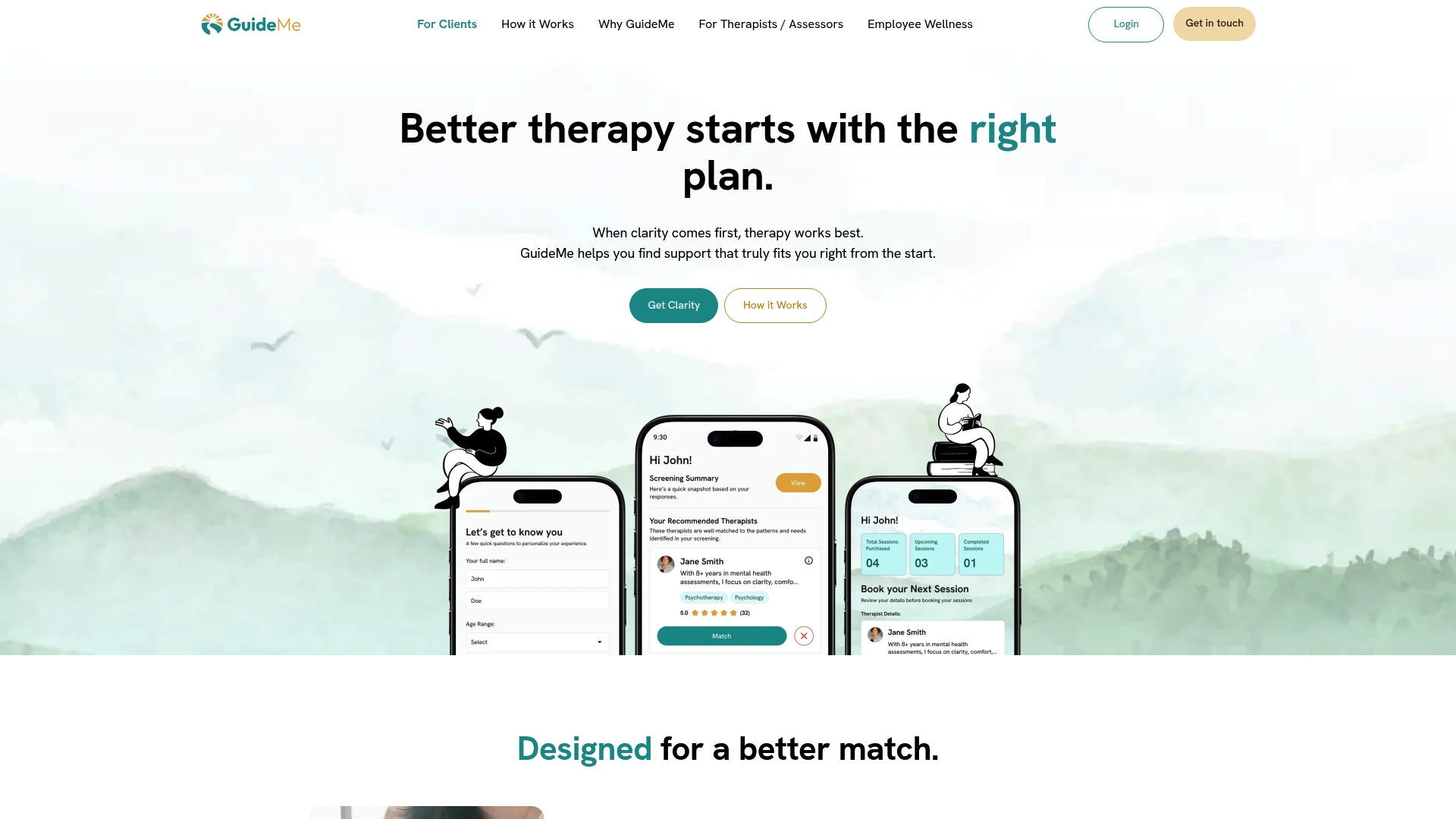
GuideMe is built for exactly this kind of decision. As a human-led, AI-powered therapy navigation platform, GuideMe helps you understand your current mental health needs, builds you a personalised therapy plan, and matches you with a therapist who genuinely fits your profile and professional context. You do not have to work out the right approach alone. Explore executive therapy programmes on GuideMe and take a more informed step towards the support your leadership deserves.
Frequently asked questions
What is the main benefit of CBT for executives?
CBT generally includes fewer sessions than other psychotherapies and may include homework to practise skills between sessions, making it a focused, actionable option that fits busy executive schedules without requiring an extended time commitment.
How does executive coaching differ from therapy?
Executive coaching methodologies commonly emphasise structured goal-setting and performance-focused outcomes, while therapy typically addresses deeper psychological challenges, emotional wellbeing, and patterns that may be rooted in personal history.
Is mindfulness actually effective for leaders?
Mindful leadership training has reported descriptive improvements in work engagement, transformational leadership, and mental wellbeing indicators, though results vary between individuals and more robust randomised research is still needed.
When should an executive consider schema therapy?
Schema therapy concepts are most relevant when leadership challenges repeat persistently or are driven by stable, deep-seated beliefs and patterns that surface under pressure, particularly when other approaches have produced only partial or short-lived results.
What is the downside to systems-psychodynamic approaches?
A systems-psychodynamic approach is reflective and exploratory by nature, which means it typically requires more time and does not yield the rapid, measurable outcomes that executives often expect from CBT or structured coaching programmes.