

TL;DR:
- The therapy intake process builds foundational trust and significantly influences therapy outcomes.
- Effective intake involves gathering personal history, current concerns, goals, and assessment tools.
- Thoughtful, measurement-based intake enhances engagement, personalization, and long-term success.
Starting therapy is a big step, and it is natural to feel unsure about what happens before the real work begins. Many people assume the intake process is little more than signing forms and answering a few basic questions. In reality, it is far more significant than that. Early therapeutic alliance built during intake is one of the strongest predictors of positive therapy outcomes. How you and your therapist connect from the very first session shapes everything that follows. This article walks you through exactly what the therapy intake process involves, why it matters, and how to prepare so you can walk in feeling ready and confident.
Table of Contents
- What is the therapy intake process?
- Why intake matters: evidence and outcomes
- What to expect: steps and key questions during intake
- Measurement-based care and its role in intake
- Why a thoughtful intake sets the tone for therapy
- Get started with expert guidance
- Frequently asked questions
Key Takeaways
| Point | Details |
|---|---|
| Intake shapes success | Your first therapy session lays the foundation for trust and progress. |
| Evidence matters | Measurement-based care at intake leads to improved outcomes across studies. |
| Prepare thoughtfully | Bringing questions and relevant information helps ensure a productive intake. |
| Personalised support | Every intake is unique; clarity and honest communication accelerate results. |
What is the therapy intake process?
Therapy intake is the initial phase of your therapeutic journey. It is the structured process through which your therapist gathers essential information about you, your background, your goals, and your current mental health concerns. Think of it as the foundation upon which your entire treatment plan is built.
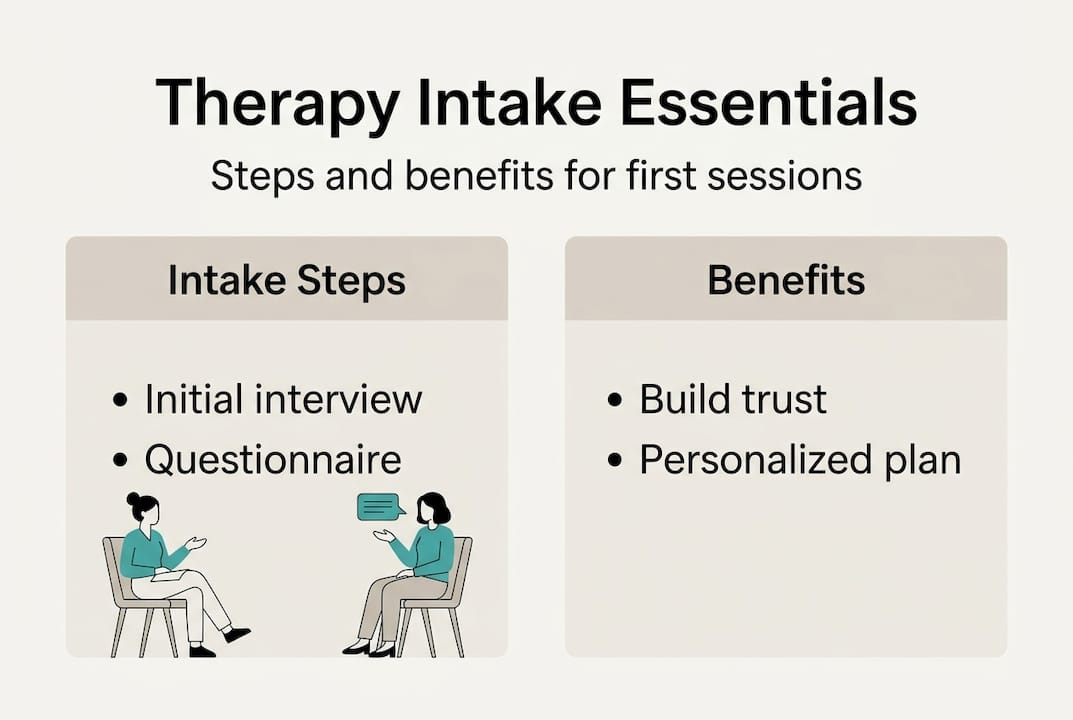
During intake, you and your therapist will typically cover several key areas:
- Your personal and medical history, including any previous experience with therapy or mental health treatment
- Your current symptoms and concerns, such as anxiety, low mood, relationship difficulties, or stress
- Your goals for therapy, meaning what you hope to achieve and what a positive outcome looks like for you
- Practical matters, including confidentiality, session frequency, fees, and what to expect going forward
- Assessment tools or questionnaires, which help your therapist understand the severity of your symptoms and track change over time
The methods therapists use during intake vary depending on their training and approach, but most will use a combination of open conversation and structured questions to build a clear picture of your needs.
It is worth knowing that the therapeutic alliance built during intake influences up to 8% of outcome variance in therapy. That might sound like a small number, but in the context of mental health treatment, it is clinically meaningful. Feeling heard, respected, and understood during your very first session sets the tone for how safe you feel to open up later.
"The intake session is not just an administrative step. It is the beginning of a relationship that will support your growth and wellbeing throughout the entire therapeutic process."
First impressions genuinely matter here. If you leave your intake session feeling comfortable and clear about the process ahead, you are far more likely to stay engaged and committed to the work.
Why intake matters: evidence and outcomes
Understanding the basic steps is one thing. Knowing why they matter is what truly helps you approach intake with the right mindset.
Research consistently shows that psychotherapy improves outcomes for around 75% of people who engage with it. But that improvement does not happen by chance. The quality of the early sessions, particularly intake, plays a significant role in whether someone stays in therapy, engages fully, and ultimately benefits.
The numbers are striking. Studies on measurement-based care (MBC), which we will explain in more detail shortly, show effect sizes for depression treatment ranging from d=1.18 to d=1.27 when structured assessment begins at intake. For context, an effect size above 0.8 is considered large in psychological research. Starting well makes a measurable difference.
| Factor | Impact on therapy outcomes |
|---|---|
| Therapeutic alliance | Up to 8% of outcome variance |
| Early engagement (first 3 sessions) | Sets foundation for long-term progress |
| Measurement-based care from intake | Effect sizes d=1.18 to 1.27 for depression |
| Client-therapist fit | Strongly linked to retention and satisfaction |
The first three sessions are particularly important. They set the foundation for how engaging new clients during intake translates into long-term commitment and progress. When clients feel understood early on, they are less likely to drop out and more likely to do the deeper work that leads to real change.
Early data collection also allows your therapist to personalise your treatment from the outset. Rather than taking a generic approach, they can tailor their methods to your specific history, preferences, and goals. This personalisation is one of the most valuable outcomes of a thorough intake process.
Pro Tip: Ask your therapist at the end of your intake session how the information you have shared will be used to measure your progress over time. This shows you are invested and helps set clear expectations from the start.
The connection between measurement-based assessment in healthcare and improved client outcomes is well established across multiple fields, and therapy is no exception. A good intake is not just about gathering data. It is about beginning a collaborative relationship built on clarity and trust.
What to expect: steps and key questions during intake
After seeing why intake matters, let us explore what you will actually experience and how to prepare so you feel confident walking in.
A typical therapy intake session follows a clear sequence:
- Completing paperwork and consent forms before or at the start of your session, covering confidentiality, cancellation policies, and your rights as a client
- Sharing your background including your personal history, family context, and any previous mental health treatment or diagnoses
- Describing your current concerns in your own words, explaining what has brought you to therapy at this particular point in your life
- Discussing your goals and what you hope therapy will help you achieve, whether that is managing anxiety, improving relationships, or building self-confidence
- Completing any assessment tools your therapist uses, such as symptom checklists or mood scales, to establish a baseline for your progress
- Asking questions about the therapeutic process, your therapist's approach, and what the coming sessions will look like
Honesty is your greatest asset during intake. The more accurately you describe your experiences, the better equipped your therapist will be to build a treatment plan that genuinely fits your needs. Compassionate assessment practices ensure that this process feels safe rather than clinical or interrogative.
While there are no rigid national standards for how intake must be conducted, measurement-based care is recommended as best practice for monitoring progress and supporting the therapeutic alliance from the very beginning.
Bringing relevant documents can also help. If you have previous therapy notes, a list of medications, or a GP letter, these can give your therapist useful context. And if you are feeling nervous, that is completely normal.
Pro Tip: Before your session, write down any questions or concerns you want to raise. It is easy to forget things when you are in the moment, and having a short list means you leave feeling informed and empowered rather than wishing you had said more.
You can also spend time preparing for your intake session by reflecting on what has been weighing on you most and what you genuinely want to get out of therapy. Even a few minutes of quiet thought beforehand can make the conversation feel more natural.
Measurement-based care and its role in intake
Now that you are clear on intake steps, it is worth understanding how modern measurement methods are reshaping the process for the better.
Measurement-based care (MBC) refers to the routine use of standardised questionnaires and assessment tools to track a client's symptoms and progress throughout therapy. Rather than relying solely on conversation, therapists using MBC gather structured data at regular intervals, starting from intake.
Common tools used during intake include:
- Standardised mental health scales, such as the PHQ-9 for depression or the GAD-7 for anxiety
- Feedback surveys that capture how you feel about the therapeutic relationship itself
- Progress notes and baseline assessments that create a starting point against which future sessions are measured
| Approach | Traditional intake | Measurement-based intake |
|---|---|---|
| Data collection | Conversational only | Structured tools plus conversation |
| Progress tracking | Subjective and informal | Objective and consistent |
| Treatment adjustment | Reactive | Proactive and evidence-informed |
| Client involvement | Passive | Active and collaborative |
The benefits of MBC are clear. Clients gain greater clarity about their own progress. Therapists can respond more quickly when something is not working. And the therapeutic relationship is strengthened because both parties are working from the same shared understanding.
Measurement-based care improves outcomes significantly when tools are introduced from the very start of therapy, making intake the ideal moment to establish this practice. The quality assessment methods used across healthcare more broadly reflect the same principle: measuring early leads to better decisions and better results.
For you as a new client, this means your intake session is not just about telling your story. It is about beginning a process of active, ongoing progress monitoring in therapy intake that keeps your treatment on track from day one.
Why a thoughtful intake sets the tone for therapy
Most people starting therapy focus on the techniques their therapist will use or the topics they will eventually discuss. Very few stop to consider how much the intake session itself shapes their entire experience. That is a missed opportunity.

What often separates satisfied clients from disappointed ones is not the therapeutic model used or the number of sessions attended. It is how comfortable and understood they felt from the very beginning. A well-conducted intake builds a genuine sense of safety. It signals to the client that this is a space where they will be listened to, not judged.
Early alliance fostered through intake strongly predicts therapy success, and yet it remains one of the most underestimated parts of the process. Investing in a thoughtful, thorough intake is one of the smartest choices both clients and therapists can make. If your intake session felt rushed or superficial, it is worth raising that with your therapist. You deserve a foundation built on genuine understanding.
Get started with expert guidance
Feeling clearer about the intake process is a great first step, but knowing where to find the right support makes all the difference. GuideMe is designed specifically to help people like you navigate therapy with confidence, from understanding what to expect at intake to finding a therapist who is the right fit for your needs.

With the Guide Me platform, you can explore therapist profiles, learn about how intake and progress monitoring work, and get matched with a professional who understands your goals. GuideMe combines human expertise with smart technology to make the journey into therapy feel less overwhelming and more supported. You do not have to figure this out alone.
Frequently asked questions
Does therapy intake include confidential information, and how is it used?
Yes, intake involves sharing confidential details about your history and symptoms, which your therapist uses to build a personalised treatment plan. This information is protected and only accessed by authorised staff involved in your care.
How long does a therapy intake session usually last?
Most therapy intake sessions last between 45 and 75 minutes, giving enough time for thorough assessment, goal-setting, and the start of a working relationship.
Are there special forms or assessments used during intake?
Many therapists use standardised questionnaires or symptom checklists as part of measurement-based care, helping to establish a clear baseline for monitoring your progress.
Can I bring questions or specific concerns to my intake session?
Absolutely. Therapists actively encourage clients to ask questions and share their worries during intake, as early clarity about goals leads to stronger engagement and better outcomes.