

TL;DR:
- Group therapy offers an effective, socially connected alternative to individual therapy for conditions like depression, anxiety, PTSD, and suicidality. Its benefits include shared experience, interpersonal learning, and a sense of belonging, which support recovery and well-being. Combining group and individual therapy can produce the most comprehensive and sustained mental health outcomes.
Seeking help for your mental health can feel like an isolating experience. Many people sit with their struggles quietly, convinced that nobody else could possibly understand what they are going through. Yet one of the most powerful shifts in modern therapy is the move towards group settings, where shared experience becomes a healing force in its own right. Group therapy is as effective as individual therapy for a wide range of conditions including depression, anxiety, PTSD, and suicidality. That finding, drawn from a meta-analysis of 172 randomised controlled trials, challenges the assumption that therapy must be a private, one-to-one conversation to produce real results.
Table of Contents
- Key benefits of group therapy for mental health
- How group therapy compares to individual therapy
- Practical outcomes: evidence from clinical trials
- Is group therapy right for everyone?
- Our perspective: why group therapy's real strength is connection
- Find your group therapy fit with GuideMe
- Frequently asked questions
Key Takeaways
| Point | Details |
|---|---|
| Social connection | Group therapy offers a sense of belonging that reduces feelings of isolation. |
| Proven effectiveness | Group therapy is as effective as individual therapy for many mental health concerns. |
| Practical gains | Clinical trials show improvements in mood, anxiety, and self-esteem even after brief group therapy. |
| Best fit varies | Not everyone may suit group therapy, but nearly everyone can benefit with the right preparation. |
Key benefits of group therapy for mental health
Having introduced the value of group therapy, let us detail the advantages that make it distinctively powerful. Group therapy is far more than simply putting several people together in a room with a therapist. Its effectiveness is grounded in well-researched psychological mechanisms that have been studied for decades.
The American Group Psychotherapy Association describes Yalom's therapeutic factors as the core mechanisms through which group therapy works. These eleven factors include universality, group cohesiveness, instillation of hope, altruism, interpersonal learning, and catharsis. Each one plays a distinct role in supporting recovery and wellbeing.
Here is how those factors translate into everyday benefits for group therapy participants:
- Universality. Discovering that other people share your fears, shame, or confusion is deeply reassuring. Feeling like you are the only person suffering is itself a source of additional distress. Hearing someone else articulate exactly what you have been feeling can provide immediate relief.
- Group cohesiveness. The sense of belonging that builds within a consistent therapy group creates a safe environment where members feel accepted. This built-in community is something individual therapy simply cannot replicate in the same way.
- Instillation of hope. When you witness another group member making progress, it signals that change is genuinely possible. Seeing recovery in real time, rather than just hearing about it abstractly, is motivating in a way that goes beyond what a therapist can describe.
- Altruism. Being able to support others in the group reinforces your own sense of worth and capability. Many people entering therapy feel helpless or burdensome. Contributing to someone else's progress shifts that narrative considerably.
- Interpersonal learning. The group setting provides a live environment to practise social skills, receive feedback, and build self-awareness. For people who struggle with relationships or communication, this is a rare and structured opportunity.
- Catharsis. Sharing deeply personal experiences in front of others who respond with understanding rather than judgement creates an emotional release that supports psychological healing.
"The group becomes a social microcosm, reflecting each member's broader patterns of relating to others. It is in this space that real interpersonal change becomes possible." — Irvin Yalom, group psychotherapy pioneer
Pro Tip: When starting group therapy, it helps to remind yourself that every other member has taken the same courageous step. The discomfort of the first session is widely shared and usually fades quickly.
You can find further group therapy insights and practical guidance on choosing the right format for your situation through resources designed to support your therapy journey.
How group therapy compares to individual therapy
Having mapped the key benefits, it is crucial to see how group therapy stands up when placed alongside individual therapy. For many people, the assumption is that individual therapy is the gold standard. The evidence tells a more nuanced story.

A large-scale meta-analysis summary found that group therapy produces outcomes equivalent to individual therapy for depression, anxiety, PTSD, and suicidality. Importantly, the research also found that a combined approach of both individual and group therapy produced the best outcomes for people at risk of suicide attempts, with a relative risk reduction to 0.42 compared with control conditions.
| Condition | Group therapy | Individual therapy | Combined approach |
|---|---|---|---|
| Depression | Equally effective | Equally effective | Strong outcomes |
| Anxiety | Equally effective | Equally effective | Strong outcomes |
| PTSD | Equally effective | Equally effective | Strong outcomes |
| Suicidality | Effective | Effective | Optimal outcomes |
| Social skills development | Superior | Limited opportunity | Supportive |
| Sense of belonging | Superior | Not directly addressed | Supportive |
| Complex personal trauma | Supportive | Often preferable | Recommended |
Key insight: Group therapy matches individual therapy on clinical outcomes for the most common conditions, while offering distinct psychosocial advantages that one-to-one sessions cannot easily provide.
Where individual therapy tends to be preferable is in situations involving highly personal or complex histories where privacy and depth of focus are essential. Survivors of childhood trauma, for instance, may need a period of individual work before they feel ready to engage in a group. This does not mean group therapy is less effective overall. It means the right format depends on your specific needs and where you are in your journey.
Group therapy also tends to be more accessible. Sessions are typically lower in cost than individual therapy, and the waiting times for group programmes through NHS services and private providers can sometimes be shorter. For people who have been on waiting lists for one-to-one support, joining a group can be an important and effective step forward rather than a lesser substitute.
Practical outcomes: evidence from clinical trials
Now that we have compared group and individual formats, let us see what practical results group therapy delivers, backed by clinical research. Numbers and effect sizes can feel abstract, but they tell an important story about what you can realistically expect.
A 31-study meta-analysis focused specifically on brief group cognitive behavioural therapy (CBT) found meaningful improvements across several core outcomes at three months:
| Outcome measure | Effect size (Hedges' g) | What this means in practice |
|---|---|---|
| Depression | g = 0.31 | Noticeable reduction in low mood and hopelessness |
| Anxiety | g = 0.28 | Reduced worry, tension, and fear responses |
| Self-esteem | g = 0.15 | Improved confidence and self-worth |
These are modest but clinically meaningful gains, particularly when you consider that they were achieved through brief interventions rather than long-term programmes. Brief group CBT typically involves a fixed number of structured sessions, sometimes as few as six to twelve weeks.
One finding that stands out is the effectiveness of single-day or intensive group CBT sessions. These were particularly strong for anxiety and self-esteem outcomes. This matters practically because it suggests that even a limited investment of time in group therapy can produce measurable benefits. You do not need months of weekly sessions to begin noticing a positive shift.
Here is a summary of what the research suggests participants typically experience:
- Reduced feelings of isolation within the first few sessions, as the universality factor takes effect.
- Improved emotional regulation as members learn from both the facilitator and each other.
- Greater self-awareness developed through interpersonal feedback within the group.
- Increased motivation fuelled by witnessing progress in others.
- Sustained gains at three months post-intervention for depression, anxiety, and self-esteem.
These results hold across different formats, including in-person and online group programmes, making group CBT a genuinely flexible option for people with varied schedules and access needs.
Is group therapy right for everyone?
While outcomes are strong, group therapy is not a universal solution. Let us explore when it works best and when it may not be suitable.
The honest answer is that group therapy, like any therapeutic approach, works best when it is matched carefully to the individual. The APA's research highlights that people with high levels of hostility, very poor motivation, or certain acute presentations may struggle in group settings and face higher drop-out rates. This does not mean they cannot benefit from therapy. It means group therapy may not be the right starting point for everyone.
People who tend to benefit most from group therapy include those who:
- Experience loneliness or social isolation as a core part of their difficulties.
- Want to develop interpersonal skills in a structured, supportive environment.
- Have mood or anxiety conditions that are being actively managed rather than in acute crisis.
- Are motivated to engage with others and contribute to a shared therapeutic process.
- Are comfortable with, or open to developing comfort with, some degree of vulnerability in front of others.
People who may need additional consideration or individual support first include those who:
- Are currently in acute psychiatric crisis or presenting with severe symptoms that require intensive individual care.
- Have experienced recent trauma that has not yet been stabilised.
- Have strong concerns about confidentiality or significant social anxiety that has not been addressed.
- Present with interpersonal styles that might disrupt group dynamics, such as persistent domination of group conversations or frequent expressions of hostility.
Screening and preparation are therefore critical. A well-run group therapy programme will include an initial assessment to determine suitability, preparation sessions to help members understand what to expect, and consistent facilitation to manage group dynamics constructively. Without these safeguards, the therapeutic environment can break down quickly.
Online group therapy adds a specific layer of consideration. Virtual settings can reduce barriers for people in rural areas, those with mobility challenges, or those who find in-person environments overwhelming. However, how group therapy works online differs in some ways from face-to-face groups. Building cohesion and trust through a screen requires deliberate facilitation and may take longer. That said, research increasingly supports the effectiveness of online group formats, particularly for anxiety and depression.
Pro Tip: If you are unsure whether group therapy is right for you, ask your GP or a therapy navigator to discuss a brief screening assessment. Knowing more about the format before committing reduces anxiety about the process significantly.
Our perspective: why group therapy's real strength is connection
After considering who benefits and when, it is helpful to reflect on what makes group therapy uniquely valuable beyond the research numbers. At GuideMe, we believe the most important ingredient in group therapy is not any particular technique or structured programme. It is genuine human connection.
The evidence for group therapy is compelling. Effect sizes, randomised controlled trials, and comparative outcome data all support its effectiveness. But what the numbers cannot fully capture is the moment when someone in a group hears their exact experience described by someone else. That moment of recognition changes something. It shifts the internal narrative from "I am broken and alone" to "I am struggling, and I am not the only one."
This matters enormously in a world where loneliness is becoming a significant public health concern. Many people seeking therapy are not only dealing with a diagnosable condition. They are also grappling with a deep sense of disconnection from others, from their communities, and sometimes from themselves. Individual therapy is excellent for exploring that inner world. But group therapy offers something different. It provides live evidence that connection is possible, right there in the room or on the screen.
Facilitation quality is everything in making this work. A skilled group therapist does far more than deliver content or manage a session plan. They create and maintain the conditions in which trust can grow, conflict can be handled constructively, and vulnerability becomes a shared strength rather than a risk. This is especially true in online settings, where challenges in online group therapy require facilitators to be more intentional about creating connection across a digital space.
Our perspective is this: when group therapy works well, it does not just reduce symptoms. It restores people's confidence in their capacity to relate to others. That is a profound outcome, and one that goes far beyond what a simple clinical scale can measure.
Find your group therapy fit with GuideMe
With the evidence, benefits, and perspective in mind, the next step is finding a group that matches your needs.
GuideMe is built to make that process clearer and less overwhelming. Starting therapy can feel daunting at the best of times, and finding the right group therapy setting adds another layer of complexity.
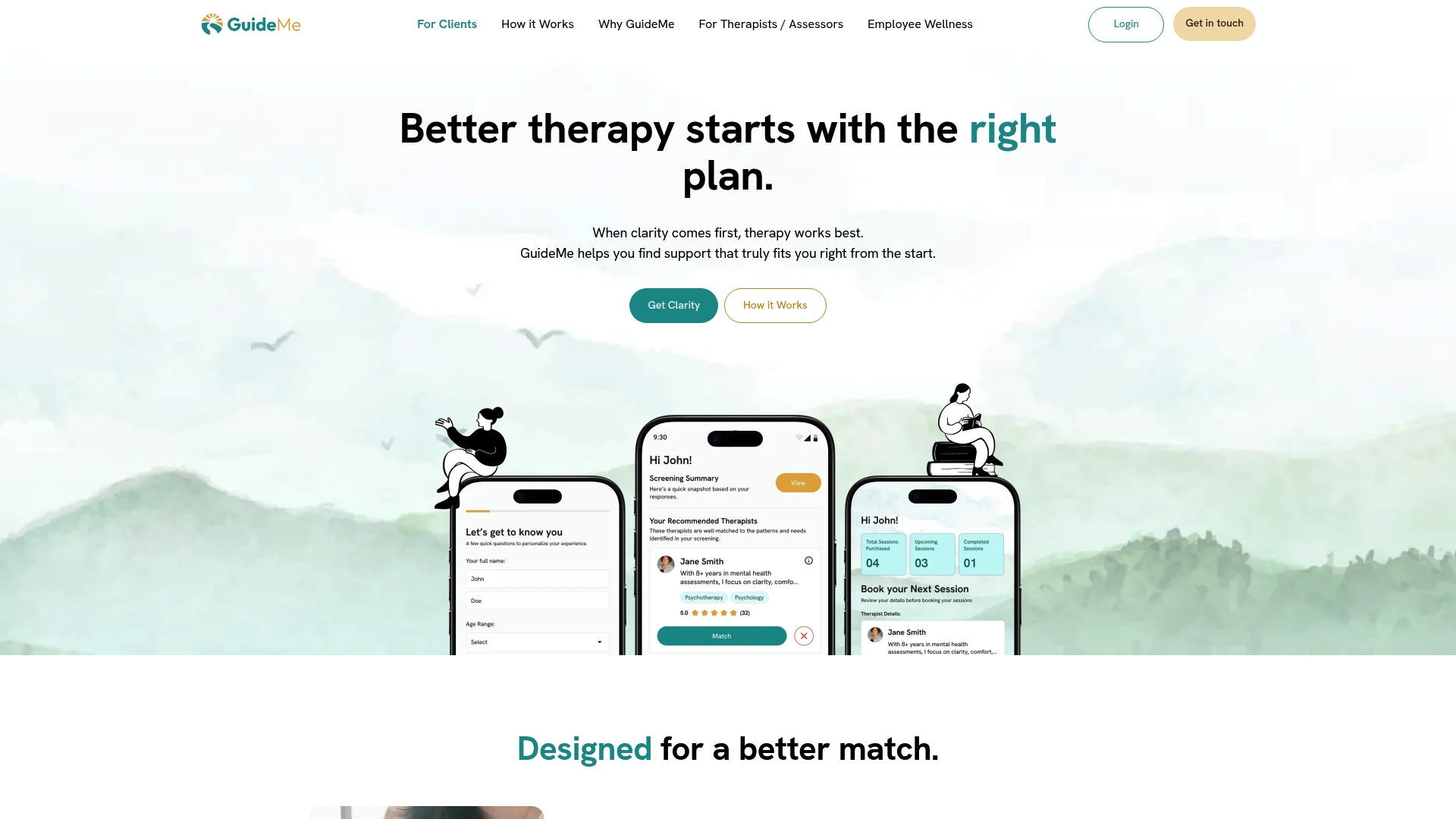
Through GuideMe's human-led, AI-powered platform, you receive an in-depth therapy plan based on your specific situation, preferences, and goals. From there, you are matched with the right therapist or programme, including group therapy options that suit your needs. Whether you are exploring group CBT for anxiety, looking for peer support in a structured therapeutic environment, or simply wanting to understand your options, GuideMe helps you find a group therapy session with confidence rather than guesswork. The right support is out there. Let GuideMe help you find it.
Frequently asked questions
Is group therapy as effective as individual therapy?
Yes, group therapy is as effective as individual therapy for depression, anxiety, PTSD, and suicidality, based on a meta-analysis of 172 randomised controlled trials.
What makes group therapy uniquely beneficial?
The group setting provides social connection, shared experience, and interpersonal learning that individual therapy cannot replicate, grounded in Yalom's therapeutic factors including universality, cohesiveness, and altruism.
Who should avoid group therapy?
People with high hostility or very poor motivation may struggle and are more likely to drop out. Careful screening and preparation before joining a group significantly improve outcomes for participants.
Are there benefits to combining group and individual therapy?
Yes, combining both approaches leads to the lowest risk of suicide attempts and produces the strongest overall outcomes, as shown in the combined approach research across multiple conditions.