

TL;DR:
- Assess team needs with surveys and goal clarity before choosing therapy formats.
- Different therapy types target communication, trust, or conflict, suited to specific team issues.
- Ongoing, regular therapy practices lead to lasting change compared to one-off team-building events.
Managing a team means navigating communication breakdowns, trust issues, remote working tensions, and low morale, often all at once. Many managers reach for the nearest solution, a team-building day or a one-off workshop, without pausing to ask whether the format actually fits the problem. Choosing the wrong approach wastes time, budget, and goodwill. This guide walks you through the main types of team therapy sessions available in corporate settings, how to assess what your team genuinely needs, how each format compares, and how to make a confident decision that supports lasting workplace change.
Table of Contents
- How to assess your team's needs before therapy
- Common types of team therapy sessions in the workplace
- Comparing team therapy formats: strengths and drawbacks
- How to choose (and adapt) the right session for your team-the-right-session-for-your-team)
- Why strategic, ongoing therapy beats one-off team building
- Next steps: bringing expert-led team therapy to your workplace
- Frequently asked questions
Key Takeaways
| Point | Details |
|---|---|
| Assess team needs | Use diagnostics like psychological safety polls to define priorities before therapy. |
| Know your options | Team therapy types include interpersonal, supportive, activity-based and process-focused sessions. |
| Context matters | Choose session formats that match your team's size, work style, and collaboration needs. |
| Regular sessions win | Ongoing therapy sessions deliver better outcomes than one-off events. |
| ROI is measurable | Evidence shows significant returns and improved team outcomes from therapy investments. |
How to assess your team's needs before therapy
Establishing what your team needs is the critical foundation before exploring therapy session types. Without a clear picture of the underlying issues, even the best therapeutic format can miss the mark entirely.
Start by clarifying your top goals. Are you looking to improve communication, rebuild trust after a difficult period, address stress and burnout, or support a team adjusting to hybrid working? Being specific here matters. A team struggling with remote isolation needs a different intervention to one dealing with interpersonal conflict in a shared office.
Once your goals are clear, use structured assessment tools to gather honest data. Consider the following approaches:
- Psychological safety polls measure whether team members feel safe to speak up, take risks, and share concerns without fear of judgement. Psychological safety benchmarks provide a useful starting point for comparing your team's scores against broader norms.
- Energy mapping asks individuals to rate how energised or drained they feel across different tasks, relationships, and team rituals. Patterns reveal where friction or disconnection lives.
- Pulse surveys offer quick, recurring check-ins that track sentiment over time, making it easier to see whether things are improving or worsening after an intervention.
Diagnosis is an essential step before choosing any therapy format. Skipping it often leads to generic sessions that fail to resonate. As noted in facilitation guidance for team-based work, integrating therapy into regular workflow, rather than treating it as a one-off event, produces significantly better outcomes. The sessions become part of how the team operates, not an interruption to it.
A thorough debrief after each session is equally important. Without structured reflection, insights fade quickly. Encourage participants to name one specific behaviour they will change and one team norm they will reinforce. This transfer step is what moves learning from the session into daily work.
Pro Tip: Pair your pulse survey with a short anonymous comments box. Numbers tell you how people feel; open comments tell you why.
If you are exploring behavioural health strategies for your team, starting with a proper assessment prevents costly missteps and makes every subsequent session more targeted and effective.
Common types of team therapy sessions in the workplace
Once you understand your team's particular needs, it is easier to pinpoint which therapy session types might be most effective. The landscape of workplace team therapy is broader than many managers realise, and each format brings distinct strengths.
Interpersonal group therapy (IPT-Work) focuses on relationships, communication patterns, and the social factors that affect mood and performance. IPT-Work adapted formats compare interpersonal and supportive group psychotherapy specifically for work-related stress and depression, showing meaningful benefits for both approaches in corporate contexts.
Supportive group therapy creates a structured space for team members to share experiences, feel heard, and build mutual understanding. It is less directive than interpersonal therapy and works well when teams need emotional validation before tackling behavioural change.

Activity-based therapy uses structured tasks, creative exercises, and collaborative challenges to surface team dynamics in action. It is engaging and accessible, particularly for teams that resist more formal therapeutic settings.
Process-oriented group therapy focuses on what happens within the group in real time, observing how members interact, communicate, and respond to one another. It is especially useful for teams with entrenched conflict or dysfunctional communication patterns.
Across these formats, common therapeutic techniques include active listening exercises, role-play scenarios, open sharing circles, icebreakers, journaling prompts, and structured problem-solving tasks. These techniques are adapted depending on whether sessions are delivered in-person, virtually, or in a hybrid format.
Pro Tip: For hybrid teams, use breakout rooms in virtual sessions to mirror the small-group dynamics that make in-person therapy effective. Smaller groups encourage more honest participation.
Here is a quick overview of session types and their primary applications:
| Session type | Primary focus | Best setting |
|---|---|---|
| Interpersonal group (IPT-Work) | Communication, workplace stress | In-person or virtual |
| Supportive group therapy | Emotional validation, morale | Any format |
| Activity-based therapy | Team dynamics, engagement | In-person or hybrid |
| Process-oriented therapy | Conflict, interaction patterns | In-person preferred |
Team size and diversity also shape the right choice. Larger, cross-functional groups often benefit from structured formats like IPT-Work, while smaller, more homogenous teams may respond better to open supportive sessions. Explore tailored team therapy strategies to understand how these formats can be adapted to your specific context.
Comparing team therapy formats: strengths and drawbacks
With the common types outlined, a head-to-head comparison can clarify when to use each approach.
| Format | Strengths | Drawbacks | Ideal for |
|---|---|---|---|
| Interpersonal group (IPT-Work) | Evidence-based, structured, targets stress | Requires trained facilitator | Teams with communication or stress issues |
| Supportive group therapy | Low barrier, emotionally safe | Less structured, slower change | Teams needing trust before action |
| Activity-based therapy | High engagement, visible dynamics | Results harder to measure | Teams resistant to formal therapy |
| Process-oriented therapy | Deep insight into group behaviour | Can surface conflict unexpectedly | Entrenched dysfunction |
Key considerations when comparing formats:
- Cost and time investment: Interpersonal and process-oriented formats typically require more sessions and a qualified therapist or facilitator, making them costlier upfront. Activity-based formats can be delivered at lower cost but may require more repetition to achieve lasting change.
- Engagement style: Introverts often find async formats, journaling exercises, and smaller breakout groups more accessible than open group discussions. Extroverts may thrive in activity-based or process-oriented settings.
- Remote and hybrid suitability: Supportive group therapy and structured IPT-Work formats adapt well to virtual delivery. Activity-based therapy works best in-person but can be partially replicated online with careful design.
- Cross-functional groups: Structured formats with clear agendas tend to work better when participants do not share daily working relationships.
"The evidence is clear: investing in workplace mental health is not just good for people, it is good for business. Behavioural health ROI research shows an average return multiple of 2.3, with net savings of $159 per member per month."
Those figures make a compelling case for moving beyond token gestures. The formats that produce the strongest ROI are those embedded in regular team routines, supported by skilled facilitators, and measured against clear outcomes. One-off sessions rarely deliver these results.
How to choose (and adapt) the right session for your team
After weighing the options and making comparisons, the next step is matching, then adapting, the best approach to your team's needs.
Follow these decision steps:
- Define the primary problem clearly. Is it communication, trust, stress, or conflict? Name it specifically before considering any format.
- Assess team readiness. Some teams need a lower-barrier entry point like supportive group sessions before they are ready for more intensive formats.
- Consider practical constraints. Budget, team size, remote or hybrid working arrangements, and facilitator availability all shape what is feasible.
- Choose a format and pilot it. Run two or three sessions before committing to a longer programme. Gather feedback after each one.
- Measure and adjust. Use pre and post surveys to track psychological safety scores, communication satisfaction, and stress levels. Course-correct based on the data.
Blending formats often produces the best results. You might begin with supportive group sessions to establish trust, then introduce IPT-Work techniques as the group becomes more cohesive, and layer in activity-based exercises to reinforce new behaviours.
Corporate therapy approaches work best for diverse teams with communication challenges, and adapting for remote or hybrid contexts via virtual formats is now standard practice. Async activities such as shared journaling or pre-session reflection prompts are essential for introvert-friendly delivery.
Pro Tip: Send a short three-question survey within 48 hours of each session. Immediate feedback is more accurate than retrospective reviews weeks later.
Psychotherapy research consistently supports the value of these approaches. Across therapeutic modalities, studies show moderate to large effect sizes (g=0.32 to 1.25), with effectiveness demonstrated globally, including in low and middle-income settings. These are not marginal gains. They represent meaningful, measurable improvements in how people work together.
Why strategic, ongoing therapy beats one-off team building
Here is an uncomfortable truth that many organisations avoid: most team-building events do not work. Not because the activities are poor, but because a single day cannot rewire communication habits, rebuild trust, or shift a team's culture. It takes repetition, reflection, and time.
The organisations that see real, lasting change are those that treat team therapy as a regular practice, not a periodic event. They embed short, structured sessions into the team's rhythm, whether that is a monthly group check-in, a quarterly facilitated review, or weekly peer feedback rituals. Each session builds on the last.
Therapy-style sessions also create something that icebreakers simply cannot: genuine psychological safety. When team members experience consistent, confidential, and professionally facilitated conversations, trust builds organically. And when that trust is paired with measurable goals, such as improved psychological safety scores or reduced conflict incidents, the work becomes purposeful rather than performative.
The shift we encourage is this: stop asking "What team event should we book this quarter?" and start asking "What ongoing practice will make this team genuinely stronger?" That question leads somewhere far more valuable.
Next steps: bringing expert-led team therapy to your workplace
Understanding the different types of team therapy sessions is a strong start. But moving from insight to action requires the right support. Working with experienced professionals ensures that sessions are properly assessed, facilitated, and followed through, rather than left to chance.
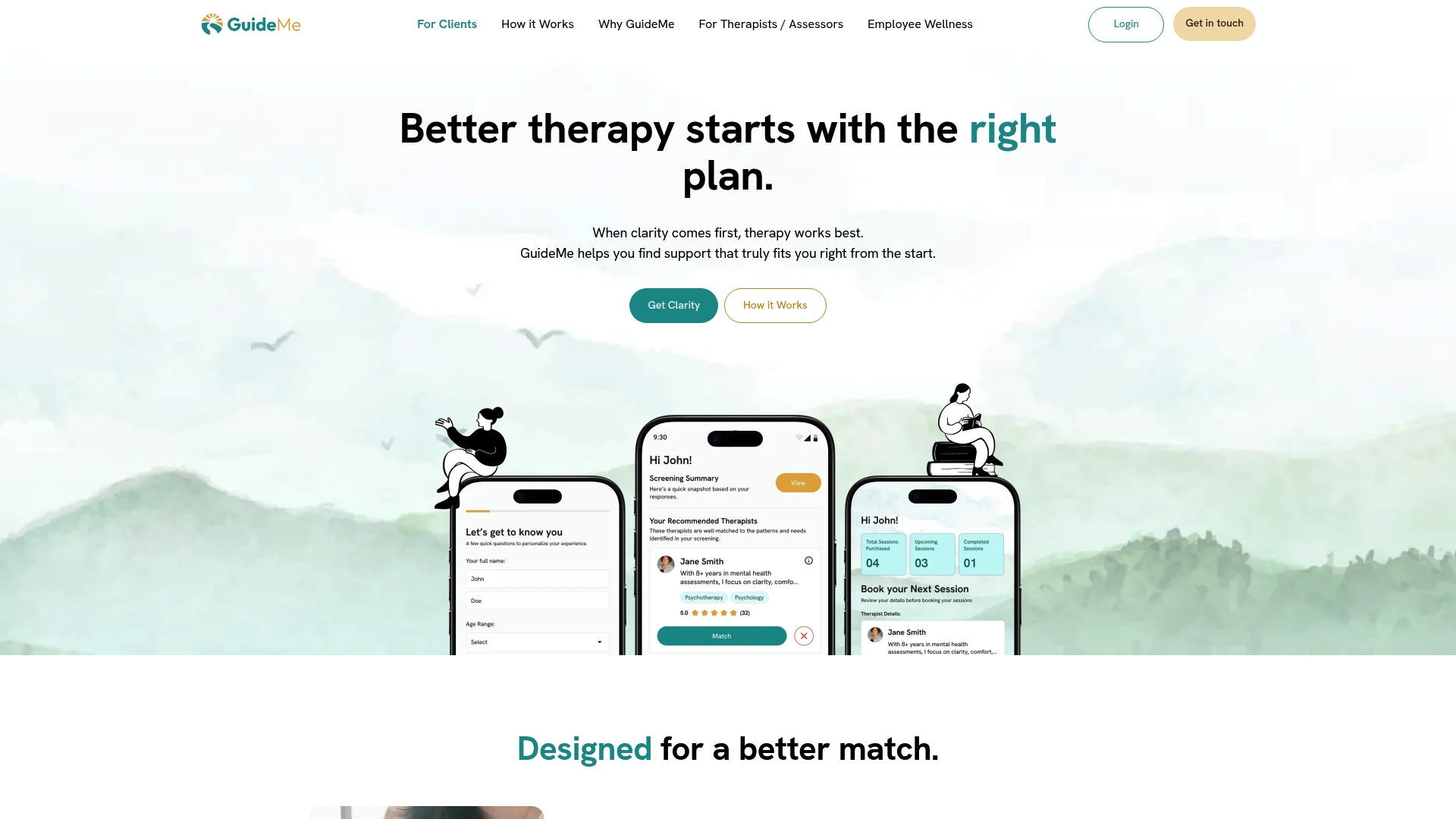
GuideMe makes it straightforward to connect with qualified therapists who specialise in workplace and group settings. Whether your team needs supportive group sessions, interpersonal formats, or a blended approach, expert-led team therapy is available through a platform designed to match you with the right professional from the outset. Take the next step and give your team the structured, ongoing support it deserves.
Frequently asked questions
What are the most effective types of team therapy for workplace stress?
Interpersonal group therapy and supportive group sessions are proven effective for workplace stress, particularly when tailored to the team's specific context. IPT-Work adapted formats show measurable benefits for both communication and mood in corporate environments.
How do team therapy sessions differ from team-building events?
Team therapy sessions use evidence-based interventions and ongoing facilitation to create lasting behavioural change. Traditional team-building events are typically one-off activities with little structured follow-up, which limits their long-term effectiveness in improving team dynamics.
Can remote and hybrid teams benefit from therapy sessions?
Yes. Virtual group formats and async tools allow therapy sessions to support psychological safety and cohesion across distributed teams. Virtual corporate therapy adaptations make introvert-friendly and remote-ready formats fully accessible.
What ROI can teams expect from investing in team therapy?
Large-scale research shows meaningful financial returns from workplace mental health investment. Behavioural health meta-analyses report an average ROI multiple of 2.3, with net savings of $159 per member per month.