

TL;DR:
- Group therapy is a structured, evidence-based treatment led by trained professionals for various mental health issues.
- It offers benefits like normalization, peer feedback, social learning, and cost-effectiveness, enhancing recovery.
- Suitability depends on motivation, stability, and goals; proper facilitator training ensures a safe, effective experience.
Many people assume group therapy is simply sitting in a circle and talking about your problems with strangers. In reality, it is a structured, evidence-based treatment with a skilled professional at its centre, and research consistently shows it produces strong outcomes for depression, anxiety, and trauma. If you have been curious about group therapy but felt unsure whether it is right for you, this guide will walk you through exactly how it works, what the evidence says, and what to expect from your first session. By the end, you will have the clarity to make a confident, informed decision about your mental health care.
Table of Contents
- What is group therapy and how does it work?
- Key benefits of group therapy: what can you expect?
- Is group therapy right for you? Suitability and considerations
- What actually happens in a group therapy session?
- The hidden value of group therapy: what most miss
- Ready to start your group therapy journey?
- Frequently asked questions
Key Takeaways
| Point | Details |
|---|---|
| Powerful shared healing | Group therapy lets you learn and heal with others facing similar challenges, using evidence-based approaches. |
| Not one-size-fits-all | Suitability depends on your goals and readiness—professional advice helps you make the right decision. |
| Expert guidance matters | Effective group sessions rely on trained professionals to create a safe, structured, and compassionate environment. |
| Open to all backgrounds | Group therapy’s benefits are supported by research across a range of mental health issues and ages. |
What is group therapy and how does it work?
Group therapy is a structured therapeutic process in which a trained facilitator guides a small group of people, typically between five and fifteen, towards shared therapeutic goals. It is not a drop-in chat session or a support group run by peers. It is a professionally led treatment, and the APA recognises it as a speciality requiring careful group composition and skilled leadership.
Sessions follow a recognisable pattern, though the format varies by approach and group type. Most sessions include:
- Welcome and check-in: The facilitator opens the session and invites members to share briefly how they are feeling.
- Focused activity or discussion: The group works through a structured topic, skill, or theme relevant to all members.
- Sharing and feedback: Participants reflect on the theme and respond to one another in guided ways.
- Closure: The facilitator summarises key insights and prepares the group to leave on stable emotional footing.
The core roles in any group include the therapist or facilitator, who holds clinical responsibility, and the participants, who are active contributors rather than passive listeners. Some groups also include a co-leader, particularly when working with larger or more complex groups.
It helps to understand how group therapy compares with individual therapy, because both have genuine value and they are not always interchangeable.
| Feature | Group therapy | Individual therapy |
|---|---|---|
| Number of participants | 5 to 15 people | One client |
| Cost per session | Generally lower | Generally higher |
| Personalised focus | Shared goals | Fully individual |
| Peer learning | Yes | No |
| Scheduling flexibility | Fixed group times | More flexible |
| Feedback sources | Therapist and peers | Therapist only |
As you can see, neither format is universally superior. They serve different needs, and many people benefit from using both at different stages of their journey.
"Group dynamics and group climate require special and ongoing attention by the group leader, and careful composition of the group is essential to therapeutic success."
If you want a broader overview before diving deeper, a group therapy guide can help you map out your options clearly.
Key benefits of group therapy: what can you expect?
Group therapy offers benefits that individual therapy simply cannot replicate, and the evidence behind it is considerable. Understanding those benefits helps you weigh up whether this approach fits your situation.
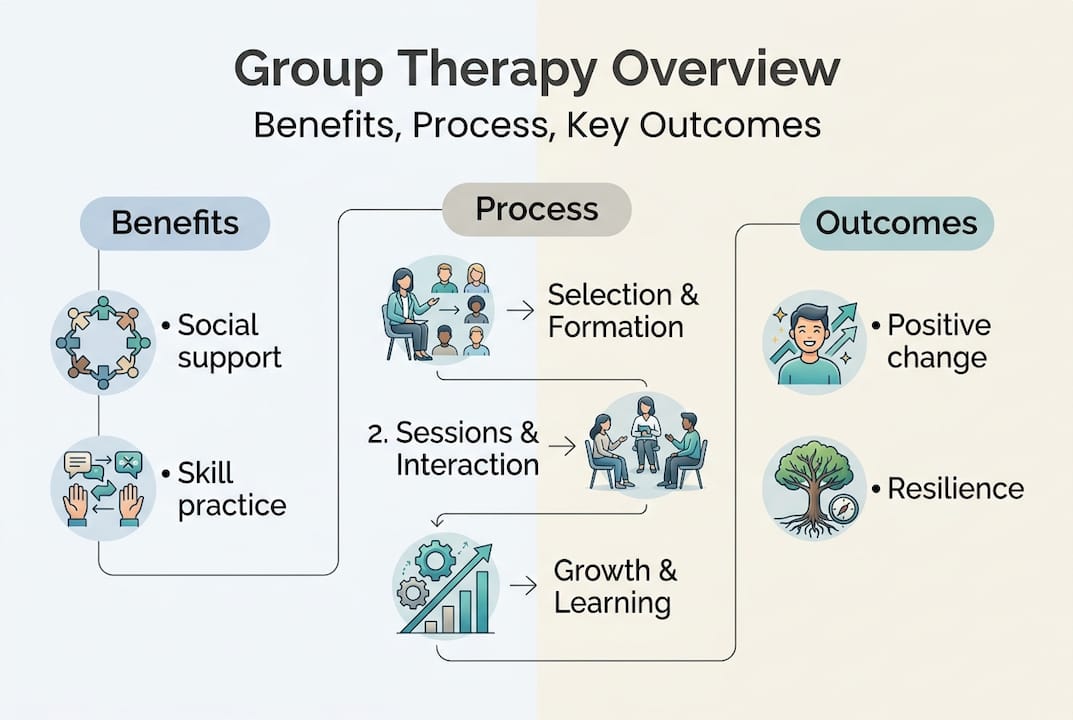
A major meta-analysis of group therapy found large effect sizes for youth depression, anxiety, and PTSD, particularly when groups had strong cohesion and were culturally adapted to their members. The standardised mean difference for depression was SMD -0.72, which is considered a large and clinically meaningful effect. Those are not trivial numbers.
| Condition | Evidence level | Key finding |
|---|---|---|
| Depression | High | Large effect size (SMD -0.72) |
| Anxiety | High | Significant symptom reduction |
| PTSD | Moderate to high | Effective, especially with cohesion |
| Relationship difficulties | Moderate | Improved interpersonal functioning |
Beyond the statistics, here is what participants typically report gaining from group therapy:
- Normalisation: Hearing others describe similar struggles reduces shame and isolation.
- Social learning: Watching how others handle situations builds practical coping skills.
- Honest feedback: Peers offer perspectives that a one-on-one therapist may not replicate.
- Accountability: Regular attendance creates a sense of commitment that supports consistency.
- Cost-effectiveness: Group sessions are often significantly more affordable than individual appointments.
The social support dimension is particularly powerful. Many people enter group therapy feeling that their experiences are unique or shameful. Discovering that others share those feelings, and that they are managing them, is itself therapeutic. Feeling less alone is not a soft outcome. It is a measurable driver of recovery.

Pro Tip: Group therapy can build resilience and interpersonal skills that are genuinely difficult to practise in a one-on-one setting. If social anxiety or relationship difficulties are part of your experience, a group format may offer advantages that individual sessions cannot.
Is group therapy right for you? Suitability and considerations
Group therapy is not a universal solution, and knowing whether it suits your current needs is an important step before committing. The right fit makes a real difference to the outcome.
You are likely to benefit from group therapy if you:
- Are motivated to engage with others in a structured setting.
- Can maintain consistent attendance over a period of weeks or months.
- Are open to sharing and receiving feedback from peers.
- Have a goal that aligns well with a group focus, such as managing anxiety, building coping skills, or processing grief.
- Have enough emotional stability to engage without being destabilised by others' experiences.
However, group therapy is not suitable for everyone, and careful selection is needed to avoid a poor fit. There are situations where another approach is more appropriate:
- Severe or recent trauma may require more personalised, one-on-one pacing before group work is appropriate.
- High levels of hostility or interpersonal difficulty can disrupt the group and limit therapeutic gain for all members.
- Active crisis or instability may make it hard to participate productively or safely.
- Need for deep individual focus on complex personal history may be better served by individual therapy.
Before joining a group, it is worth reflecting on a few key questions: How do you feel about sharing personal experiences in front of others? Are you currently in a stable enough place to hear and hold space for others' pain? Does the group's focus align with your own therapeutic goals?
Pro Tip: A thoughtful evaluation with a mental health professional before joining a group can save you from a poor match and help you start with confidence rather than uncertainty.
What actually happens in a group therapy session?
Knowing what to expect from a session can make the idea feel far less daunting. Here is a step-by-step picture of what a typical group therapy session involves.
- Pre-session preparation: Arrive a few minutes early. You may be asked to reflect on a specific prompt or simply to check in with how you are feeling.
- Welcome: The facilitator opens the session, acknowledges who is present, and sets the tone.
- Group check-in: Each member shares briefly, often just a sentence or two about their current emotional state.
- Focused activity or discussion: This is the core of the session. Activities may include structured sharing on a theme, role-playing scenarios, or skill-building exercises such as mindfulness or cognitive reframing techniques.
- Reflection and peer response: Members respond to one another with guided prompts from the facilitator, creating space for feedback and connection.
- Wrap-up and closure: The facilitator draws the session to a close, highlights key themes, and ensures everyone leaves in a grounded state.
Group rules are established early and revisited regularly. Confidentiality is a cornerstone. What is shared in the room stays in the room, and this norm is taken seriously by both the facilitator and participants.
"Preparation, clear expectations, and proper training for group leaders are essential for a successful therapeutic group experience."
Leaders are trained to manage group dynamics, handle emotional disclosures sensitively, and keep the group focused. This is why starting group therapy with a properly credentialled and experienced facilitator matters so much.
Pro Tip: Arrive ready to listen as much as you share. Some of the most valuable moments in group therapy come from witnessing others, not just from speaking yourself.
The hidden value of group therapy: what most miss
Most people entering group therapy for the first time focus almost entirely on the therapist. They want to know about their qualifications, their style, their approach. That is understandable, but it misses something important.
The peer relationships within a group are often where the deepest change happens. Being truly seen and understood by someone who has lived a similar experience, not just assessed by a professional, can shift how you see yourself in ways that are hard to achieve otherwise. The group becomes a kind of living evidence that you are not broken, not alone, and not without options.
Cohesion, the sense of belonging and trust that develops within a group over time, is one of the strongest predictors of positive outcomes. It is not the technique or the worksheet that drives change. It is the culture of the group itself. As you explore group therapy insights, keep that in mind. Be open to the connections, not just the content. The relationships you build in that room, however briefly, are part of the treatment.
Ready to start your group therapy journey?
If this guide has helped you see group therapy in a new light, the next step is finding the right option for your specific situation.

At GuideMe, we know that finding the right therapeutic format can feel overwhelming. That is why our platform is designed to help you understand your mental health needs first and then find a group therapy option that genuinely fits. Whether you are certain group therapy is for you or still weighing it up, GuideMe combines human expertise with AI-powered matching to give you clearer choices and a more comfortable start. You do not have to figure this out alone. We are here to help you take that first step with confidence.
Frequently asked questions
How do I know if group therapy is suitable for my needs?
Consult a mental health professional to evaluate your goals, challenges, and readiness for a group format. As careful selection is needed to avoid a poor fit, some situations genuinely require more individualised care before group work is appropriate.
What types of issues are commonly addressed in group therapy?
Group therapy is effective for depression, anxiety, trauma, relationship difficulties, and coping skills, particularly when members share similar challenges. Meta-analyses show large effects for depression, anxiety, and PTSD when group cohesion is strong.
What should I expect from my first group therapy session?
Expect an introduction, a discussion of group rules, and an opportunity to get to know other members at a comfortable pace. There is no pressure to share more than you feel ready for, and leader preparation ensures the session is structured and safe from the outset.
Is group therapy led by a qualified professional?
Yes. Group therapy sessions are facilitated by a therapist trained specifically in group dynamics and evidence-based techniques. The APA recognises group therapy as a speciality, meaning qualified facilitators bring specific expertise beyond general counselling training.