

Trust is not a soft skill or a nice-to-have in therapy. It is a measurable, foundational element that directly influences your treatment outcomes. Research shows that therapeutic alliance predicts symptom improvement across diverse conditions, yet many people entering therapy underestimate how crucial trust is to their success. This guide explains what trust means in therapy, how it is built and maintained, what happens when it breaks down, and why prioritising trust from the start can transform your therapeutic experience.
Table of Contents
- What is trust in therapy and why it matters
- How trust is built and maintained in therapy
- Challenges to trust: ruptures, repair and special cases
- The impact of trust on therapy outcomes and your experience
- Start your therapy journey with confidence
- Frequently asked questions
Key takeaways
| Point | Details |
|---|---|
| Trust underpins therapeutic alliance | A strong alliance built on trust is essential for positive therapy outcomes and sustained progress. |
| Building trust requires specific skills | Therapists use empathy, credibility, active listening, and transparency to establish and nurture trust. |
| Ruptures can be repaired effectively | Most trust breakdowns can be addressed through acknowledgement, apology, and collaborative problem-solving. |
| Early trust-building improves retention | Establishing trust early in therapy enhances engagement, reduces dropout, and accelerates symptom improvement. |
| Patient feedback strengthens outcomes | Sharing your perceptions of trust with your therapist improves treatment effectiveness and collaboration. |
What is trust in therapy and why it matters
Trust in therapy is not an abstract feeling. It is a core component of the therapeutic alliance, involving agreement on goals, tasks, and an emotional bond between you and your therapist. This alliance is the collaborative relationship that makes therapy work. Without it, even the most evidence-based techniques struggle to deliver results.
Research consistently demonstrates that trust is a powerful predictor of therapy success. Meta-analyses reveal a significant positive correlation between therapeutic alliance and outcomes, with r=0.278 across 295 studies and over 30,000 patients. This means that the quality of your relationship with your therapist matters as much as, and sometimes more than, the specific therapeutic approach being used.
The therapeutic alliance rests on three pillars. First, you and your therapist must agree on the goals of treatment. What do you want to achieve? Second, you need to agree on the tasks or methods to reach those goals. Third, you must develop a genuine emotional connection characterised by mutual respect, warmth, and safety. Trust weaves through all three pillars, enabling you to share vulnerably, engage fully, and persist through difficult moments in therapy.
Understanding this helps you appreciate why trust-building is not optional but central to your therapy journey. A strong alliance fosters sustained engagement, reduces dropout rates, and creates the psychological safety necessary for meaningful change. When you trust your therapist, you are more likely to explore painful emotions, challenge unhelpful patterns, and experiment with new behaviours. Platforms like GuideMe recognise this foundational importance, helping you find therapists who prioritise building strong, trust-based alliances from the very first session.
"The therapeutic alliance is the most robust predictor of treatment success, transcending theoretical orientation and specific techniques."
Trust is not a passive byproduct of therapy. It is an active ingredient that you and your therapist co-create together. Recognising its importance empowers you to assess whether your therapeutic relationship is working and to advocate for the trust you need to thrive.
How trust is built and maintained in therapy
Building trust in therapy is a deliberate, evidence-based process. Therapists employ specific strategies to establish credibility and foster safety from your very first session. Building trust involves therapist credibility, consistency, transparency, empathy, and active listening. These are not abstract qualities but observable behaviours that you can recognise and evaluate.
Therapists often begin with what is called borrowed trust. This comes from their professional credentials, reputation, and the therapeutic setting itself. You trust that your therapist has the training and expertise to help you. However, borrowed trust is fragile. It must be reinforced through consistent, empathic behaviour over time.
Consistency is crucial. Your therapist should show up reliably, maintain clear boundaries, and follow through on commitments. If they say they will send you a resource or check in on a particular issue, they should do so. This predictability creates a safe container for your vulnerability.
Transparency also builds trust. Effective therapists explain their approach, clarify what you can expect from sessions, and invite questions. They do not hide behind jargon or mystify the therapeutic process. Instead, they collaborate with you as an informed partner in your own healing.
Empathy and active listening are perhaps the most visible trust-building tools. When your therapist reflects your feelings accurately, validates your experiences, and demonstrates genuine curiosity about your inner world, you feel seen and respected. This validation is not about agreement. It is about acknowledgement. You can disagree with your therapist and still feel heard.
Trust develops in phases. Early sessions often focus on stabilising crises and establishing safety. As trust deepens, you may explore more vulnerable material. Over time, the relationship becomes a secure base from which you can integrate progress and experiment with change. Platforms like GuideMe support this process by matching you with therapists whose style and approach align with your needs, increasing the likelihood of a strong initial connection.
- Therapists demonstrate empathy through reflective listening and validation of your experiences.
- Consistency in session structure and follow-through reinforces reliability and safety.
- Transparency about methods and expectations fosters collaboration and informed consent.
- Active engagement with your feedback shows respect and adaptability.
Pro Tip: Pay attention to how your therapist responds when you express doubt or discomfort. A trustworthy therapist welcomes these moments as opportunities to strengthen the relationship rather than defending themselves or dismissing your concerns.
Challenges to trust: ruptures, repair and special cases
Trust in therapy is not immune to breakdown. Ruptures happen when something damages the therapeutic alliance, leaving you feeling misunderstood, dismissed, or unsafe. Coercive measures, empathic failures, and power imbalances cause trust loss, but most ruptures can be repaired with acknowledgement and apology.
Common causes of ruptures include misunderstandings about goals, boundary violations, perceived judgement, or moments when your therapist misses the mark emotionally. You might feel unheard, invalidated, or as though your therapist is pushing an agenda that does not fit your experience. These moments are uncomfortable, but they are also normal.
What matters most is how ruptures are addressed. Effective repair involves open acknowledgement of the rupture, a genuine apology if warranted, and collaborative problem-solving to prevent recurrence. Rupture-repair processes strengthen alliance, and patient ambivalence linked to ruptures can be addressed collaboratively. In fact, successfully repairing a rupture often deepens trust more than if the rupture had never occurred.

Some ruptures are more difficult to repair. In cases involving paranoia, severe trauma, or significant power imbalances, rebuilding trust requires specialised skills and patience. However, even in these challenging scenarios, most therapeutic relationships can recover if both parties commit to the repair process.
You play an active role in rupture repair. If you feel your trust has been compromised, bringing this up directly with your therapist is essential. A skilled therapist will not become defensive. Instead, they will explore your concerns with curiosity and work with you to restore safety.
- Recognise when you feel disconnected, misunderstood, or unsafe in therapy.
- Share your concerns directly with your therapist, even if it feels uncomfortable.
- Observe how your therapist responds to your feedback.
- Collaborate on solutions that address the rupture and prevent future issues.
- Reflect on whether the repair process strengthens or weakens your trust.
Pro Tip: If your therapist consistently dismisses your concerns or becomes defensive when you raise issues, this is a red flag. Trust requires mutual respect and accountability. Platforms like GuideMe can help you find a better match if your current therapeutic relationship is not meeting your needs.
"Ruptures are not failures. They are opportunities to model healthy conflict resolution and deepen the therapeutic bond."
Understanding that ruptures are normal and repairable helps you navigate the inevitable bumps in your therapeutic journey with confidence and agency.
The impact of trust on therapy outcomes and your experience
Trust is not just a feel-good factor. It has measurable, tangible effects on your therapy outcomes. Strong therapeutic alliance predicts symptom improvement, relapse prevention, and better functioning in major depressive disorder. This pattern holds across diverse diagnoses, from anxiety and trauma to personality disorders and substance use.
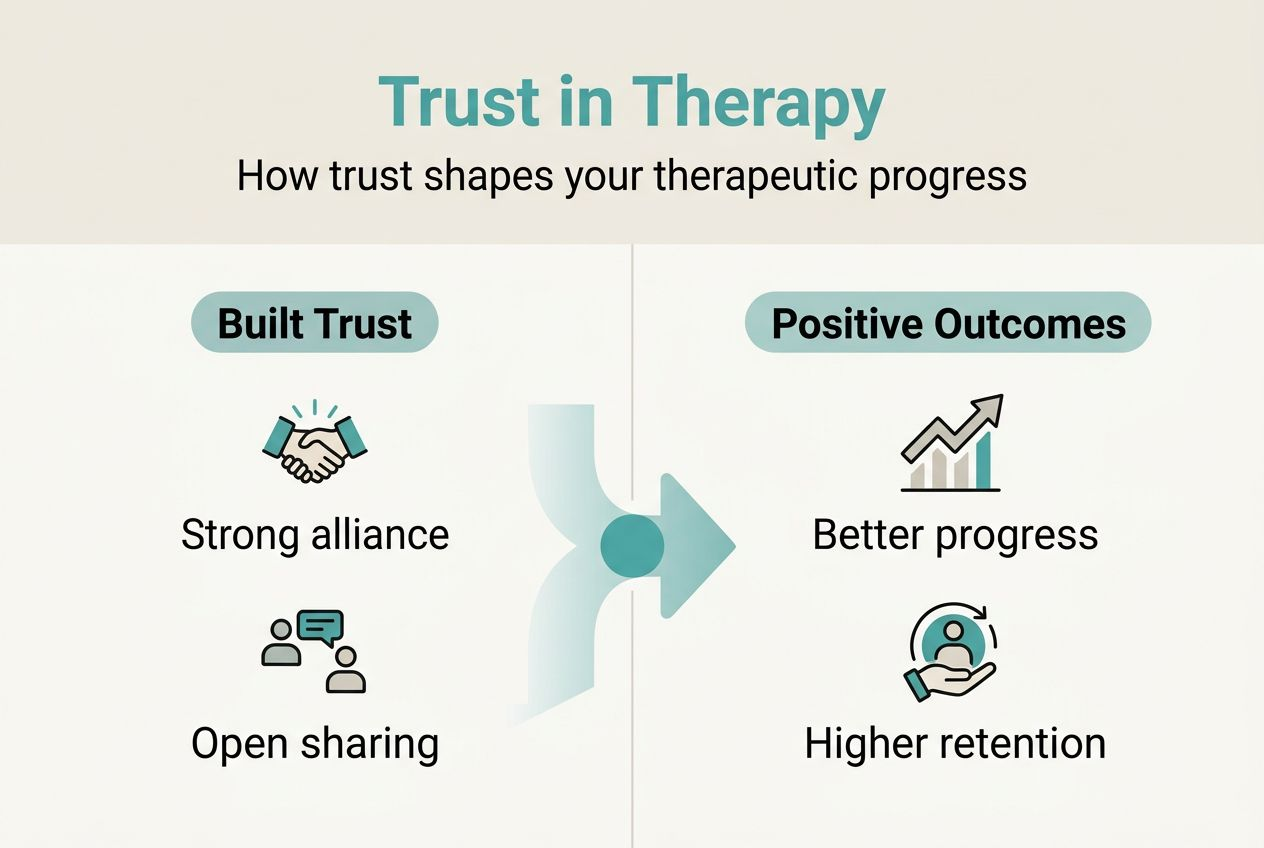
Patient feedback to therapists on trust and respect also plays a critical role. RCTs show therapist feedback on patient-reported trust improves outcomes. When therapists receive regular feedback about how safe and respected you feel, they can adjust their approach in real time, enhancing engagement and effectiveness.
Trust boosts retention. Therapy requires sustained effort over weeks or months. When you trust your therapist, you are more likely to show up consistently, even when sessions feel difficult. This continuity is essential for meaningful progress. Dropout rates are significantly higher when the therapeutic alliance is weak.
The relationship between trust and symptom improvement can be bidirectional. As you begin to feel better, your trust in your therapist may deepen. Conversely, as trust grows, you may feel safer exploring painful material, accelerating symptom relief. This positive feedback loop underscores why prioritising trust early in therapy leads to better long-term results.
| Outcome | Impact of strong trust |
|---|---|
| Symptom reduction | Faster and more sustained improvement across diagnoses |
| Retention | Higher session attendance and lower dropout rates |
| Engagement | Greater willingness to explore difficult emotions and behaviours |
| Relapse prevention | Reduced risk of symptom return after therapy ends |
| Overall functioning | Improved daily functioning and quality of life |
Understanding these impacts empowers you to prioritise trust when choosing a therapist and to actively nurture the alliance throughout your therapy journey. You are not a passive recipient of treatment. You are a co-creator of the therapeutic relationship, and your investment in building trust directly shapes your outcomes.
- Trust enhances your willingness to engage fully in therapeutic tasks and homework.
- A strong alliance provides emotional support during setbacks and difficult phases.
- Regular feedback to your therapist about trust strengthens collaboration and responsiveness.
- Prioritising trust early reduces the risk of dropout and accelerates progress.
Platforms like GuideMe recognise that trust is foundational to therapy success. By helping you find therapists who align with your values and communication style, GuideMe increases the likelihood of a strong initial alliance, setting you up for a more effective and satisfying therapeutic experience.
Start your therapy journey with confidence
Now that you understand the vital role of trust in therapy, you can approach your therapeutic journey with clarity and intention. GuideMe is designed to help you find trusted therapists who prioritise building strong, collaborative alliances from the very first session. Our platform combines human expertise with AI-powered matching to connect you with therapists whose approach, style, and values align with your needs.
We offer personalised support and resources to help you assess whether your therapeutic relationship is working and to navigate challenges like ruptures with confidence. Whether you are starting therapy for the first time or seeking a better fit, GuideMe empowers you to prioritise trust and maximise your therapy outcomes. Your mental health deserves a relationship built on safety, respect, and genuine collaboration.
Frequently asked questions
Why is trust so important in therapy?
Trust is essential because it creates the psychological safety needed for you to share vulnerably and engage fully in the therapeutic process. Without trust, even evidence-based techniques struggle to deliver results. Research shows that the therapeutic alliance, built on trust, is one of the strongest predictors of positive outcomes across all therapy types.
How can I tell if I trust my therapist?
You likely trust your therapist if you feel safe sharing difficult emotions, believe they have your best interests at heart, and sense that they genuinely understand and respect you. You should feel heard, validated, and confident that your therapist is competent and reliable. If you frequently feel judged, dismissed, or unsafe, trust may be compromised.
What should I do if I feel my trust has been broken?
Bring your concerns directly to your therapist. A skilled therapist will welcome this feedback and work collaboratively to repair the rupture. Pay attention to how they respond. If they become defensive or dismissive, this is a red flag. Most ruptures can be repaired with acknowledgement, apology, and problem-solving, and doing so often strengthens the alliance.
Can trust be built quickly, or does it take time?
Trust develops in phases. Some initial trust, often called borrowed trust, comes from your therapist's credentials and professionalism. However, deeper trust requires consistent, empathic behaviour over time. Early trust-building strategies like transparency, active listening, and reliability can accelerate the process, but genuine trust typically deepens as you experience your therapist's responsiveness and care across multiple sessions.
How does trust affect my therapy outcomes?
Strong trust is linked to faster symptom improvement, better retention, reduced relapse risk, and improved overall functioning. When you trust your therapist, you are more likely to engage fully in therapy, persist through difficult moments, and collaborate effectively on treatment goals. Patient feedback on trust also helps therapists adjust their approach, further enhancing outcomes.