

TL;DR:
- Therapists utilize evidence-based techniques, build strong alliances, and monitor progress for effective therapy.
- Key qualities of effective therapists include empathy, warmth, active listening, and flexibility.
- Therapy success depends more on the relationship and client engagement than just the technique used.
Many people assume therapists simply listen and offer advice. In reality, their work is far more structured, skilled, and science-backed than that. Therapists facilitate psychotherapy through building a strong therapeutic alliance, using evidence-based interventions, and monitoring your progress over time. If you have ever felt unsure about what a therapist actually does, or wondered whether therapy is really working for you, this article will give you clear, honest answers. We will cover what defines a therapist's role, the skills that make them effective, the approaches they use, and the ethical boundaries that guide their work.
Table of Contents
- What does a therapist really do?
- The skills and qualities that make an effective therapist
- How therapists help: evidence-based approaches and the therapeutic alliance
- Ethical boundaries and dilemmas in therapy
- Why your relationship with your therapist may matter more than the technique
- Find the right support for your mental health journey
- Frequently asked questions
Key Takeaways
| Point | Details |
|---|---|
| Therapists are collaborative professionals | They guide therapy by building trust, using proven methods, and adapting to your needs. |
| Therapeutic alliance drives outcomes | The relationship between you and your therapist has a major impact on how effective therapy is. |
| Skills and ethics matter | An effective therapist combines empathy, expertise, and strong boundaries to support your journey. |
| Measure and communicate | Progress in therapy is tracked together, so honest communication helps you get the most out of each session. |
What does a therapist really do?
Therapists are not the same as friends who listen, GPs who prescribe, or coaches who set goals. They are trained mental health professionals who assess your wellbeing, offer structured support, and work with you to facilitate meaningful change. That distinction matters, because knowing what a therapist actually does helps you get more from your sessions.
Here is a quick comparison to make it concrete:
| Support type | Primary focus | Structured methods | Tracks progress |
|---|---|---|---|
| Therapist | Mental health and emotional wellbeing | Yes, evidence-based | Yes |
| GP | Physical and general health | Partially | Sometimes |
| Friend | Emotional support | No | No |
| Coach | Goals and performance | Yes, but not clinical | Varies |
The table shows why therapy occupies a unique space. A friend can be kind and supportive, but they cannot offer therapist-supported techniques grounded in clinical training and research.
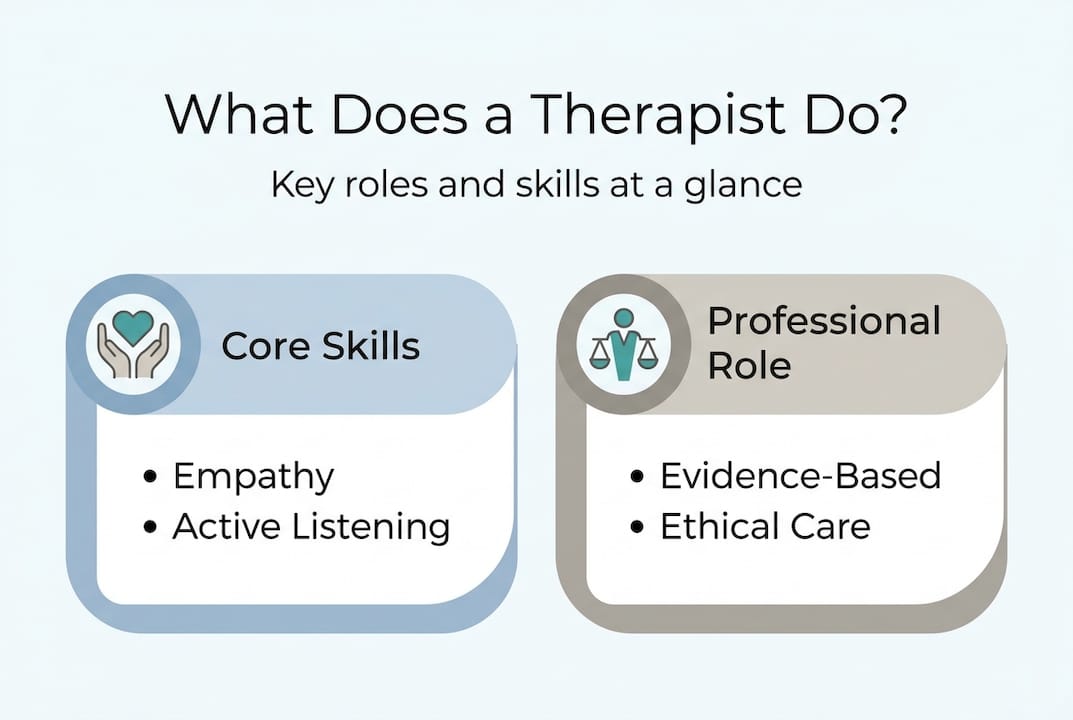
At the core of a therapist's work are three key activities:
- Building a therapeutic relationship — creating a space where you feel safe enough to be honest
- Tailoring interventions — choosing approaches that suit your specific needs and goals
- Tracking progress — regularly reviewing how you are doing and adjusting the plan accordingly
"Therapists facilitate psychotherapy through building an alliance, using evidence-based interventions, and monitoring progress." — American Psychological Association
The therapeutic relationship, often called the alliance, is particularly important. Research consistently shows it is one of the strongest predictors of whether therapy helps. Without trust and collaboration, even the best techniques fall short. This is why a good therapist invests time in understanding you as a person, not just your symptoms.
Therapists also work within a professional framework. They hold recognised qualifications, follow ethical codes, and engage in ongoing supervision. This structure protects you and ensures the support you receive meets a consistent standard.
The skills and qualities that make an effective therapist
With a broad sense of what therapists do, let us explore the personal and professional qualities that make them effective. Not every skilled therapist looks the same, but certain core qualities appear consistently in those who achieve the best outcomes.
Core therapist competencies include a mix of personality traits and learned skills:
- Empathy — genuinely understanding your experience without judgement
- Warmth — creating a sense of care and acceptance in sessions
- Active listening — paying close attention to what you say, and what you do not say
- Flexibility — adapting their approach when something is not working for you
- Grounding in human psychology — understanding how thoughts, feelings, and behaviours connect
- Assessment skills — identifying what is happening and what kind of support fits best
Some of these are natural traits, and some are developed through training and experience. The important thing is that they work together. A therapist who is warm but inflexible may struggle to adapt when your needs change. One who is technically skilled but lacks empathy may leave you feeling unheard.

Here is a striking finding: therapist interpersonal skills account for 26.79% of the therapist effect on outcomes. That means more than a quarter of how much therapy helps you comes down to how your therapist relates to you as a person, not just the method they use.
Pro Tip: Do not be afraid to ask your therapist how they tailor their approach to your specific needs. A good therapist will welcome that question and give you a clear, honest answer.
You can recognise these qualities in real sessions by noticing whether your therapist reflects back what you share, whether they check in about how the sessions feel, and whether they adjust their style based on your feedback. These small signals tell you a lot about the quality of care you are receiving. Active listening and flexibility are not just nice to have; they are indicators of a therapist who is genuinely invested in your progress.
How therapists help: evidence-based approaches and the therapeutic alliance
Having explored therapist skills, let us see how these are put into practice and why the therapist-client relationship is so powerful.
Therapists draw on a range of evidence-based interventions depending on your needs. Here is a summary of the most common approaches:
| Approach | Best suited for | Key outcome |
|---|---|---|
| Cognitive Behavioural Therapy (CBT) | Anxiety, depression, OCD | Changes unhelpful thought patterns |
| Dialectical Behaviour Therapy (DBT) | Emotional dysregulation, trauma | Builds distress tolerance and regulation |
| Person-Centred Therapy | Low self-esteem, life transitions | Builds self-acceptance and autonomy |
| EMDR | Trauma and PTSD | Reduces distress linked to traumatic memories |
| Psychodynamic Therapy | Long-standing patterns, relationships | Increases self-awareness and insight |
Psychotherapy shows small to large effect sizes across a wide range of conditions, and the therapist's role is central to those results. The approach matters, but so does the person delivering it.
The therapeutic alliance is the working relationship between you and your therapist. It includes agreement on goals, agreement on the tasks of therapy, and the emotional bond between you. Alliance robustly correlates with outcomes in both face-to-face therapy (r=0.278) and online therapy (r=0.275). In plain terms, the stronger your relationship with your therapist, the better your results are likely to be.
Here are four steps to strengthen that alliance:
- Be honest about what is and is not working — your therapist cannot adapt if they do not know
- Share your goals early — clarity about what you want helps shape the direction of sessions
- Give feedback regularly — even small observations about how sessions feel are valuable
- Raise concerns directly — if something feels off, saying so is part of the process, not a disruption to it
Pro Tip: Therapy is a collaborative process. Bring your feedback to sessions the same way you would bring any other important topic. Your therapist genuinely wants to hear it.
Progress in therapy is not just a feeling. Therapists use structured tools to track change over time, reviewing goals and adjusting their approach based on what the evidence shows.
Ethical boundaries and dilemmas in therapy
Beyond what therapists do well, it is also vital to understand where boundaries lie and what ethical responsibilities guide their work.
One of the most important things to know is that therapy is confidential, but not unconditionally so. Your therapist will not share what you discuss without your consent, except in specific circumstances. If there is a risk of serious harm to you or someone else, they have a duty to act. This is not a breach of trust; it is a legal and ethical obligation designed to keep people safe.
Therapists regularly navigate difficult ethical territory. Common dilemmas include:
- Confidentiality versus safety — when a client discloses a risk of harm
- Dual relationships — when a therapist knows a client in another context, such as socially or professionally
- Boundary violations — maintaining appropriate professional distance
- Value conflicts — when a therapist's personal values differ from a client's choices
- Therapist impairment — managing their own mental health to remain effective
"Edge cases include confidentiality vs. safety, dual relationships, boundary violations, value conflicts with clients, and therapist impairment."
When a therapist faces a boundary issue, they do not make decisions alone. Ethical decision-making models guide them to balance your autonomy, the principle of doing no harm, and the goal of acting in your best interest. They may consult a supervisor or colleague, and in some cases they will explain the situation to you directly.
If you ever feel a boundary has been crossed, you have the right to raise it. Professional bodies exist to investigate concerns, and a good therapist will take your feedback seriously. Knowing your rights in therapy helps you feel more confident and in control of the process.
Why your relationship with your therapist may matter more than the technique
Most guides to therapy focus heavily on which approach is best, whether CBT, psychodynamic work, or something else. That framing is understandable, but it misses something important.
Success in therapy hinges on relational factors like alliance and therapist effect at least as much as specific techniques. The person you work with, and the quality of the relationship you build together, shapes your outcomes in ways that no single method can guarantee.
This means that if you feel the fit is wrong, that is not a small thing to push through. It is meaningful information. Seeking a better match is not giving up on therapy; it is taking it seriously. The therapist effect is real: two people using the same approach can produce very different results depending on their relational skills and how well they connect with you.
What most articles do not say is this: your active engagement matters just as much as your therapist's skill. Therapy is not something that happens to you. It is something you do together. Showing up with honesty, sharing feedback, and staying curious about your own patterns all contribute to better outcomes. The technique is the framework, but the relationship and your participation are what make it work.
Find the right support for your mental health journey
Understanding what a therapist does is a powerful first step. But knowing it and finding the right person to work with are two different things.
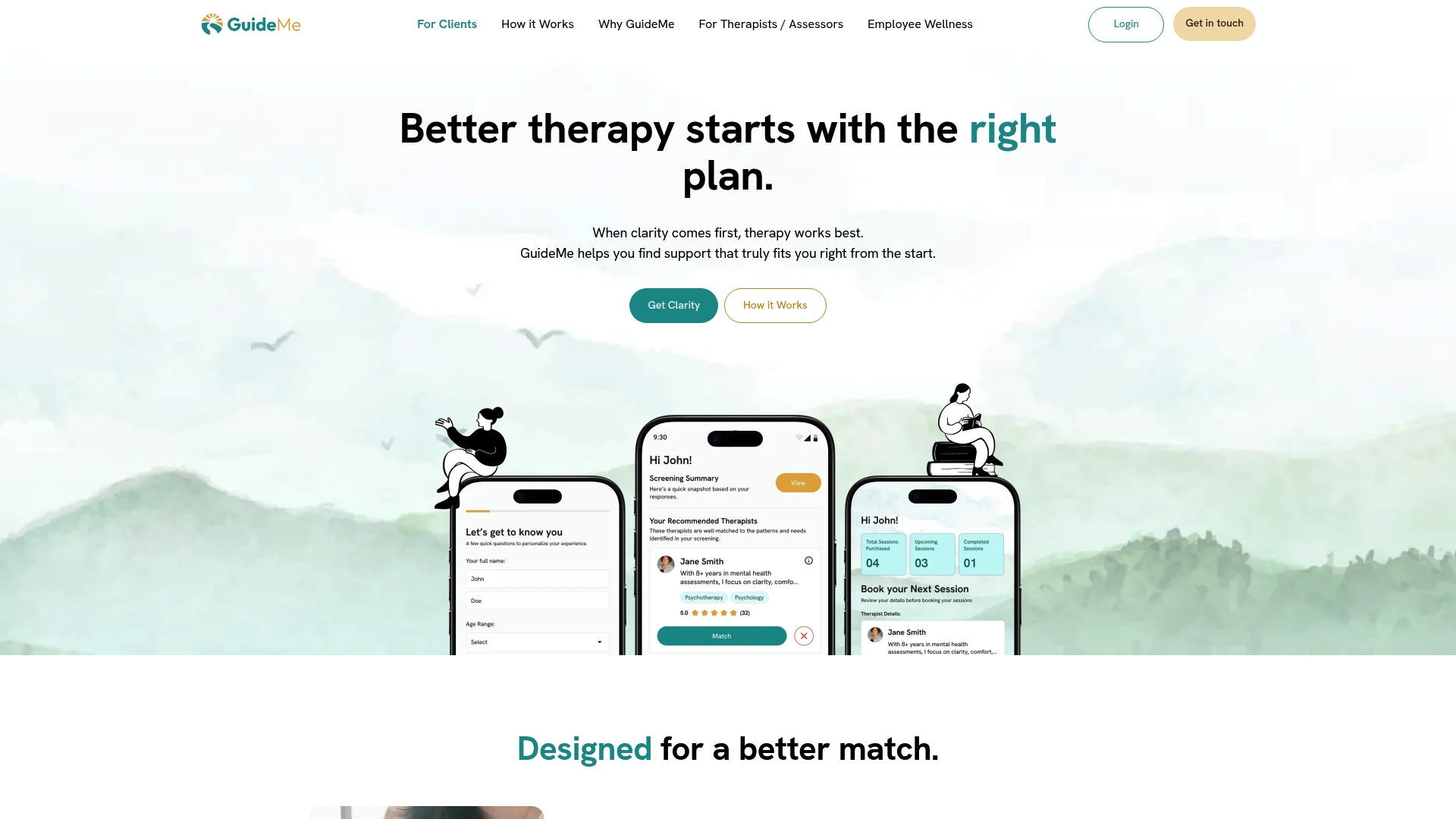
GuideMe is a therapy navigation platform that helps you understand your mental health needs and get matched with a qualified therapist who suits you. It is human-led and AI-powered, combining personalised therapy plans with careful therapist matching so you do not have to figure it all out alone. If you are ready to start your therapy journey, GuideMe gives you a structured, supportive way to begin. You deserve care that fits, and finding the right therapist from the start makes all the difference.
Frequently asked questions
How do I know if my therapist is effective?
An effective therapist demonstrates empathy, warmth, and flexibility, adapts your treatment plan as you progress, and uses evidence-based methods to track change over time.
What should I do if I feel uncomfortable with my therapist?
Raise your concerns directly in the session; if things do not improve, therapist interpersonal skills significantly affect outcomes, so seeking a better fit is a reasonable and healthy step.
Are therapy sessions confidential?
Yes, sessions are confidential, but exceptions apply when there is a risk of harm to you or another person, in which case your therapist has a duty to act.
How do therapists measure progress?
Therapists use measurement-based care, setting clear goals with you at the start and using structured tools to review how you are progressing throughout treatment.
What if I disagree with my therapist's approach?
Good therapists prioritise collaborative, client-centred care, so sharing your concerns openly gives them the opportunity to adapt their approach to suit you better.