

Choosing therapy can feel overwhelming when faced with countless options, each claiming unique benefits. You might assume some therapies are inherently superior, but research reveals a surprising truth: most therapy modalities produce comparable outcomes. The real difference lies not in which approach is objectively best, but in finding the right fit for your personal needs, preferences, and goals. Understanding what therapy modalities actually are and how they work empowers you to make confident choices about your mental health journey.
Table of Contents
- Understanding Therapy Modalities: Definitions And Key Types
- How Research Compares Therapy Outcomes: Common Factors Versus Specific Methods
- Choosing The Right Therapy Modality For You: Factors And Practical Steps
- Blended And Emerging Therapy Modalities: Combining Approaches For Better Outcomes
- Explore Therapy Options With Guide Me
- Frequently Asked Questions
Key takeaways
| Point | Details |
|---|---|
| Similar effectiveness | Research shows different therapy types often achieve comparable results through shared healing elements |
| Methods vary | Modalities differ primarily in their techniques and focus areas rather than overall success rates |
| Personal fit matters | Your preferences, goals, and comfort with a therapist determine the best therapy choice |
| Common factors | Elements like therapeutic alliance and empathy contribute significantly to positive outcomes |
| Professional matching | Expert guidance helps identify suitable modalities aligned with your specific needs |
Understanding therapy modalities: definitions and key types
Therapy modalities are the various approaches or methods therapists use to support mental health and wellbeing. Think of them as different frameworks for understanding and addressing psychological challenges, each with distinct techniques, theoretical foundations, and areas of focus. While the term might sound clinical, it simply refers to the structured way a therapist conducts sessions and helps you work towards your goals.
Several popular modalities dominate the therapy landscape in 2026. Cognitive behavioural therapy (CBT) examines how thoughts influence feelings and behaviours, offering practical strategies to challenge unhelpful patterns. Psychodynamic therapy explores unconscious processes and past experiences that shape current difficulties. Humanistic approaches, including person-centred therapy, emphasise personal growth and self-actualisation through empathy and unconditional positive regard. Other common types include dialectical behaviour therapy (DBT), which focuses on emotion regulation, and acceptance and commitment therapy (ACT), which helps you align actions with personal values.
Each modality targets different aspects of human experience:
- Cognitive approaches focus on thought patterns and beliefs
- Behavioural methods emphasise actions and habit formation
- Psychodynamic therapies explore unconscious motivations and early relationships
- Humanistic approaches centre on present experience and personal meaning
- Integrative modalities combine elements from multiple frameworks
Despite these differences, meta-analyses suggest all therapies have comparable effects supporting what researchers call the common factors model. This perspective proposes that shared elements across therapies, such as the therapeutic relationship, hope for change, and a coherent framework for understanding problems, contribute more to positive outcomes than the specific techniques used. Understanding this principle helps demystify therapy selection and reduces pressure to find the single "perfect" approach.
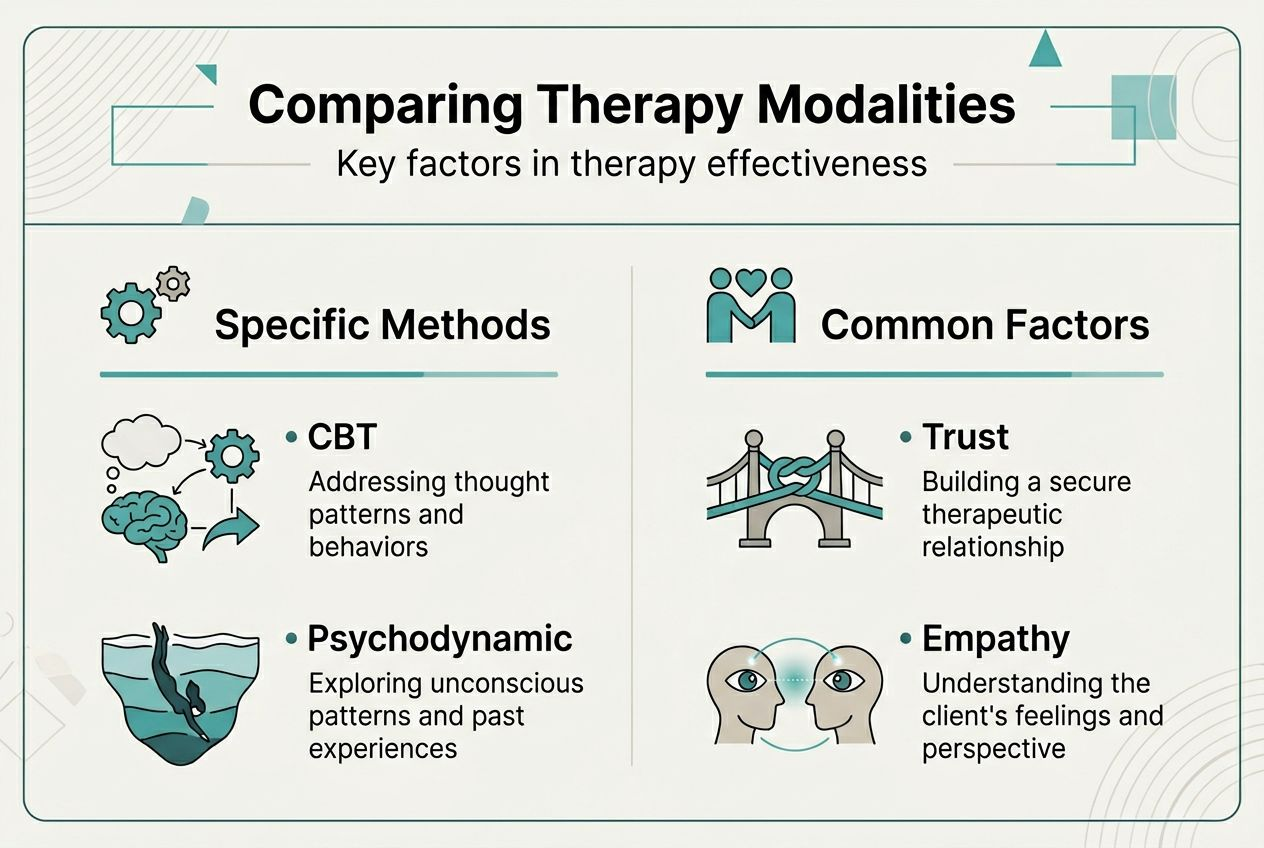
The common factors model doesn't diminish the value of specific modalities. Rather, it highlights that what happens between you and your therapist often matters more than the theoretical label attached to your sessions. Guide Me recognises this nuance, helping you navigate options whilst prioritising the human elements that truly drive therapeutic success.
How research compares therapy outcomes: common factors versus specific methods
The question of why therapy works has sparked decades of scientific debate. Two competing explanations dominate: the common factors model and the specific factors model. The common factors perspective argues that elements present across all therapy types account for most positive change. These universal components include the therapeutic alliance (the trust and collaboration between you and your therapist), empathy, positive expectations, and providing a rationale for understanding your difficulties.
Research supporting this view is compelling. Meta-analyses suggest comparable effects across therapies, indicating that different modalities produce similar outcomes for many conditions. Studies examining therapist effects find that who delivers therapy often predicts success better than which modality they use. This challenges the assumption that specific techniques are the primary active ingredients in psychological treatment.
However, the role of common factors in psychotherapy is debated, with methodological issues and alternative explanations. Critics point out that comparing therapies is complex. Research designs may not adequately test whether specific techniques add value beyond common factors. Some conditions might respond better to targeted approaches, even if overall averages suggest equivalence. The debate remains unresolved, with implications for how we understand and deliver mental health care.
| Aspect | Specific factors view | Common factors view |
|---|---|---|
| Primary mechanism | Unique techniques drive change | Shared elements drive change |
| Modality importance | High, technique selection crucial | Moderate, relationship matters more |
| Research focus | Testing specific interventions | Examining therapeutic alliance |
| Treatment selection | Match technique to diagnosis | Match therapist to client |
| Training emphasis | Master modality-specific skills | Develop relational competencies |
Pro tip: Most people miss this crucial insight: the quality of your connection with your therapist often predicts outcomes better than the therapy type. If you feel heard, understood, and genuinely supported, you're already accessing powerful common factors. Don't stay with a therapist who feels like a poor fit just because they practise a modality you think you "should" try.
This research landscape suggests a balanced perspective. Whilst specific techniques matter for certain presentations, the therapeutic relationship and shared healing elements deserve equal attention when choosing therapy. Understanding both views helps you make informed decisions without getting trapped in the myth that one modality is universally superior.
Choosing the right therapy modality for you: factors and practical steps
Selecting a therapy approach suited to your needs doesn't require a psychology degree, just clarity about your goals and preferences. Start by identifying what you hope to achieve. Are you managing specific symptoms like anxiety or depression? Working through relationship patterns? Exploring identity and meaning? Different modalities naturally align with different objectives, though all therapies have comparable effects overall.
Consider your learning style and comfort zone. Some people thrive with structured, skills-based approaches like CBT that offer homework and clear techniques. Others prefer exploratory, insight-oriented work that delves into emotions and past experiences. Neither is better, they simply suit different preferences. Think about whether you want practical tools you can apply immediately or deeper understanding of underlying patterns.

Therapist qualities matter enormously. Research consistently shows that therapist effects outweigh modality effects for many clients. Look for someone who demonstrates genuine warmth, listens without judgement, and explains their approach clearly. Their training and credentials matter, but so does your gut feeling about whether you can open up to them. Trust your instincts about interpersonal fit.
Practical considerations shape realistic choices:
- Research modalities that interest you using reliable sources and client testimonials
- Identify therapists offering those approaches in your area or via online platforms
- Check credentials, experience levels, and specialisations relevant to your needs
- Consider session format preferences: individual, group, couples, or family therapy
- Evaluate practical factors like cost, insurance coverage, session frequency, and scheduling flexibility
- Book initial consultations with two or three therapists to compare approaches and rapport
- Commit to at least three to four sessions before deciding if the fit works
- Reassess periodically whether you're making progress towards your goals
Pro tip: Don't hesitate to switch therapists or modalities if something feels off after giving it a fair trial. Many people waste months in therapy that isn't working because they feel guilty about leaving or assume the problem is them. A good therapist will support you finding the right fit, even if that means referring you elsewhere.
Open communication accelerates finding the right match. Ask potential therapists about their methodology, typical session structure, and how they measure progress. Discuss your preferences and concerns directly. A skilled therapist welcomes these conversations and adapts their approach to suit you. Therapy options guidance can help you navigate these decisions with expert support, matching your unique needs with suitable practitioners and approaches.
Remember that choosing therapy is an iterative process, not a one-time decision. Your needs may evolve, and different life phases might call for different approaches. Flexibility and self-awareness serve you better than rigidly committing to a single modality because someone told you it was best.
Blended and emerging therapy modalities: combining approaches for better outcomes
Modern therapy increasingly embraces integration rather than strict adherence to single modalities. Blended approaches draw techniques from multiple frameworks, tailoring treatment to individual needs rather than forcing clients into predetermined protocols. An integrative therapist might use CBT techniques for anxiety management whilst incorporating psychodynamic exploration of relationship patterns and mindfulness practices for emotional regulation. This flexibility often resonates with clients seeking personalised care.
Emerging modalities continue expanding the therapy landscape in 2026. Art therapy uses creative expression to access emotions and experiences difficult to verbalise. Mindfulness-based cognitive therapy (MBCT) combines meditation practices with cognitive techniques, particularly effective for preventing depression relapse. Eye movement desensitisation and reprocessing (EMDR) addresses trauma through bilateral stimulation. Digital therapy platforms offer app-based CBT and other interventions, increasing accessibility for those with scheduling or mobility constraints.
These innovations reflect growing recognition that diverse clients benefit from diverse approaches. The debate on how therapies work, through common or specific factors, remains unresolved, but practical integration often serves clients well regardless of theoretical purity.
| Modality | Primary purpose | Well suited for | Evidence level |
|---|---|---|---|
| Integrative therapy | Personalised, flexible treatment | Clients wanting tailored approaches | Moderate to strong |
| Art therapy | Emotional expression through creativity | Trauma, children, verbal processing difficulties | Moderate |
| MBCT | Prevent relapse, emotional regulation | Recurrent depression, anxiety | Strong |
| EMDR | Trauma processing | PTSD, traumatic memories | Strong |
| Digital CBT | Accessible, structured skills | Mild to moderate anxiety/depression | Moderate to strong |
| Somatic therapy | Body-based trauma release | Trauma, chronic stress | Emerging |
Blended approaches offer several advantages. They allow therapists to adapt techniques based on what's working rather than rigidly following a manual. Clients benefit from multiple perspectives on their difficulties. Integration acknowledges that human psychology is complex and rarely fits neatly into single theoretical boxes. However, potential limitations exist: less standardisation makes research more challenging, and therapists need training across multiple modalities to integrate effectively.
Client preferences significantly influence blended therapy success. Some people appreciate eclectic approaches that feel responsive and personalised. Others find clarity and structure in modality-specific treatment. Neither preference is wrong. The key is matching therapeutic style with client expectations through open discussion.
Modern therapy approaches increasingly recognise that rigid adherence to single modalities may not serve all clients equally. Flexibility, combined with solid grounding in evidence-based practices, often provides the best foundation for effective treatment. Whether you choose a traditional modality or an integrative approach, what matters most is finding a therapist who can skilfully apply their knowledge whilst maintaining the common factors that truly drive change.
Explore therapy options with Guide Me
Navigating the therapy landscape becomes simpler with expert guidance tailored to your unique situation. Guide Me is a therapy navigation platform designed to help you better understand your mental health with an in-depth therapy plan and get matched with the right therapist. We combine human expertise with AI-powered matching to connect you with suitable practitioners from the start, creating a more supportive and comfortable therapy experience.

Whether you're exploring therapy for the first time or seeking a better fit after previous experiences, Guide Me therapy matching removes the guesswork from finding your ideal therapeutic approach. Our personalised assessment considers your goals, preferences, and circumstances to recommend modalities and therapists aligned with your needs. You'll receive clear explanations of different approaches, helping you make informed decisions with confidence. Therapy support services extend beyond initial matching, providing ongoing guidance as your needs evolve. Take the next step in your mental health journey with support that truly understands what makes therapy work.
Frequently asked questions
What are therapy modalities?
Therapy modalities are structured approaches or methods therapists use to support mental health and facilitate change. Each modality has distinct theoretical foundations, techniques, and areas of focus, though research shows most produce similar overall outcomes. Common examples include cognitive behavioural therapy, psychodynamic therapy, and humanistic approaches, each offering different pathways to understanding and addressing psychological challenges.
How do I know which therapy modality is right for me?
Choosing the right modality depends on your personal goals, preferences, and comfort with different approaches. Consider whether you prefer structured, skills-based work or exploratory, insight-oriented sessions. The therapist-client relationship often matters more than the specific modality, so prioritise finding someone you trust and feel comfortable with. Trial sessions with different therapists can help you assess fit before committing long-term.
Are some therapy modalities more effective than others?
Research indicates that most established therapy modalities produce comparable outcomes for many conditions, supporting the common factors model. Whilst certain techniques may suit specific presentations better, elements like therapeutic alliance, empathy, and hope contribute significantly to success across all approaches. The therapist's skill and your connection with them often predict outcomes better than the modality label alone.
What should I expect in my first therapy session?
Initial sessions typically involve the therapist gathering information about your background, current concerns, and goals for therapy. You'll discuss confidentiality, session logistics, and the therapist's approach. This is also your opportunity to ask questions about their methodology and assess whether you feel comfortable. First sessions are exploratory, helping both you and the therapist determine if you're a good match.
Can I switch therapy modalities if my current approach isn't working?
Absolutely. Switching modalities or therapists is common and often necessary to find the right fit. Give your current approach a fair trial of three to four sessions, but don't persist indefinitely if you're not seeing progress or feeling supported. A good therapist will understand and may even suggest trying a different approach or referring you to a colleague whose style better suits your needs.
What are common factors in therapy and why do they matter?
Common factors are elements present across all therapy types that contribute to positive outcomes, including the therapeutic alliance, empathy, hope for change, and a coherent framework for understanding problems. Research suggests these shared elements may account for more therapeutic success than specific techniques. Understanding common factors helps you prioritise relationship quality and therapist fit when choosing therapy, rather than focusing solely on modality labels.