

Therapy isn't about lying on a couch analysing your childhood for years. Psychotherapy is a structured, evidence-based process where trained professionals help you work through mental health challenges using proven techniques. Whether you're dealing with anxiety, depression, relationship issues, or simply want to understand yourself better, therapy offers practical tools and support. This guide explains what therapy actually involves, explores different types of therapy available, discusses the benefits and challenges you might encounter, and helps you find the right therapist and approach for your unique needs.
Table of Contents
- What is psychotherapy? Understanding the fundamentals
- Different types of therapy and how they work
- The benefits and challenges of therapy
- How to find the right therapist and therapy for you
- Ready to find your right therapy?
- Frequently asked questions
Key takeaways
| Point | Details |
|---|---|
| Structured process | Psychotherapy involves guided, confidential conversations using evidence-based techniques to address mental health challenges. |
| Multiple approaches | Different therapy types like CBT, ACT, and family therapy suit varying needs and preferences. |
| Proven effectiveness | Therapy produces meaningful improvement in 75% of people who engage with it. |
| Personal fit matters | Choosing the right therapist and modality significantly impacts treatment success and outcomes. |
What is psychotherapy? Understanding the fundamentals
Psychotherapy is professional, structured help for mental health challenges that goes far beyond casual conversation. Psychotherapy involves in-depth conversations between the client and the therapist to understand negative thought patterns, feelings, and unhelpful behaviour. These sessions take place in a confidential setting where you work collaboratively with a trained professional to address specific concerns.
The therapeutic process follows evidence-based techniques tailored to your situation. Your therapist creates a safe space where you can explore difficult emotions, examine patterns in your thinking and behaviour, and develop practical strategies for change. This isn't about judgement or advice giving, it's about guided discovery and skill building.
Many people imagine therapy as the classic scene of someone lying on a couch discussing their childhood whilst a therapist takes notes. That stereotype doesn't reflect modern psychotherapy. Today's therapy involves active participation, goal setting, and practical exercises you can apply between sessions. You might work on communication skills, learn techniques to manage anxiety, or process traumatic experiences using structured methods.
Common goals people pursue through therapy include:
- Managing overwhelming emotions like anxiety, sadness, or anger
- Changing unhelpful behaviour patterns that interfere with daily life
- Healing from trauma or difficult past experiences
- Building self-awareness and understanding your motivations
- Improving relationships with partners, family, or colleagues
- Developing coping strategies for stress and life transitions
Therapy works because it provides both insight and action. You gain understanding of why you think and feel certain ways, then learn specific techniques to create change. The relationship with your therapist matters too. Research consistently shows that a strong therapeutic alliance, where you feel heard and supported, contributes significantly to positive outcomes.
"Therapy isn't about fixing what's broken. It's about building skills, understanding patterns, and creating the life you want to live."
If you're considering therapy guidance, understanding these fundamentals helps you approach the process with realistic expectations. Therapy requires active participation and honest communication, but it offers a structured path towards better mental health and wellbeing.
Different types of therapy and how they work
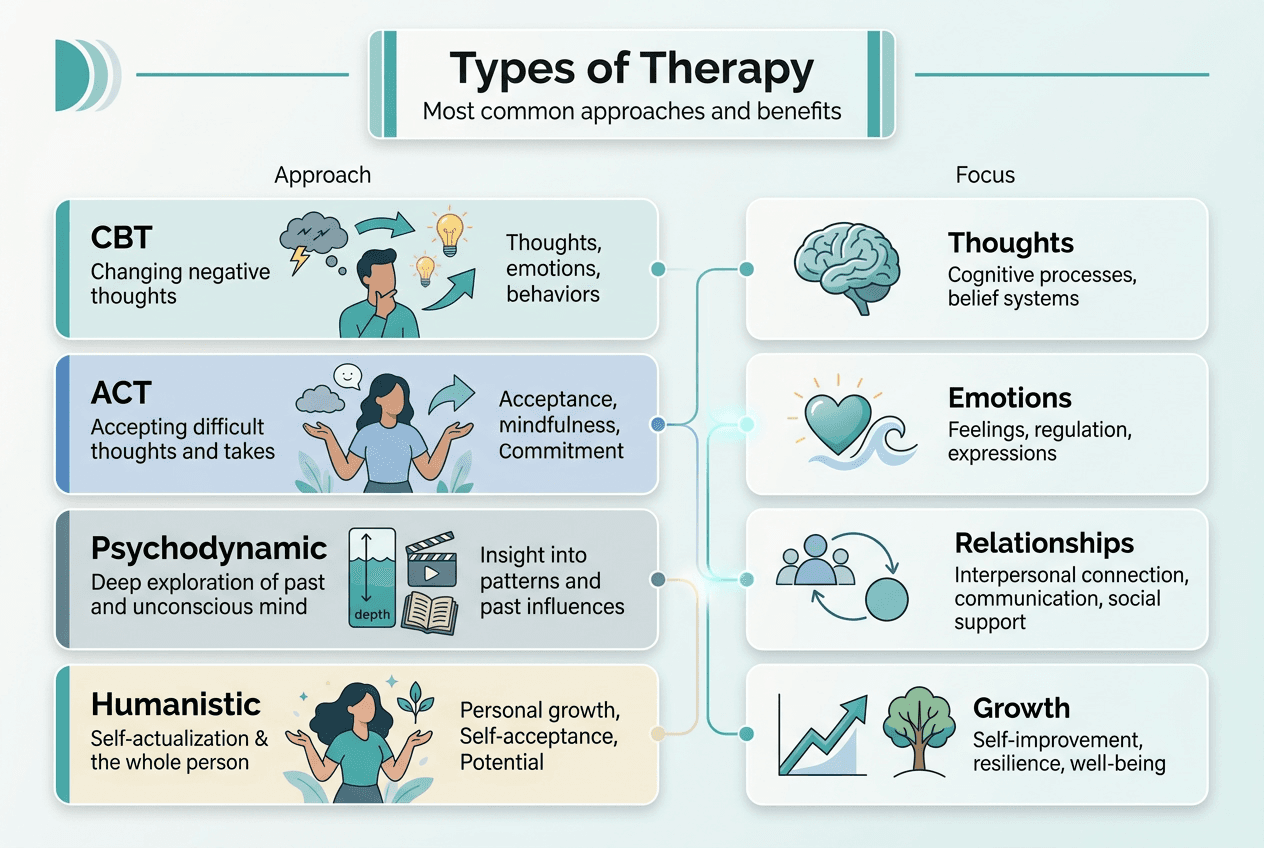
Therapy comes in many forms, each designed to address specific mental health needs through different approaches and techniques. Understanding the main therapy modalities helps you identify which might work best for your situation and preferences.
Cognitive Behavioural Therapy (CBT) is the most popular and widely practised therapy modality. CBT focuses on the connection between thoughts, feelings, and behaviours. Your therapist helps you identify negative thought patterns and replace them with more balanced, realistic ones. This approach works particularly well for anxiety, depression, and phobias. Sessions involve practical exercises, homework assignments, and skill building you can use daily.

Acceptance and Commitment Therapy (ACT) is effective for treating anxiety, depression, and eating disorders. Rather than fighting difficult thoughts and feelings, ACT teaches you to accept them whilst committing to actions aligned with your values. This modality combines mindfulness techniques with behaviour change strategies. You learn psychological flexibility, which means responding to situations based on your values rather than reacting to uncomfortable emotions.
Family therapy addresses relationship dynamics and communication patterns within family systems. This approach recognises that individual problems often connect to broader family interactions. Sessions typically involve multiple family members working together to improve communication, resolve conflicts, and strengthen relationships. It's particularly helpful for parenting challenges, adolescent issues, and major family transitions.
Other common therapy types include:
- Psychodynamic therapy exploring unconscious patterns and past experiences
- Dialectical Behaviour Therapy (DBT) combining CBT with mindfulness for emotional regulation
- Humanistic therapy focusing on personal growth and self-actualisation
- Eye Movement Desensitisation and Reprocessing (EMDR) for trauma processing
| Therapy type | Best for | Typical approach |
|---|---|---|
| CBT | Anxiety, depression, phobias | Identifying and changing thought patterns |
| ACT | Chronic pain, stress, eating disorders | Acceptance and values-based action |
| Family therapy | Relationship issues, parenting challenges | Improving family communication dynamics |
| Psychodynamic | Long-standing patterns, self-exploration | Understanding unconscious influences |
Pro Tip: Consider your treatment goals and learning style when choosing a therapy type. If you prefer structured, practical exercises, CBT might suit you. If you're interested in deeper self-exploration, psychodynamic approaches could be better.
The right modality depends on your specific concerns, personality, and what feels comfortable. Many therapists integrate techniques from multiple approaches, creating a personalised treatment plan. When exploring therapy guidance, you can discuss which modalities align with your needs and preferences.
The benefits and challenges of therapy
Therapy offers significant mental health improvements for most people who engage with it, but understanding both benefits and potential challenges helps you make informed decisions about treatment.
Psychotherapy produces meaningful improvement in 75% of people compared to those who received no treatment. This substantial effectiveness rate demonstrates therapy's value as a mental health intervention. People who complete therapy often report better emotional regulation, improved relationships, and enhanced coping skills that persist long after treatment ends.
Key benefits you might experience through therapy include:
- Reduced symptoms of anxiety, depression, and other mental health conditions
- Better understanding of your thoughts, feelings, and behaviour patterns
- Improved communication and relationship skills
- Enhanced resilience when facing stress and challenges
- Greater self-awareness and personal insight
- Practical coping strategies you can use throughout life
- Healing from trauma or difficult past experiences
Therapy strengthens your ability to navigate life's difficulties. You develop a toolkit of techniques for managing emotions, solving problems, and maintaining wellbeing. Many people find therapy helps them break cycles of unhelpful behaviour and create more fulfilling relationships.
However, therapy isn't without challenges or risks. Publications on negative effects of psychotherapy have rapidly increased in the past decade, highlighting the importance of monitoring your experience. Some people experience temporary increases in distress when processing difficult emotions or memories. Others find certain therapeutic approaches don't match their needs or preferences.
Potential challenges include:
- Initial discomfort discussing personal issues with a stranger
- Temporary emotional distress when addressing painful topics
- Time and financial commitment required for regular sessions
- Difficulty finding the right therapist or approach on first attempt
- Frustration if progress feels slow or inconsistent
These challenges don't mean therapy is harmful, they're often part of the growth process. Working through discomfort can lead to breakthrough moments and lasting change. The key is maintaining open communication with your therapist about your experience.
"Effective therapy sometimes feels uncomfortable because growth requires facing what we've avoided. The difference between productive discomfort and harmful distress lies in having a skilled therapist who monitors your wellbeing throughout the process."
If you experience persistent negative effects, discuss them with your therapist immediately. They can adjust the approach, pace, or techniques to better suit your needs. Sometimes switching therapists or modalities makes a significant difference. Platforms offering therapy guidance can help you navigate these decisions and find better fits when needed.
Understanding both benefits and challenges empowers you to engage with therapy realistically. Most people find the benefits far outweigh temporary discomfort, particularly when working with a therapist who matches their needs and communication style.
How to find the right therapist and therapy for you
Finding the right therapist and therapy approach significantly impacts your treatment success. This process involves several steps that help you identify what you need and evaluate potential matches.
Start by identifying your specific needs and goals. What brings you to therapy? Are you dealing with anxiety, relationship issues, trauma, or general life stress? Choosing the right therapy modality depends on your mental health needs, goals, and personal preferences. Write down what you hope to achieve through therapy and what matters most to you in a therapeutic relationship.
Follow these steps to find your ideal match:
- Research therapy options that address your specific concerns and align with your preferences
- Consider practical factors like location, cost, availability, and whether you prefer in-person or online sessions
- Prepare questions to ask potential therapists about their approach, experience, and treatment philosophy
- Schedule initial consultations with two or three therapists to evaluate fit and comfort level
- Pay attention to how you feel during and after initial sessions
- Give the relationship a few sessions to develop before making final decisions
Understanding the differences between psychiatrists, psychologists, and therapists is crucial for finding the right professional. Psychiatrists are medical doctors who can prescribe medication and treat mental health conditions from a medical perspective. Psychologists hold doctoral degrees in psychology and provide therapy and psychological testing. Therapists typically have master's degrees in counselling or social work and focus on talk therapy and support.
Your choice depends on your needs. If you think medication might help, starting with a psychiatrist makes sense. For therapy-focused treatment, psychologists and therapists offer excellent support. Many people work with both a therapist for regular sessions and a psychiatrist for medication management.
Pro Tip: Use trial sessions to evaluate fit before committing long-term. Most therapists offer initial consultations where you can assess whether their style, approach, and personality work for you.
Consider these factors when evaluating potential therapists:
- Specialisation in your specific concerns or issues
- Training in therapy modalities that interest you
- Communication style and whether you feel heard
- Cultural competence and understanding of your background
- Practical logistics like scheduling flexibility and location
The therapeutic relationship matters as much as credentials or techniques. You need someone you trust, feel comfortable opening up to, and believe genuinely cares about your progress. If something feels off, that's valuable information. Trust your instincts whilst giving the relationship a fair chance to develop.
Platforms offering therapy guidance can streamline this process by matching you with therapists based on your needs, preferences, and goals. This personalised approach saves time and increases the likelihood of finding a good fit from the start.
Remember that finding the right therapist sometimes takes patience. If your first choice doesn't work out, that's normal and doesn't reflect on you or therapy's potential effectiveness. Keep searching until you find someone who feels right. You might also explore complementary approaches like mental health improvement running alongside therapy for holistic wellbeing.
Ready to find your right therapy?
Navigating therapy options and finding the right professional can feel overwhelming, especially when you're already dealing with mental health challenges. That's where guided support makes a real difference.
GuideMe offers personalised therapy matching that considers your specific needs, preferences, and goals. Rather than searching endlessly through directories, you receive expert guidance that connects you with therapists whose specialisations, approaches, and styles align with what you're looking for. This human-led, AI-powered platform helps you understand your mental health better whilst finding the right therapeutic fit from the beginning.

Exploring guided therapy support means starting your journey with clarity and confidence. You'll develop an in-depth therapy plan that addresses your unique situation, then get matched with professionals who can help you achieve your goals. This creates a more supportive, comfortable therapy experience from your very first session.
Pro Tip: Taking the first step towards therapy shows strength, not weakness. Getting the right support early often leads to better outcomes and faster progress.
Discover your therapy options today and begin building the mental health support system you deserve.
Frequently asked questions
What can I expect during my first therapy session?
Your first session focuses on building rapport and gathering information. Your therapist will ask about your reasons for seeking therapy, relevant history, current challenges, and what you hope to achieve. They'll explain how sessions work, discuss confidentiality, and answer your questions about the therapeutic process. This initial meeting helps both you and your therapist determine whether you're a good fit and begin developing a treatment plan.
How long does therapy usually last?
Therapy duration varies based on your needs, goals, and chosen approach. Some modalities like CBT are designed as short-term treatments lasting 6 to 12 sessions. Other approaches, particularly those addressing complex trauma or long-standing patterns, may continue for months or years. Many people attend weekly sessions initially, then reduce frequency as they progress. Your therapist will discuss expected timelines and regularly review progress with you.
What if therapy doesn't work for me?
It's normal for therapy to take time before you notice significant changes. If you're not seeing progress after several sessions, discuss your concerns openly with your therapist. They can adjust their approach or suggest alternative techniques. Sometimes the issue is fit rather than effectiveness, trying a different therapist or therapy modality often makes a substantial difference. Platforms offering therapy support can help you explore other options and find better matches for your needs.
What's the difference between a therapist, psychologist and psychiatrist?
Psychiatrists are medical doctors who can prescribe medication and treat mental health conditions from a medical perspective. Psychologists hold doctoral degrees in psychology, provide therapy, conduct psychological testing, and diagnose mental health conditions. Therapists typically have master's degrees in counselling, social work, or related fields and focus on talk therapy and emotional support. All three can provide valuable mental health care, your choice depends on whether you need medication management, psychological testing, or therapy-focused treatment.