

Therapy remains misunderstood despite decades of research proving its effectiveness. Many believe therapy only helps severe mental illness, yet psychotherapy demonstrates small to large effect sizes across conditions from everyday stress to clinical depression. Others worry therapy takes years with uncertain results, when evidence shows meaningful symptom relief often emerges within months. This guide cuts through misconceptions to reveal therapy's proven benefits for mental health and personal growth, helping you understand which approaches work best and how to select the right therapist for your needs in 2026.
Table of Contents
- The proven benefits of therapy for mental health
- Choosing the right type of therapy for you
- Understanding common debates and considerations in therapy selection
- Practical steps to start therapy and maximise its benefits
- Explore therapy options with GuideMe
- FAQ about choosing therapy
Key takeaways
| Point | Details |
|---|---|
| Evidence-backed relief | Therapy reduces depression and anxiety symptoms with effect sizes ranging from 0.73 to 1.25. |
| Multiple effective approaches | CBT and psychodynamic therapies both show strong outcomes for various mental health challenges. |
| Informed selection matters | Choosing therapy should balance symptom relief goals, personal growth aspirations, and therapist compatibility. |
| Common factors drive success | Therapeutic relationship and engagement often matter more than specific techniques. |
The proven benefits of therapy for mental health
Research consistently demonstrates that therapy works. CBT significantly reduces depression, anxiety, and stress with robust statistical support across diverse populations. The numbers tell a compelling story: effect sizes for depression hover around 0.73, whilst anxiety disorders show even stronger responses between 0.86 and 1.25.
These aren't abstract academic findings. Effect sizes above 0.8 represent large, clinically meaningful changes that patients notice in daily life. Someone experiencing moderate depression might find themselves sleeping better, engaging more with friends, and regaining interest in hobbies they'd abandoned. Anxiety sufferers often report reduced physical symptoms, fewer avoidance behaviours, and improved ability to handle stressful situations.
The benefits extend beyond symptom reduction. Therapy develops lasting skills for emotional regulation, problem solving, and interpersonal communication. You learn to recognise thought patterns that fuel distress, challenge unhelpful beliefs, and respond to difficulties with greater flexibility. These capabilities persist after therapy ends, providing tools you'll use throughout life.
Even treatment-resistant depression responds when therapy combines with medication. Patients who haven't improved with antidepressants alone often achieve remission when adding structured psychotherapy. The synergy works because medication addresses neurochemical imbalances whilst therapy tackles behavioural patterns, cognitive distortions, and environmental stressors simultaneously.
Therapy benefits across conditions:
- Depression shows consistent improvement with multiple therapy approaches
- Anxiety disorders respond particularly well to structured interventions
- Stress management improves through skill-building and cognitive restructuring
- Personal insight deepens, enhancing self-awareness and relationship quality
- Coping strategies develop that prevent future episodes
The evidence base continues growing stronger. Meta-analyses examining thousands of patients confirm therapy's effectiveness across ages, cultures, and delivery formats. Whether you pursue face-to-face sessions, group therapy, or online counselling through platforms like GuideMe, research supports meaningful outcomes when you engage consistently with evidence-based approaches.
Choosing the right type of therapy for you
Understanding therapy types helps you select an approach matching your needs and preferences. The two most researched and widely practised therapies offer distinct benefits depending on whether you prioritise immediate symptom relief or deeper self-understanding.
Cognitive behavioural therapy focuses on the connection between thoughts, feelings, and behaviours. CBT therapists help you identify distorted thinking patterns, test their accuracy, and develop more balanced perspectives. You'll receive homework assignments, practise specific skills, and track progress systematically. This structured approach works brilliantly for depression, anxiety, panic disorder, and obsessive-compulsive disorder. Sessions typically run 12 to 20 weeks, making CBT relatively brief and cost-effective.

Psychodynamic therapy explores how past experiences and unconscious patterns influence current difficulties. Your therapist helps you recognise recurring themes in relationships, understand defensive mechanisms, and process unresolved emotional conflicts. This approach suits people seeking personal growth, wanting to understand themselves more deeply, or struggling with relationship patterns. Sessions continue longer than CBT, often spanning months or years, allowing gradual insight development.
Research comparing CBT and psychodynamic approaches reveals equivalent effectiveness for major depression with large effect sizes for both. This means neither approach is universally superior. Your choice should reflect personal preferences, specific symptoms, and therapy goals.

Comparing therapy approaches:
| Aspect | CBT | Psychodynamic |
|---|---|---|
| Duration | 12-20 weeks typically | Months to years |
| Focus | Present symptoms and patterns | Past influences and unconscious processes |
| Structure | Highly structured with homework | More exploratory and flexible |
| Best for | Specific anxiety or depression symptoms | Relationship patterns and self-understanding |
| Cost | Lower due to shorter duration | Higher due to extended treatment |
Some therapists integrate multiple approaches, drawing from CBT techniques whilst exploring deeper emotional patterns. This flexibility can provide complementary benefits depending on individual needs, particularly when treating complex presentations involving trauma, personality patterns, and multiple symptoms simultaneously.
Pro Tip: Prioritise therapies with strong empirical support over trendy but unproven methods. Ask potential therapists about their training, theoretical orientation, and evidence base for treating your specific concerns.
Your personality matters too. If you prefer structured, goal-oriented work with clear milestones, CBT likely suits you better. If you value open-ended exploration and aren't constrained by time or budget, psychodynamic therapy might resonate more. Many people benefit from trying one approach, then switching if it doesn't fit. The GuideMe platform helps match you with therapists whose style aligns with your preferences and goals.
Understanding common debates and considerations in therapy selection
Therapy research reveals complexities that inform realistic expectations. The "dodo bird verdict" describes findings that most well-established therapies yield similar outcomes due to common therapeutic factors. The therapeutic relationship, patient motivation, and therapist empathy often matter more than specific techniques. This doesn't mean therapy type is irrelevant, but it suggests factors beyond theoretical orientation drive much of therapy's effectiveness.
This research challenges the notion that one therapy reigns supreme. Whilst CBT shows advantages for specific phobias and panic disorder, psychodynamic therapy excels for personality difficulties and relationship problems. Both approaches work when delivered competently by trained therapists who establish strong therapeutic alliances with patients.
Beware therapies lacking rigorous evidence. Some popular approaches rely on testimonials rather than controlled research. Energy therapies, past-life regression, and certain alternative methods haven't demonstrated effectiveness in quality studies. Sticking with established approaches like CBT, psychodynamic therapy, interpersonal therapy, or acceptance and commitment therapy ensures you're investing time and money in validated treatments.
Treatment-resistant depression requires careful assessment. Pseudoresistance occurs when patients haven't received adequate treatment due to insufficient medication dosing, poor adherence, or misdiagnosis. Before concluding therapy doesn't work, ensure you've tried evidence-based approaches for adequate duration with skilled therapists. Psychotherapy can serve as adjunctive treatment even in complex cases involving multiple failed medication trials.
Common therapy considerations:
- Cost varies significantly, with psychodynamic therapy typically more expensive due to longer duration
- Insurance coverage differs by provider and therapy type
- Comorbidities like substance use or trauma require specialised approaches
- Cultural factors influence therapy effectiveness and patient comfort
- Therapist training and experience matter as much as theoretical orientation
"The evidence suggests that the therapeutic relationship and common factors across therapies contribute more to outcomes than specific techniques, though certain approaches show advantages for particular disorders."
Trauma history complicates treatment. Patients with childhood abuse, neglect, or other traumatic experiences often need trauma-focused therapies like EMDR or trauma-focused CBT before standard approaches work effectively. Unaddressed trauma can interfere with therapy progress, creating apparent treatment resistance that actually reflects incomplete assessment and planning.
Comorbidities demand attention too. Depression with concurrent anxiety, substance use, or personality disorders requires integrated treatment addressing all conditions. A comprehensive rehabilitation workflow ensures nothing gets overlooked. The GuideMe platform helps identify therapists experienced with complex presentations, increasing likelihood of successful outcomes.
Practical steps to start therapy and maximise its benefits
Starting therapy requires thoughtful preparation to ensure you find the right fit and achieve meaningful results. Begin by clarifying your primary goals. Do you want symptom relief for specific anxiety or depression? Are you seeking personal growth and self-understanding? Do relationship patterns concern you? Clear goals help you select appropriate therapy types and communicate effectively with potential therapists.
Research therapists thoroughly before committing. Review their credentials, ensuring they hold relevant qualifications and licensure. Check their theoretical orientation matches your preferences. Read patient reviews when available, noting comments about therapist warmth, responsiveness, and effectiveness. Many therapists offer brief phone consultations, letting you assess rapport before scheduling.
Steps to begin therapy:
- Identify your primary concerns and therapy goals with specificity
- Research therapy types best suited to your needs and preferences
- Compile a list of qualified therapists in your area or online
- Schedule initial consultations with two or three potential therapists
- Ask about their approach, experience with your concerns, and expected timeline
- Choose the therapist with whom you feel most comfortable and understood
- Commit to regular attendance and active participation between sessions
Initial consultations prove invaluable for assessing fit. You'll discuss your concerns, learn about the therapist's approach, and gauge whether their style suits you. Trust your instincts about comfort and connection. Choosing evidence-based therapists and understanding the therapeutic process improves outcomes significantly, so don't rush this decision.
Regular attendance matters enormously. Weekly sessions provide continuity, allowing you to build on previous work and maintain momentum. Cancellations and irregular scheduling undermine progress, particularly in shorter-term approaches like CBT where each session builds on the last. If scheduling proves difficult, discuss options like fortnightly sessions or online therapy for greater flexibility.
Active participation between sessions amplifies benefits. Complete homework assignments your therapist suggests. Practise skills in real-world situations. Notice patterns and bring observations to sessions. Therapy isn't something done to you, it's a collaborative process requiring your engagement and effort.
Pro Tip: Prepare questions for your first session to clarify expectations and methods. Ask about the therapist's experience with your specific concerns, typical session structure, expected duration, and how you'll measure progress together.
Monitor your progress honestly. Notice changes in symptoms, relationships, and daily functioning. Discuss what's working and what isn't with your therapist. Effective therapists welcome feedback and adjust approaches when needed. If you're not improving after several months, raise concerns directly. Sometimes switching therapists or approaches makes sense, and a good therapist will support that decision.
The GuideMe platform streamlines this entire process, matching you with therapists suited to your needs and preferences whilst providing tools to track progress throughout your therapy journey.
Explore therapy options with GuideMe
Finding the right therapist transforms therapy from a daunting prospect into a supportive journey towards better mental health and personal growth. GuideMe simplifies this process by connecting you with qualified therapists tailored to your specific needs, whether you're addressing anxiety, depression, relationship difficulties, or seeking deeper self-understanding.
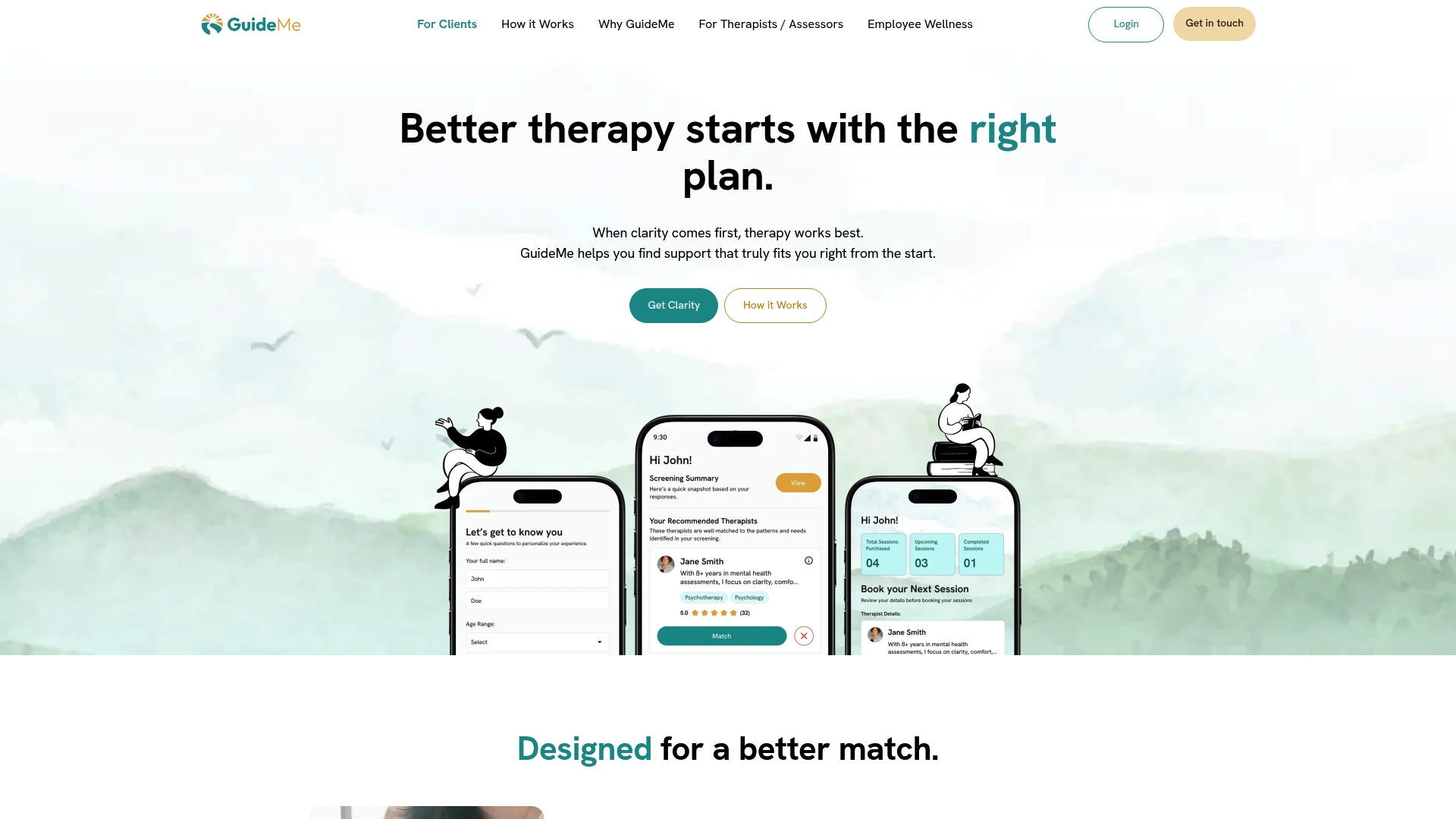
The platform combines human expertise with intelligent matching technology, ensuring you start with a therapist whose approach, experience, and style align with your goals. You'll access easy search and booking options, transparent information about therapists' qualifications and specialities, and support throughout your therapy journey. With GuideMe, you can confidently begin therapy in 2026, knowing you've made an informed choice backed by evidence and personalised to your unique situation.
FAQ about choosing therapy
What are the main benefits of therapy for mental health?
Therapy provides evidence-based symptom reduction for depression and anxiety, with effect sizes indicating large, clinically meaningful improvements. Beyond symptom relief, therapy develops lasting skills for emotional regulation, stress management, and interpersonal effectiveness that continue benefiting you long after sessions end.
How do I know which type of therapy fits my needs?
Consider your goals and preferences when selecting therapy. CBT works well for specific symptoms like anxiety or depression with structured, time-limited treatment, whilst psychodynamic therapy suits those seeking deeper self-understanding and exploring relationship patterns. Both approaches show equivalent effectiveness for many conditions, so personal fit matters most.
Can therapy help if I have tried treatment before without success?
Yes, therapy can still help. Treatment resistance sometimes reflects inadequate treatment duration, poor therapist fit, or unaddressed comorbidities rather than true resistance. Reassess whether you received evidence-based therapy for sufficient duration, consider trying a different approach, and ensure any trauma or substance use issues are addressed.
What should I expect in my first therapy session?
Your first session typically involves discussing your concerns, history, and therapy goals whilst the therapist explains their approach and answers questions. This consultation helps both parties assess fit and comfort. Come prepared with questions about the therapist's experience, expected timeline, and treatment approach.
How long does therapy usually take to show results?
Many people notice improvements within eight to twelve weeks of consistent therapy, though timelines vary by condition severity and therapy type. CBT often produces faster symptom relief, whilst psychodynamic therapy's benefits emerge more gradually. Regular attendance and active participation between sessions accelerate progress significantly.