

Therapy isn't reserved for crisis moments or severe mental illness. Many people assume you need a formal diagnosis to benefit from therapy, but that's far from reality. Whether you're navigating a career shift, struggling with stress, or simply wanting to understand yourself better, therapy offers practical tools and insights for personal growth. This article explores the varied reasons individuals seek therapy, the evidence-based approaches available, and what realistic outcomes you can expect from the therapeutic process.
Table of Contents
- Key Takeaways
- Common reasons why people seek therapy
- Understanding therapy approaches and their benefits
- How therapy supports life transitions and relationships
- Measuring therapy effectiveness and realistic expectations
- Explore therapy options with GuideMe
- Why seek therapy FAQ
Key Takeaways
| Point | Details |
|---|---|
| Therapy for everyday life | Therapy can help with stress, anxiety and adapting to life changes, not just crises. |
| Evidence based approaches | Different approaches suit different goals, and finding the right style matters. |
| CBT and DBT evidence | Cognitive Behavioural Therapy and Dialectical Behaviour Therapy have substantial research backing. |
| Growth and relationships | Therapy can support personal growth, better relationships and clearer understanding of oneself. |
Common reasons why people seek therapy
Individuals seek therapy for managing stress, anxiety, overwhelm; healing from past experiences; navigating life transitions like career changes, divorce, parenthood; improving relationships; understanding oneself better; support with mental health conditions; feeling less alone; personal growth and goal-setting. These motivations reflect therapy's broad applicability to everyday challenges, not just clinical diagnoses.
Stress and anxiety top the list of reasons people book their first session. Modern life brings constant demands, and therapy offers structured space to process overwhelm and develop coping strategies. You might feel stuck in patterns of worry or find yourself unable to switch off, even during downtime.
Healing from past traumatic experiences draws many to therapy. Whether it's childhood wounds, relationship trauma, or single distressing events, therapy provides tools to process these experiences safely. The goal isn't to erase memories but to reduce their emotional grip on your present life.
Life transitions often trigger the decision to seek support. Career changes, divorce, parenthood, bereavement, or relocation all shake our foundations. During these shifts, therapy helps you process emotions, rebuild identity, and adapt to new circumstances. Even positive changes like promotion or marriage can bring unexpected stress.
Relationship improvement motivates both individuals and couples. You might struggle with communication patterns, recurring conflicts, or emotional distance. Therapy offers frameworks to understand relational dynamics and practise new ways of connecting. Some seek therapy to break generational patterns they've noticed affecting their partnerships.
Personal growth and self-understanding represent increasingly common motivations. You don't need to be in crisis to benefit from exploring your values, patterns, and potential. Many people use therapy as a tool for intentional development, much like hiring a coach for professional goals.
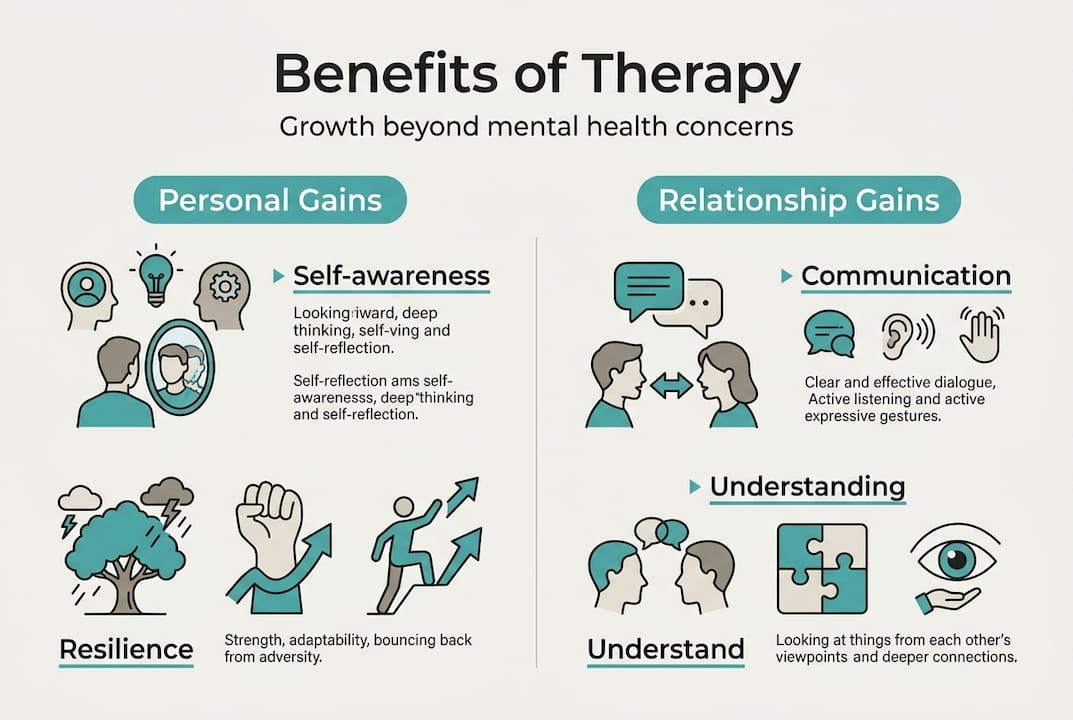
Pro tip: If you're unsure whether your concerns warrant therapy, consider this: if something consistently affects your wellbeing or relationships, it's worth exploring with a professional.
Understanding therapy approaches and their benefits
Key methodologies include Cognitive Behavioural Therapy (CBT), which targets thoughts and behaviours for anxiety and depression with large effects; Dialectical Behaviour Therapy (DBT) for emotion regulation, borderline personality disorder, PTSD; Psychodynamic Therapy (PDT/STPP), comparable to CBT for depression. Each approach offers distinct frameworks for understanding and addressing psychological challenges.
CBT focuses on the relationship between thoughts, feelings, and behaviours. If you notice unhelpful thinking patterns like catastrophising or all-or-nothing thinking, CBT provides concrete techniques to challenge and reshape these patterns. Sessions typically include homework assignments to practise new skills between meetings. The structured, goal-oriented nature suits people who prefer practical tools over open-ended exploration.

DBT specialises in emotion regulation skills, particularly helpful for intense emotional experiences. Originally developed for borderline personality disorder, it's now widely used for anyone struggling with emotional volatility, self-harm urges, or relationship instability. DBT combines individual therapy with skills training in mindfulness, distress tolerance, emotion regulation, and interpersonal effectiveness.
Psychodynamic therapy explores deeper insights into emotional conflicts and unconscious patterns. Rather than focusing solely on current symptoms, this approach examines how past experiences shape present behaviour. You might explore childhood relationships, recurring themes in your life, or defence mechanisms you've developed. Sessions are typically less structured, allowing themes to emerge organically.
| Therapy type | Primary focus | Best suited for | Typical duration |
|---|---|---|---|
| CBT | Thought and behaviour patterns | Anxiety, depression, specific phobias | 12-20 sessions |
| DBT | Emotion regulation skills | Intense emotions, relationship difficulties | 6-12 months |
| Psychodynamic | Unconscious patterns and past influences | Self-understanding, recurring life themes | Open-ended or 16-20 sessions (STPP) |
| Person-centred | Self-directed growth | Personal development, self-acceptance | Variable |
Choosing depends on your personal needs and goals. If you want quick symptom relief for specific issues, CBT's structured approach might suit you. For deeper self-exploration or persistent patterns across relationships, psychodynamic work could fit better. Many therapists integrate techniques from multiple approaches, tailoring treatment to your unique situation.
Pro tip: Don't hesitate to ask potential therapists about their approach during initial consultations. Understanding their methodology helps you assess whether it aligns with your preferences and goals.
How therapy supports life transitions and relationships
For life transitions and relationship challenges, therapy provides emotional processing and adaptation tools; edge cases highlight need for readiness and motivation; contrasting CBT's symptom focus versus PDT's root exploration suits different needs. The therapeutic relationship itself becomes a laboratory for understanding and changing relational patterns.
Therapy provides safe space for emotional processing during change. Life transitions stir up complex feelings: grief for what's ending, anxiety about the unknown, excitement mixed with fear. Your therapist offers consistent support whilst you navigate these emotional currents. Unlike friends or family who may have their own agendas, therapists maintain professional boundaries that allow you to explore freely.
It offers practical tools to adapt and rebuild. Beyond emotional support, therapy equips you with specific strategies for managing transition stress. You might learn grounding techniques for anxiety, communication scripts for difficult conversations, or decision-making frameworks for uncertain situations. These tools become resources you can draw on long after therapy ends.
Relationship therapy targets communication and understanding. Whether in couples therapy or individual work focused on relationships, you'll examine patterns like criticism, defensiveness, stonewalling, or contempt. Therapists help you recognise these dynamics in real time and practise healthier alternatives. You might role-play difficult conversations or explore attachment styles affecting your connections.
Success depends on client motivation and readiness. Research consistently shows that your engagement level predicts outcomes more than the specific therapy type. If you're attending under pressure from others or haven't fully committed to change, progress will be limited. Readiness doesn't mean having all the answers; it means willingness to engage honestly with the process.
Different approaches suit different personal and relational needs. For immediate relationship crisis, CBT-based approaches like Gottman Method offer structured interventions. For understanding deep-seated patterns from your family of origin, psychodynamic couples therapy might serve better. Some people benefit from individual therapy before or alongside couples work.
Pro tip: If you're seeking therapy for relationship issues, consider whether individual therapy, couples therapy, or both would best address your situation. Sometimes personal work creates foundation for relational change.
Measuring therapy effectiveness and realistic expectations
Psychotherapy shows small to moderate effects in psychosis, suicidal ideation, larger in depression, anxiety; CBT attrition approximately 16-19%, relapse around 33%; response rates 50-62%. CBT remission reaches 54% in older adults with anxiety; CBT versus STPP show equivalent results in depression randomised controlled trials. These figures help set realistic expectations about what therapy can achieve.
Psychotherapy benefits vary by condition and individual. Depression and anxiety disorders typically show stronger improvements compared to psychotic disorders or suicidal ideation. However, even modest effect sizes translate to meaningful quality-of-life improvements for many people. Your personal circumstances, including social support, life stressors, and biological factors, all influence outcomes.
Depression and anxiety show stronger improvements. The large effect sizes for these conditions reflect both the nature of the disorders and the refinement of therapeutic techniques targeting them. If you're seeking therapy for depression or anxiety, research supports optimism about potential benefits. However, improvement doesn't mean instant cure; it's typically gradual and requires active participation.
Attrition and relapse are important considerations. Roughly one in six people discontinue CBT before completing treatment, often due to practical barriers, mismatch with therapist, or feeling worse before better. About one third of people who respond to therapy experience relapse within follow-up periods. This doesn't indicate failure; mental health, like physical health, sometimes requires ongoing maintenance.
| Outcome measure | Depression (CBT) | Anxiety (CBT) | Psychosis | Suicidal ideation |
|---|---|---|---|---|
| Effect size | g=0.73 (large) | g=0.86 (large) | g=0.32 (small-moderate) | g=0.34 (small-moderate) |
| Response rate | 50-62% | 50-62% | Variable | Variable |
| Remission rate | 40-54% | 54% (older adults) | Lower | Lower |
| Relapse rate | ~33% | ~33% | Higher | Requires ongoing monitoring |
It's normal to have ups and downs during therapy. Progress isn't linear. You might feel worse initially as you confront difficult emotions or patterns you've been avoiding. Some sessions feel breakthrough moments; others feel like treading water. Trust the process whilst also communicating openly with your therapist about your experience.
"Therapy isn't about fixing what's broken. It's about understanding yourself more deeply and developing tools to navigate life's challenges with greater resilience and self-compassion."
CBT has substantial remission and response rates. Over half of people with depression or anxiety who complete CBT courses experience significant symptom reduction. Remission rates, whilst lower, still represent meaningful recovery for many individuals. These statistics reflect controlled research settings; real-world outcomes vary based on therapist skill, client engagement, and external factors.
Explore therapy options with GuideMe
Finding the right therapist can feel overwhelming, especially when you're already struggling. GuideMe simplifies this process by helping you understand your mental health needs through an in-depth therapy plan and matching you with suitable therapists. The platform combines human expertise with AI-powered insights to ensure you find the right fit from the beginning.
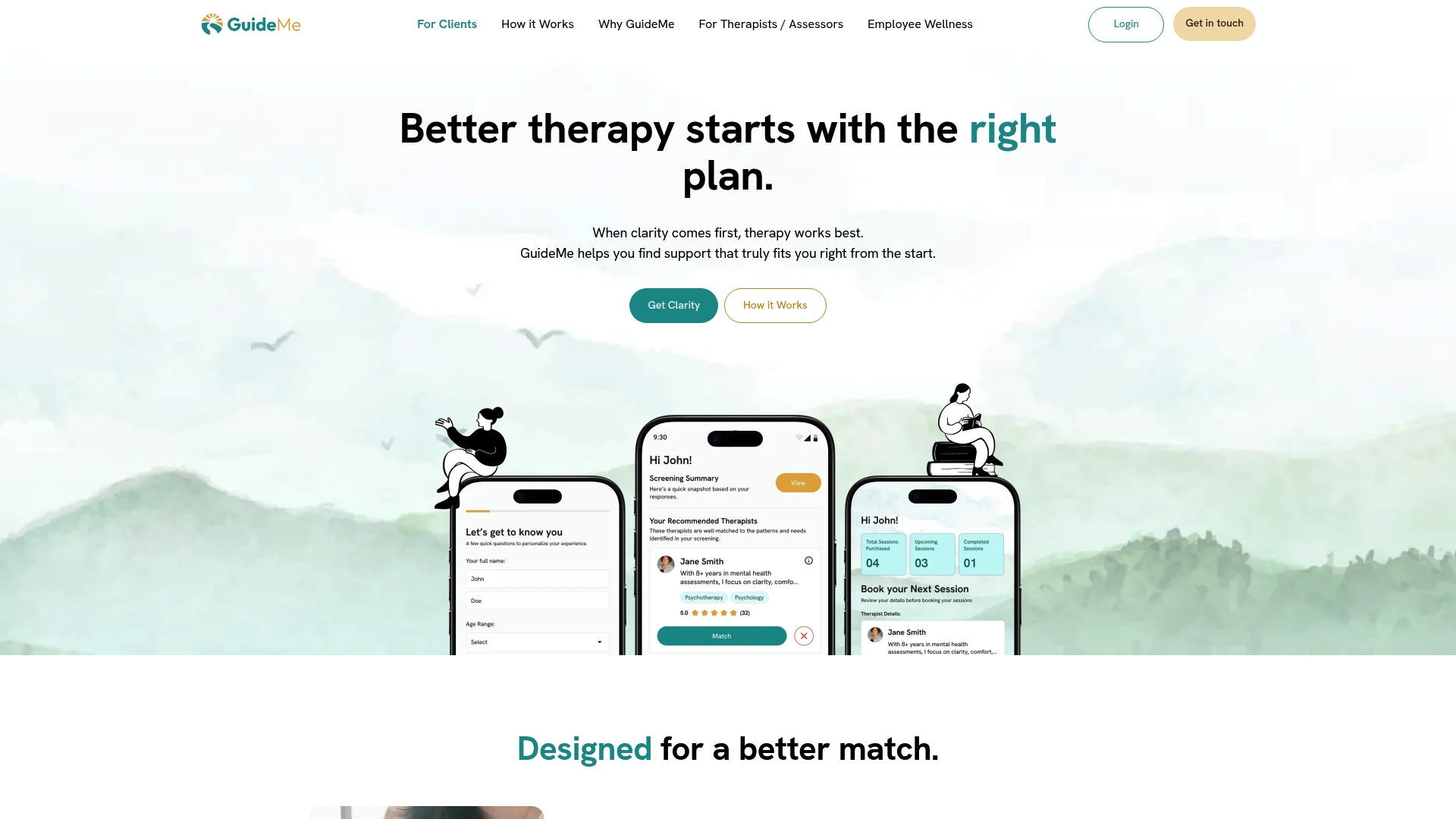
Whether you're navigating life transitions, seeking personal growth, or addressing specific mental health concerns, GuideMe offers access to evidence-based therapies tailored to your situation. The platform's approach creates a more supportive and comfortable therapy experience, reducing the trial and error often involved in finding the right therapeutic relationship. Explore your options and take the first step towards understanding yourself better.
Why seek therapy FAQ
How long does therapy usually last?
Therapy duration varies widely based on your goals and approach. Short-term CBT for specific issues might run 12-20 sessions over three to six months. Psychodynamic therapy or work on deep-seated patterns often continues for a year or longer. Many people start with a defined course and reassess, whilst others use therapy intermittently during challenging periods.
What if I'm not ready for therapy?
Readiness isn't all-or-nothing. You might start therapy feeling ambivalent and develop commitment through the process. However, if you're attending solely due to external pressure without personal motivation, outcomes will likely disappoint. Consider what specific changes you'd like to see and whether you're willing to engage honestly, even when uncomfortable.
Can therapy really improve relationships?
Research supports therapy's effectiveness for relationship challenges, both in couples therapy and individual work focused on relational patterns. Improvements depend on both partners' willingness to engage (in couples work) or your commitment to examining your own patterns (in individual therapy). Communication skills, emotional regulation, and understanding attachment styles all contribute to healthier connections.
How do I choose the right therapy approach?
Consider your goals and preferences. If you want practical tools for specific symptoms, CBT's structured approach suits well. For exploring deeper patterns or self-understanding, psychodynamic therapy might fit better. Many therapists integrate multiple approaches. During initial consultations, ask about their methodology and how it addresses your specific concerns.
Is therapy only for mental illness?
Absolutely not. Whilst therapy effectively treats diagnosed conditions, many people seek it for personal growth, life transitions, relationship enhancement, or self-understanding. Therapy serves anyone wanting to live more intentionally, understand themselves better, or develop skills for navigating life's challenges. You don't need a diagnosis to benefit from professional support.