

TL;DR:
- Therapy offers stronger long-term benefits and lower relapse rates than medication alone.
- It is highly personalizable and adapts to individual needs, improving engagement and outcomes.
- Medication can have significant side effects and often provides only temporary symptom relief.
When facing anxiety, depression, or other mental health challenges, many people assume medication is the fastest and most effective route. But the evidence tells a more nuanced story. Research suggests therapy often delivers stronger long-term benefits, including meaningfully lower relapse rates compared to medication alone. This article explores the science behind both approaches, laying out why therapy is frequently the preferred choice for sustainable mental health. Whether you are just starting to consider your options or feeling lost in the decision, understanding the differences can help you move forward with confidence.
Table of Contents
- How therapy and medication work: The basics explained
- Why relapse is lower with therapy: The evidence
- Side effects and sticking with treatment: What people overlook
- Personalisation and patient preference: Why therapy fits you
- Our perspective: What most guides miss about therapy vs medication
- Get support and guidance for choosing the right therapy
- Frequently asked questions
Key Takeaways
| Point | Details |
|---|---|
| Therapy lowers relapse | Therapy reduces the risk of symptoms returning compared to medication alone. |
| Fewer side effects | Therapy avoids common medication issues like emotional blunting and weight gain. |
| Improved treatment adherence | People are more likely to start and complete therapy than medication. |
| Individualised care | Therapy can be tailored to suit personal needs for better long-term outcomes. |
How therapy and medication work: The basics explained
To make an informed decision, it is important to understand what makes therapy and medication fundamentally different. Both can be effective, but they work in very distinct ways.
Therapy, sometimes called a talking treatment, involves regular sessions with a trained professional. There are several well-established types:
- Cognitive behavioural therapy (CBT): Focuses on identifying and changing unhelpful thought patterns and behaviours
- Psychodynamic therapy: Explores how past experiences shape current feelings and responses
- Person-centred therapy: Prioritises the individual's own perspective and capacity for growth
- Acceptance and commitment therapy (ACT): Builds psychological flexibility and values-based action
Therapy works by helping you understand the root causes of distress, develop coping skills, and build lasting resilience. Changes happen gradually through the therapeutic relationship and the insights you gain over time.
Medication, on the other hand, acts directly on brain chemistry. Common categories include antidepressants (such as SSRIs), anti-anxiety medications (such as benzodiazepines), and mood stabilisers. These drugs can reduce symptoms relatively quickly, sometimes within weeks, but they do not address the underlying psychological patterns driving those symptoms.
Here is a quick reference to help you compare the two approaches:
| Feature | Therapy | Medication |
|---|---|---|
| Mechanism | Psychological and behavioural change | Alters brain chemistry |
| Speed of effect | Gradual (weeks to months) | Often faster (days to weeks) |
| Long-term benefit | Strong, sustained improvement | Variable; relapse risk on stopping |
| Side effects | Minimal | Can be significant |
| Personalisation | High | Moderate |
| Completion rates | Higher | Lower |
One of the most telling findings is that patients are significantly more likely to accept and complete therapy. Refusal rates are 1.76 times higher for medication alone than for therapy, reflecting a clear preference among those seeking help. Many people report preferring therapy over medication because it gives them active tools rather than passive symptom relief.
Why relapse is lower with therapy: The evidence
Now that you understand the basics, let us explore why therapy often leads to more enduring improvements.
Relapse, in mental health terms, means experiencing a significant return of symptoms after a period of improvement. For conditions like depression and anxiety, relapse is one of the biggest challenges people face. Medication can reduce symptoms while you take it, but once you stop, those symptoms can return if nothing else has changed.
Therapy addresses this differently. By working through the underlying causes of distress, you develop skills and self-awareness that stay with you long after your sessions end.

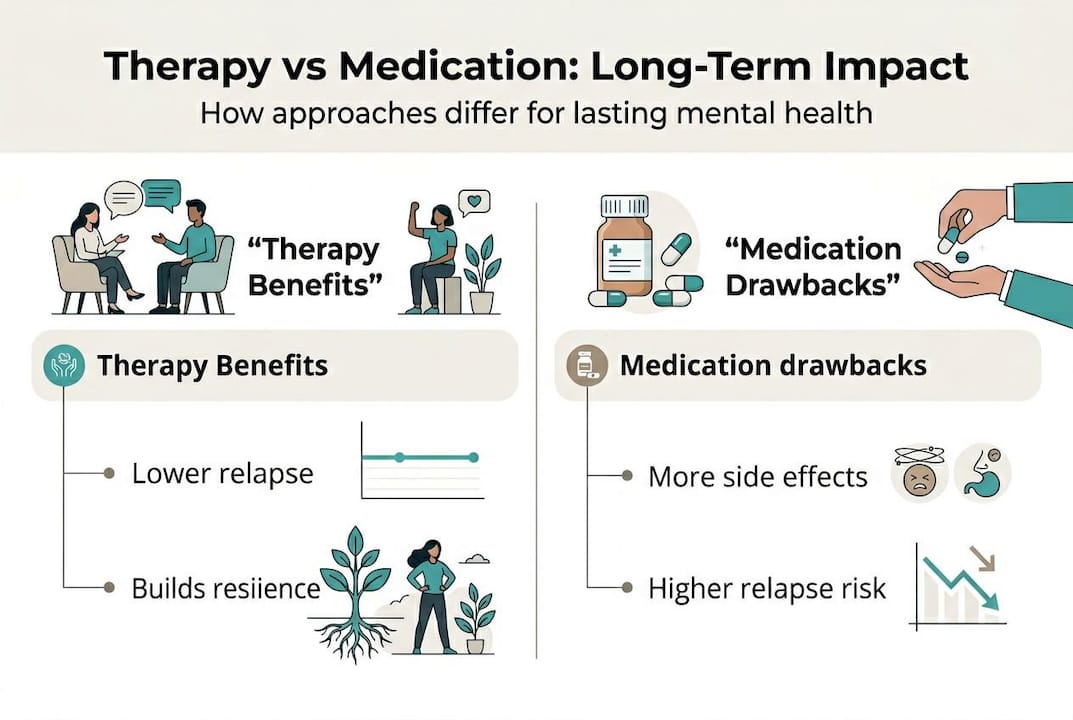
The data here is compelling. Research shows that psychodynamic therapy reduced relapse risk at 12 months with a relative risk (RR) of 0.78. In plain terms, an RR below 1.0 means a meaningfully lower chance of relapse compared to medication. A useful way to think about this is the "number needed to treat" concept: the fewer people you need to treat for one person to benefit, the more effective the intervention.
| Treatment | 12-month relapse rate | Relative risk (RR) |
|---|---|---|
| Therapy (psychodynamic) | Lower | 0.78 |
| Medication alone | Higher | 1.00 (reference) |
These numbers reflect something important. Therapy does not just mask symptoms. It helps people build genuinely different ways of thinking and responding, which creates a protective effect over time.
Exploring therapeutic approaches for common mental health conditions can help you see which types of therapy have the strongest evidence for the challenges you are facing.
Pro Tip: When choosing a treatment, consider not just how quickly it works, but how well it targets the underlying causes of your distress. Sustained wellness depends on addressing the roots, not just the symptoms.
Side effects and sticking with treatment: What people overlook
Beyond relapse, choosing a sustainable path depends on how treatments affect our lives day-to-day.
Medication can be genuinely helpful, but it often comes with side effects that are underappreciated in mainstream conversations about mental health. Research confirms that common medication side effects include emotional blunting, weight gain, and sexual dysfunction, and that these issues can actually slow progress in therapy when both are used together. Medicated patients have shown slower symptom reduction in talking treatments, which is a significant finding.
Here is a direct comparison:
Common medication side effects:
- Emotional blunting or numbness
- Weight gain
- Sexual dysfunction
- Sleep disturbances
- Nausea or gastrointestinal discomfort
- Fatigue
Therapy side effects:
- Temporary emotional discomfort when processing difficult topics
- Time commitment
- Financial cost (though often lower over the long term)
The contrast is stark. Therapy's "side effects" are largely part of the process of growth. Medication's side effects can directly undermine quality of life and make it harder to engage with treatment.
Dropout and refusal rates are significantly higher for medication alone. Patients are 1.76 times more likely to refuse pharmacotherapy than therapy, making treatment adherence a critical factor in choosing the right approach.
This matters because starting and stopping medication repeatedly can itself create instability. When people cannot tolerate side effects, they often stop treatment altogether, which can lead to withdrawal effects and a rapid return of symptoms.
Pro Tip: If you are currently on medication and concerned about side effects, raise this with your GP or psychiatrist before making any changes. A good clinician will take your concerns seriously and may adjust your dosage, switch medications, or discuss whether choosing the right therapy alongside or instead of medication is appropriate for your situation.
Personalisation and patient preference: Why therapy fits you
The final piece is fitting the treatment to the individual, and this is where therapy excels through personalisation.
One of the most powerful aspects of therapy is that it adapts to you. There is no single protocol applied uniformly. A skilled therapist works to understand your specific history, personality, goals, and preferences before tailoring their approach. This stands in contrast to medication prescribing, where the process is often more standardised.
Here is how therapists typically personalise your treatment:
- Initial assessment: Gathering a detailed picture of your mental health history, current symptoms, and life circumstances
- Goal setting: Working with you to identify what meaningful improvement looks like for you specifically
- Approach selection: Choosing or combining therapeutic models that match your presentation and preferences
- Ongoing adjustment: Reviewing progress regularly and adapting the approach as your needs evolve
- Skill building: Developing coping strategies that are relevant to your particular challenges
This personalisation is not just good practice. It is linked to better outcomes. Research indicates that individual predictors can identify who will benefit most from therapy versus medication with up to 71% remission accuracy. That means therapy is not a one-size-fits-all option; it can be genuinely targeted to the people most likely to benefit.
Patient preference also plays a bigger role than many people realise. When individuals have a say in their treatment and choose therapy, they are more likely to engage, persist, and benefit. Lower dropout rates reflect this directly. Feeling heard and involved in your own care is itself therapeutic.
If you are curious about what has been established as a first-line treatment for mental health conditions, the evidence increasingly points to therapy as the starting point for many people, with medication reserved for specific circumstances or as a complement.
Our perspective: What most guides miss about therapy vs medication
After weighing the research, it is clear there is more to consider than just statistics.
Most mainstream articles on this topic get stuck on a single question: which works faster? That framing misses what actually matters for most people, which is the quality of recovery over months and years, not the speed of symptom relief in the first few weeks.
Therapy builds something that medication cannot provide on its own: self-understanding. When you work through difficult feelings in a supported environment, you develop insight into why you respond the way you do. That insight belongs to you permanently. It does not stop working when you stop treatment.
Medication, when genuinely needed, can be life-changing. We are not dismissing it. But treating it as a standalone answer rather than part of a broader plan often leads to the cycle of symptom return that the relapse data reflects. The most honest guidance we can offer is this: sustainable mental health is built, not prescribed. Therapy is often where that building happens.
Get support and guidance for choosing the right therapy
If you are exploring your options, knowing where to start can feel overwhelming. GuideMe is here to make that process simpler and more personal.
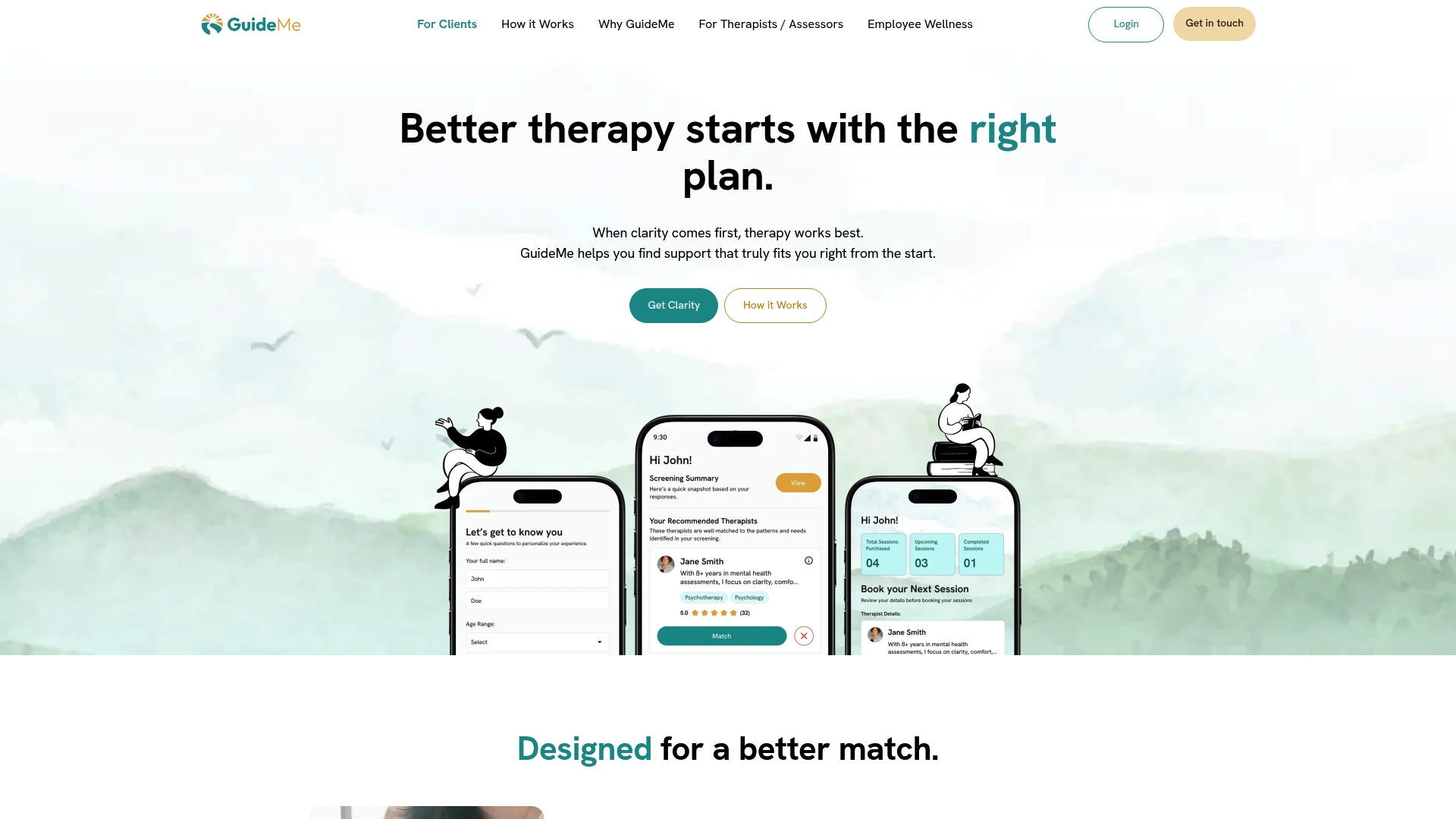
GuideMe is a therapy navigation platform that combines human expertise with AI-powered matching to help you understand your mental health needs and connect with the right therapist from the very beginning. Rather than leaving you to search alone, GuideMe creates an in-depth therapy plan tailored to your situation. If you are ready to take the next step, find your ideal therapy and get matched with a therapist who genuinely fits your needs.
Frequently asked questions
Is therapy more effective than medication for anxiety and depression?
Evidence shows therapy provides lower relapse rates and is preferred by many patients, making it a highly effective long-term option for anxiety and depression. For many individuals, it offers more sustained improvement than medication alone.
What are the main drawbacks of using medication instead of therapy?
Medications can cause significant side effects including emotional blunting and weight gain, and dropout rates are higher than for therapy. These factors often make it harder to maintain consistent treatment progress.
Who responds best to therapy instead of medication?
Research shows that individual predictors can identify those most likely to benefit from therapy, and personal preference for therapy consistently leads to better engagement and outcomes.
Can I combine therapy and medication?
Yes, many people find that combining both approaches works well, particularly for more severe symptoms. The right combination depends on your specific needs, history, and what you and your clinician agree on together.