

Most people wait for breaking points before seeking therapy. They endure months of mounting stress, sleepless nights, and strained relationships until something finally gives. Yet research shows that preventive therapy reduces crisis risk by 18%, transforming mental health from reactive damage control into proactive wellbeing maintenance. Starting therapy before you're in crisis isn't just sensible, it's one of the most effective strategies for long-term mental health. This article explores why early intervention matters, how it works, and practical steps to begin your journey.
Table of Contents
- Key Takeaways
- The importance of therapy before mental health crises
- How therapy prevents crisis: mechanisms and evidence
- Comparing therapy before and after crisis: benefits and challenges
- Practical steps to start therapy before a crisis
- Guide Me: your partner in proactive mental health support
- FAQ
Key Takeaways
| Point | Details |
|---|---|
| Crisis risk reduction | Preventive therapy reduces crisis risk by 18 per cent and shifts mental health care from reactive damage control to proactive wellbeing maintenance. |
| Early intervention matters | Starting therapy before a crisis improves long term mental health outcomes. |
| Integrated psychological and social support | Combining psychological therapy with social interventions produces greater effects than either approach alone. |
| Mood journal starter | Beginning with a simple mood journal helps therapists understand patterns and tailor initial sessions. |
The importance of therapy before mental health crises
Therapy isn't an emergency service reserved for breaking points. It's a maintenance tool that keeps your mental health functioning optimally, much like regular exercise prevents heart disease rather than treating it after a cardiac event. When you engage with early interventions and therapy before crisis moments, you're addressing stressors whilst they're still manageable, not after they've compounded into overwhelming problems.
The evidence is compelling. A comprehensive analysis of 31 randomised controlled trials involving over 35,000 participants found that combined psychological prevention with social interventions reduces crisis incidence significantly. This isn't theoretical, it's measurable impact across diverse populations. Early support doesn't just reduce the likelihood of severe episodes, it fundamentally changes your relationship with mental health challenges.
Consider what happens when you start therapy proactively. You learn to recognise subtle warning signs, like persistent irritability or withdrawal from activities you once enjoyed. You develop coping mechanisms before stress becomes unmanageable. You build a therapeutic relationship during calmer periods, so when difficulties arise, you already have professional support in place. This foundation proves invaluable when life inevitably presents challenges.
Preventive therapy addresses multiple dimensions simultaneously:
- Emotional regulation skills that help you process difficult feelings before they accumulate
- Stress management techniques tailored to your specific triggers and lifestyle
- Problem-solving frameworks that prevent small issues from snowballing
- Social support networks that reduce isolation and provide practical assistance
The integration of psychological and social support measures creates particularly powerful effects. Therapy doesn't exist in a vacuum. When you're developing healthier thought patterns whilst simultaneously improving your social connections and life circumstances, the combined impact exceeds what either approach achieves alone. This holistic perspective recognises that mental health emerges from the interaction between internal psychological states and external environmental factors.
Pro Tip: Start a simple mood journal before beginning therapy. Track your emotional patterns for two weeks, noting triggers, physical sensations, and coping strategies you naturally use. This baseline data helps your therapist understand your unique patterns quickly, making early sessions more productive.
Many people hesitate to seek therapy because they feel their struggles aren't "serious enough." This mindset fundamentally misunderstands therapy's purpose. You don't wait until your car completely breaks down to get an oil change. Similarly, you shouldn't wait for a mental health emergency to invest in psychological maintenance. Early intervention means addressing difficulties whilst you still have energy, perspective, and options.
How therapy prevents crisis: mechanisms and evidence
Understanding how therapy actually prevents crises demystifies the process and highlights why timing matters. The mechanisms aren't mysterious, they're well-documented psychological processes that become more effective when applied early.
Therapy improves emotional regulation by teaching you to identify feelings accurately, understand their origins, and respond thoughtfully rather than reactively. When you're not in crisis, you have the cognitive bandwidth to learn these skills properly. You can practise them in lower-stakes situations, building competence before facing major challenges. This gradual skill development proves far more effective than trying to learn emotional regulation whilst simultaneously managing a crisis.

Stress management becomes sustainable when you address it proactively. You identify your specific stressors, whether they're work pressures, relationship dynamics, or internal perfectionism. You experiment with different coping strategies, discovering what actually works for your personality and circumstances. You build routines that prevent stress accumulation rather than frantically trying to reduce overwhelming stress levels.
Problem-solving skills develop through practice. Therapy provides a structured space to examine how you currently approach difficulties, identify patterns that aren't serving you, and try alternative approaches. Early intervention means you're solving problems whilst they're still manageable, which builds confidence and competence. You learn to break down complex challenges, consider multiple perspectives, and take action despite uncertainty.
The evidence supporting these mechanisms is substantial. The combined psychological prevention with social interventions reduces crisis incidence finding emerged from rigorous research across diverse populations. These weren't small studies, they included over 35,000 participants in randomised controlled trials, the gold standard for medical evidence.
| Mechanism | How it prevents crisis | Evidence strength |
|---|---|---|
| Emotional regulation | Processes feelings before they accumulate into overwhelming distress | High, consistent across multiple studies |
| Stress management | Addresses stressors whilst still manageable | High, particularly with combined approaches |
| Problem-solving skills | Resolves issues before they compound | Moderate to high, varies by therapeutic approach |
| Early warning sign recognition | Enables timely intervention before escalation | High, especially with ongoing therapeutic relationships |
Social interventions amplify psychological therapy's effectiveness. When therapy helps you improve communication skills, set healthier boundaries, and build supportive relationships, these environmental changes reduce crisis risk independently whilst also reinforcing the psychological skills you're developing. This synergy explains why combined approaches show particularly strong results.
Pro Tip: Ask your therapist to help you create a personalised early warning system. Identify three specific signs that indicate you're moving towards crisis, then establish concrete actions to take when you notice each sign. This practical framework transforms abstract awareness into actionable prevention.
The preventive approach also addresses a crucial but often overlooked factor: therapeutic relationships take time to develop. Trust, rapport, and understanding don't emerge instantly. When you start therapy to prevent crises rather than during one, you build this foundation during calmer periods. Your therapist learns your patterns, strengths, and vulnerabilities. You become comfortable being honest about difficulties. This established relationship becomes a powerful resource when challenges arise.
Comparing therapy before and after crisis: benefits and challenges
The timing of therapeutic intervention fundamentally shapes outcomes, costs, and experiences. Comparing preventive and reactive approaches reveals why early engagement offers substantial advantages, whilst also acknowledging the real barriers people face.
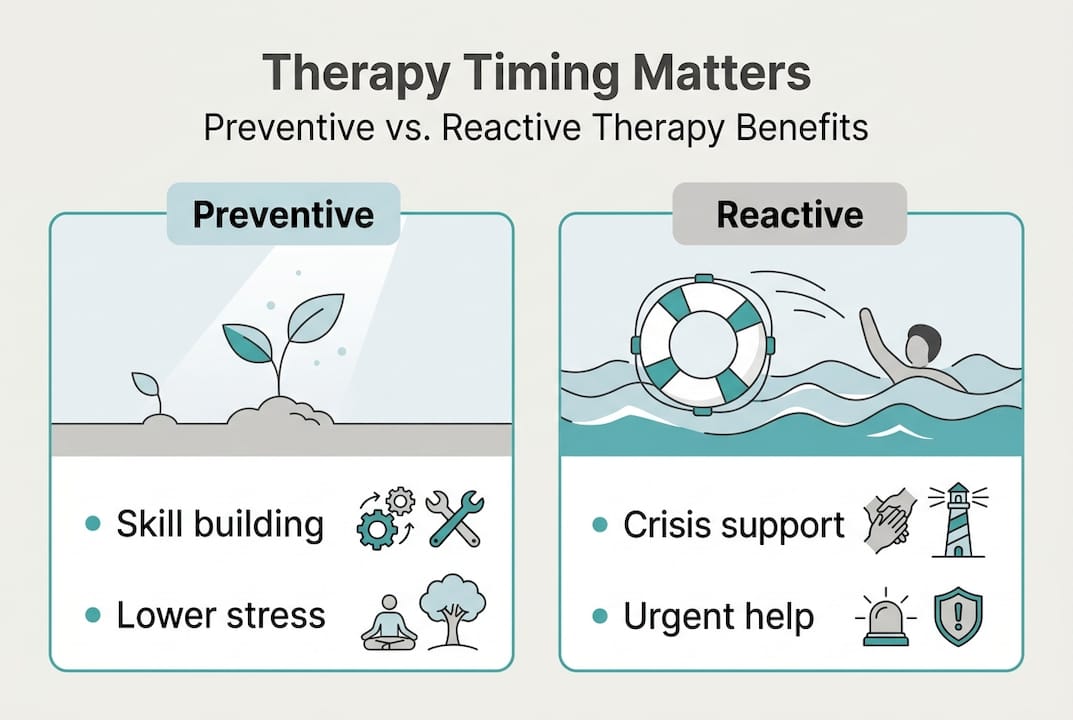
Preventive therapy operates from a position of relative strength. You have energy to engage deeply with therapeutic work. You can reflect thoughtfully rather than reacting desperately. You make changes from choice rather than necessity. This psychological space allows for more thorough, lasting transformation. You're not just putting out fires, you're fireproofing your mental health infrastructure.
| Approach | Primary benefits | Main challenges |
|---|---|---|
| Preventive therapy | Lower overall crisis risk, sustainable wellbeing, skill development during calmer periods | Requires recognising need before emergency, overcoming "not serious enough" mindset |
| Reactive therapy | Addresses immediate crisis, validates severity of distress | Often occurs after significant damage, limited energy for deep work, higher emotional and financial costs |
Reactive therapy, whilst absolutely valuable when crises occur, faces inherent limitations. You're trying to learn new skills whilst simultaneously managing overwhelming distress. Your cognitive resources are depleted precisely when you need them most. The urgency can create pressure that interferes with the gradual, sustainable change therapy facilitates best. Additionally, crisis intervention often focuses on immediate stabilisation rather than addressing underlying patterns, potentially setting up future crises.
The cost differential extends beyond finances. Preventive therapy typically involves regular sessions during periods when you're still functioning well, allowing you to maintain work, relationships, and daily responsibilities whilst developing skills. Crisis intervention often requires more intensive support, potentially including time off work, strained relationships, and disrupted routines. The combined psychological prevention reduces crisis incidence, which translates to avoided costs across multiple life domains.
Several challenges can impede early engagement:
- Stigma and misconceptions that therapy is only for severe problems
- Difficulty recognising gradual mental health decline
- Competing priorities that push mental health maintenance down the list
- Access barriers including cost, availability, and knowledge of resources
Addressing these challenges requires both individual initiative and systemic changes. Personally, you can educate yourself about mental health, monitor your wellbeing regularly, and prioritise preventive care. Systemically, improved access to therapy before crisis benefits everyone, reducing overall healthcare costs whilst improving population wellbeing.
The sustainability factor deserves particular emphasis. Preventive therapy helps you develop habits, thought patterns, and coping mechanisms that become integrated into your daily life. You're not learning emergency procedures, you're building a lifestyle that maintains mental health naturally. This sustainable approach means the benefits compound over time rather than requiring constant intensive intervention.
Some worry that starting therapy before crisis means committing to endless sessions. Actually, preventive therapy often requires less total time than repeated crisis interventions. You might engage in focused work for several months, develop solid skills and insights, then step back to independent practice with occasional check-ins. This pattern proves more efficient than cycling through crises and intensive interventions.
Practical steps to start therapy before a crisis
Knowing therapy helps is one thing. Actually beginning is another. These concrete steps move you from awareness to action, making preventive therapy accessible rather than aspirational.
-
Recognise early signs in yourself. Notice patterns like persistent low mood, increased irritability, sleep changes, or withdrawal from activities. These subtle shifts often precede crises by weeks or months. Pay attention to feedback from trusted friends or family who notice changes you might dismiss.
-
Research therapeutic approaches and specialisations. Different therapy types suit different needs. Cognitive behavioural therapy excels at changing thought patterns. Psychodynamic therapy explores underlying emotional patterns. Acceptance and commitment therapy builds psychological flexibility. Understanding options helps you make informed choices.
-
Use navigation platforms to find suitable therapists. Resources like Guide Me streamline the often overwhelming process of finding the right therapeutic fit. These platforms consider your specific needs, preferences, and circumstances, connecting you with professionals whose expertise matches your situation.
-
Schedule an initial consultation without waiting for crisis. Most therapists offer introductory sessions where you can assess fit. Use these to ask about their approach, experience with preventive work, and how they'd structure support for someone seeking to maintain and improve mental health rather than manage crisis.
-
Establish regular sessions before urgency dictates frequency. Starting with weekly or fortnightly sessions creates consistency whilst you're building skills. This rhythm allows time to practise between sessions and reflect on progress without the pressure of crisis management.
-
Communicate openly about your preventive goals. Be explicit that you're seeking therapy to maintain wellbeing and prevent crisis rather than respond to emergency. This frames the therapeutic work appropriately and helps your therapist tailor their approach.
Pro Tip: Create a "therapy readiness" document before your first session. List current stressors, past mental health experiences, what you hope to gain, and any concerns about therapy itself. This preparation makes initial sessions more productive and demonstrates your commitment to the process.
Maintaining progress requires ongoing attention. Regular self-monitoring helps you notice when you're drifting off course before it becomes crisis. Simple practices like weekly mood check-ins, journaling about challenges and successes, and honest conversations with your therapist about what's working create accountability and awareness.
Financial considerations matter. Preventive therapy represents an investment in long-term wellbeing. Whilst costs vary, many therapists offer sliding scale fees, and some insurance plans cover preventive mental health care. The combined psychological prevention reduces crisis incidence, which often means lower total healthcare costs over time compared to crisis intervention.
Don't underestimate the importance of therapeutic fit. The relationship between you and your therapist significantly impacts outcomes. If initial sessions don't feel right, that's valuable information, not failure. Starting therapy early gives you time to find the right match without crisis pressure forcing you to settle for whoever's immediately available.
Consider your support system as you begin therapy. Whilst therapy is confidential, having trusted people who know you're working on mental health can provide additional support. They can help you notice patterns, celebrate progress, and maintain accountability to your wellbeing goals.
Guide Me: your partner in proactive mental health support
Navigating mental health support shouldn't add to your stress. Guide Me exists specifically to make finding the right therapy straightforward, personalised, and accessible. Whether you're seeking preventive support or addressing emerging concerns, the platform connects you with professionals whose expertise matches your unique needs.

Guide Me recognises that effective therapy depends on fit. The platform's approach combines human expertise with intelligent matching, considering your preferences, circumstances, and goals. This means you're not scrolling through endless profiles hoping to guess who might help. You're guided towards therapists whose training, approach, and availability align with what you're seeking. This personalised process makes starting therapy early less overwhelming and more likely to result in productive therapeutic relationships.
FAQ
Why is therapy recommended before a mental health crisis?
Therapy before crisis equips you with coping skills, emotional regulation techniques, and self-awareness that reduce the likelihood of severe episodes. Research demonstrates that early intervention addresses stressors whilst they're manageable, preventing the accumulation of difficulties that lead to crisis. Additionally, establishing a therapeutic relationship during calmer periods means you have professional support already in place when challenges arise.
What signs indicate it's time to seek therapy early?
Persistent low mood, increased anxiety, sleep disturbances, irritability, or withdrawal from previously enjoyed activities often signal it's time to seek support. Difficulty managing daily responsibilities, strained relationships, or feeling consistently overwhelmed by stress are additional indicators. Remember that early warning signs vary individually, so trust your instinct if something feels off, even if you can't articulate exactly what's wrong.
Can therapy prevent serious mental health crises?
Yes, substantial evidence shows that therapy combined with social interventions reduces crisis incidence significantly. Analysis of over 35,000 participants in randomised controlled trials found an 18% reduction in crisis risk with preventive approaches. Early therapy improves resilience, develops coping mechanisms, and addresses underlying patterns before they escalate into emergencies.
How do I find the right therapy before a crisis occurs?
Consider your specific needs, preferences regarding therapeutic approach, and practical factors like location and availability. Research different therapy types to understand which might suit your goals. Platforms like Guide Me streamline this process by matching you with therapists whose expertise aligns with your situation. Schedule initial consultations with potential therapists to assess fit before committing to ongoing work.