

TL;DR:
- Chronic stress is harmful and often requires professional therapy for effective relief.
- Evidence-based therapies like CBT and mindfulness significantly reduce stress and improve coping.
- Therapy helps identify triggers, build adaptive strategies, and foster lasting stress management skills.
Stress is not simply a fact of modern life that you must push through alone. Many people believe that if they just try harder, sleep more, or take a holiday, the pressure will ease. But for a significant number of people, stress becomes persistent, disruptive, and genuinely harmful to health. The good news is that therapy offers something willpower and self-help rarely can: a structured, evidence-based path to lasting relief. This guide explains what therapy for stress actually involves, why the research supports it so strongly, and how to find the right approach for your situation.
Table of Contents
- What makes stress a challenge worth professional help
- The science behind therapy for stress relief
- How therapy changes your relationship with stress
- Comparing therapy with self-help and alternative strategies
- Why real stress relief means looking past quick fixes
- How GuideMe helps you find lasting stress relief
- Frequently asked questions
Key Takeaways
| Point | Details |
|---|---|
| Therapy targets stress roots | Unlike self-help, therapy focuses on changing the underlying thought and behaviour patterns that fuel stress. |
| Multiple therapy types | CBT, mindfulness, and insight-oriented therapy all provide strong, evidence-based relief for different needs. |
| Lasting results proven | Clinical studies show therapy can reduce stress, anxiety, and depression with benefits lasting several years. |
| Know when to seek help | Professional support is best when stress feels overwhelming, becomes persistent, or disrupts daily life. |
What makes stress a challenge worth professional help
Not all stress is the same. Short-term stress, the kind you feel before a presentation or a difficult conversation, is a normal part of life. Your body responds, you get through it, and the feeling passes. Chronic or unresolved stress is different. It lingers, builds, and starts to affect your sleep, your relationships, your concentration, and your physical health. This is the kind of stress that rarely improves on its own, no matter how determined you are.
When stress becomes chronic, many people fall into patterns that feel helpful but actually make things worse. These are called maladaptive coping strategies, and they include:
- Avoiding situations or responsibilities that feel overwhelming
- Using alcohol, food, or screens to numb difficult feelings
- Withdrawing from friends and family
- Overworking to stay distracted
- Catastrophising or ruminating on worst-case scenarios
The problem with these strategies is that they offer short-term relief while reinforcing the stress cycle. Maladaptive coping worsens stress and anxiety over time, whereas therapy promotes adaptive strategies such as problem-solving, emotional regulation, and gradually facing what feels difficult rather than avoiding it.
So when should you consider seeking professional help? A few clear signals include:
- Stress that has lasted more than a few weeks without improvement
- Difficulty functioning at work, in relationships, or in daily tasks
- Feeling emotionally exhausted or out of control
- Physical symptoms such as headaches, digestive issues, or disrupted sleep
- Self-help strategies that have not produced meaningful change
"Therapy offers something self-help often cannot: a structured, personalised process for understanding and changing the patterns that keep stress alive."
Therapy also supports increasing self-awareness, which is a foundational step in breaking the stress cycle. When you understand what triggers your stress and how you respond to it, you are far better placed to make lasting changes.
The science behind therapy for stress relief
Understanding why therapy works makes it easier to trust the process. Several well-researched approaches have been shown to reduce stress effectively, each working through slightly different mechanisms.
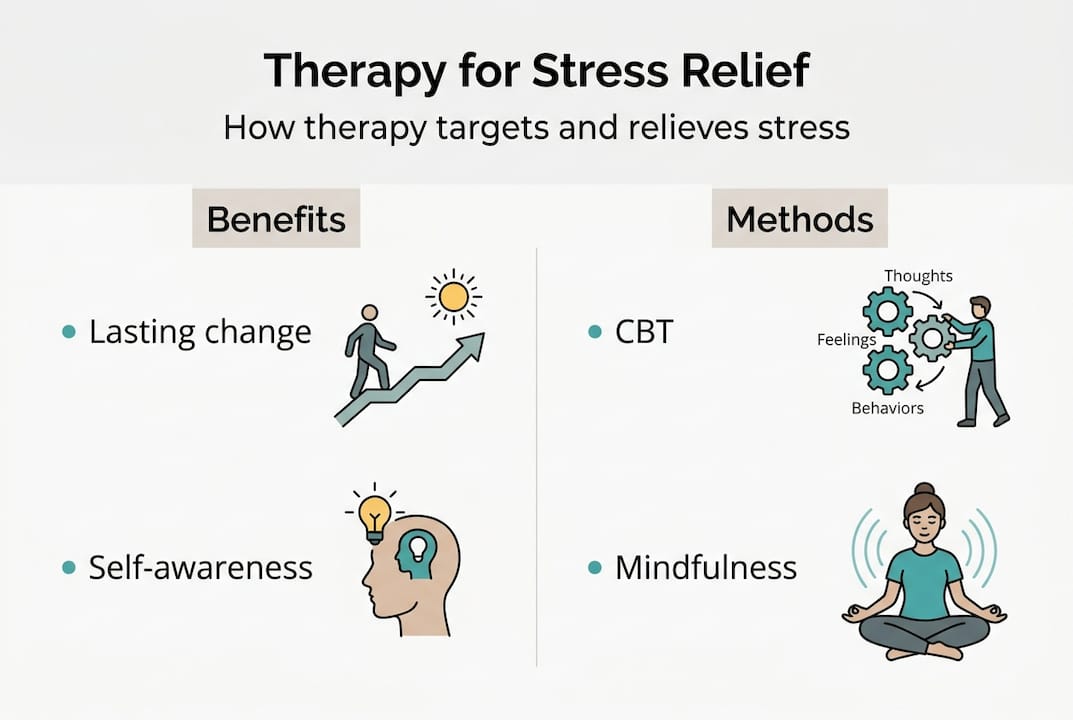
Cognitive behavioural therapy (CBT) is the most widely studied. It works by helping you identify negative or distorted thought patterns and replacing them with more balanced, realistic ones. CBT targets negative thought patterns and behaviours that fuel stress and anxiety, making it one of the most recommended first-line treatments. A large meta-analysis of 153 studies confirmed that CBT significantly reduces stress across a wide range of populations and settings.
Mindfulness-based interventions (MBIs) such as Mindfulness-Based Stress Reduction (MBSR) work differently. They train your attention and help you respond to stressful situations with greater calm rather than reacting automatically. MBIs reduce both the psychological and physiological signs of stress, including cortisol levels and blood pressure.
Insight-oriented therapy focuses on understanding the deeper emotional roots of stress, often exploring past experiences and relational patterns. Exposure therapy is particularly useful when stress is tied to specific fears or avoidance behaviours.
Here is a comparison of the most common therapies for stress:
| Therapy type | How it works | Typical duration | Best suited for | Long-term effectiveness |
|---|---|---|---|---|
| CBT | Restructures thoughts and behaviours | 8 to 20 sessions | Most stress and anxiety types | Very strong |
| Mindfulness-based (MBSR) | Builds present-moment awareness | 8 weeks | Chronic stress, burnout | Strong with ongoing practice |
| Insight-oriented | Explores emotional roots | Months to years | Deep-rooted or relational stress | Strong for complex cases |
| Exposure therapy | Gradual facing of feared situations | 8 to 12 sessions | Avoidance-based stress | Strong for specific triggers |
The evidence is clear. Therapy is not a vague or passive process. It is a targeted intervention with measurable outcomes, and for most people experiencing persistent stress, it produces results that self-help simply cannot match.
How therapy changes your relationship with stress
Knowing the science is one thing. What does it actually feel like to go through therapy for stress relief?
Most people begin therapy feeling overwhelmed and unsure of what to expect. The early sessions are typically focused on understanding your situation. A good therapist will help you map out what is happening in your life, how stress shows up for you, and what patterns may be keeping it in place. This is not about blame. It is about clarity.
As therapy progresses, you move through a stepwise process:
- Identifying your triggers: Understanding exactly what situations, thoughts, or interactions set off your stress response
- Recognising your patterns: Seeing how you typically react and which responses are helping or harming you
- Building new strategies: Practising more adaptive ways of thinking and responding, with your therapist's guidance
- Applying skills in real life: Testing what you have learned outside of sessions and reflecting on what works
- Sustaining progress: Developing a personal toolkit for managing future stress independently
Therapy addresses root cognitive and behavioural patterns rather than just the surface symptoms, which is why its effects tend to last. Many clients report improvements in sleep, concentration, and relationships as stress reduces. They also describe a greater sense of control and self-awareness of stress patterns that continues to serve them long after therapy ends.
For those managing stress alongside family responsibilities, practical resources such as stress management for parents can complement the work done in therapy.
Pro Tip: If stress spikes return after therapy ends, that is normal and not a sign of failure. Use the strategies you have built, and consider a few booster sessions rather than waiting until you feel overwhelmed again.
Comparing therapy with self-help and alternative strategies
Therapy is not the only option people turn to when stress becomes difficult to manage. It is worth understanding how it compares with other commonly tried approaches.
| Approach | Strengths | Limitations | Best for |
|---|---|---|---|
| Therapy (CBT, etc.) | Personalised, evidence-based, lasting change | Requires time and financial investment | Persistent or chronic stress |
| Self-help books/courses | Accessible, low cost | Limited accountability, variable quality | Mild stress with clear triggers |
| Mindfulness apps | Convenient, builds daily habits | Effects moderate over time without practice; less effective in large groups or older adults | Everyday stress management |
| Peer support groups | Reduces isolation, shared experience | Not a substitute for clinical support | Supplementary support |
| Medication | Fast-acting symptom relief | Does not address root causes, potential side effects | Severe symptoms alongside therapy |
The key takeaway is that most alternatives work best as complements to therapy rather than replacements. Mindfulness for anxiety can be a genuinely useful daily practice, but it works better when combined with professional guidance.
There are situations where therapy may not be immediately necessary:
- Stress that is clearly situational and expected to resolve naturally
- Mild stress that responds well to exercise, rest, and social connection
- Periods of adjustment following a life change, where time and support are sufficient
However, if you are unsure whether your stress warrants professional help, that uncertainty itself is often a good reason to seek an assessment. A therapist can help you determine what level of support is right for you.
Why real stress relief means looking past quick fixes
Most articles about stress give you a list of techniques. Breathe deeply. Exercise more. Cut back on caffeine. These things are not wrong, but they rarely produce lasting change on their own. The uncomfortable truth is that without addressing the underlying triggers and ingrained responses that drive your stress, the cycle tends to repeat.
What we have seen, time and again, is that people who invest in therapy do not just feel better temporarily. They develop a fundamentally different relationship with stress. They stop seeing every difficult situation as a threat and start responding with greater flexibility and confidence.
Meaningful progress also means being prepared for setbacks. Stress will return in some form. The difference is that after therapy, you have the self-awareness and the tools to respond differently. That is not a small thing. That is a genuine shift in how you move through life.
Pro Tip: When choosing a therapist, look for someone who balances challenge with compassion. A good therapeutic relationship should feel both safe and honest. That combination is what drives real results.
How GuideMe helps you find lasting stress relief
If you are ready to move from understanding to action, GuideMe is designed to make that step as straightforward as possible.
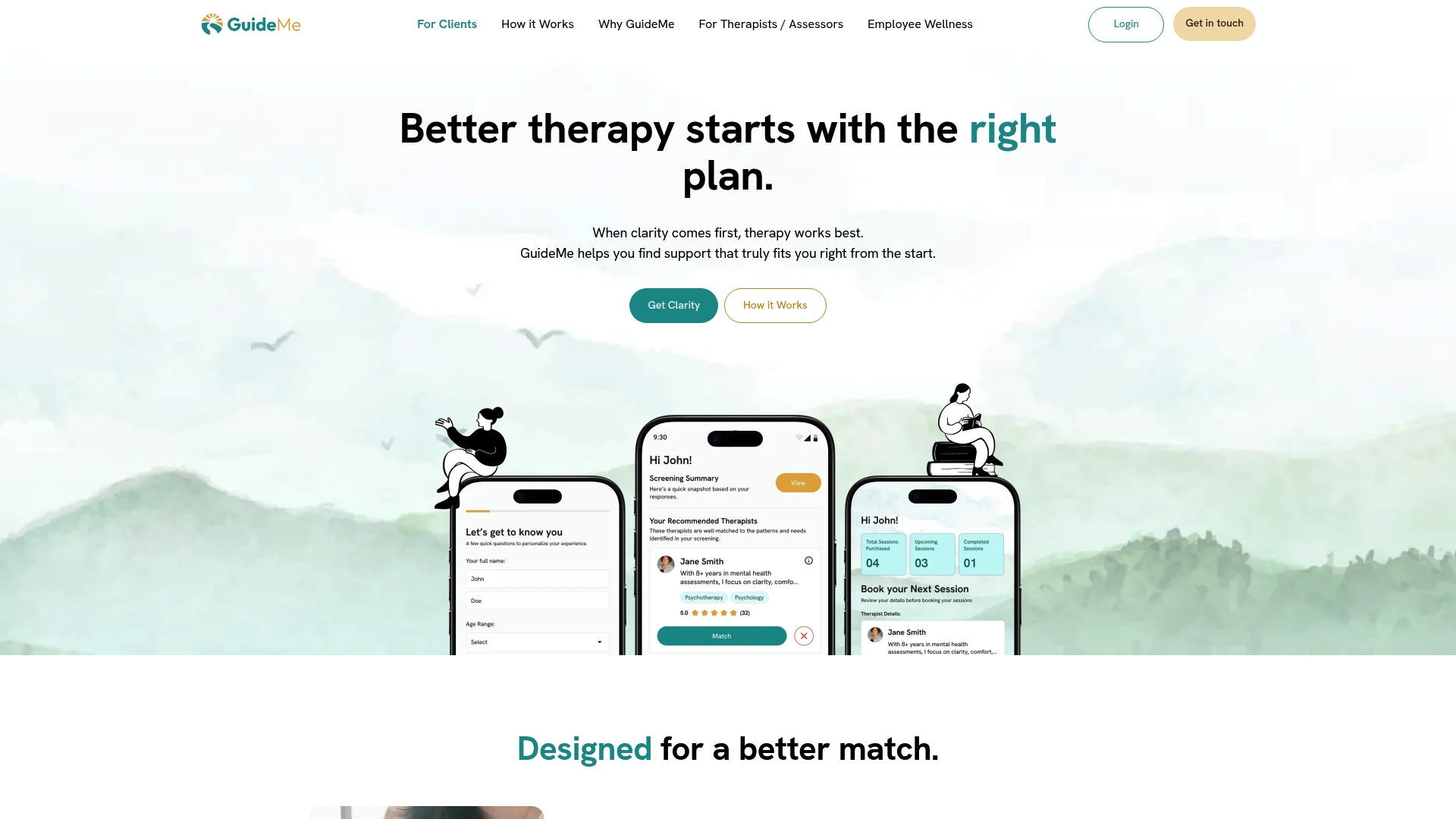
GuideMe is a therapy navigation platform that combines human expertise with AI-powered matching to connect you with the right therapist for your specific needs. Rather than searching blindly, you receive an in-depth therapy plan that reflects your situation and guides you towards guided therapy for stress that is genuinely suited to you. The process is designed to feel supportive from the very beginning, removing the guesswork and helping you feel confident in your choice. Getting the right support should not be complicated. GuideMe helps make it simple.
Frequently asked questions
What kind of therapy works best for stress relief?
CBT is a primary therapy for stress and anxiety, making it one of the most effective options for most people. Mindfulness-based therapies are also commonly recommended, particularly for chronic or burnout-related stress.
How long does it take for therapy to help with stress?
Most people notice meaningful improvement within 8 to 12 sessions, with 60 to 80% of anxiety cases showing symptom improvement in that timeframe. The most lasting effects typically build over several months of consistent work.
Is therapy more effective than self-help for stress relief?
Yes, particularly for persistent stress. Large effect sizes and 60 to 80% improvement rates sustained over two or more years make therapy significantly more effective than self-help or mindfulness apps alone.
What are the signs I should consider therapy for my stress?
Seek therapy if stress persists for more than a few weeks, disrupts your daily life, or if self-help has not addressed the root cognitive and behavioural patterns keeping it in place.