

Therapy remains one of the most misunderstood tools for mental wellbeing, often seen as a last resort rather than a proactive step towards personal growth. Many people question whether talking to a stranger can genuinely improve their lives, yet research shows psychotherapy works through both specific techniques and universal healing factors. This guide explains why therapy matters for emotional health, relationships, and personal development. You will discover evidence-based benefits, learn about different therapy approaches, and understand when seeking professional support becomes essential for your wellbeing.
Table of Contents
- How Therapy Supports Mental Health And Personal Growth
- The Vital Role Of Cognitive Behavioural Therapy (Cbt) In Treatment
- Comparing Therapy Approaches: Unique Features And Shared Benefits
- When To Consider Therapy And How To Make The Most Of It
- Discover Professional Therapy Support With Guideme
- Frequently Asked Questions
Key takeaways
| Point | Details |
|---|---|
| Therapy combines specific techniques with common healing factors | All effective therapies share elements like empathy and therapeutic alliance whilst using distinct methods tailored to individual needs. |
| CBT significantly reduces depression and suicidal thoughts | Cognitive behavioural therapy cuts suicidal ideation across all follow-up periods with documented clinical benefits. |
| Benefits persist across multiple mental health conditions | Evidence shows therapy effectiveness spans anxiety, PTSD, OCD, and relationship issues with lasting improvements. |
| Understanding therapy mechanisms helps you choose wisely | Knowing how different approaches work empowers you to select support matching your personality and goals. |
How therapy supports mental health and personal growth
Therapy works through two powerful pathways: specific techniques unique to each approach and common factors present across all effective treatments. Psychotherapies may work through techniques that are specific to each therapy or through factors that all therapies have in common, creating a foundation for meaningful change. These shared elements include the therapeutic alliance between you and your counsellor, genuine empathy, your expectations for improvement, and the safe space therapy provides.
The therapeutic relationship itself often drives significant healing. When you feel heard, understood, and supported without judgement, you become more willing to explore difficult emotions and try new behaviours. This collaborative partnership creates trust that allows vulnerability, which is essential for authentic personal growth.
Specific techniques vary dramatically by therapy type but all aim to facilitate positive change. Cognitive therapies focus on thought patterns, behavioural approaches target actions and habits, whilst psychodynamic methods explore unconscious influences. Each technique serves a purpose within its theoretical framework, yet the human connection remains central to success.
Pro Tip: Look for therapists who emphasise collaboration and regularly check in about your progress to maximise therapy outcomes.
Reviewing mechanisms and mediators in psychotherapy helps you appreciate that therapy offers far more than simply talking about problems. Key elements include:
- Building self-awareness through guided reflection
- Learning practical coping strategies for daily challenges
- Developing healthier relationship patterns
- Processing past experiences that influence current behaviour
- Creating accountability for personal growth goals
"The quality of the therapeutic relationship predicts outcomes as strongly as specific treatment techniques, highlighting why choosing the right therapist matters as much as selecting the right therapy type."
Understanding these foundational elements helps you recognise therapy's value beyond surface-level conversations. The combination of evidence-based techniques and powerful human connection creates conditions for lasting change that extends well beyond the therapy room.
The vital role of cognitive behavioural therapy (CBT) in treatment
Cognitive behavioural therapy stands as one of the most researched and effective psychological treatments available today. CBT significantly reduces suicidal ideation and risk of self-harm across all follow-up durations, making it a potentially life-saving intervention for those experiencing crisis. This structured approach helps you identify and change unhelpful thought patterns whilst developing practical coping skills.

CBT operates on the principle that thoughts, feelings, and behaviours interconnect and influence each other. By targeting negative thinking patterns, you can shift emotional responses and modify behaviours that maintain distress. Sessions typically involve homework assignments, thought records, and behavioural experiments that extend learning beyond the therapy hour.
The evidence base for CBT spans numerous mental health conditions with impressive results. CBT is a first-line treatment with varied effect sizes across disorders, demonstrating robust effectiveness for depression, anxiety disorders, PTSD, OCD, eating disorders, and substance use issues. Effect sizes range from moderate to large depending on the specific condition and treatment protocol.
Pro Tip: Combining CBT with medication or other support services can enhance results, particularly for moderate to severe depression or anxiety.
CBT's structured nature makes it particularly accessible and measurable. Most courses run between 12 to 20 sessions, though some conditions require longer treatment. The time-limited format appeals to many people who want clear goals and tangible progress markers.
| Condition | Effect Size | Clinical Significance |
|---|---|---|
| Depression | Large | Substantial symptom reduction comparable to medication |
| Generalised anxiety | Moderate to large | Significant worry reduction and improved functioning |
| PTSD | Large | Meaningful trauma symptom relief and quality of life gains |
| OCD | Moderate | Notable compulsion reduction and distress management |
| Social anxiety | Large | Considerable fear decrease and social engagement improvement |
For cognitive behavioural therapy overview, the approach focuses on present difficulties rather than extensively exploring past experiences. You learn to challenge distorted thinking, test beliefs through behavioural experiments, and develop skills for managing future challenges independently. This practical focus resonates with people seeking concrete tools for immediate relief.
The therapy's effectiveness for suicidal thoughts deserves special attention. Research demonstrates that CBT reduces both ideation and self-harming behaviours in the short term and maintains these improvements over extended follow-up periods. This makes it an essential intervention for individuals experiencing suicidal crisis or chronic self-harm patterns.
Comparing therapy approaches: unique features and shared benefits
Different therapy types offer distinct pathways to healing whilst sharing fundamental healing elements. All therapies have comparable effects due to common factors despite differing techniques, suggesting that both the specific method and therapeutic relationship contribute to success. Understanding these differences helps you choose an approach aligned with your preferences and needs.
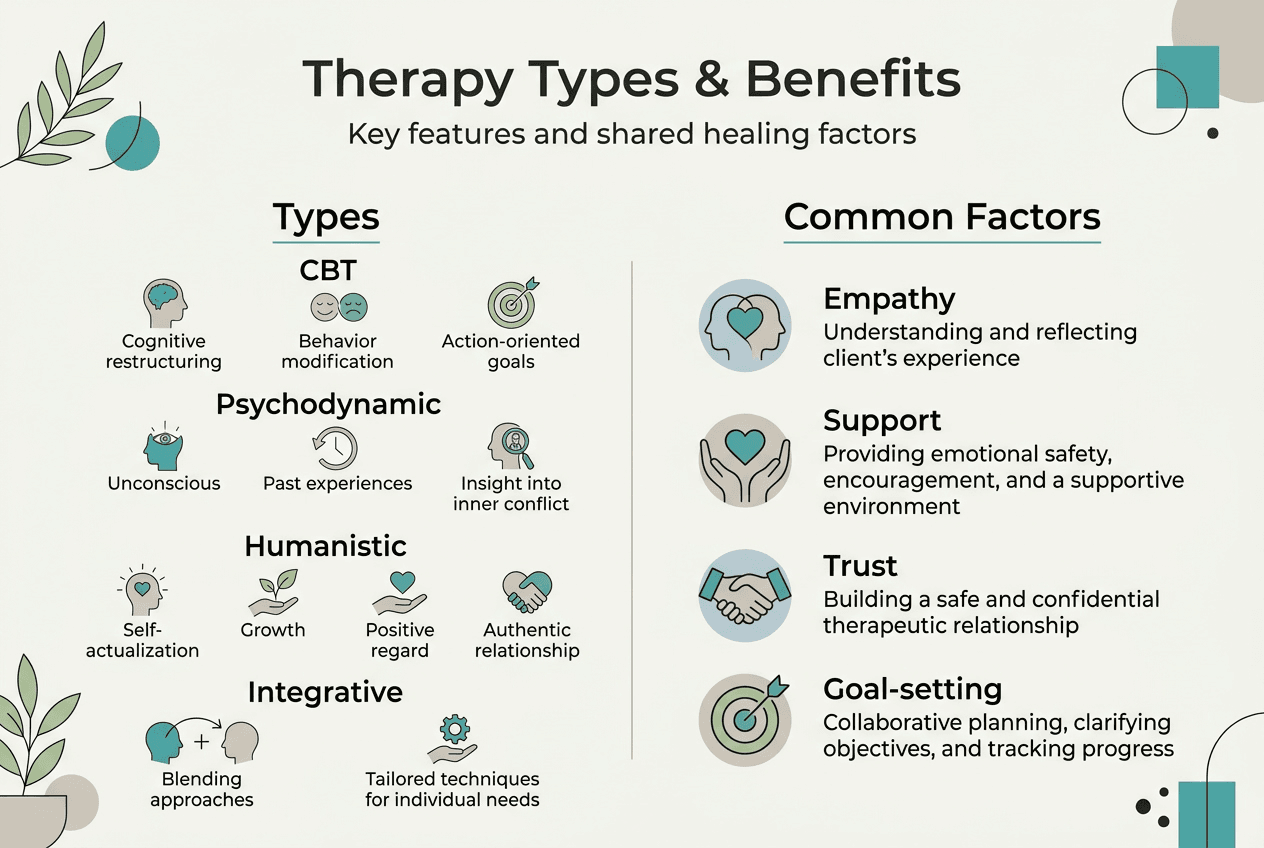
Cognitive behavioural therapy focuses on identifying and changing thought patterns and behaviours maintaining distress. It uses structured sessions, homework assignments, and measurable goals. This approach suits people who prefer practical tools and time-limited treatment.
Psychodynamic therapy explores unconscious patterns, childhood experiences, and relationship dynamics that influence current functioning. Sessions tend to be less structured, allowing themes to emerge naturally through free association and therapist interpretation. This depth-oriented approach appeals to those seeking self-understanding and insight into recurring patterns.
Humanistic therapies, including person-centred counselling, emphasise personal growth, self-actualisation, and the therapeutic relationship itself. The therapist provides unconditional positive regard, empathy, and genuineness whilst you direct session content. This non-directive approach suits individuals wanting autonomy in their healing journey.
Integrative approaches combine elements from multiple theoretical orientations, tailoring treatment to your specific needs. Therapists draw from cognitive, behavioural, psychodynamic, and humanistic techniques as appropriate. This flexibility can address complex presentations requiring varied interventions.
| Therapy Type | Primary Focus | Session Structure | Best Suited For |
|---|---|---|---|
| CBT | Thoughts and behaviours | Structured with homework | Anxiety, depression, specific phobias |
| Psychodynamic | Unconscious patterns | Open-ended exploration | Relationship issues, recurring patterns |
| Humanistic | Personal growth | Client-directed | Self-development, existential concerns |
| Integrative | Tailored combination | Flexible and adaptive | Complex presentations, varied needs |
Common factors across all approaches include the therapeutic alliance, empathy, positive expectations, and providing a safe space for exploration. These elements of effective therapy often predict outcomes as strongly as specific techniques, highlighting the importance of finding a therapist you connect with personally.
For therapy approach comparisons, consider your preferences regarding structure, depth of exploration, and treatment duration. Some people thrive with CBT's practical focus whilst others need psychodynamic therapy's exploratory space. Your personality, presenting concerns, and goals should guide this choice.
The therapeutic relationship quality matters regardless of approach. Research consistently shows that feeling understood, respected, and supported by your therapist predicts positive outcomes across all therapy types. This underscores why therapist selection involves both their training and your personal rapport.
When to consider therapy and how to make the most of it
Recognising when to seek therapy can prevent minor difficulties from becoming major crises. Therapy benefits anyone experiencing emotional struggles, relationship conflicts, life transitions, or simply wanting personal growth. You don't need a diagnosed mental health condition to benefit from professional support.
Early intervention often prevents symptom escalation and reduces overall treatment duration. If you notice persistent sadness, anxiety interfering with daily activities, relationship patterns causing distress, or difficulty coping with stress, these signal appropriate times to explore therapy. Waiting until crisis point makes recovery harder and longer.
Maximising therapy effectiveness requires active participation beyond weekly sessions. Setting clear goals at the outset provides direction and measurable progress markers. Being open and honest, even when discussing difficult topics, allows your therapist to provide targeted support. Practising skills and completing assignments between sessions accelerates improvement and builds lasting change.
Pro Tip: Regularly review progress with your therapist to adjust goals if needed, ensuring therapy remains relevant to your evolving needs.
Practical steps to enhance your therapy experience:
- Prepare for sessions by noting important events or patterns from the previous week
- Ask questions when concepts or techniques seem unclear
- Provide feedback about what feels helpful or unhelpful in sessions
- Apply learned skills in real-life situations between appointments
- Be patient with yourself as change takes time and involves setbacks
- Consider journaling to track progress and identify patterns
Recognising therapy's practical applications helps overcome hesitation and stigma. Modern therapy focuses on building strengths and skills rather than dwelling on weaknesses. It provides tools for navigating relationships, managing stress, processing difficult emotions, and achieving personal goals.
For getting started with therapy, the initial step involves identifying what you hope to achieve. Whether addressing specific symptoms, improving relationships, or pursuing personal development, clear intentions guide therapist selection and treatment planning. Many people benefit from trying therapy even without crisis, using it as preventative mental health maintenance.
Therapy works best when you view it as collaborative rather than passive. Your therapist brings expertise and guidance, but you bring essential knowledge about your life, values, and goals. This partnership creates conditions for meaningful, lasting change that extends well beyond the therapy relationship itself.
Discover professional therapy support with GuideMe
Understanding therapy's importance represents the first step towards improved mental health and wellbeing. GuideMe connects you with qualified therapists tailored to your specific needs, making the process of finding the right support straightforward and accessible. Our professional therapy matching service combines human expertise with intelligent matching to ensure you start with a therapist suited to your concerns, preferences, and goals.

Exploring therapy types and booking sessions happens easily through our platform, removing common barriers to seeking help. Whether you're addressing specific mental health concerns, navigating relationship challenges, or pursuing personal growth, GuideMe offers compassionate guidance throughout your journey. We understand that choosing therapy can feel overwhelming, especially if you're unsure where to begin or what approach suits you best. Our service simplifies these decisions whilst respecting your autonomy and individual needs.
Frequently asked questions
What are the main types of therapy?
The primary therapy types include cognitive behavioural therapy (CBT), psychodynamic therapy, humanistic approaches, and integrative methods. CBT focuses on changing thought patterns and behaviours, whilst psychodynamic therapy explores unconscious influences and past experiences. Humanistic therapies emphasise personal growth and the therapeutic relationship itself. Many therapists use integrative approaches, combining elements from multiple orientations to suit individual needs.
How long does therapy usually take?
Therapy duration varies significantly based on your concerns, goals, and chosen approach. CBT typically runs 12 to 20 sessions for specific issues like anxiety or depression. Psychodynamic therapy often continues longer, sometimes years, for deep exploratory work. Some people benefit from brief interventions of six to eight sessions, whilst others engage in ongoing therapy for personal development. Your therapist will discuss expected duration during initial sessions.
Is therapy effective for everyone?
Therapy demonstrates effectiveness across diverse populations and conditions, though individual results vary. Success depends on factors including the therapeutic relationship quality, your engagement level, appropriateness of the chosen approach, and life circumstances. Most people experience meaningful benefits when matched with a suitable therapist and approach. Research shows therapy works comparably well across different demographics when cultural factors are considered.
Can therapy help with relationship problems?
Therapy effectively addresses relationship difficulties through individual counselling, couples therapy, or family sessions. You can explore relationship patterns, communication skills, attachment styles, and conflict resolution strategies. Individual therapy helps you understand your contributions to relationship dynamics and develop healthier patterns. Couples therapy provides a space for both partners to work on issues collaboratively with professional guidance.
How do I know when to start therapy?
Consider starting therapy when emotional distress interferes with daily functioning, relationships feel consistently difficult, you experience persistent sadness or anxiety, or you want support during major life transitions. You don't need severe symptoms to benefit from therapy. Many people seek support for personal growth, self-understanding, or preventative mental health maintenance. Trust your instinct that professional support might help.
How does cognitive behavioural therapy (CBT) work?
CBT helps identify and change negative thought patterns and behaviours maintaining distress. Sessions involve examining the connections between thoughts, feelings, and actions, then testing and modifying unhelpful patterns. You learn practical skills like thought challenging, behavioural activation, and exposure techniques. Homework assignments extend learning beyond sessions, helping you apply new skills in daily life. The approach is structured, goal-oriented, and time-limited.
What should I expect in my first therapy session?
Your first session typically involves discussing your background, current concerns, and therapy goals. The therapist will ask about your symptoms, relationships, medical history, and what you hope to achieve. You'll discuss confidentiality, session frequency, and treatment approach. This initial meeting helps both you and the therapist determine if you're a good match. Come prepared to share openly about what brings you to therapy.
Can therapy help with suicidal thoughts or self-harm?
Therapies, especially CBT, effectively reduce suicidal thoughts and behaviours across short and long-term follow-up periods. Seeking therapy represents a crucial and potentially life-saving step if you experience suicidal ideation or engage in self-harm. Therapists are trained to assess risk, provide safety planning, and deliver interventions targeting these specific concerns. If you're in crisis, contact emergency services or a crisis helpline immediately, then arrange ongoing therapy support.