

Finding therapist matching software that pairs clients with suitable therapists and offers reliable intake is difficult. Many platforms use simple directories or basic filters without clinical screening or a personalised care plan upfront. This comparison lists the main features and intake process differences so people can choose a matching platform that fits their situation and support needs.
Table of Contents
GuideMe Therapy Platform
At a Glance
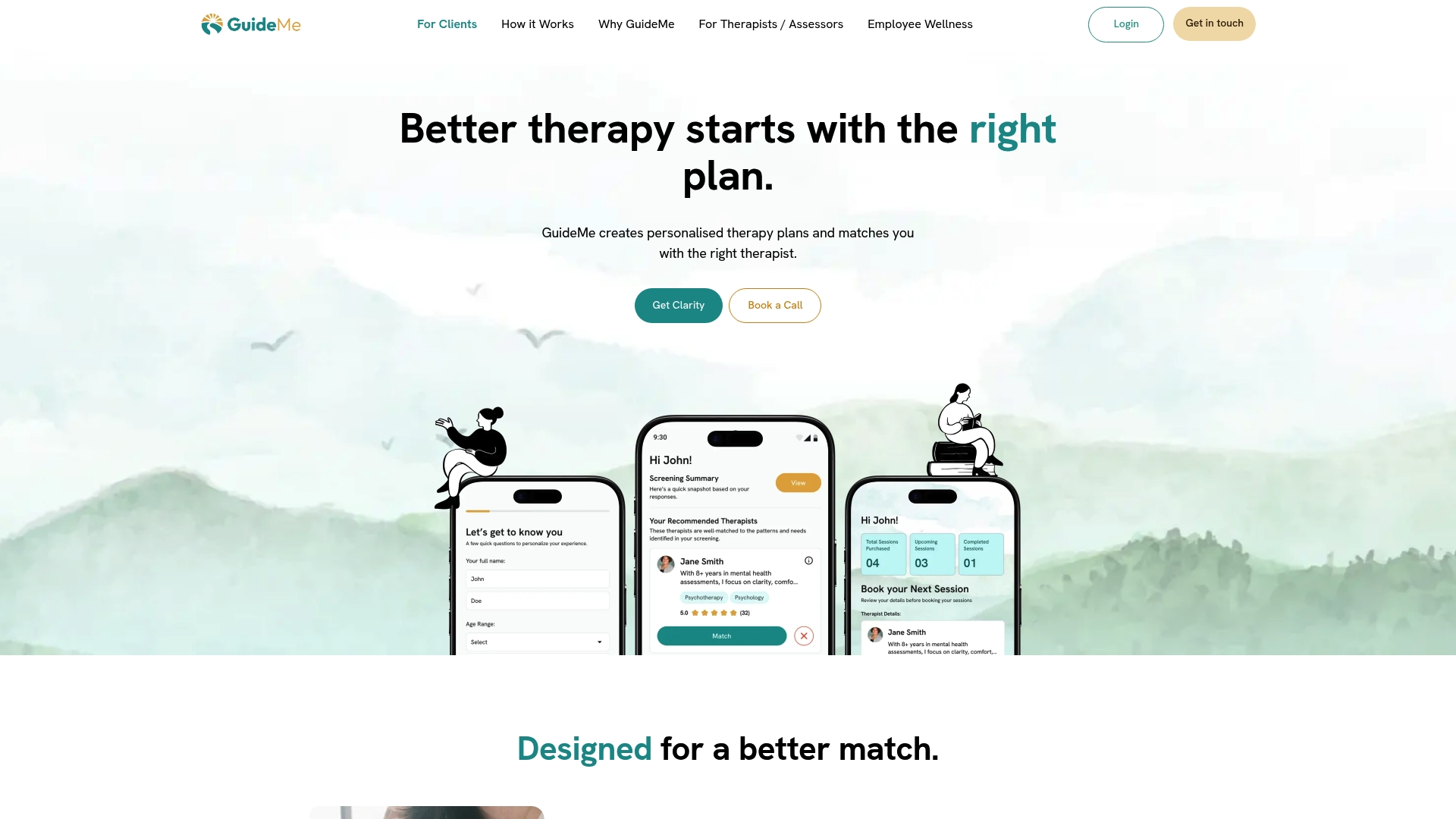
Created by a practising psychotherapist, GuideMe pairs professional screening with personalised therapy plans and human-led matching. The service blends clinician-led intake with AI assisted tools to suggest suitable therapists. It also includes therapist-facing scheduling and messaging to help manage ongoing care.
Core Features
GuideMe uses professional screening guided by mental health experts to shape personalised therapy plans, and a thoughtful therapist-client matching system pairs clients with suitable clinicians. The platform provides ongoing support with resources and check-ins and offers therapist management tools such as scheduling and secure messaging. These capabilities cover both individual clients and organisations seeking employee mental health support.
Key Differentiator
The one distinct feature is that the product was created by a practising psychotherapist who prioritises compassionate, personalised matching and support. That clinical origin shows up in the screening and matching workflow and in the emphasis on clear treatment plans. The approach places human judgement at the centre while using technology to assist rather than replace clinicians.
Pros
GuideMe focuses on matching quality rather than a simple directory. Its clinician‑guided screening informs a clear, in-depth therapy plan before a match is made, which reduces guesswork for clients. Therapists receive practice management features and access to professional development and steady referral opportunities, which helps them manage caseloads and client follow up. The platform also aims for accessibility and confidentiality in how it handles sensitive information.
Cons
- Requires access to licensed therapists, which may limit availability in some regions and for some client needs.
Who It's For
This suits people who want a guided, clinically informed entry to therapy and who value a clear care plan before committing to sessions. It also fits therapists seeking better client matching and basic practice management tools. Organisations planning employee mental health programmes will find the screening and matching workflow relevant.
Unique Value Proposition
Professional screening by clinicians produces a structured therapy plan before any match is proposed. That upfront plan changes the workflow for both clients and therapists by turning initial intake into a clear route map. For organisations, this can shorten the time to an appropriate referral. For therapists, the plan reduces administrative back and forth and clarifies expectations from the first contact.
Real World Use Case
A person completes a gentle online screening and receives a tailored therapy plan that lists priorities and suggested session frequency. GuideMe then recommends therapists whose skills and availability fit the plan. The client books through the platform and receives resource check-ins while the therapist manages scheduling and messaging within the same system.
Pricing
Not applicable — informational only. The public content does not list subscription tiers or per session pricing. Organisations or therapists interested in commercial terms should contact Guidemetherapy directly for up to date details.
Website: https://guidemetherapy.com
Headway
At a Glance
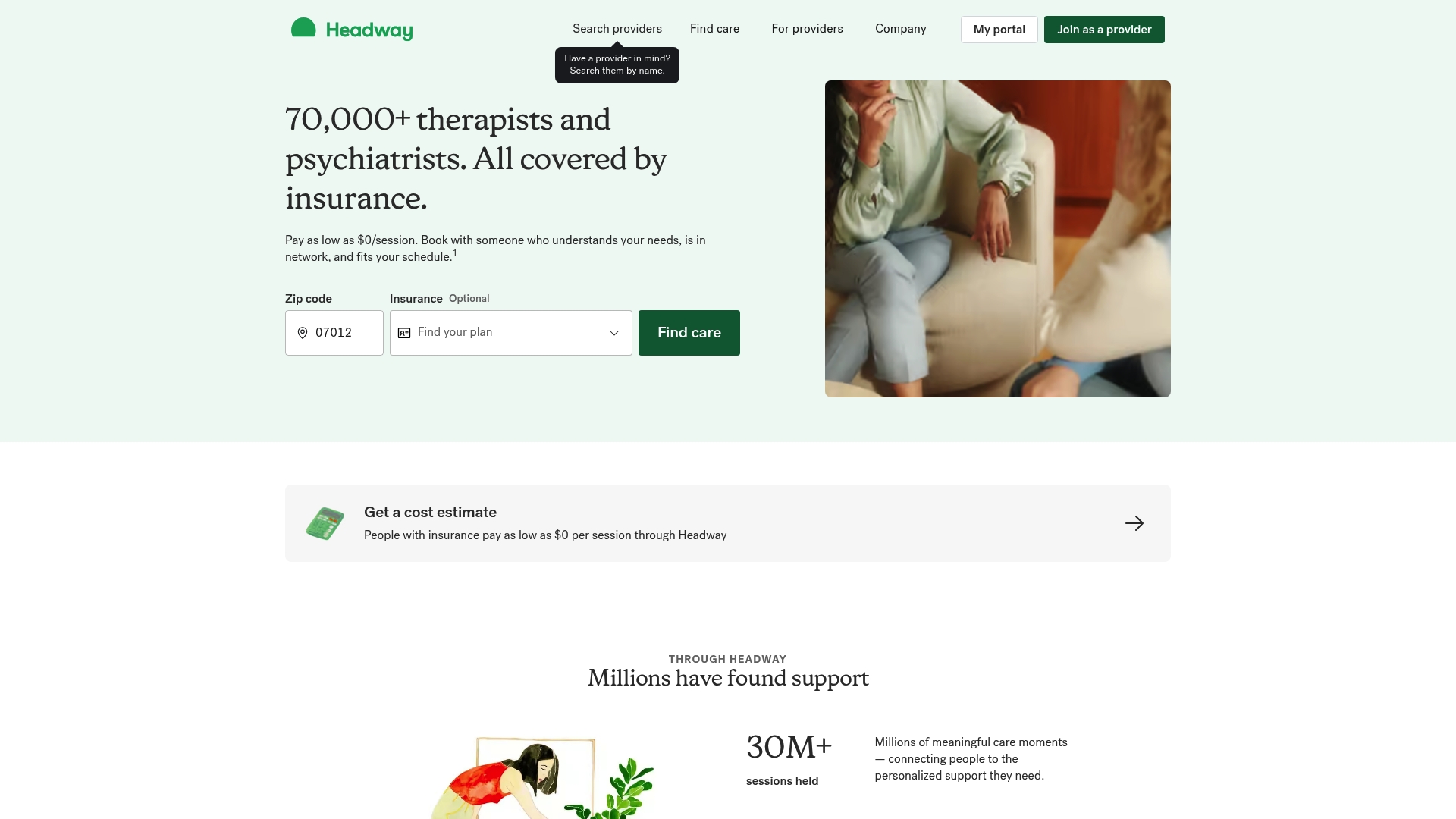
Headway pairs a searchable therapist and psychiatrist directory with practice management tools that include EHR, scheduling, telehealth, and billing. The vendor states its telehealth platform is HIPAA-compliant, so the company also advertises a large provider network and multiple insurance plans to make finding in network care easier. That mix targets both people looking for covered care and clinicians who want to reduce administration.
Core Features
Headway combines a filterable directory with tools clinicians use day to day, including EHR, appointment booking, and telehealth. The platform offers a cost estimation tool that uses a client’s insurance details to estimate out of pocket costs. It also routes insurance claims and supports billing workflows so practices can manage revenue and appointments in one place.
Key Differentiator
Headway’s defining angle is the joined offering of a client-facing directory and clinician-facing practice tools, focused on enabling in network billing for mental health providers. That single environment reduces the friction between finding a provider and handling claims for clinicians. The approach suits practices that want both referrals and streamlined back office operations.
Pros
Headway helps people find providers who accept their insurance, which reduces the usual guesswork when booking therapy. The platform reduces administrative burden for clinicians by handling insurance claims and automating billing tasks. It supports practice growth with scheduling, notes, credentialing assistance, and a sizeable network that the company highlights for matching clients to local clinicians.
Cons
- Limited depth on provider qualifications in directory listings. Profiles often lack detailed specialism notes or evidence of outcomes.
- Buyer feedback focuses on connection and billing ease rather than clinical effectiveness. Reviews emphasise logistics over therapy results.
- Coverage depends on regional partnerships and insurance availability. That constraint can limit usefulness in some areas.
When It May Not Fit
Headway is less helpful where insurance partnerships are thin or the provider network is small. Solo clinicians outside major metropolitan areas may see few matches. Practices that need public outcome reporting or deep profile detail for each clinician will find the directory too light.
Who It's For
People who prioritise finding therapy covered by insurance and want an estimate of likely costs will get most value from Headway. Licensed therapists and psychiatrists who want to expand in network referrals while offloading claims and billing work will find Headway appropriate. Clinics aiming to reduce day to day administration will also benefit.
Real World Use Case
A client enters their postcode and insurance details, filters for psychiatrists who accept their plan, and books the first available appointment online. The clinician receives bookings, manages notes in the EHR, and conducts the session over the built in telehealth tool. Insurance claims are submitted through the platform, reducing manual billing tasks.
Website: https://headway.co
BetterHelp
At a Glance
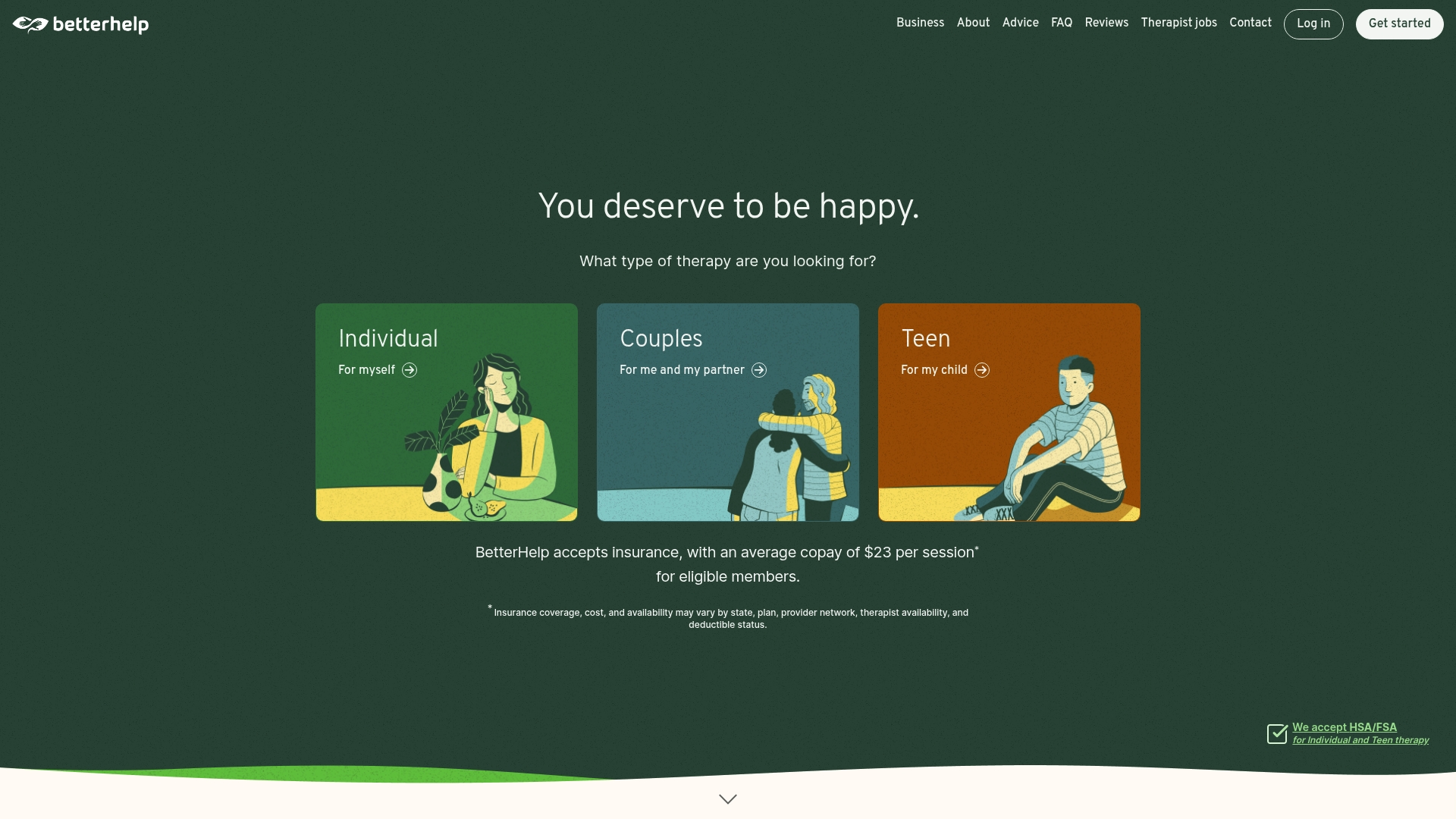
BetterHelp reports a network of over 31,000 licensed therapists available across many specialisms. The platform supports messaging, live chat, phone, and video so people can choose how they contact a therapist. It targets users who need flexible, remote support rather than in person appointments.
Core Features
BetterHelp matches you to a therapist from its large pool and lets you switch if the fit is poor. The service supports asynchronous messaging, scheduled live sessions, and digital worksheets and modules with more than 150 items. Users can manage appointments and communicate from a web browser or mobile device.
Key Differentiator
That large therapist network is the platform’s defining angle. BetterHelp focuses on scale and flexible access across time zones and formats. Compared with Guidemetherapy, which emphasises a human led, AI powered matching process, BetterHelp concentrates on broad availability and a high volume of accredited professionals.
Pros
BetterHelp makes therapy accessible outside normal office hours with 24/7 communication options and several contact formats. Many people find the subscription model cheaper than regular face to face sessions, and the platform offers an advertised lower copay for members with eligible insurance. The ability to change therapists without long waits reduces time spent in a poor match. Digital worksheets and short modules provide extra material between sessions.
Cons
-
Not suitable for urgent crises or emergency care; the service itself warns against using it for immediate danger.
-
Some therapists do not accept insurance, which can raise out of pocket costs for people who expect cover.
-
The online format may feel less personal than face to face therapy for some clients.
-
Privacy concerns persist for a minority of users despite normal confidentiality practices for teletherapy.
When It May Not Fit
People who need immediate crisis intervention should choose an emergency service rather than BetterHelp. Those who prefer in person contact or live in areas with strict local licensing rules may find the online only model limiting. If you rely entirely on specific insurers, the partial insurance acceptance could lead to unexpected costs.
Who It's For
Adults, teens, and couples who prefer remote sessions and flexible scheduling will find BetterHelp appropriate. It suits people who value many therapist options and quick access to appointments. It also fits people who want a subscription style payment rather than single-session fees.
Real World Use Case
A busy professional books weekly video sessions and uses messaging between meetings to report progress. They complete digital worksheets assigned by their therapist to track coping strategies. This approach keeps therapy consistent without travel or timetable conflicts.
Pricing
Pricing runs in a weekly subscription band reported at $70–$100 per week, with an advertised average copay of $23 for insurance eligible members. Plans allow cancellation at any time.
Website: https://betterhelp.com
Hopeflow
At a Glance
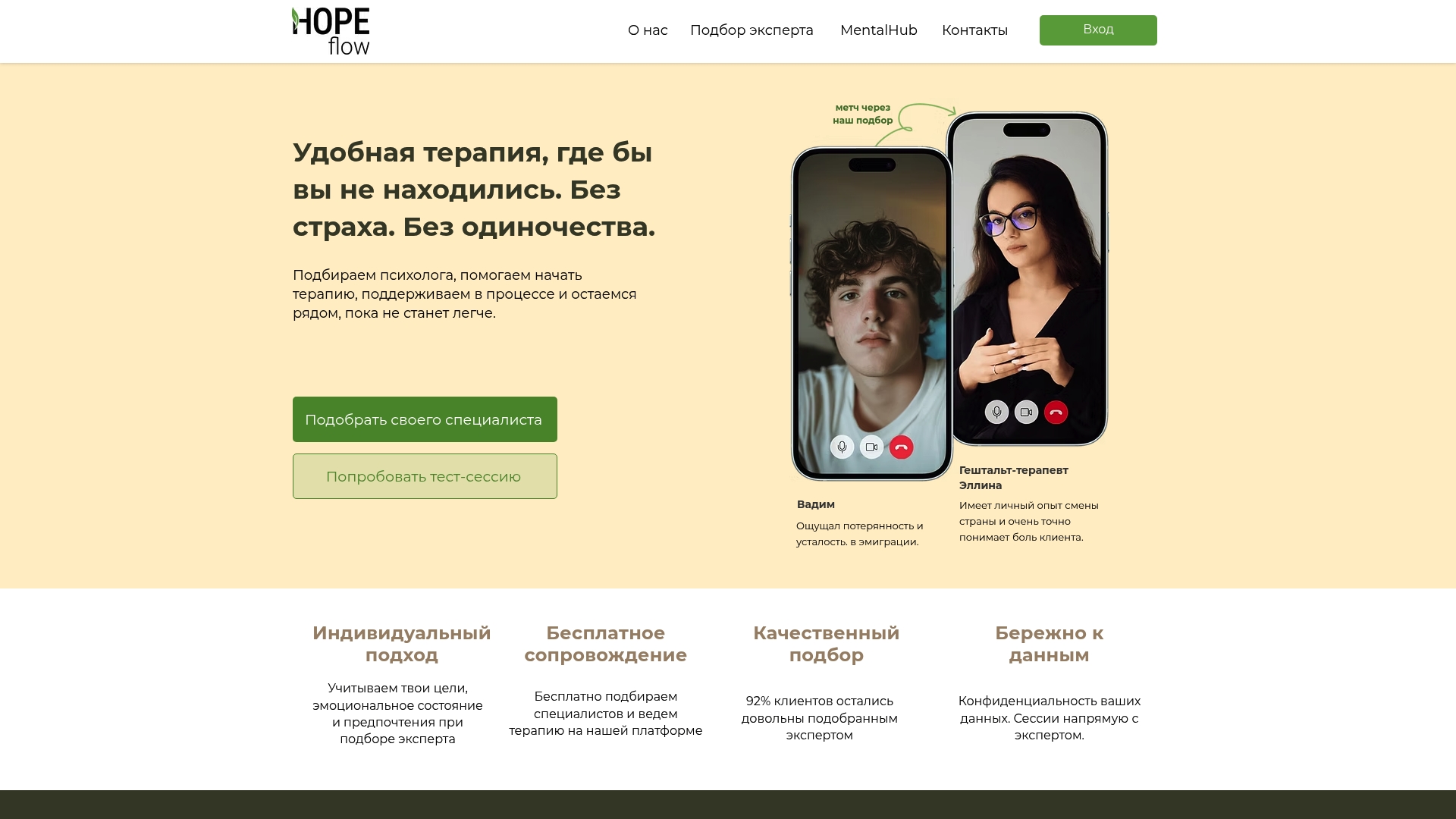
Hopeflow reports 92% positive client feedback from its members. The site matches people to verified psychologists and therapists using a free personalised assessment. As of November 1 the website is temporarily offline, and the platform says it will resume service when ready.
Core Features
Hopeflow combines a personalised therapist matching process with a library of mental health resources and free initial assessments. Members can choose from therapeutic approaches such as cognitive behavioural therapy, gestalt therapy, art therapy, sexology, coaching, somatic practices, and existential therapy. The platform also offers confidential one to one sessions with vetted professionals whose education and supervision have been checked.
Key Differentiator
The central distinction is a free AI-driven personalised therapist matching system that factors in goals, current emotional state, and user preferences. That matching emphasises fit rather than discovery by browsing, which helps people who do not want to wade through long therapist lists. The feature targets emigrants and others with relocation-related stress who need a quick, relevant match.
Pros
Hopeflow shows a strong professional vetting process that reduces the risk of mismatched care and supports member confidence while searching. The platform saves time by pairing people with suitable therapists through its free assessment and matching flow, and its approach list lets members pursue modalities from art therapy to somatic work. The service emphasises confidentiality and ethical standards, and that reported positive-feedback rate supports its effectiveness in member experience.
Cons
- Service is temporarily offline as of November 1 with no firm reopening date.
- Session pricing and payment models are not detailed on the site, leaving members uncertain about ongoing costs.
- The service relies on internet access and basic digital literacy, which may exclude some older or less digitally confident people.
- The community features and peer support details are limited compared with larger mental health forums.
When It May Not Fit
If you need immediate, in-person therapy near your location the platform may not meet that need. People who prefer full transparency on prices before any contact will find the current information sparse. Those uncomfortable with web based assessments or online video sessions may prefer a local charity or clinic instead.
Who It's For
Hopeflow suits people seeking confidential, tailored therapy matches, especially emigrants and those dealing with adaptation or loneliness. It fits members who value a curated match over self-directed searching and who are comfortable with online sessions and digital assessments. It also suits those exploring multiple therapeutic approaches rather than a single technique.
Real World Use Case
A person who recently moved country uses Hopeflow's free assessment to describe goals and cultural adjustment challenges. The platform pairs them with a verified therapist experienced in migration stress and gestalt techniques. They begin confidential online sessions and use the site resources to track mood and coping strategies between meetings.
Website: https://hopeflow.online
Comparison of alternatives
GuideMe excels among alternatives by providing a human-centred, clinically oriented approach to therapist-client matching, setting it apart from fully digital systems that prioritise scale or automation. To guide users through varying requirements, we analyse key differences among GuideMe, Headway, and BetterHelp to identify which service suits specific therapy and management goals.
Matching and intake approach
GuideMe's primary feature is its professional, clinician-led screening and personalised matching process. This structure supports clients who require a clear therapy path before engaging in sessions. Alternatively, BetterHelp offers accessibility and breadth by connecting users to over 31,000 therapists with the option to switch matches easily. While this supports users valuing choice and immediate access, it lacks the initial structured intake that GuideMe provides. Headway's searchable directory and insurance compatibility bridges logistics for clients focusing on coverage and cost estimation, though its approach lacks the profound depth of client-professional compatibility.
Availability and flexibility
Choosing BetterHelp guarantees remarkable round-the-clock communication and format variety like video, messaging, and live sessions. This extensive availability appeals primarily to users constrained by time or unable to access physical therapy spaces. Conversely, GuideMe's operation focuses heavily on meaningful client outcomes, influencing its availability tailored towards effective scheduling rather than constant accessibility. Headway, however, targets insured participants primarily; its locality-dependent availability may restrict user reach in non-covered regions.
Best fit
- GuideMe aligns with individuals prioritising a detailed, human-centred plan for their therapy journey, ensuring therapist-client alignment through clinician involvement.
- BetterHelp is suitable for those seeking immediate counselling availability and flexible communication formats, essential for those with dynamic schedules.
- Professionals or clinics aiming for extensive in-network insurance navigation and reduced administrative tasks will benefit most from Headway’s integrated tools.
Our pick
GuideMe represents the prime choice for a structured and professionally guided therapy experience prior to the first session. For users requiring less structure with on-demand flexibility or insurance provisions, BetterHelp and Headway may offer greater alignment. GuideMe retains a foundational ethos of human-centred care. Clients who value clinician expertise in shaping their therapy path stand to gain substantially from GuideMe's unique approach.
GuideMeTherapy emphasises its clinician-guided approach, setting it apart in tailored care and comprehensive support.
| Platform | Core Features | Key Differentiator | Best For | Notable Limitation |
|---|---|---|---|---|
| Guidemetherapy | Clinician-led screening, therapist tools | Developed by practising psychotherapist | Individuals seeking guided therapy plans | Requires access to licensed therapists |
| Headway | Directory, EHR, telehealth, billing | Integrated provider directory and tools | People seeking in-network insurance care | Limited provider qualification details |
| BetterHelp | Messaging, live sessions, modules | Extensive online therapist network | Remote users wanting flexible access | Not for crises, partial insurance acceptance |
| Hopeflow | AI-driven personalised therapist match | High user satisfaction, free assessments | Relocation/adjustment-focused therapy | Service temporarily offline as of November 1 |
How to Find a Clearer Path Among Wellmatched.com Alternatives
Feeling lost in therapy options is common. Many clients want a clear treatment plan before committing, as well as thoughtful therapist-client matching that limits guesswork. Guidemetherapy addresses these challenges through professional screening and a human-led, AI-powered process. The platform matches you with therapists suited to your needs while providing a structured therapy plan to guide your care.
- Guided screening to pinpoint your priorities
- Personalised matching that values a supportive connection
- Support for both individuals and organisations looking for mental health guidance
Explore Guidemetherapy to access a more confident start in therapy. Take the next step by completing an in-depth screening and receive a therapy plan that helps you book with the right therapist from the outset.
Guidemetherapy helps reduce uncertainty and builds a clearer route to therapy matched to you.
FAQ
What features does Guidemetherapy offer for therapist matching?
Guidemetherapy provides personalised therapy plans based on professional screening led by mental health experts. This clinician-guided process helps shape a clear route to appropriate therapists, making it easier to find the right match for individual needs.
How does Headway compare to Guidemetherapy when it comes to insurance coverage?
Headway helps individuals find therapists who accept their insurance, making it easier to access covered care. In contrast, Guidemetherapy focuses on clinical assessment and personalised treatment plans prior to matching, which may be more suitable for those seeking structured therapy without immediate insurance considerations.
Which platform offers a stronger focus on practice management tools for therapists?
Headway combines a filterable directory with practice management features like EHR, scheduling, and billing tools. While Guidemetherapy also provides resources for therapist management, its primary strength lies in the therapist-client matching process rather than administrative tools.
Does Guidemetherapy offer ongoing support after the initial therapist match?
Yes, Guidemetherapy provides ongoing support with resources and check-ins to enhance the therapy experience. This helps clients maintain progress and ensures they feel supported throughout their therapeutic process.
What is the primary advantage of using an AI-driven platform like Guidemetherapy?
Guidemetherapy utilises AI-assisted tools to suggest suitable therapists based on individual screening. This aids in reducing guesswork and delivers a more tailored experience, unlike directories that may simply list available therapists.