

TL;DR:
- Guidemetherapy offers personalized, AI-assisted therapy matching with ongoing support, suitable for those seeking a structured plan. Other options like Ieso, SilverCloud, and Kooth cater to NHS-funded, digital self-help, or youth mental health needs, while directories verify licensed private therapists. Choosing a platform involves confirming accreditation, insurance compatibility, session format, and specific therapist expertise before booking.
For UK users seeking accredited, insurance-friendly therapy matching, the strongest alternatives to therapyinvite.com are Guidemetherapy, Ieso Digital Health, SilverCloud Health, Kooth, and the professional directories maintained by BACP, UKCP, and Counselling Directory. Each suits a different need.
- Guidemetherapy — best for personalised, AI-assisted matching with human oversight and ongoing support between sessions; suited to individuals who want a structured therapy plan before they meet a therapist
- Ieso Digital Health — best for NHS-commissioned written cognitive behavioural therapy (CBT); suited to adults in England who prefer text-based sessions and want an NHS-backed pathway
- SilverCloud Health — best for guided digital self-help programmes; suited to people managing mild-to-moderate anxiety or depression who want a flexible, structured digital option
- Kooth — best for young people aged 10–25; suited to those who want free, anonymous online counselling without a referral
- BACP Directory — best for verifying that a private therapist is registered and bound by an ethical framework, with over 18,000 listed therapists; suited to anyone hiring a therapist independently
- UKCP Directory — best for finding psychotherapists and psychologists with specialist training; suited to people seeking longer-term or trauma-focused work
- Counselling Directory — best for searching local and online counsellors by location and specialism; suited to those who prefer to browse and contact therapists directly
All recommendations prioritise BACP, UKCP, or HCPC registration and, where relevant, NHS affiliation or private insurance compatibility.
Table of Contents
- How do these therapy platforms compare at a glance?
- What does each platform actually offer you?
- How do you choose the right alternative for your situation?
- How do costs, insurance, and NHS access work for therapy in the UK?
- How do you verify a therapist's accreditation and safety credentials?
- Which alternative should you pick for your specific situation?
- Key takeaways
- Why accreditation and insurance handling matter more than platform features
- Guidemetherapy helps you find the right therapist from the start
- Useful sources and further reading
How do these therapy platforms compare at a glance?
| Platform / Directory | Best for | UK availability | Session types | Therapy types / specialties | Pricing model | Insurance / NHS access | Therapist accreditation | Typical wait / match speed | Prescribing available |
|---|---|---|---|---|---|---|---|---|---|
| Guidemetherapy | Personalised matching with a therapy plan | Yes — UK-focused | Video, phone, messaging | CBT, trauma, LGBTQ+, anxiety, depression, relationships | Pay-per-session; packages available | Private insurance-compatible; employer programmes | BACP / UKCP / HCPC verified | Fast — AI-assisted screening then human match | No |
| Ieso Digital Health | NHS-commissioned text CBT | Yes — NHS-contracted in England | Written / text-based | CBT | NHS-funded (no cost to patient on NHS pathway) | NHS commissioned | Accredited CBT therapists | Varies by NHS area | No |
| SilverCloud Health | Digital self-help programmes | Yes — NHS and private | Self-guided digital modules | CBT-based programmes for anxiety, depression, stress | NHS-funded or employer / insurer subscription | NHS and employer / insurer funded | Clinically developed; supervised | Immediate access to modules | No |
| Kooth | Young people aged 10–25 | Yes — NHS-commissioned in many areas | Text chat, messaging, self-help tools | Emotional wellbeing, anxiety, low mood | Free (NHS-commissioned) | NHS-commissioned | Qualified counsellors and practitioners | Same-day or next-day drop-in chat | No |
| BACP Directory | Verifying / finding registered private therapists | Yes — UK-wide | Varies by therapist | All modalities | Therapist sets own fee | Therapist-dependent | BACP-registered; ethical framework and complaints process; over 18,000 private therapists | Depends on therapist availability | No |
| UKCP Directory | Psychotherapists and psychologists | Yes — UK-wide | Varies by therapist | Psychotherapy, trauma, long-term work | Therapist sets own fee | Therapist-dependent | UKCP-registered | Depends on therapist availability | No |
| Counselling Directory | Browsing local / online counsellors | Yes — UK-wide | Varies by therapist | All modalities | Therapist sets own fee | Therapist-dependent | Self-declared; verify independently | Depends on therapist availability | No |
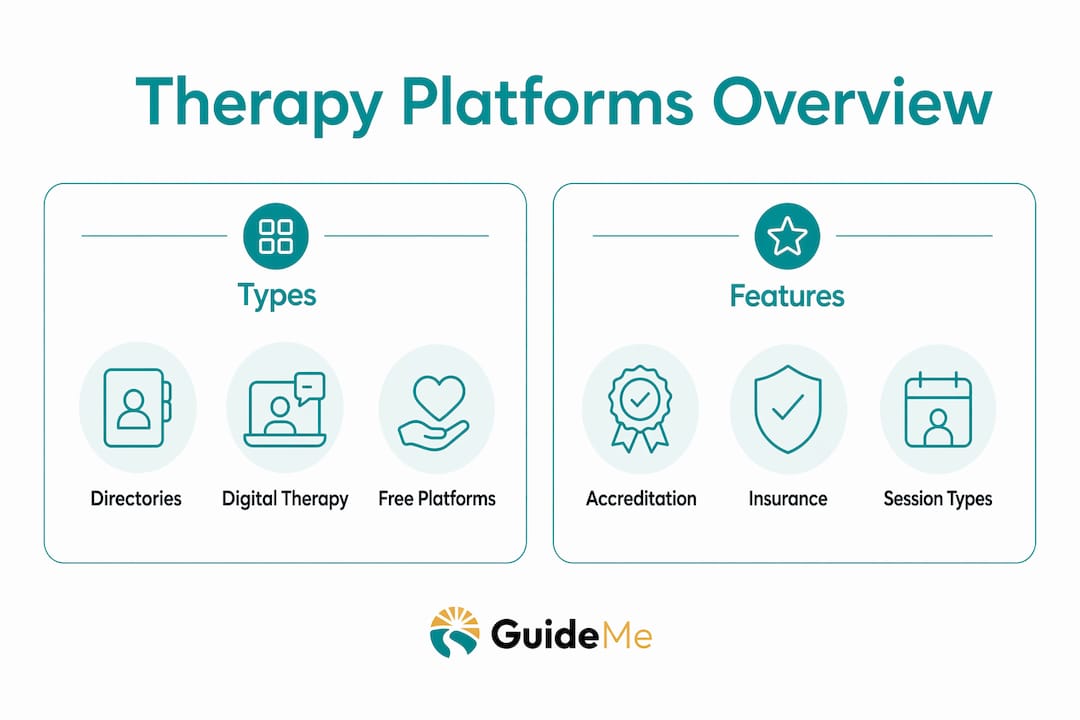
How to read this table: NHS indicates the service is commissioned or funded by the NHS at no direct cost to the patient on that pathway. Insurance-friendly means the platform or therapist can work with private medical insurers (pre-authorisation usually required). Teen-specialist indicates services designed specifically for under-18s or young adults. Always confirm current availability in your area, as NHS commissioning varies by region.
What does each platform actually offer you?
Guidemetherapy
Guidemetherapy is a therapy navigation platform that combines AI-assisted screening with human-led matching. Before you meet a therapist, you complete an in-depth assessment that generates a personalised therapy plan, so the match is based on your specific needs rather than a generic questionnaire. The platform supports individuals and organisations, and its therapists hold BACP, UKCP, or HCPC registration.

Guidemetherapy suits people who have felt lost trying to find the right therapist on their own, or who have had mismatched experiences in the past. The therapist matching process is designed to get you to the right clinician from the first session, not after several costly trials. The main consideration is that it is a private-pay platform, so NHS funding does not apply directly, though employer programmes and private insurance compatibility are available.
Ieso Digital Health
Ieso delivers CBT entirely through written conversation, which suits people who find video calls uncomfortable or who need to fit therapy around irregular schedules. It holds NHS contracts in England, meaning eligible patients can access it at no cost through their local NHS talking-therapy pathway. Therapists are accredited CBT practitioners. The limitation is that written CBT is a specific modality; if you need trauma-focused work, EMDR, or longer-term psychotherapy, Ieso is not the right fit.

SilverCloud Health
SilverCloud offers structured digital programmes built on CBT principles, covering anxiety, depression, stress, and sleep. It is commissioned by many NHS trusts and available through some employers and insurers. Access is immediate once you are enrolled, which makes it useful when waiting times for one-to-one therapy are long. It works best as a standalone option for mild-to-moderate presentations or as a complement to face-to-face therapy, rather than a replacement for complex or high-acuity needs.
Kooth
Kooth is a free, anonymous online mental health platform for young people aged 10–25, commissioned by the NHS in many parts of England. Young people can access drop-in text chat with qualified counsellors, structured self-help tools, and a moderated peer community. Children and young people can sometimes self-refer to specialist services, and Kooth sits within that accessible tier. It is not a substitute for clinical assessment where a young person has complex or high-risk needs, but for early intervention and ongoing emotional support it is one of the most accessible options in the UK.
BACP Directory
The BACP therapist directory lists over 18,000 private therapists and allows filtering by location, session type, and specialism. It is a verification resource as much as a search tool. Every listed therapist has agreed to BACP's ethical framework and is subject to its formal complaints process, which gives clients a clear route if something goes wrong. The directory does not handle booking or insurance; you contact therapists directly and arrange everything independently.
UKCP Directory
The UKCP register focuses on psychotherapists and psychologists, including those trained in longer-term and trauma-focused modalities. If you are looking for psychodynamic therapy, schema therapy, or specialist trauma work, UKCP-registered practitioners are a strong starting point. As with BACP, the directory is a search and verification tool; administrative and financial arrangements are between you and the therapist.
Counselling Directory
Counselling Directory (counselling-directory.org.uk) allows therapists to create profiles that include their qualifications, specialisms, fees, and availability. It is a broad directory rather than a curated marketplace, so the onus is on you to verify credentials independently. It is useful for finding local therapists who may not appear on the BACP or UKCP registers, but always cross-check registration status before booking.
How do you choose the right alternative for your situation?
Accreditation, insurance handling, session format, and therapist fit are the four criteria that matter most. Work through them in order.
- Confirm accreditation first. Check that any therapist or platform uses BACP-, UKCP-, or HCPC-registered clinicians. Unregistered practitioners have no binding ethical framework and no formal complaints process.
- Clarify your insurance position. If you have private medical insurance, contact your insurer before booking to confirm cover and obtain a pre-authorisation code. Choosing a provider that handles insurer administration directly saves significant time and reduces the risk of unexpected costs.
- Match the session format to your life. Video, phone, text, and asynchronous messaging each suit different schedules and comfort levels. Decide which format you can realistically commit to before comparing platforms.
- Check for specialist needs. If you need trauma-focused therapy, LGBTQ+-affirming care, youth services, or a specific modality such as EMDR or CBT, confirm the platform or therapist has that specialism before you proceed.
- Review the cancellation and refund policy. Platforms with opaque or punitive cancellation terms are a practical risk. Ask specifically: what is the notice period, and is a missed session charged in full?
- Verify data privacy and GDPR compliance. Any UK-based therapy platform should publish a clear privacy policy confirming GDPR compliance and explaining how session notes are stored and who can access them. The online therapy setup process covers what to look for before you start.
- Book a trial or introductory session. Most platforms offer a short initial consultation. Use it to assess therapist fit before committing to a package.
Questions to ask a therapist or platform before booking:
- Are you registered with BACP, UKCP, or HCPC? Can I verify this on the register?
- Do you hold a current DBS certificate (relevant for work with children or vulnerable adults)?
- Do you manage insurance pre-authorisation and invoicing, or does the patient handle that?
- What is your cancellation policy and how much notice is required?
- What happens if I want to change therapists?
- How are session notes stored and who has access to them?
Red flags to watch for: therapists who cannot confirm their registration body; platforms with no published complaints or escalation process; pricing that is not clearly stated before you book; services that describe their practitioners as "trained listeners" rather than qualified clinicians.
Pro Tip: Ask the platform directly whether it manages insurer administration on your behalf. Providers that invoice the insurer directly remove the most common source of friction for insured clients and reduce the chance of unexpected bills.
How do costs, insurance, and NHS access work for therapy in the UK?
Private insurance can cover therapy sessions, but it almost always requires pre-authorisation from the insurer before sessions begin. Failing to secure that authorisation in advance can leave you liable for the full cost. Some UK providers handle AXA administration directly, invoicing the insurer on your behalf so you do not need to submit paperwork. The same model applies to Bupa and other major insurers.
The three main access routes in the UK:
- NHS talking therapies (IAPT). You can self-refer to NHS talking-therapy services without a GP appointment for many common conditions. Waiting times vary by area, and the service is primarily structured around CBT and related evidence-based approaches. Specialised secondary care still usually requires a GP referral.
- Private medical insurance. Contact your insurer first to confirm cover, obtain a pre-authorisation code, and ask whether your chosen provider is on the insurer's approved list. Choose a provider that manages insurer invoicing directly to avoid chasing claims yourself.
- Self-funded private therapy. Fees vary widely depending on the therapist's location, qualifications, and specialism. Expect a range from around £50 to £150 or more per session in the UK, with London rates typically at the higher end. Some platforms offer packages that reduce the per-session cost.
Pro Tip: Before your first session, ask your insurer for a written confirmation of your authorisation code and the number of sessions covered. Keep this on file. If your provider invoices the insurer directly, share the code with them at the point of booking.
How do you verify a therapist's accreditation and safety credentials?
Always verify registration before booking. BACP, UKCP, and HCPC each maintain publicly searchable registers, and checking takes under two minutes.
The BACP register is a public protection measure: registered status binds practitioners to a published ethical framework and a formal complaints process. That matters practically because it gives you a clear route if something goes wrong, which many unregulated platforms cannot offer.
The BACP therapist directory lists over 18,000 private therapists and allows filtering by location, session type, and specialism.
How to verify a therapist's credentials:
- Search the therapist's name on the BACP register (bacp.co.uk), UKCP register (ukcp.org.uk), or HCPC register (hcpc-uk.org) and confirm their status is current.
- Ask the therapist directly for their registration number and body.
- For face-to-face work or work with children and vulnerable adults, ask whether they hold a current DBS (Disclosure and Barring Service) certificate.
- Confirm they hold professional indemnity insurance.
- Check that the platform or practice publishes a clear GDPR-compliant privacy policy. Guidance on what to look for in a medical practice's online presence can help you assess whether a provider's site meets basic transparency standards.
For a fuller explanation of what qualifications and registration levels mean in practice, the therapist qualifications guide covers the main registration bodies and what each one requires of its members.
Which alternative should you pick for your specific situation?
- Insured employee with private medical cover: Choose a platform or therapist that is approved by your insurer and handles pre-authorisation and invoicing directly. Guidemetherapy's employer and insurance-compatible pathway is a strong starting point; confirm your insurer's approved provider list before booking.
- Young person aged 10–25: Kooth is the most accessible free option, available without a referral in most NHS-commissioned areas. For more structured or clinical support, the NHS children and young people's mental health pathway offers routes via school nurses, GPs, and self-referral.
- Adult wanting a short wait and NHS funding: Self-refer to your local NHS talking-therapy service via the NHS website. Ieso Digital Health and SilverCloud are available through many NHS trusts and can reduce waiting times for CBT and digital self-help.
- Specialist trauma or long-term psychotherapy: Search the UKCP register for a practitioner trained in trauma-focused modalities (EMDR, schema therapy, psychodynamic therapy). Guidemetherapy's in-depth screening also matches to trauma specialists where available.
- Someone who has had poor previous matches: Guidemetherapy's structured therapy plan and AI-assisted matching process is specifically designed to reduce the trial-and-error that leads to wasted sessions and costs.
- Anyone wanting to verify a therapist they have already found: Use the BACP or UKCP register to confirm registration status before booking—over 18,000 private therapists are listed on the BACP directory—regardless of which platform introduced you.
Key takeaways
The most reliable therapyinvite.com alternatives for UK users combine BACP, UKCP, or HCPC accreditation with clear insurance handling and a session format that fits your life.
| Point | Details |
|---|---|
| Accreditation is non-negotiable | Always verify BACP, UKCP, or HCPC registration before booking any therapist or platform. |
| Insurance requires pre-authorisation | Contact your insurer first, obtain an authorisation code, and choose a provider that invoices the insurer directly. |
| NHS self-referral is available | You can self-refer to NHS talking-therapy services without a GP appointment for many common conditions. |
| Match format to your needs | Video, phone, text, and digital programmes suit different schedules; confirm the format before committing. |
| Guidemetherapy | Combines AI-assisted screening with human-led matching and a personalised therapy plan, suited to those who want the right therapist from the first session. |
Why accreditation and insurance handling matter more than platform features
Most articles comparing therapy platforms focus on interface design, subscription pricing, and the number of therapists on the roster. Those details matter, but they are secondary to two questions that actually determine whether therapy works for you: is the clinician properly registered, and will the administrative side of insurance cause you to drop out before you see results?
Professional registration with BACP, UKCP, or HCPC is more than a credential. It provides a published ethical framework and a formal complaints process that many unregulated platforms cannot match. A platform with a polished app and an unregistered therapist offers you no real recourse if the relationship breaks down or causes harm.
The insurance administration point is underappreciated. Clients who have to chase their own claims, submit invoices, and follow up with insurers are significantly more likely to disengage from therapy, not because the therapy is not working, but because the friction is exhausting. Providers that handle insurer administration directly remove that barrier entirely. When you are comparing options, ask that question first, before you look at pricing or session types.
Guidemetherapy's approach of combining in-depth screening with human-led matching addresses the other common failure point: the wrong therapist. A mismatch in the first few sessions is demoralising and expensive. A structured therapy plan built before matching reduces that risk considerably.
Guidemetherapy helps you find the right therapist from the start
Finding a therapist who genuinely fits your needs, works with your insurer, and is available when you need them is harder than it should be. Guidemetherapy addresses that directly.
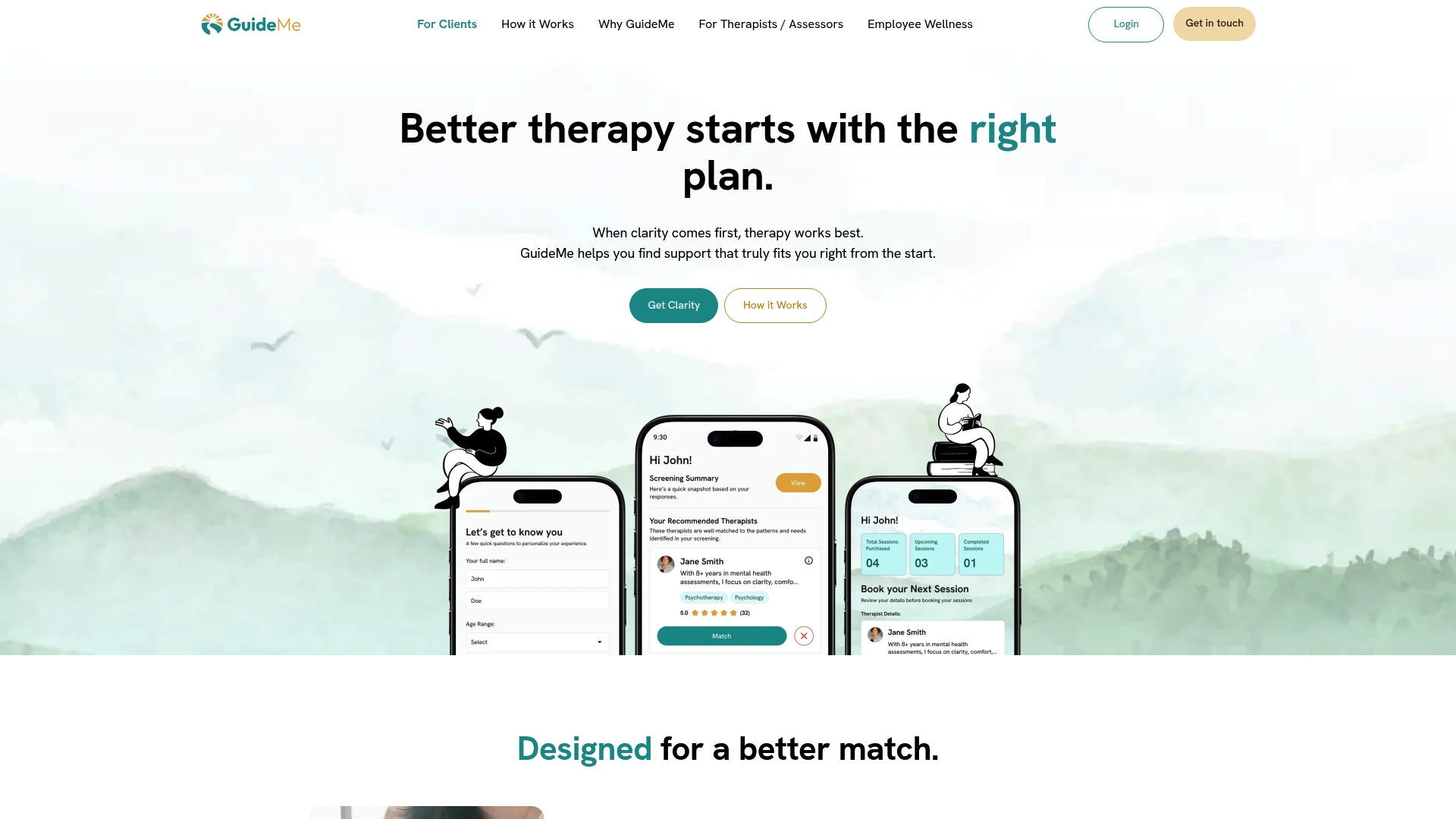
The platform combines an in-depth mental health screening with AI-assisted and human-led matching, so you arrive at your first session with a therapist who already understands your situation. All matched therapists hold recognised UK accreditation (BACP, UKCP, or HCPC), and the platform supports both individual clients and organisations through employer mental health programmes.
- For individuals: personalised therapy plan, accredited therapist match, and ongoing support between sessions
- For employers: corporate mental health solutions with access to a vetted therapist network
Start your therapy plan on the Guidemetherapy platform and get matched with an accredited therapist suited to your specific needs.
Guidemetherapy is the publisher of this article. Therapist recommendations reflect independent editorial criteria: UK accreditation, insurance compatibility, and matching quality. Guidemetherapy earns a commission on completed bookings made through the platform.
Useful sources and further reading
- How to access mental health services — NHS: Explains NHS self-referral routes, patient choice, and how to access talking therapies in England without a GP referral.
- How to find local mental health services — NHS: Lets you search for NHS talking-therapy services by postcode and confirms self-referral eligibility.
- Where to get urgent mental health help — NHS: Covers crisis support, liaison psychiatry, and crisis resolution teams for urgent needs.
- BACP therapist directory: Search over 18,000 BACP-registered private therapists by location, session type, and specialism.
- Protecting the public — BACP register: Explains what BACP registration means, the ethical framework it requires, and how to raise a complaint.
- Children and young people's mental health support — NHS: Outlines referral routes for under-18s, including self-referral, school nurses, and specialist CAMHS pathways.
- Therapist qualifications guide — Guidemetherapy: Explains the main UK registration bodies, what each requires of its members, and how to verify a therapist's credentials.
- Legal compliance in therapy — Guidemetherapy: Covers GDPR, data privacy, and the regulatory obligations therapy platforms must meet in the UK.
This article provides general information about therapy platforms and access routes in the UK. It is not a substitute for professional medical or psychological advice. Always verify a therapist's current registration status and confirm your insurance cover directly with your insurer before booking.