

TL;DR:
- Mental health support in finance reduces stress, improves decision-making, and enhances organizational performance. Proactive programs offer high returns, lower turnover, and foster a culture of openness and trust. Supporting confidentiality and normalizing therapy encourage finance professionals to seek help early and sustainably.
Mental health support in finance is defined as structured psychological and therapeutic assistance designed to address the specific stressors finance professionals face, including burnout, regulatory pressure, and performance-driven culture. The benefits of mental health support in finance extend well beyond individual wellbeing. Behavioural health programmes deliver a 507% return on investment, with $6.07 gained per $1 invested through reduced healthcare costs and lower absenteeism. That figure alone reframes mental health from a welfare concern into a business-critical priority. Finance professionals and their employers both stand to gain measurably when psychological support is treated as part of standard practice.
1. What key mental health challenges do finance professionals face?
85% of finance professionals report that stress seriously affects their work. That is not a general workforce statistic. It is specific to finance, where the annual cost of poor mental health per employee reaches £5,379. The sector carries a culture that rewards performance and silence in equal measure.
Finance workers face a distinct set of pressures that other sectors rarely encounter:
- Sustained high-stakes decision-making with real financial consequences for clients or employers
- Regulatory scrutiny from bodies such as FINRA and the SEC, which creates constant compliance anxiety
- Identity fusion with performance, where a bad quarter feels like personal failure
- Physical stress symptoms including TMJ and digestive issues, linked to what therapist Annie Wright describes as "Deal Mode", a cognitive state of emotional disconnection driven by constant quantitative focus
- Exhaustion rates that sit higher in finance and insurance than in most other sectors
Pro Tip: If you are experiencing physical symptoms like jaw tension or persistent digestive discomfort alongside work stress, these are recognised signs of chronic occupational stress in finance. A GP referral or therapy assessment is a practical first step.
The culture of finance also creates a specific barrier to seeking help. Professionals fear that disclosing mental health difficulties will affect their regulatory standing or career trajectory. This fear is largely unfounded, but it persists because it is rarely addressed openly by employers.

2. How does mental health support improve cognitive function and decision-making?
Financial anxiety directly reduces cognitive bandwidth, impairing problem-solving and impulse control. This matters enormously in finance, where clear thinking is the core professional skill. When anxiety occupies mental capacity, the quality of decisions deteriorates, even among experienced professionals.
Therapy restores that capacity. It helps finance professionals distinguish between fear-driven reactions and confident, evidence-based decisions. That distinction is not always obvious in the moment, particularly during volatile markets or high-pressure deal periods.
"Bridging cognitive and emotional support is critical for finance professionals. The quantitative mindset that makes someone effective in finance can also make it harder to process emotional stress. Therapy tailored to that identity is what creates real change." — Annie Wright, therapist specialising in finance professionals
The cognitive benefits of structured mental health support include:
- Reduced anxiety, which frees up working memory for complex analysis
- Better impulse control during high-stakes negotiations or trading decisions
- Improved capacity to separate professional setbacks from personal identity
- Greater consistency in performance across high-pressure periods
Finance professionals who access therapy for financial decisions report clearer thinking and more deliberate responses to workplace pressure. The improvement is not abstract. It shows up in how they handle client conversations, manage risk, and respond to setbacks.
3. What are the organisational benefits of mental health support in finance firms?
The organisational case for mental health investment is direct. Behavioural health programmes return $6.07 per $1 invested, with 76% of employees reporting less absenteeism and 73% showing measurable anxiety improvement. These are not marginal gains. They represent a significant reduction in the hidden costs that drain finance firms quietly over time.
The organisational benefits break down across four areas:
- Reduced absenteeism and presenteeism. Employees who receive mental health support attend work more consistently and perform more effectively when present.
- Lower staff turnover. Burnout is a primary driver of attrition in finance. Firms that address it proactively retain experienced staff longer, reducing recruitment and onboarding costs.
- Legal risk reduction. Proactive accommodation policies, documented clearly and handled with care, reduce exposure to ADA-related legal claims. Viewing accommodation requests as engagement opportunities rather than compliance burdens improves both culture and legal risk management.
- Sustained ambition. Firms that embed wellness into career development, through flexible exam scheduling and structured recovery time, help staff maintain long-term drive without burning out.
Pro Tip: Finance firms that document their mental health accommodation processes clearly, and train managers to respond with empathy, reduce legal exposure and improve employee trust simultaneously.
The comparison below shows the difference between firms that treat mental health reactively versus those that integrate it proactively.
| Approach | Outcome |
|---|---|
| Reactive (crisis-only support) | High turnover, elevated absenteeism, legal exposure |
| Proactive (embedded wellness programmes) | Lower attrition, reduced sick days, stronger compliance culture |
4. What mental health support options work best for finance professionals?
Finance professionals need support that fits their working patterns and respects their professional identity. Generic Employee Assistance Programmes (EAPs) exist in most large firms, but uptake is low when professionals do not trust confidentiality or feel the support is not relevant to their specific pressures.
The most effective options include:
- Trauma-informed therapy that addresses finance culture directly, including Deal Mode, identity issues, and the emotional cost of sustained high performance
- Online counselling, which removes scheduling barriers for professionals working long or unpredictable hours. Online counselling for finance stress offers flexibility without compromising the quality of therapeutic support
- EAPs with clear confidentiality communication. EAP use is confidential and does not affect FINRA or SEC compliance standing. Many finance professionals do not know this, and that gap in communication suppresses uptake
- AI-driven CRM tools that reduce administrative burdens for financial advisers. Automation of admin tasks frees advisers for client engagement and reduces a significant source of daily burnout
The table below outlines support types and their primary benefit for finance professionals.
| Support type | Primary benefit |
|---|---|
| Finance-specific therapy | Addresses Deal Mode and identity-linked stress |
| Online counselling | Flexible access for demanding schedules |
| EAP programmes | Confidential, low-barrier entry point |
| AI-driven admin tools | Reduces operational burnout causes |
5. How to overcome stigma and encourage mental health support uptake in finance
Stigma in finance is tied to two specific fears: appearing weak to peers, and triggering regulatory scrutiny. Both fears are addressable with accurate information and cultural leadership. The regulatory concern is largely a misconception. Mental health disclosures through EAPs are confidential and separate from any FINRA or SEC compliance reporting. Communicating this clearly to staff removes one of the most common barriers to seeking help.
Cultural change requires action at the leadership level. Managers who openly acknowledge stress and model help-seeking behaviour create permission for their teams to do the same. Training managers to respond to mental health disclosures with empathy, rather than concern about productivity, is a practical starting point.
Key steps for firms looking to reduce stigma:
- Communicate EAP confidentiality clearly and repeatedly, not just during onboarding
- Train line managers in mental health first aid and empathetic response
- Create documented accommodation processes so employees know what to expect
- Recognise that accommodation requests signal engagement, not disengagement
Pro Tip: When communicating EAP benefits to finance teams, lead with the confidentiality guarantee. That single message does more to increase uptake than any other communication.
Finance professionals who understand their rights and the protections available to them are far more likely to seek support early, before stress becomes a clinical concern.
Key takeaways
Mental health support in finance produces measurable returns for both individuals and organisations, with behavioural health programmes delivering a 507% ROI and directly improving cognitive performance, retention, and legal compliance.
| Point | Details |
|---|---|
| Significant ROI | Behavioural health programmes return $6.07 per $1 invested through reduced absenteeism and healthcare costs. |
| Cognitive performance | Addressing financial anxiety restores problem-solving capacity and improves decision quality in high-pressure roles. |
| Retention and attrition | Proactive mental health support reduces burnout-driven turnover and lowers recruitment costs for finance firms. |
| Confidentiality is real | EAP use does not affect FINRA or SEC compliance standing, yet this is widely misunderstood by finance professionals. |
| Cultural leadership matters | Manager training and open communication about mental health are the most effective tools for reducing stigma in finance workplaces. |
Why finance mental wellness needs a different conversation
I have spoken with enough finance professionals to know that the standard mental health messaging does not land in this sector. Telling a derivatives trader or a compliance officer to "talk to someone" without acknowledging the specific pressures of their world feels dismissive. The Deal Mode concept resonates because it names something real. Finance professionals are trained to suppress emotional responses and operate in a state of sustained cognitive focus. That is a professional asset. It is also, over time, a serious mental health liability.
What I find most striking is how often physical symptoms appear before the psychological ones are acknowledged. Jaw tension, sleep disruption, digestive problems. These are the body's signals that the mental load has exceeded capacity. Finance professionals often push through these signs for months before seeking any support, partly because the culture rewards endurance and partly because they genuinely do not connect the physical symptoms to occupational stress.
The firms getting this right are not the ones with the most generous EAP packages. They are the ones where a senior leader has said, openly, that they have used therapy and found it useful. That single act of normalisation does more than any wellness programme. Therapy's role in workplace culture is shifting, and finance is one of the sectors where that shift is most overdue and most consequential.
The sustainable ambition model, where career development and wellbeing are treated as compatible rather than competing, is the direction the best firms are moving. The evidence supports it. The ROI supports it. The only thing still holding some firms back is the cultural assumption that stress is the price of success.
— Yetty
How Guidemetherapy supports finance professionals
Finance professionals deserve mental health support that understands their world, not generic advice that ignores the pressures of high-stakes roles, regulatory demands, and performance culture.
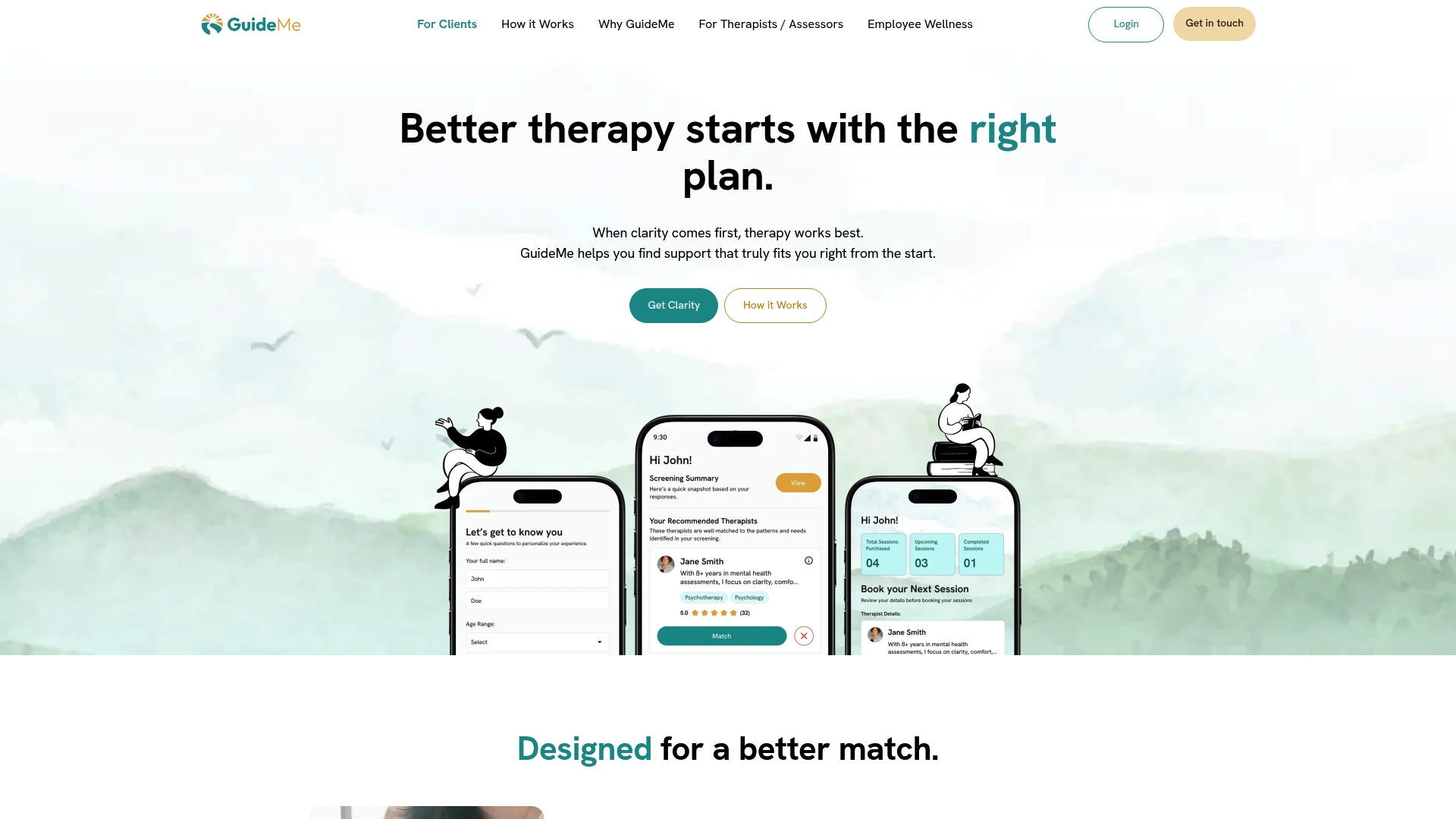
Guidemetherapy is a therapy navigation platform that matches you with the right therapist from the start, using an in-depth therapy plan built around your specific needs. It is human-led and AI-powered, which means you get a thoughtful match rather than a random referral. For finance professionals feeling the weight of sustained pressure, Guidemetherapy offers a confidential, structured route to the right support. Find your therapist and take the first step towards clearer thinking and a more sustainable career.
FAQ
What are the main benefits of mental health support in finance?
Mental health support in finance reduces absenteeism, improves cognitive performance, and lowers staff turnover. Behavioural health programmes deliver a 507% ROI, with measurable improvements in anxiety and workplace attendance.
Does using an EAP affect my regulatory standing with FINRA or SEC?
EAP use is confidential and does not appear in any FINRA or SEC compliance disclosures. Finance professionals can access support without any impact on their regulatory standing.
What is "Deal Mode" and why does it matter for mental health?
Deal Mode is a cognitive state described by therapist Annie Wright in which finance professionals suppress emotional responses to sustain quantitative focus. Over time, it contributes to emotional disconnection, physical stress symptoms, and burnout.
How can finance firms reduce mental health stigma in the workplace?
Firms reduce stigma most effectively by communicating EAP confidentiality clearly, training managers in empathetic responses, and having senior leaders openly acknowledge their own use of mental health support.
What type of therapy works best for finance professionals?
Finance-specific therapy that addresses Deal Mode, identity-linked stress, and the emotional cost of sustained performance produces the strongest results. Online counselling also works well due to scheduling flexibility for demanding finance roles.