

TL;DR:
- Therapy plays a crucial role in fostering psychological safety, reducing stigma, and enhancing employee resilience within workplace culture. When integrated with leadership visibility and organizational policies, it significantly improves communication, reduces absenteeism, and supports mental health. Sustained promotion and targeted interventions are essential for increasing therapy utilization and achieving long-term organizational benefits.
The role of therapy in workplace culture is to build psychological safety, support employee mental health, and create the conditions for healthier team dynamics. Organisations that treat therapy as a structural priority, rather than a personal perk, see measurable improvements in communication, resilience, and retention. Evidence from 2026 research programmes including The Working Mind and longitudinal studies on psychotherapy and work disability confirms this. Employee Assistance Programmes (EAPs), Acceptance and Commitment Therapy (ACT), and digital peer support platforms are now central tools in how HR professionals and leaders approach mental health at work.
How does therapy affect workplace culture and employee well-being?

Therapy's impact on work culture operates on two levels: individual and systemic. At the individual level, therapeutic approaches such as Cognitive Behavioural Therapy (CBT) and ACT improve emotional regulation, communication skills, and resilience. At the systemic level, therapy shapes organisational culture by normalising help-seeking behaviour and reducing the silence that surrounds mental health at work.
The benefits of therapy in teams extend well beyond the individual receiving support. When employees feel psychologically safe enough to acknowledge stress or seek help, team communication improves and conflict reduces. Research shows that The Working Mind programme produced large effect improvements in mental health literacy and resilience among both managers and employees, with stigma reduction showing meaningful, if variable, effects across groups. This tells HR leaders that literacy and resilience are achievable targets, but stigma requires sustained, multi-layered effort.
Therapy also directly reduces burnout and absenteeism. Employees who access timely therapeutic support are better equipped to manage workload pressure before it becomes a crisis. The connection between therapy and employee well-being is not simply about feeling better. It is about maintaining the cognitive and emotional capacity to perform consistently.
- Therapy improves emotional intelligence and self-awareness in individual employees
- It reduces presenteeism, where employees are physically present but mentally disengaged
- Therapeutic support builds resilience against occupational stress and role ambiguity
- Group and team therapy formats strengthen interpersonal trust and psychological safety
- Consistent access to therapy reduces the frequency and duration of mental health-related absences
Pro Tip: Avoid positioning therapy as a crisis response only. Organisations that integrate therapy into routine well-being offerings, rather than reserving it for acute situations, report stronger uptake and less stigma around use.
Individual therapy alone does not change culture. It must be paired with organisational practices that reduce the root causes of stress, including workload design, management behaviour, and communication norms. Therapy and employee well-being are most effectively supported when the environment itself does not actively undermine the gains made in a therapy session.
What barriers limit therapy use at work and how does culture shape them?
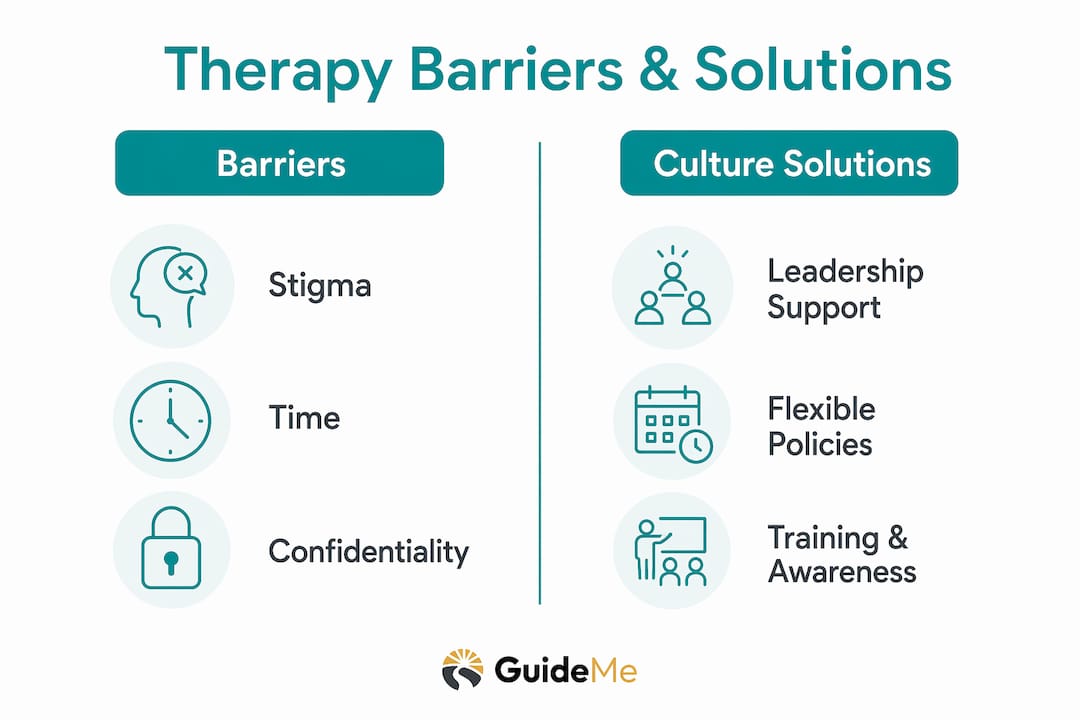
Therapy underutilisation is one of the most persistent challenges in workplace mental health strategy. Employees often avoid therapy despite its availability, driven by stigma, confidentiality concerns, and a perception that therapy is not relevant to their work-related difficulties. These are not individual failings. They are cultural signals embedded in how organisations operate.
The COM-B behavioural model, used in occupational health research, identifies three categories of barriers: capability, opportunity, and motivation. In workplace therapy contexts, these translate directly into practical obstacles.
| Barrier type | Example in practice | Cultural solution |
|---|---|---|
| Stigma (self and anticipated) | Fear of being seen as weak or unreliable | Leadership visibility and open endorsement of therapy use |
| Structural constraints | No private space, inflexible schedules, time scarcity | Dedicated therapy time, remote access options, protected hours |
| Cultural norms | Self-reliance expectations, productivity pressure | Reframe help-seeking as a professional strength, not a weakness |
| Confidentiality concerns | Distrust that EAP data stays private | Clear, repeated communication about data protection policies |
| Perceived irrelevance | "Therapy is for serious mental illness, not work stress" | Broaden messaging to include stress, career transitions, and team conflict |
Leadership silence is one of the most damaging cultural signals an organisation can send. When senior leaders never mention mental health, never share their own experiences of stress, and never visibly use available support, employees read this as a warning. Visible endorsement from leaders acts as a legitimising cue. It creates social permission for others to seek help without fear of professional consequences.
Structural barriers are equally significant. Time scarcity is consistently cited as a reason employees do not engage with EAPs or therapy. If accessing support requires navigating a complex referral process during a busy workday, most people will not bother. Reducing friction, through self-referral options, digital access, and protected time, directly increases utilisation.
How can therapy be embedded in workplace policies and leadership practices?
The Total Worker Health approach, developed by the US National Institute for Occupational Safety and Health, provides a useful framework for HR professionals. It combines protection from work-related harm with promotion of overall well-being, addressing the root causes of stress rather than simply offering support after the fact. Effective policy changes include flexible scheduling, workload review, and the active promotion of EAPs as part of standard employment benefits.
Supervisor and manager training is one of the highest-leverage investments an organisation can make. Trained managers who understand how to have supportive conversations, signpost resources, and model healthy behaviour create a direct multiplier effect across their teams. The critical distinction is that managers trained in supportive behaviours are far more effective than those trained to act as informal therapists. Overstepping clinical boundaries creates confusion, dependency, and sometimes harm.
Pro Tip: When designing manager training, focus on three skills: active listening, knowing when to refer, and how to follow up without pressure. These three competencies cover the majority of mental health conversations managers will actually face.
EAP utilisation remains below 10% without sustained promotion, but rises to near 30% with active, ongoing campaigns. This gap is not about the quality of the EAP. It is about visibility, trust, and cultural normalisation. HR teams that run regular awareness campaigns, share anonymised success stories, and integrate EAP messaging into onboarding and performance conversations see significantly higher engagement.
| Intervention type | Primary focus | Expected outcome |
|---|---|---|
| Individual therapy (CBT, ACT) | Employee mental health and coping skills | Reduced burnout, improved emotional regulation |
| Manager training | Supportive behaviours and referral skills | Earlier identification, reduced stigma at team level |
| EAP promotion campaigns | Awareness and trust building | Higher utilisation rates, reduced underuse |
| Digital peer support platforms | Real-time, accessible peer connection | Emotional regulation, reduced isolation |
| Policy reform (Total Worker Health) | Root cause stress reduction | Lower absenteeism, improved retention |
Digital peer support platforms complement traditional therapy by providing real-time, accessible mental health support that does not require a formal appointment. They drive emotional regulation and social connectedness, particularly in remote or hybrid teams where isolation is a genuine risk. These platforms work best as a complement to therapy, not a replacement for it.
Therapeutic approaches in organisations are most effective when they combine modalities. ACT, for example, is particularly well suited to workplace contexts because it focuses on psychological flexibility and values-based action rather than symptom elimination. Organisational interventions combining ACT with psychoeducation show promise, though long-term effectiveness depends on sustained leadership alignment and cultural support.
What does the evidence say about therapy and organisational outcomes?
A Finnish longitudinal study on psychotherapy and work disability provides some of the clearest evidence available on therapy's impact on absenteeism and long-term work ability. The research identified distinct subgroups with different disability trajectories, and found that early therapeutic intervention produced the greatest reductions in work disability, particularly for employees with higher baseline risk. This is a critical finding for HR analytics: therapy's return on investment is not uniform across the workforce.
Employees in high-risk subgroups who received timely psychotherapy showed a sharp decline in work disability post-intervention, while delayed intervention groups showed a less pronounced recovery trajectory.
Segmenting employees by risk and directing early, targeted support to those most likely to benefit is a more effective strategy than blanket provision. This does not mean withholding support from lower-risk employees. It means prioritising resources and timing interventions where they will have the greatest measurable impact on absenteeism and work ability.
Comfort accessing EAP resources fell from 67% in 2020 to 52% in 2022, a decline linked directly to trust erosion and cultural deterioration during periods of organisational change. This statistic should concern every HR leader. It demonstrates that therapy infrastructure can exist while the cultural conditions for using it actively deteriorate. Access and culture must be maintained together.
The evidence on how therapy improves workplace outcomes also highlights the importance of timing. Therapy delivered at the point of early distress, before an employee reaches crisis, produces better outcomes and lower costs than reactive provision. Building referral pathways that identify need early, through manager conversations, occupational health screening, and self-referral, is the structural priority.
Key takeaways
Therapy's impact on workplace culture depends on integrating access, leadership behaviour, and policy reform simultaneously. Access alone does not change culture.
| Point | Details |
|---|---|
| Access is not enough | Therapy must be paired with stigma reduction and structural changes to drive real utilisation. |
| Leadership visibility matters | Visible endorsement from senior leaders creates social permission for employees to seek support. |
| Early intervention delivers the best outcomes | Targeting high-risk employees with timely therapy reduces work disability and absenteeism most effectively. |
| EAP promotion is a continuous task | Utilisation rises from below 10% to near 30% with sustained, active promotion campaigns. |
| Multi-level interventions work best | Combining individual therapy, manager training, and policy reform produces the most durable cultural change. |
What I have learned about therapy and culture change at work
The most common mistake I see organisations make is treating therapy access as the finish line. They set up an EAP, communicate it once during onboarding, and consider the job done. The research is unambiguous: mere access is insufficient without the systemic design changes that make using it feel safe and normal.
What actually works is less glamorous than a new platform or a well-being day. It is a senior leader mentioning in a team meeting that they have found therapy useful. It is a manager who knows how to say "I noticed you seem under pressure, do you know about the support available?" without making it feel like a performance review. It is an HR team that sends a reminder about EAP services every quarter, not just in October for Mental Health Awareness Month.
I am also convinced that segmentation matters far more than most organisations acknowledge. Not every employee needs the same support at the same time. Directing early, targeted therapeutic support to employees showing signs of high distress, through occupational health data, absence patterns, or manager referrals, produces better outcomes than treating the workforce as a single group. This is where HR analytics and mental health strategy genuinely intersect.
The organisations that get this right do not treat therapy as a separate initiative. They treat it as part of how they manage people. That shift in framing changes everything.
— Yetty
Supporting your team's mental health with Guidemetherapy
Knowing that therapy works is one thing. Connecting your employees with the right therapist, at the right time, is another challenge entirely.
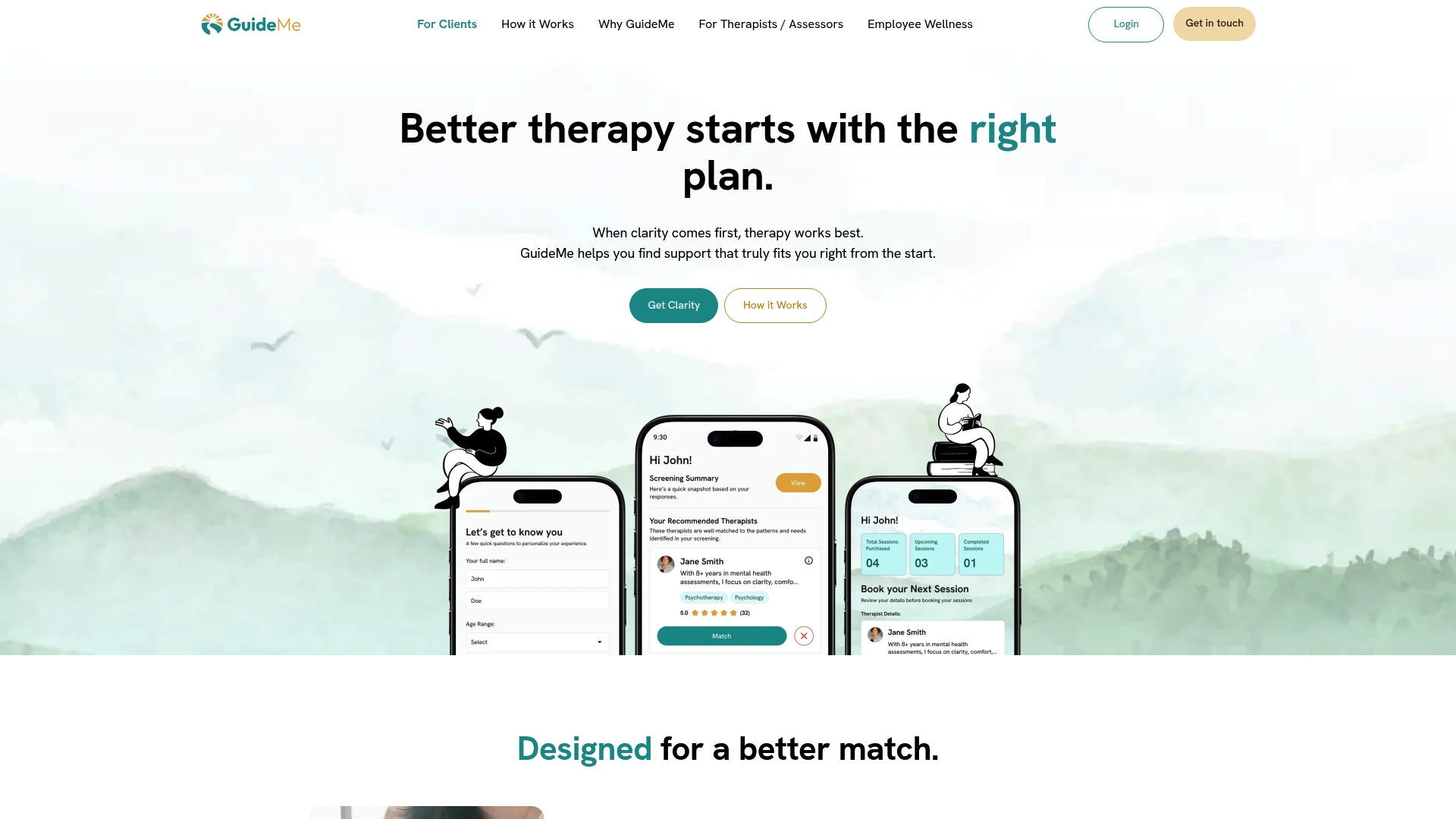
Guidemetherapy is a therapy navigation platform that helps employees understand their mental health needs and get matched with a therapist who is genuinely suited to them. It is human-led and AI-powered, which means the matching process is both clinically informed and practically accessible. For HR professionals and organisational leaders looking to move beyond a basic EAP offering, Guidemetherapy provides a structured, confidential pathway that reduces the friction employees face when seeking support. It is a practical next step for any organisation serious about embedding mental health support into its culture.
FAQ
What is the role of therapy in workplace culture?
Therapy supports workplace culture by building psychological safety, reducing stigma, and improving employees' emotional resilience and communication. When integrated with leadership practices and policy reform, it creates the conditions for a mentally healthier organisation.
Why do employees avoid using EAPs and therapy at work?
Employees avoid therapy due to stigma, confidentiality concerns, time constraints, and a perception that it is not relevant to work-related stress. Cultural norms of self-reliance and productivity pressure reinforce this avoidance.
How does leadership behaviour affect therapy uptake?
Visible leadership endorsement of mental health support acts as a legitimising cue, creating social permission for employees to seek help. Leadership silence, by contrast, signals that help-seeking carries professional risk.
Which therapeutic approaches work best in organisational settings?
Acceptance and Commitment Therapy (ACT) is particularly well suited to workplace contexts because it builds psychological flexibility and values-based coping. Combined with psychoeducation and manager training, it produces measurable improvements in resilience and mental health literacy.
How can HR measure the impact of therapy on organisational outcomes?
HR teams can track absenteeism rates, EAP utilisation, and occupational health referrals before and after therapy programme implementation. Segmenting data by risk group, as supported by longitudinal disability research, provides the clearest picture of where therapy is delivering measurable return.