

TL;DR:
- Diversity aims to actively value differences in culture, gender, and ethnicity to improve organizational performance. Embedding sustained, measurable DEI initiatives enhances innovation, decision-making, and community cohesion. Practicing ongoing self-reflection, accountability, and inclusive actions builds genuine belonging and cultural inclusivity.
Diversity is defined as the presence and active valuing of differences in culture, gender, ethnicity, neurodiversity, and lived experience within communities and organisations. Far from being a box-ticking exercise, it is now recognised as a strategic necessity. Research confirms that gender-diverse and ethnically mixed teams demonstrate measurably higher innovation capacity and problem-solving ability. With 123.2 million people displaced globally as of 2025, the case for cultural inclusivity has never been more pressing. Organisations that treat inclusion as a daily practice, not just a policy document, are the ones building genuinely resilient cultures.
What are the main benefits of diversity?
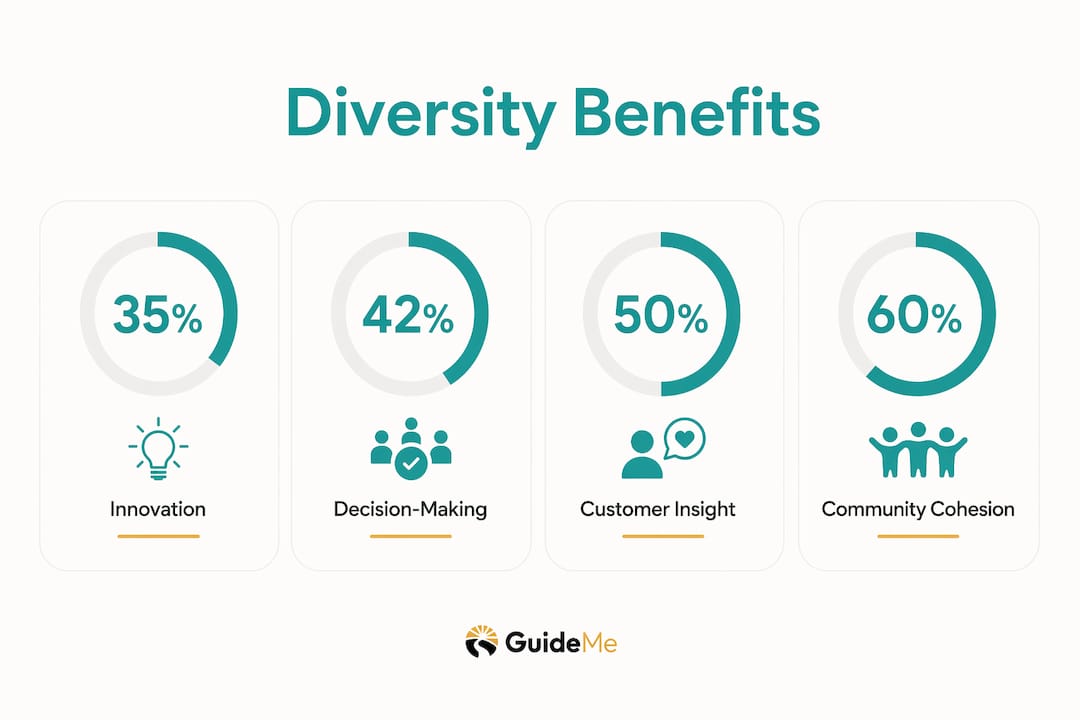
The benefits of diversity extend well beyond good intentions. They show up in measurable business outcomes, community cohesion, and individual well-being.
Creativity and innovation
Diverse teams generate a wider range of ideas because members draw on different cultural frameworks, professional backgrounds, and personal experiences. A PNAS study on diverse teams found that gender-diverse organisations show improved problem-solving and innovation. That finding matters because it shifts diversity from a values conversation to a performance conversation.

Decision-making and customer understanding
Organisations with mixed backgrounds at leadership level make better decisions. They understand a broader customer base because their teams reflect it. According to gender diversity research by David A. Thomas, a diverse and inclusive workforce is a strategic necessity that fuels creativity and decision-making. Businesses that ignore this leave competitive advantage on the table.
Healthcare and specialist fields
The benefits of inclusion are not limited to corporate settings. Multidisciplinary healthcare teams with diverse gender and disciplinary backgrounds deliver improved patient care and more creative clinical solutions. That evidence aligns directly with what we see in business contexts: varied perspectives produce better outcomes.
Social benefits
- Reduced unconscious bias through regular exposure to different perspectives
- Greater mutual respect across communities and colleague groups
- Stronger sense of belonging for individuals who have historically been excluded
- Broader cultural competency across entire organisations, not just HR teams
Pro Tip: When making the case for inclusion internally, lead with the business case. Framing diversity as a performance driver, not just a moral obligation, tends to secure leadership buy-in far more reliably.
How do organisations implement workplace diversity initiatives?
Effective workplace diversity initiatives in 2026 are targeted, measurable, and tied to accountability. Vague commitments to "being more inclusive" no longer satisfy employees, regulators, or investors.
The most effective current approaches, as outlined by Qooper's DEI initiative examples, include:
- Blind recruitment — removing names, photos, and demographic identifiers from applications to reduce bias at the shortlisting stage
- Pay equity audits — regular, structured reviews of compensation data to identify and correct unexplained gaps across gender, ethnicity, and disability status
- Leadership accountability frameworks — tying DEI outcomes to performance reviews and executive bonuses, so inclusion becomes a measurable leadership responsibility
- Inclusive language in job descriptions — auditing role profiles to remove coded language that discourages applications from underrepresented groups
- Mentoring and sponsorship programmes — pairing employees from underrepresented groups with senior advocates who actively support their progression
One critical distinction separates organisations that see results from those that do not. Sustained DEI integration consistently outperforms one-off workshops. A single half-day training session does not change hiring practices, promotion patterns, or daily behaviour. Systemic change requires embedded metrics, repeated reinforcement, and visible leadership commitment.
The legal context also matters. A 2025 federal executive order in the United States has prompted many organisations to recalibrate their DEI programmes for compliance. UK organisations are not directly affected, but the shift signals a broader global conversation about how DEI is structured and evidenced. Careful legal audit of DEI practices is now a standard part of responsible programme design.
Pro Tip: Tie at least one DEI metric directly to your senior leadership appraisal cycle. When inclusion outcomes affect pay and promotion for executives, the entire organisation takes notice.
What does cultural inclusivity actually mean?
Cultural inclusivity is not simply the absence of discrimination. The University of the Sunshine Coast defines it as an ongoing process requiring critical self-reflection, negotiation, and active mutual respect. That definition matters because it frames inclusion as a practice, not a destination.
Cultural inclusivity covers dimensions that go well beyond ethnicity:
- Language and communication style — recognising that directness, formality, and silence carry different meanings across cultures
- Religious observance and dietary needs — accommodating prayer times, fasting periods, and food requirements without requiring individuals to justify themselves
- Neurodiversity — designing workplaces and learning environments that work for people with autism, ADHD, dyslexia, and other cognitive differences
- Socioeconomic background — acknowledging that access to networks, education, and professional norms is not equally distributed
UNESCO's research on intercultural integration makes a point that most organisations miss. Integration is multidirectional. It is not only about migrants or newcomers adapting to an existing culture. It requires the receiving community to adjust, learn, and make space. The same principle applies inside organisations: inclusion is not the responsibility of the person being included.
Educational institutions that embed cultural inclusivity into their curricula report stronger student engagement and retention, particularly among first-generation and international students. Healthcare providers that train staff in cultural competency see measurably better patient communication and treatment adherence. The pattern holds across sectors.
How can you practically promote diversity and belonging?
Knowing the principles is one thing. Putting them into daily practice is where most organisations and individuals struggle. The gap between policy and lived experience is where inclusion either takes root or quietly dies.
Active daily practices such as accommodation conversations and external accessibility audits are what build sustainable belonging. These are not grand gestures. They are consistent, small actions that signal to every person in a team that their needs are considered.
Practical steps that work:
- Start accommodation conversations proactively. Do not wait for employees to raise needs. Ask directly and regularly whether current working arrangements support everyone effectively.
- Audit accessibility, both physical and digital. Physical spaces, websites, internal platforms, and communication tools all need to be reviewed against accessibility standards such as WCAG 2.2.
- Build employee resource networks. Groups organised around shared identities, such as women in leadership, LGBTQ+ networks, or neurodiversity communities, give underrepresented employees a voice and a community.
- Invest in ongoing cultural competency development. Replace one-off workshops with quarterly learning sessions, reading groups, or external speaker programmes that build knowledge over time.
- Review promotion data annually. Track who is being promoted, sponsored, and developed. Patterns in that data reveal where systemic barriers still exist.
The therapy and workplace culture connection is also worth noting here. Organisations that support employee mental health alongside DEI efforts see stronger results because psychological safety and inclusion reinforce each other. When people feel safe, they contribute more fully.
Pro Tip: Avoid the common trap of treating a single diversity training programme as a completed task. Systemic change requires repeated, embedded action. Schedule your next DEI review before the current one ends.
Key takeaways
Diversity produces measurable benefits in innovation, decision-making, and community cohesion only when organisations embed it as a sustained, accountable practice rather than a one-off initiative.
| Point | Details |
|---|---|
| Diversity drives performance | Gender-diverse and mixed teams show higher innovation and better problem-solving outcomes. |
| Systemic initiatives outperform workshops | Blind recruitment, pay equity audits, and leadership accountability produce lasting change. |
| Cultural inclusivity is dynamic | It requires ongoing self-reflection and mutual adjustment, not a fixed policy. |
| Daily practice builds belonging | Accommodation conversations and accessibility audits create inclusion that people actually feel. |
| Legal context shapes DEI design | Organisations must audit their programmes regularly to stay compliant with evolving regulations. |
Why inclusion is the work that never finishes
I have spent years watching organisations launch DEI programmes with genuine enthusiasm, only to see them quietly shelved eighteen months later when the initial momentum fades. The pattern is consistent and, frankly, predictable.
What I have come to believe is this: most organisations treat inclusion as a project with a start and end date. The ones that actually change their cultures treat it as infrastructure. You do not finish building infrastructure. You maintain it, update it, and hold people accountable for how they use it.
The shifting legal environment, particularly the ripple effects of the 2025 US federal executive order, has made some organisations nervous about their DEI commitments. I understand the caution. But retreating from inclusion because the regulatory picture is complicated is the wrong response. The answer is better design, clearer metrics, and more defensible evidence, not less ambition.
The research is not ambiguous. Diverse teams produce better outcomes. Cultural inclusivity strengthens communities. The challenge is not knowing what to do. The challenge is doing it consistently, measuring it honestly, and refusing to declare victory too soon.
If you work in an organisation that is serious about this, tie your DEI outcomes to something that leadership genuinely cares about. That is usually money, risk, or reputation. Frame inclusion in those terms and the conversation changes.
— Yetty
How Guidemetherapy supports inclusive well-being
Building an inclusive culture is not only an organisational challenge. It affects individuals too, particularly those navigating workplaces where they feel unseen or unsupported.
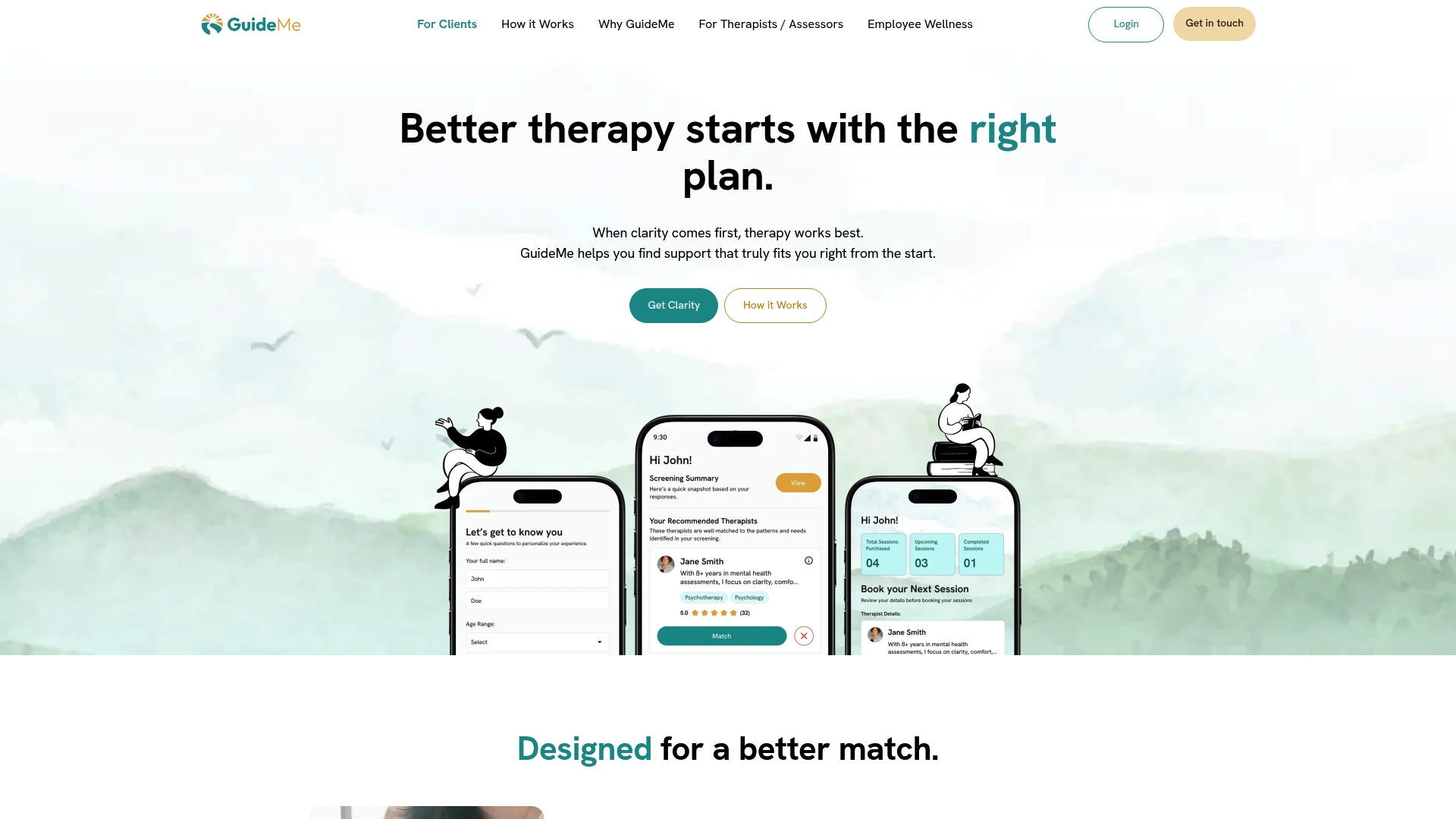
Guidemetherapy is a therapy navigation platform that helps individuals understand their mental health and get matched with the right therapist from the start. For people managing the emotional weight of exclusion, identity-related stress, or workplace challenges tied to diversity, having the right therapeutic support makes a real difference. Guidemetherapy combines human expertise with AI-powered matching to create a more comfortable, personalised therapy experience. If you or your organisation wants to support well-being alongside your inclusion efforts, find the right therapist through Guidemetherapy today.
FAQ
What is diversity in the workplace?
Diversity in the workplace is the presence of employees with varied backgrounds including culture, gender, ethnicity, neurodiversity, and lived experience. It goes beyond representation to include how those differences are valued and included in daily decisions.
What are the proven benefits of diversity?
Research confirms that diverse teams show higher innovation, better problem-solving, and improved decision-making. In healthcare, multidisciplinary diverse teams also deliver stronger patient outcomes.
How do diversity training programmes create lasting change?
One-time diversity training programmes rarely produce systemic change on their own. Sustained programmes that embed inclusive practices into hiring, promotion, and leadership accountability consistently deliver better results.
How does cultural inclusivity differ from diversity?
Diversity refers to the presence of differences, while cultural inclusivity is the active, ongoing process of ensuring all individuals feel safe, respected, and empowered. Inclusivity requires continuous self-reflection and mutual adjustment from everyone involved.
How can individuals promote diversity in their daily lives?
Individuals can promote inclusion by starting accommodation conversations, challenging their own assumptions, supporting employee networks, and advocating for accessible environments in both physical and digital spaces.