
TL;DR:
- Online therapy provides licensed mental health support via internet channels, offering comparable effectiveness to in-person care for many conditions. Its benefits include increased accessibility, reduced stigma, and flexible scheduling, though it faces challenges like building rapport and privacy concerns. The best approach depends on individual needs, with careful platform selection and therapist matching essential for success.
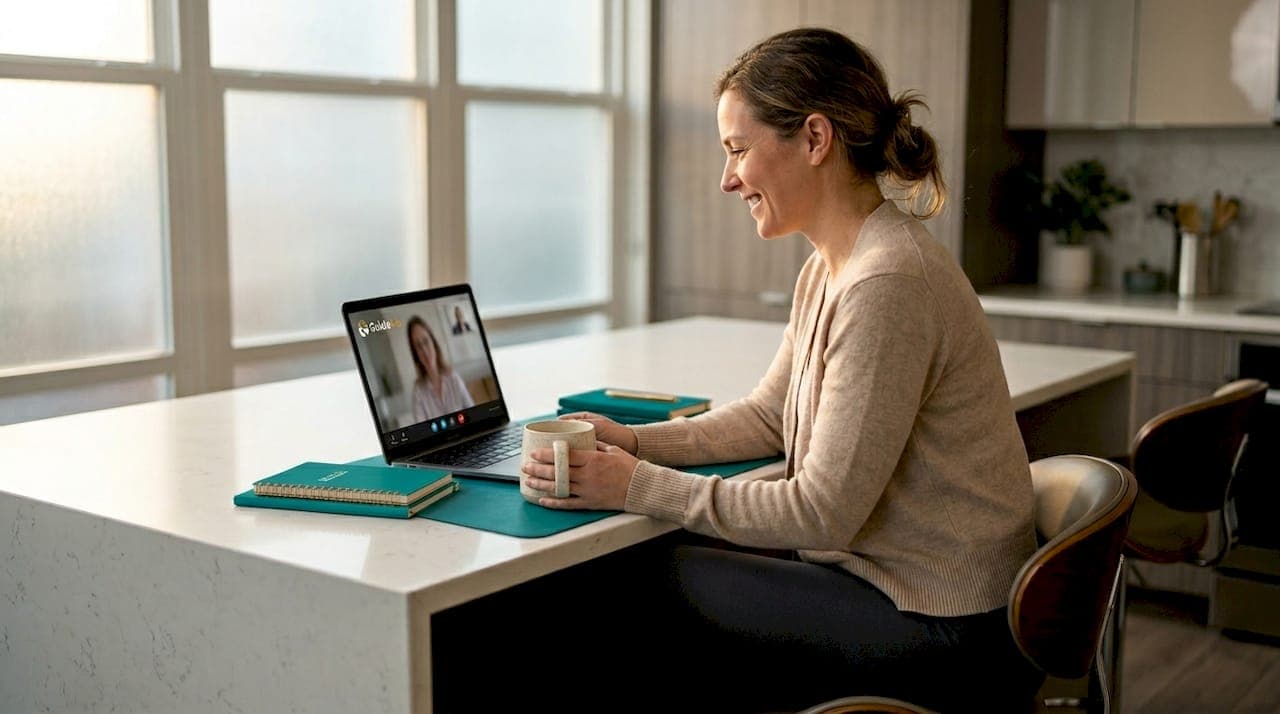
Online therapy, also known as teletherapy or e-therapy, is professional mental health support delivered entirely over the internet. If you have been curious about it but unsure whether it is as effective as sitting in a therapist's office, you are not alone. Many people feel uncertain about making the switch or even starting therapy for the first time. This guide explains what online therapy involves, how it works in practice, what the research actually says about its effectiveness, and how to decide whether it is the right fit for you.
Table of Contents
- Key takeaways
- What online therapy is and how it works
- Benefits of online therapy
- Limitations and challenges of online therapy
- Online therapy vs in-person therapy: what the evidence says
- How to start online therapy: practical steps
- My perspective on online therapy
- Find your right fit with Guidemetherapy
- FAQ
Key takeaways
| Point | Details |
|---|---|
| Online therapy defined | Professional mental health care delivered via video, phone, chat, or email with a licensed therapist. |
| Comparable outcomes | Research shows online therapy can be as effective as face-to-face sessions for many common conditions. |
| Real benefits exist | Greater accessibility, reduced stigma, and broader therapist choice are among the most significant advantages. |
| Limitations apply | It is not suited to every situation, particularly acute crises or severe emotional dysregulation. |
| Getting started matters | Checking therapist qualifications and asking about data privacy are two of the most important first steps. |
What online therapy is and how it works
Online therapy is the delivery of psychological support using the same core therapeutic models as traditional care, just without the physical consulting room. You connect with a licensed professional remotely, using technology rather than geography to access support. The terms teletherapy, e-therapy, and online counselling are often used interchangeably to describe this approach.
Remote therapy delivery happens across several channels, each with different strengths:
- Video calls are the closest equivalent to face-to-face sessions. You see and hear your therapist in real time, which supports non-verbal communication and generally builds rapport more effectively than text alone.
- Phone calls remove the visual element but remain conversational and synchronous, which works well for people who find video uncomfortable.
- Live chat or messaging allows real-time text exchange during a scheduled session window. This suits people who process thoughts better through writing.
- Asynchronous messaging or email lets you send and receive reflections between sessions, which some platforms offer as a supplementary tool. Policy definitions affect how these services are classified; email or text alone is generally not considered a complete therapy service.
Online therapy platforms typically handle scheduling, payment, and communication in one place. Most use encrypted video software specifically built for healthcare rather than general consumer tools. Understanding the technology your therapist uses, and whether it meets data protection standards, is worth doing before you begin.
Benefits of online therapy
The reasons people choose online therapy are practical as well as personal. Accessibility, flexibility, and stigma reduction are consistently cited as the most significant advantages for both patients and clinicians who adopt it.
Here is what makes online therapy genuinely useful for many people:
- Geographic access means you can see a specialist who may not practise anywhere near where you live. This is particularly important for people in rural areas or those with limited transport options.
- Reduced travel time and cost remove a real barrier. If a session fits into a lunch break or an evening at home, the likelihood of attending consistently goes up.
- Lower stigma is a meaningful benefit. Attending a session from your own home removes the fear of being seen walking into a mental health clinic, which still deters people from seeking help.
- Broader therapist selection means you are not limited to whoever practises locally. You can search by specialism, approach, or language.
- Flexible scheduling makes it easier to fit therapy around work, childcare, and other commitments, improving consistency and long-term engagement.
Online therapy can also be particularly helpful for people who find it difficult to ask for support in person. The added sense of privacy and distance can lower the threshold for reaching out in the first place, which is especially relevant for anyone who has been putting off getting support. There is also good evidence that breaking down access barriers to mental health care improves overall uptake, particularly among younger adults and working professionals.
Pro Tip: If you are new to therapy and feel nervous about a video call, ask your therapist whether starting with phone sessions is an option. Many are happy to accommodate this, and it can make the first few sessions feel less daunting.

Limitations and challenges of online therapy
Being clear about where online therapy falls short is just as important as understanding its strengths. It is not the right fit for every person or every situation.
The main challenges include:
- Therapeutic alliance can be harder to build remotely. Non-verbal cues are more limited on screen, and connection through a camera is not identical to being in the same room. Video therapy tends to build stronger alliance than message-only formats, but even video falls short for some patients.
- Technical difficulties including poor internet connections, audio lag, or device problems can disrupt session flow and reduce the quality of communication.
- Patient suitability is a genuine consideration. Online therapy is generally not recommended for people experiencing acute crises, active psychosis, or significant emotional dysregulation that requires immediate in-person intervention.
- Data privacy is an area many people overlook. Session recordings and AI transcription tools may be used by some platforms, with data potentially shared with third-party vendors. Knowing what happens to your session data matters.
- Emergency protocols are more complex remotely. If you are in crisis during a session, a therapist cannot physically assist you or contact emergency services on your behalf with the same speed they could in person.
Engaging online also requires a degree of self-discipline. Distractions at home, lack of a private space, or simply the feeling that a screen session is less "real" can affect how much you get from each appointment.
Pro Tip: Before starting online therapy, tell your therapist where you will be located for each session. This allows them to identify local emergency contacts and crisis resources relevant to your area, which is a standard part of safe practice.
Online therapy vs in-person therapy: what the evidence says
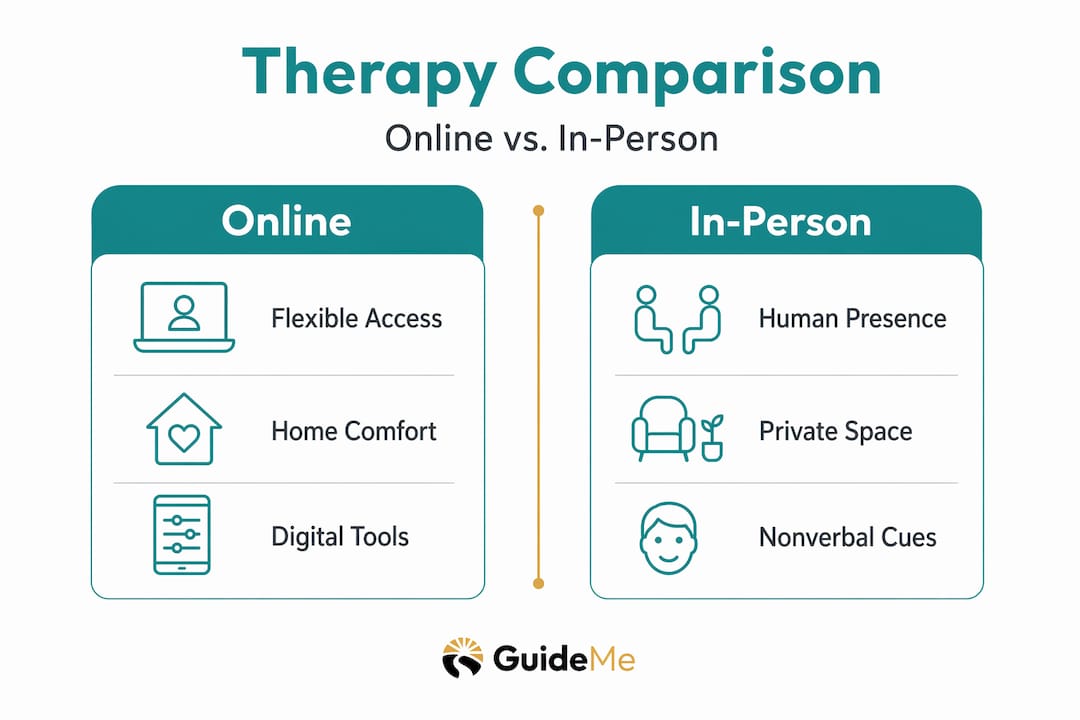
The comparison between online and in-person therapy is more nuanced than a simple "better" or "worse." Research findings vary depending on the condition being treated, the format used, and the individual patient.
| Factor | Online therapy | In-person therapy |
|---|---|---|
| Accessibility | High. No travel or location constraints | Limited to local providers and availability |
| Therapeutic alliance | Generally good via video; weaker via text only | Typically stronger due to physical presence |
| Outcome evidence | Comparable for many conditions, especially anxiety and depression | Effect sizes reported higher in some 2025 studies |
| Suitability | Best for mild to moderate presentations | Better suited to complex or crisis situations |
| Cost | Often lower due to no overhead costs | Can be higher; varies by location and provider |
| Flexibility | High. Sessions can fit around daily life | Lower. Fixed appointment times and locations |
A 2025 study found that patients reported better outcomes with face-to-face therapy, with effect sizes of d=0.76 for patients and d=0.91 for therapists when comparing in-person to online formats. These are moderate to large differences and should not be dismissed. At the same time, the same body of research suggests that combining face-to-face with online sessions may improve outcomes beyond either approach alone, particularly for depression and anxiety. A hybrid model can offer structure and accountability in person, with the flexibility of online check-ins in between.
The bottom line is that online therapy works well for many people and many conditions. The key variable is fit. Some individuals engage better in person; others feel more open and comfortable at home. Matching the format to the patient is one of the most clinically significant factors in determining outcomes. This is something worth discussing honestly with any therapist you consider working with.
How to start online therapy: practical steps
Starting online therapy does not need to be complicated, but a few practical considerations will help you get the most from the experience from the very beginning.
-
Check your therapist's qualifications. Verify that they are registered with a recognised professional body such as the BACP, UKCP, or BPS in the UK. Unverified credentials are a genuine risk in the online space. A therapist qualifications guide can help you understand exactly what to look for.
-
Understand the platform they use. Ask whether the video or messaging software is encrypted and healthcare-specific. General consumer video tools do not always meet clinical data standards.
-
Ask about data privacy directly. Find out whether sessions are recorded, whether AI transcription tools are used, and whether any data is shared with third parties. Inquiring about data handling before you start is both reasonable and necessary.
-
Review your consent documentation carefully. Ethical telepsychology practice includes two layers of consent: one for treatment and one for the technology platform. Both should be clearly explained, and consent should be revisited if the platform changes.
-
Set up your space. Find a private, quiet location where you will not be overheard. Using headphones adds another layer of privacy. Consistent surroundings also help signal to your brain that this is therapy time, which supports focus and engagement.
-
Discuss your goals early. A good therapist will want to understand what you are hoping to achieve. Being clear about this from the first session helps both of you measure progress and adjust the approach when needed. Knowing how to choose the right therapist is also part of setting yourself up for success.
My perspective on online therapy
Over the years I've spoken with many people who have tried online therapy and come away with very different experiences. What I've come to believe is that the format is less important than the match. I've seen people make real progress in text-based sessions when the therapist was exactly right for them. I've also seen people disengage from video sessions with highly qualified therapists because the online format made them feel disconnected.
What I've learned from this is that the question "is online therapy effective?" misses the point slightly. The better question is: "Is this online therapist, using this format, right for me?" That is a much more specific and answerable question.
I also think the data privacy issue is underappreciated. People share deeply personal things in therapy. Knowing where that information goes, and whether it is being stored by AI tools, is not paranoia. It is reasonable due diligence. I'd encourage anyone starting online therapy to ask those questions plainly and expect straight answers.
Finally, I'd push back gently on the idea that in-person therapy is always superior. For many people, especially those managing anxiety or who feel safer at home, the online format removes barriers that would otherwise prevent them from engaging at all. A session that happens is better than a session that never gets booked.
— Yetty
Find your right fit with Guidemetherapy
If you are ready to take the next step, Guidemetherapy is built to help you get there with confidence. Finding the right therapist can feel uncertain, especially when you are exploring online options for the first time.
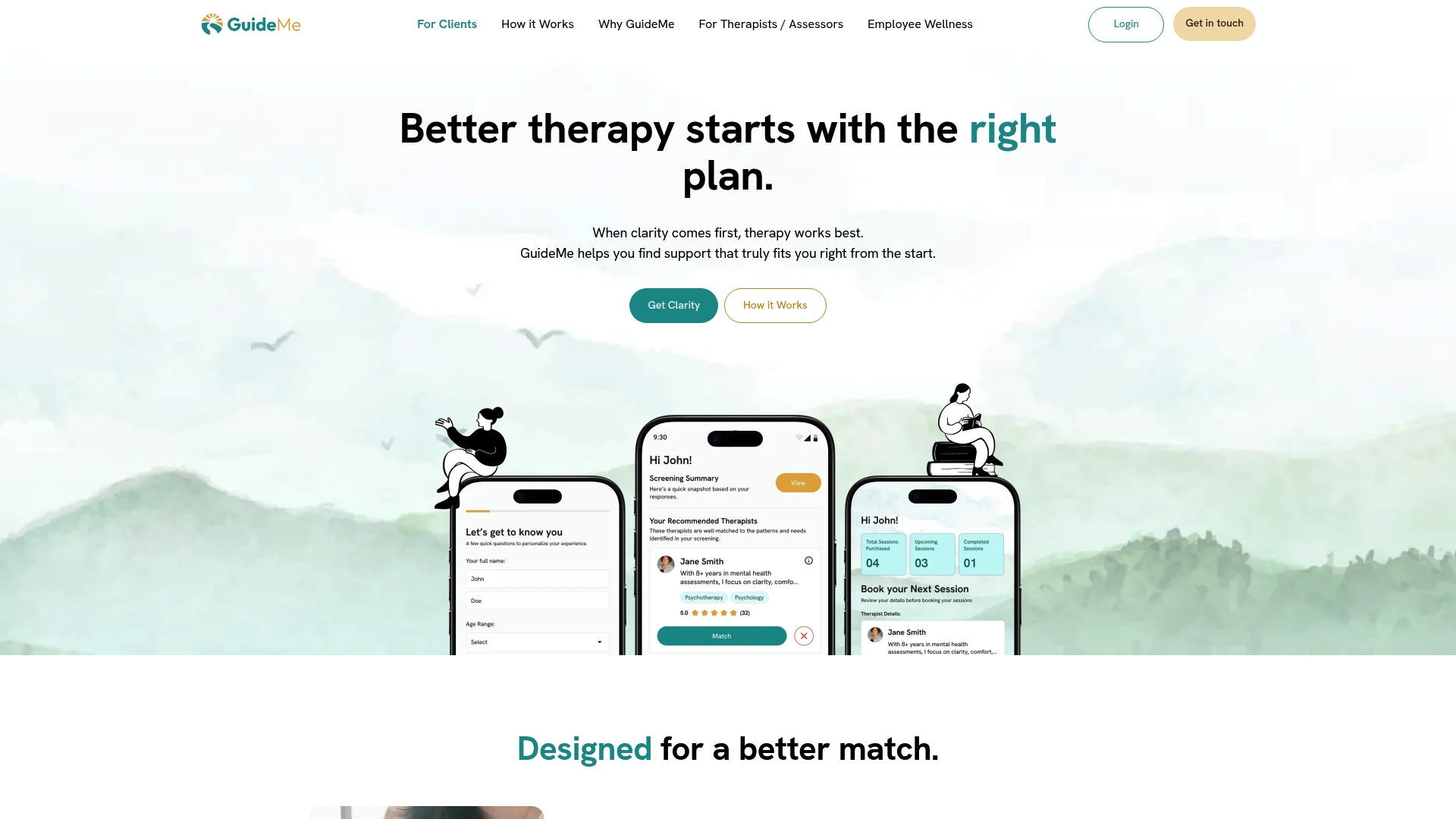
Guidemetherapy combines human expertise with AI-powered matching to create a therapy plan tailored to your needs and connect you with the right therapist from the start. Rather than scrolling through endless profiles, you get clear guidance, qualified options, and a more comfortable experience from the very beginning. Visit Guidemetherapy to start your personalised therapy plan today.
FAQ
What is online therapy and who is it for?
Online therapy is professional mental health support delivered via video, phone, or chat with a licensed therapist. It suits most people with mild to moderate mental health concerns, though it may not be appropriate for acute crises or complex clinical presentations.
Is online therapy as effective as face-to-face therapy?
Research shows online therapy produces comparable outcomes for many conditions, including anxiety and depression. Some 2025 studies do report moderately higher effect sizes for in-person therapy, and hybrid approaches may offer the best results for some individuals.
How much does online therapy cost?
The cost of online therapy varies by platform and therapist, but it is often lower than in-person sessions because therapists have lower overhead costs. Pricing in the UK typically ranges from £40 to £100 per session depending on the provider and specialism.
What should I ask before starting online therapy?
Ask about your therapist's qualifications, which platform they use, how your session data is stored, whether AI transcription is used, and what the emergency protocol is if you are in crisis during a session.
Can online therapy help with anxiety?
Yes. Online therapy for anxiety is one of the most well-evidenced applications of remote mental health care. Cognitive behavioural therapy delivered online shows strong outcomes for anxiety disorders across multiple research reviews.