

TL;DR:
- Emotionally supportive workplaces feature proactive leadership, flexible policies, and peer-led support networks. They foster trust through clear boundaries, confidentiality, and spaces designed for emotional regulation. Formal policies and accessible professional resources ensure sustained, authentic mental health support at work.
What does an emotionally supportive workplace actually look like?
The most effective examples of emotionally supportive workplaces share a clear pattern: proactive leadership, flexible policies, peer-led communities, and physical spaces designed with wellbeing in mind. These are not aspirational ideas. They are practices already running in UK and global organisations, with measurable results in retention, engagement, and mental health.
Here is what the strongest examples have in common:
- Wellbeing leave replacing sick leave. Xero reframed its leave policy so that time off covers physical, mental, spiritual, and emotional health, not just acute illness. This reduces stigma around taking time for non-visible health needs.
- Expanded bereavement leave. Xero also extended bereavement leave to cover miscarriage and stillbirth, explicitly recognising the emotional weight of experiences that workplaces have historically ignored.
- Employee Resource Groups (ERGs) for peer support. Amadeus' Fenix ERG connects employees managing long-term illness or caregiving responsibilities, providing peer-to-peer support that generic Employee Assistance Programmes rarely match.
- Sensory-friendly physical environments. Organisations are investing in optimised lighting, sound control, and multisensory rooms to reduce daily stress and aid emotional regulation.
- Leadership modelling vulnerability. When managers openly share their own mental health experiences, they signal that help-seeking is acceptable, not a weakness.
Research published in Occupational Health Science identifies six supervisor behaviours that protect employee mental health: emotional support, practical support, role modelling, stigma reduction, warning sign recognition, and responsive action. Training supervisors in these behaviours reduces employee loneliness and improves perceptions of support at work.
How managers and HR can provide emotional support day to day
Practical emotional support does not require a large budget or a formal programme. Much of it comes down to how managers show up in ordinary interactions.
Active listening is the foundation. This means giving full attention during conversations, reflecting back what an employee has said, and resisting the urge to jump straight to solutions. A simple example from the MHSSB framework: a manager who asks about an employee's weekend plans on Friday, listens genuinely, and follows up on Monday is already practising emotional support in a low-effort, high-impact way.
Regular check-ins matter more than annual reviews. Brief, genuine conversations about workload, stress, and how someone is feeling outside work create the psychological safety that allows employees to raise concerns before they become crises. These do not need to be formal. A ten-minute one-to-one, done consistently, builds more trust than a quarterly wellbeing survey.
Flexibility in scheduling and workload is also a concrete form of support. Perceived organisational support theory, reviewed in the Annual Reviews of Organisational Psychology, shows that flexible work practices are positively associated with employees' sense that their organisation genuinely cares about them, which in turn improves commitment and reduces burnout.
- Encourage team mindfulness practices, such as brief breathing exercises at the start of meetings.
- Normalise taking proper breaks, particularly for remote workers who often skip them.
- Offer workload adjustments proactively, rather than waiting for an employee to reach breaking point.
- Invite anonymous feedback on team culture and act visibly on what you hear.
Pro Tip: Training supervisors in the six Mental Health Supportive Supervisor Behaviours (MHSSB) produces measurable results. Studies show the Workplace Mental Health Training (WMHT) programme reduced employee loneliness and improved reports of supervisor emotional support, particularly for those experiencing higher baseline stress.
How to build a culture and community that genuinely supports people
Culture is not what an organisation says about itself. It is what employees experience when things get hard.
Peer support structures that sit outside the management hierarchy are particularly effective. Providence's buddy system pairs employees with peers rather than supervisors, creating a support network where people can speak freely without fear of performance judgement. This kind of peer-to-peer support is especially valuable in high-pressure environments where employees may hesitate to show vulnerability to a line manager.

ERGs work best when they grow organically and receive formal leadership sponsorship. Amadeus' Fenix group began as an informal network for employees with caregiving or chronic illness challenges. It became a structured, leadership-backed ERG that now provides resources, community, and advocacy. The key distinction from a generic EAP is that Fenix is peer-led and specific to lived experience, not a generic helpline.
Thistle Farms, a social enterprise in the US, offers one of the most thorough examples of a trauma-informed workplace culture. Their approach integrates structured community circles, facilitated by an external partner, The Circle Center, to create intentional spaces for storytelling and emotional processing. As Courtney Sobieralski, Director of People & Culture at Thistle Farms, put it:
Cultural adaptation matters too. Perceived organisational support tends to produce stronger outcomes when support strategies reflect the specific values and communication norms of a workforce. A one-size-fits-all approach to emotional support often misses the mark for diverse teams.
Does your physical workspace support or undermine emotional wellbeing?
The built environment has a direct effect on how employees feel at work. This is not a soft claim. Organisations that have invested in sensory-friendly design report improvements in stress management and employee wellbeing.

Natural light is one of the most accessible adjustments. Poor lighting increases fatigue and irritability; optimised natural light supports alertness and mood regulation throughout the working day. Sound management is equally important. Open-plan offices with uncontrolled noise are a significant source of stress, particularly for employees with anxiety or sensory sensitivities.
Multisensory rooms, which use immersive visual and audio scenes to aid relaxation, are appearing in progressive UK workplaces. These spaces give employees a dedicated place to decompress, regulate their nervous system, and return to work with greater focus. They are particularly valuable during high-pressure periods.
Physical spaces communicate organisational values. A quiet room says: your need to recover is legitimate. A wellness area says: your wellbeing is part of how we work here, not separate from it.
Practical adjustments worth considering:
- Designate quiet zones free from meetings and phone calls.
- Install adjustable lighting in individual workspaces.
- Create a dedicated wellness room with comfortable seating, low stimulation, and access to mindfulness resources.
- Use acoustic panels or soft furnishings to reduce ambient noise in open areas.
These changes do not require a full office redesign. Even small, deliberate adjustments signal to employees that their comfort and mental health are taken seriously.
What the research says about emotionally supportive workplaces
The evidence base for emotionally supportive workplace practices is strong and growing. The most cited framework comes from research published in Occupational Health Science, which identifies six Mental Health Supportive Supervisor Behaviours (MHSSB) that managers can learn and practise.
| Behaviour | Type | What it involves |
|---|---|---|
| Emotional support | Proactive | Showing care for employees' work and non-work demands |
| Practical support | Proactive | Helping employees manage workload and access resources |
| Role modelling | Proactive | Demonstrating healthy self-care and help-seeking behaviours |
| Stigma reduction | Reactive | Actively challenging mental health stigma in the team |
| Warning sign recognition | Reactive | Identifying early signs of distress in employees |
| Warning sign response | Reactive | Responding appropriately and compassionately when distress is identified |
The WMHT training programme, built around these six behaviours, has been tested in rigorous trials. Results show reduced loneliness among employees four months after training, alongside improved perceptions of supervisor emotional support and stigma-reducing behaviours. Effects were strongest for employees experiencing higher levels of stress at baseline.
Perceived Organisational Support (POS) theory, reviewed in the Annual Reviews of Organisational Psychology, provides the broader psychological framework. According to POS theory, employees who believe their organisation genuinely values their contribution and cares about their wellbeing show higher commitment, better performance, and lower turnover. The antecedents of POS include fairness, leader support, and human resource practices that employees perceive as discretionary choices rather than legal minimums.
Perceived organisational support fulfils employees' socioemotional needs for approval, affiliation, esteem, and emotional support. When those needs are met, commitment and performance follow.
For leaders seeking a structured starting point, the types of organisational support available to managers provide a practical framework for translating these research findings into daily practice.
What employees actually say about emotional support at work
The employee perspective on emotional support is consistent across industries: what matters most is not the existence of a policy, but whether managers and colleagues act on it.
At the US Army Corps of Engineers, a worker described the impact of a psychologically safe culture directly: "Speaking out has helped others to also speak out and know they won't be punished. Having flexibility was also a life-saver for me, being able to make my doctor's appointments, adding flexibility to scheduling meetings. It's made a huge difference in my work life." Another employee at the same organisation reported feeling "more open to sharing my own challenges" with peers and "more supported to address them by my supervisor."
At DPR Construction, a high-pressure life sciences project team with high emotional intelligence achieved zero staff turnover and zero safety incidents over a 70-day intensive shutdown. Senior project engineer Sabrina Donnick described the culture: "When a problem comes up, our superintendent, field engineer, senior super and I immediately start brainstorming solutions together. It's never about finger-pointing; it's about supporting each other and getting the job done."
At Thistle Farms, a shop inventory specialist described the experience simply: "Working here is not just a job. It pays the bills, but it's also a community where I can continue to recover."
These accounts share a common thread. Employees do not describe policies. They describe how people treated them, whether their manager listened, whether they felt safe to speak, and whether the organisation made space for them to be human.
Policies and frameworks that make emotional support official
Informal goodwill is not enough. Organisations that sustain emotionally supportive cultures over time tend to have formal policies that make support visible, accessible, and consistent.
The most effective policies share several features. They are written in plain language, communicated regularly by leadership, and reviewed in response to employee feedback. Mental Health America's Bell Seal for Workplace Mental Health offers a certification framework that guides UK-applicable employers through the process of building mentally healthy workplaces, covering policy, culture, and resource provision.
Key policies worth formalising include:
- Wellbeing leave, explicitly covering mental, emotional, and spiritual health alongside physical illness.
- Expanded bereavement leave that recognises pregnancy loss, miscarriage, and other emotionally significant life events.
- Flexible working arrangements formalised as a default offer, not a special request.
- Mental health days that employees can take without requiring a clinical diagnosis or GP note.
- EAP access communicated clearly and regularly, with online and telephone options, covering stress, anxiety, financial concerns, and caregiving needs.
For managers looking to understand how workplace counselling benefits both staff and leadership, formalising access to counselling services is one of the most direct steps an organisation can take. Policies only work when employees trust they will not face judgement for using them. Leadership visibility, where senior figures openly use and endorse these resources, is the single most effective way to build that trust.
Confidentiality and boundaries in workplace emotional support
Emotional support at work requires clear boundaries to function safely. Without them, well-intentioned conversations can cross into territory that feels intrusive, creates dependency, or places managers in roles they are not trained for.
The boundary between a supportive manager and a therapist is important to maintain. A manager's role is to listen, acknowledge, signpost resources, and adjust workload where possible. It is not to provide therapy, diagnose distress, or become a primary emotional support for a struggling employee. When a manager tries to fill that role, it often creates more harm than good, for both parties.
Confidentiality is the other critical element. Employees will only share genuine concerns if they trust that what they say will not be used against them. Organisations should establish clear guidelines about what managers can and cannot share, and with whom. As a general principle, information shared in a wellbeing conversation should stay between the manager and employee unless there is a specific safeguarding concern.
Peer support programmes, such as buddy systems and ERGs, carry the same need for clear boundaries. Participants should receive basic training in active listening, appropriate signposting, and recognising when a colleague needs professional support rather than peer conversation. Hadaco Health Solutions offers corporate wellbeing guidance that includes frameworks for setting up peer support structures with appropriate boundaries and training.
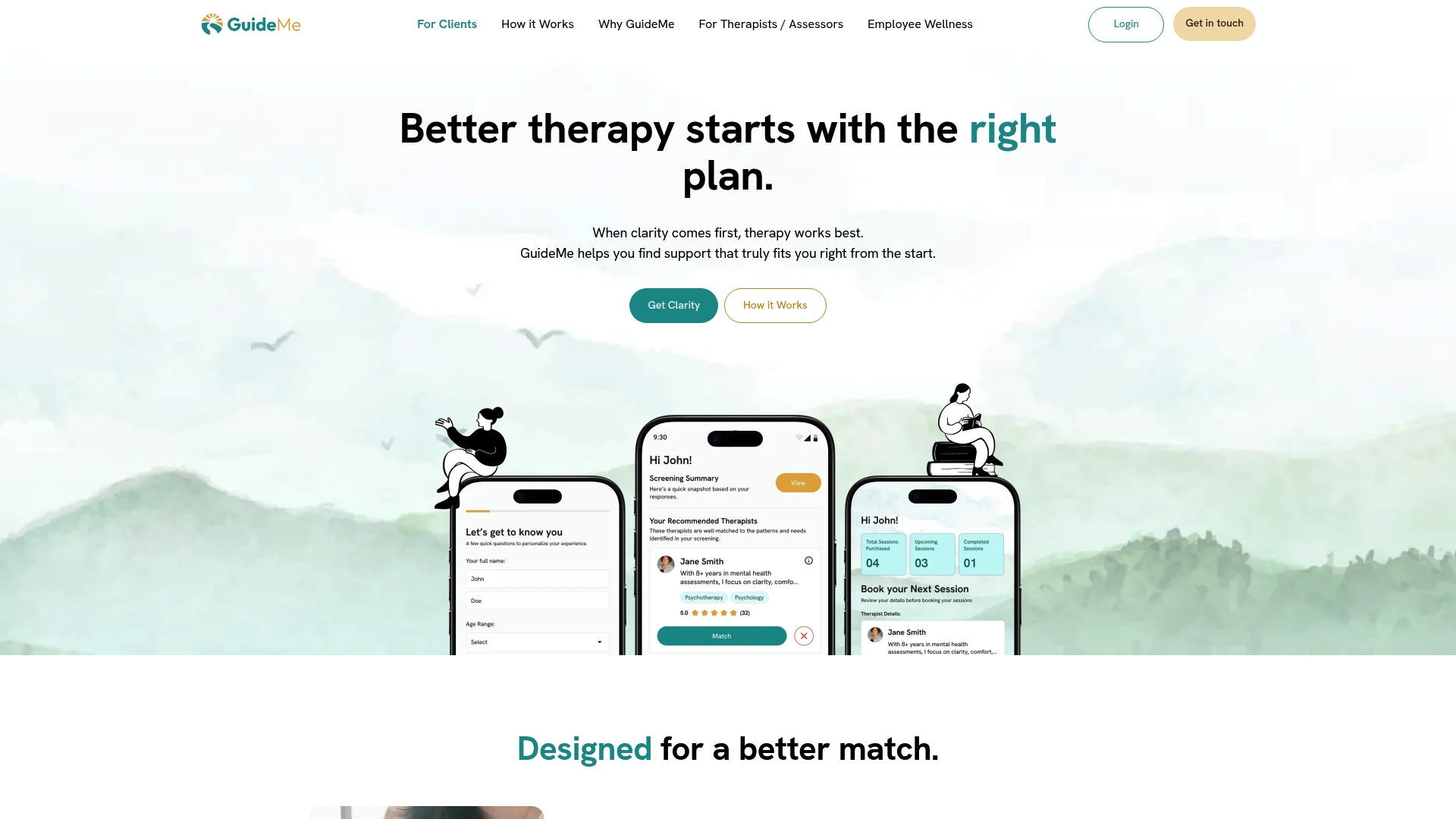
For employees who need support beyond what a manager or peer can offer, access to professional therapy is the appropriate next step. Guidemetherapy helps employees and individuals find the right therapist through a personalised matching process, reducing the confusion and delay that often prevents people from getting help when they need it most.
Key takeaways
Emotionally supportive workplaces combine proactive leadership behaviours, peer-led communities, flexible policies, and thoughtfully designed physical environments to protect employee mental health and reduce loneliness at work.
| Point | Details |
|---|---|
| Leadership behaviour drives culture | Training managers in the six MHSSB behaviours reduces employee loneliness and improves perceived support. |
| Peer support complements management | ERGs and buddy systems outside the management hierarchy increase psychological safety for employees. |
| Flexible policies signal genuine care | Wellbeing leave and expanded bereavement leave reduce stigma and encourage employees to use support. |
| Physical environment affects wellbeing | Quiet spaces, optimised lighting, and sensory rooms reduce daily stress and support emotional regulation. |
| Confidentiality enables honest support | Clear boundaries and confidentiality guidelines allow employees to share concerns without fear of consequences. |
Supporting your team starts with the right resources
Building an emotionally supportive workplace is an ongoing commitment, not a one-off initiative. When employees need support that goes beyond what a manager or peer can provide, having a clear, trusted route to professional therapy makes a real difference.
Guidemetherapy matches employees and individuals with the right therapist through a personalised, AI-powered process that removes the guesswork from finding help. Whether you are an HR leader looking to strengthen your wellbeing offering or an individual ready to take the next step, Guidemetherapy provides a clear, supported path forward.