

TL;DR:
- Not all workplace support is equally effective; choosing the wrong type or layering solutions on systemic issues wastes resources and leaves employees unsupported.
- A tiered model addressing systemic work design, manager training, and clinical care ensures sustainable, impactful wellbeing improvements.
Not all workplace support is created equal. Choosing the wrong types of organisational support, or layering individual-level solutions onto unaddressed systemic problems, is one of the most common and costly mistakes HR professionals and organisational leaders make. The result is wasted budget, low uptake, and employees who still feel unsupported. This guide cuts through the confusion by presenting a clear, evidence-based framework across primary, secondary, and tertiary support types, helping you select, sequence, and measure what actually works for your workforce.
Table of Contents
- Key takeaways
- How to evaluate types of organisational support
- 1. Work design and management practices (primary support)
- 2. Manager training on mental health and wellbeing (secondary support)
- 3. Resilience training and employee wellbeing programmes (secondary support)
- 4. Employee assistance programmes (tertiary support)
- 5. Clinical referral pathways and longer-term care (tertiary support)
- 6. Digital mental health tools and wellbeing technology
- 7. Comparing and selecting support types for your organisation
- What I have learned about organisational support that most guides will not tell you
- Supporting your workforce with the right therapy platform
- FAQ
Key takeaways
| Point | Details |
|---|---|
| Use a tiered support model | Apply primary, secondary, and tertiary interventions in sequence for the strongest organisational impact. |
| Fix the root causes first | Work design and management practices address stress at source before individual-level support is needed. |
| EAP utilisation needs active effort | Low uptake signals a communication or access problem, not a lack of employee need. |
| ROI is strong and measurable | The WHO estimates $4 return per $1 invested in workplace mental health support. |
| Leadership buy-in is non-negotiable | Manager training is consistently cited as the highest-impact single change to employee wellbeing outcomes. |
How to evaluate types of organisational support
Before selecting from the available support services, you need a clear set of criteria. Without this, it is easy to invest in visible programmes that feel good but deliver little measurable change.
The most useful framework comes from psychosocial risk management. ISO 45003 identifies six risk areas that organisations must address: demands, control, support, relationships, role clarity, and change management. Any support type you adopt should map to at least one of these areas.
When assessing organisational support systems, weigh each option against these criteria:
- Effectiveness: Is there peer-reviewed or industry evidence of measurable impact on wellbeing or performance?
- Cost: What is the cost per employee, and how does it scale with headcount?
- Accessibility: Can all employees access it regardless of shift pattern, location, or disability?
- Inclusivity: Does it account for neurodiversity, cultural background, and language needs?
- Scalability: Can it grow or flex without disproportionate cost or complexity?
- Legal compliance: Does it meet your duty-of-care obligations and relevant employment law?
Pro Tip: Build ROI measurement into every support programme from the outset. Track absence rates, turnover, and productivity scores before and after implementation. Without baseline data, you cannot prove the value of what you have invested in.
The tiered approach, spanning primary, secondary, and tertiary interventions, remains the gold standard for structuring organisational assistance types. Each tier serves a different purpose and a different population, and they work best when implemented together rather than in isolation.
1. Work design and management practices (primary support)
Primary organisational support types address the root causes of workplace stress and poor wellbeing. These are systemic, organisational-level changes rather than programmes aimed at individual employees.
The core elements of primary support include:
- Workload redesign: Addressing unrealistic demands, role overlap, and insufficient resources.
- Role clarity: Defining responsibilities clearly so employees understand what is expected of them.
- Change communication: Keeping staff informed and involved during periods of organisational change, which is one of the six ISO 45003 risk areas.
- Relationship quality: Addressing conflict, incivility, or poor team dynamics through structural rather than informal means.
Supportive leadership and growth opportunities are consistently rated as more powerful motivators than financial incentives alone, according to Social Exchange Theory. This makes management behaviour a primary support mechanism in itself. A manager who holds regular one-to-ones, communicates openly, and distributes workload fairly is delivering structural wellbeing support every week, without a formal programme in place.
The biggest pitfall here is treating primary support as a one-off project. Work redesign is an ongoing process. Roles change, teams grow, and demands shift. If your last workload review was three years ago, it is already out of date.
Pro Tip: Start your primary support audit by asking managers to identify the top three causes of stress in their teams. Their answers will surface systemic issues far more efficiently than an all-staff survey alone.
2. Manager training on mental health and wellbeing (secondary support)
Manager mental health training is the single highest-impact organisational change you can make to improve employee wellbeing. That finding is not marginal. It is consistent across multiple large-scale studies and employer surveys.

Secondary support types equip both employees and managers to recognise, manage, and reduce psychosocial risks before they escalate. This tier sits between fixing systemic problems and providing clinical care.
Key components of secondary organisational support include:
- Mental health awareness training for all line managers
- Structured frameworks for supportive conversations, such as MHFA (Mental Health First Aid)
- Clear referral pathways so managers know where to direct employees who need more help
- Peer support networks and trained mental health champions
- Stress inoculation and resilience programmes for employees, grounded in cognitive-behavioural approaches
The risk of secondary support being delivered in isolation is well documented. Training managers without fixing the systemic issues that cause stress gives them skills to support people through problems you have the power to prevent. Secondary support works best as a complement to primary interventions, not a replacement.
3. Resilience training and employee wellbeing programmes (secondary support)
Resilience training is a widely used form of secondary support, though it carries a significant caveat. Teaching employees to cope better with stress is only useful if that stress is unavoidable. Where the stress is caused by poor work design or inadequate management, resilience training amounts to asking people to adapt to problems you should be solving.
That said, well-designed resilience and stress management programmes do have real evidence behind them. Programmes covering promotion, prevention, early intervention, and care consistently outperform reactive models in both ROI and measurable wellbeing outcomes.
Effective secondary employee support strategies in this category include wellbeing days and workshops, access to physical health resources such as subsidised gym membership or occupational health referrals, digital wellbeing apps with guided mindfulness or sleep tools, and structured peer support groups facilitated by trained volunteers.
The key question to ask before investing in this tier is whether the support addresses a genuine and unavoidable source of strain, or whether it is being used to paper over systemic gaps that primary interventions would address more effectively.
4. Employee assistance programmes (tertiary support)
Employee Assistance Programmes, commonly known as EAPs, are the most widely used form of tertiary organisational support. They are reactive by design: employees access them when they are already struggling.
Typical EAP services include short-term counselling, legal and financial guidance, family support, critical incident response, and manager helplines. Modern UK EAPs increasingly include digital cognitive behavioural therapy (CBT) and wellbeing apps alongside traditional telephone counselling.
The cost picture varies significantly by organisation size:
| Organisation type | Approximate annual EAP cost per employee |
|---|---|
| Large employer (500+ staff) | £3.50 to £10 |
| Medium employer (50 to 499 staff) | £10 to £20 |
| Small employer (under 50 staff) | £25 to £100 |
| Micro-business | Up to £300 |
Roughly 62% of US workers have access to an EAP, and the UK average cost sits at around £14 per employee per year. The ROI case is compelling. UK data shows £10.85 return per £1 invested in EAPs when programmes are properly utilised.
The word "properly" carries significant weight here. EAP utilisation below 10% is a strong signal of failure in awareness or access design, not lack of employee need. Modern EAPs with proactive outreach and app-based intakes achieve utilisation rates above 40%. That gap between 10% and 40% represents thousands of employees who needed help but could not find their way to it.
Pro Tip: Send a personal communication from the CEO or a senior leader every time you promote your EAP. Named, visible endorsement from leadership removes the stigma barrier more effectively than any poster campaign.
5. Clinical referral pathways and longer-term care (tertiary support)
Short-term counselling, which is the backbone of most EAPs, is not adequate for complex or chronic mental health conditions. Modern EAPs must include clear referral pathways to clinical services such as therapy, psychiatry, or specialist community mental health teams.
This is where many organisations' wellbeing strategies fall short. An employee presenting with moderate depression or severe anxiety may receive three to six sessions of EAP counselling and then be discharged with no follow-up pathway. For common mental health presentations, that may be sufficient. For complex cases, it is not.
Organisations taking a serious approach to corporate therapy best practices are increasingly building formal agreements with therapy platforms and private health providers to fund continuation of care beyond the EAP session limit. This closes the gap between EAP support and clinical need, and it significantly improves outcomes for employees who might otherwise drop off entirely.
6. Digital mental health tools and wellbeing technology
Technology-enabled support has grown substantially since 2020 and now represents a distinct category within forms of workplace support. These tools are not a replacement for human support but they do extend reach significantly, particularly for remote workers, shift workers, and employees who are reluctant to engage with traditional counselling.
Effective digital tools in this space include app-based therapy and guided CBT, online wellbeing assessments that feed into organisational reporting, digital physiological monitoring such as stress wearables, and asynchronous text-based support with qualified counsellors.
The critical limitation to acknowledge is engagement decay. Most digital wellbeing tools see a sharp drop-off in active users within eight to twelve weeks of launch. Sustained utilisation requires integration with existing workflows, not just a standalone app. Tying digital tools to manager check-ins or team wellbeing reviews creates the accountability that keeps people engaged over time.
7. Comparing and selecting support types for your organisation
Choosing the right mix of organisational support systems comes down to context. An organisation of 30 people has different constraints and opportunities than one with 3,000 employees. Below is a practical comparison of the three tiers to guide your decision-making.
| Support type | Cost | Impact | Accessibility | Scalability |
|---|---|---|---|---|
| Primary (work design) | Low to medium | High, long-term | Universal | High |
| Secondary (training, resilience) | Medium | Medium, preventive | Moderate | Medium |
| Tertiary (EAP, clinical) | Low to high | High when utilised | Variable | High via digital |
Sequencing interventions correctly matters more than most leaders realise. Organisational-level changes must come first. Adding secondary and tertiary layers before addressing systemic risk factors produces limited returns and can actually reduce trust if employees perceive support as a substitute for genuine change.
For smaller organisations with limited budgets, a practical starting point is a core EAP contract combined with management training and a workload review. Avoiding siloed support programmes by connecting each tier to a shared wellbeing strategy is what separates organisations with high engagement from those spending money on programmes nobody uses.
Key considerations before making a final selection:
- What does your current data tell you about absence, turnover, and stress-related presenteeism?
- Which of the six ISO 45003 risk areas are most prominent in your organisation right now?
- Do your managers have the skills and confidence to have supportive conversations today?
- Is your EAP being actively promoted, or is it a line item nobody mentions?
What I have learned about organisational support that most guides will not tell you
I have worked with HR teams and organisational leaders long enough to see the same pattern repeat itself. A wellbeing initiative gets launched with real enthusiasm, strong communications, and a credible budget. Six months later, engagement has dropped, the EAP is barely being used, and leadership has quietly moved on to the next priority.
The problem is almost never the programme itself. It is the assumption that launching support is the same as delivering it. Real organisational support requires sustained communication, leadership modelling, and the willingness to address inconvenient findings. If your stress survey tells you the problem is in a specific team or under a specific manager, that is where the intervention needs to go. Redirecting employees to an EAP instead is not support. It is deflection.
What I have seen work consistently is the multi-tiered approach, where primary interventions create better conditions, secondary support builds capability, and tertiary services catch those who still struggle. No single tier is sufficient on its own. The organisations I respect most treat wellbeing as an operational responsibility, not a communications exercise.
The other thing worth saying plainly: HR misconceptions about low EAP utilisation are costing employees access to help they genuinely need. Low uptake is almost always a design or communication failure. If you fix the access, the numbers will move.
— Yetty
Supporting your workforce with the right therapy platform
When your organisational support strategy is in place, the quality of the clinical and therapy options you offer matters enormously.
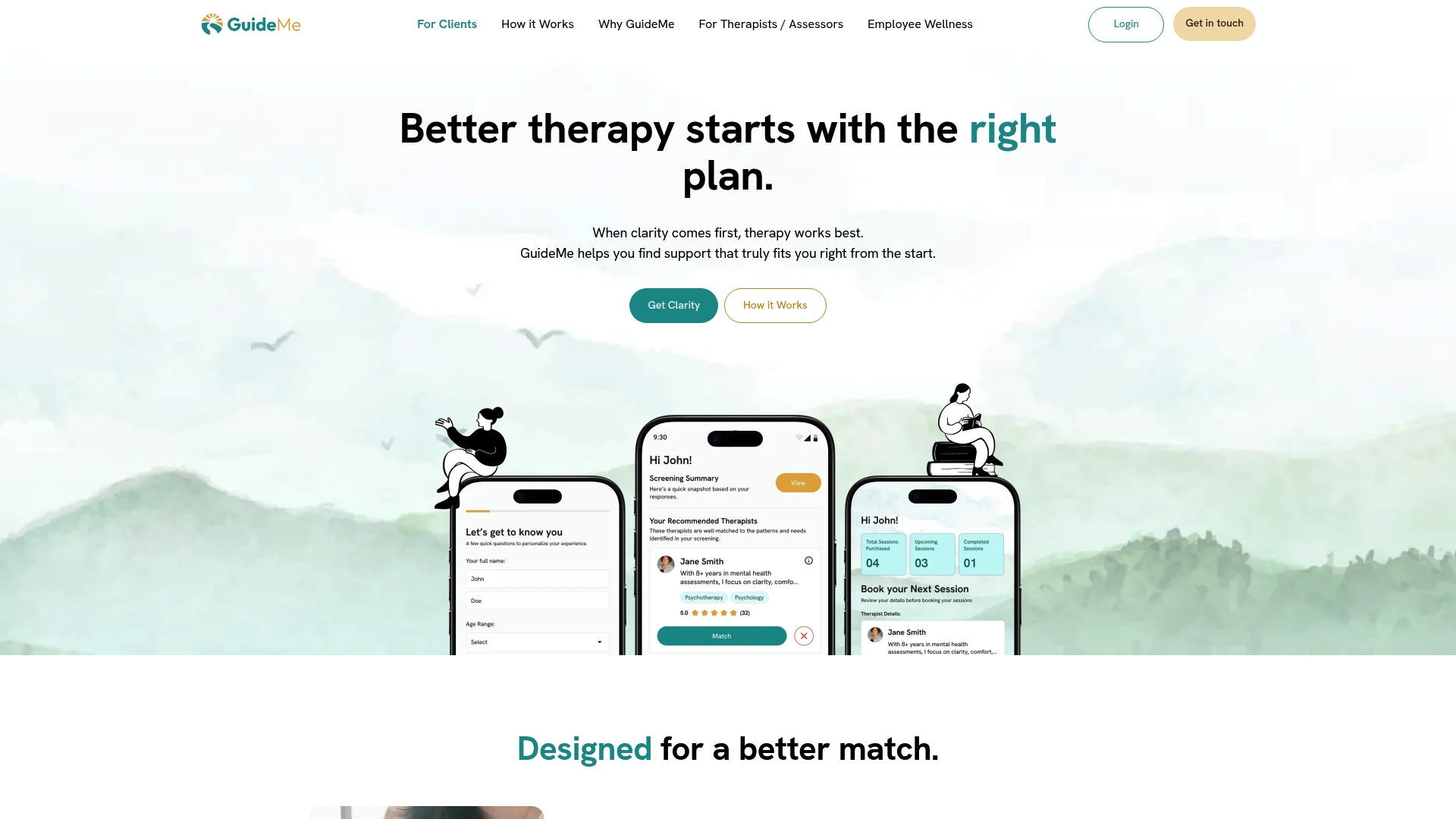
Guidemetherapy is designed to close the gap between EAP counselling limits and employees who need longer-term or more specialist support. The platform combines human expertise with AI-powered matching to connect people with the right therapist from the very first session. For HR teams, this means fewer delays, better outcomes, and a therapy experience that employees actually want to use. Understanding different counselling approaches is part of how Guidemetherapy ensures each person is matched to the method that suits their needs. If you are looking for a partner that complements your existing organisational support systems and genuinely improves access to care, explore Guidemetherapy and see how it fits your workforce.
FAQ
What are the main types of organisational support?
The three main types are primary support (work design and management practices), secondary support (resilience training and manager development), and tertiary support (EAPs and clinical services). Effective organisations use all three in sequence.
What is organisational support and why does it matter?
Organisational support refers to the policies, programmes, and practices an employer puts in place to protect and improve employee wellbeing and performance. Strong support reduces absence, increases retention, and delivers measurable ROI.
How can HR improve EAP utilisation rates?
Active promotion from senior leaders, app-based intake options, and clear communication about confidentiality are the most effective levers. Organisations using proactive outreach consistently achieve utilisation rates above 40%, compared to the sector norm of 10 to 20%.
When should organisations prioritise primary over tertiary support?
Primary support should always come first. Addressing workload, role clarity, and management quality reduces the demand on secondary and tertiary services. Investing in EAPs before fixing systemic issues produces poor returns.
What does effective manager support look like in practice?
Effective manager support includes mental health first aid training, structured frameworks for supportive conversations, and clear referral pathways to specialist services. Manager training consistently ranks as the highest-impact single change for improving employee wellbeing outcomes.