

TL;DR:
- Confidential consultations are protected by legal and ethical frameworks from the very first contact, allowing for honest communication. Preparation, platform choice, and understanding these protections are crucial to maintaining privacy during any professional session. Clients must actively verify security measures and disclose information gradually to ensure confidentiality remains effective and trustworthy.
A confidential consultation is a private meeting where your information is protected by legal and professional standards from the very first interaction. Whether you are seeking therapy, legal advice, or financial guidance, confidentiality in consultations is not a courtesy. It is a formal duty backed by frameworks including solicitor-client privilege, GDPR, and the NHS Code of Practice. This guide to confidential consultations covers everything you need to prepare, protect yourself, and get the most from any private professional session.
What is a guide to confidential consultations?
Confidential consultations are defined by one core principle: what you share stays protected. The professional you speak with is bound by legal and ethical duties that activate from the moment you make contact. In therapy, this duty is governed by professional bodies such as the British Association for Counselling and Psychotherapy (BACP). In law, solicitor-client privilege applies. In financial services, GDPR and the Financial Conduct Authority (FCA) set the standard. Understanding which framework applies to your situation gives you the confidence to speak openly.
The protection is not passive. You have an active role in maintaining it. Choosing the right platform, preparing your documents, and communicating your privacy preferences all shape how effective your consultation will be.
How to prepare for a secure and private consultation
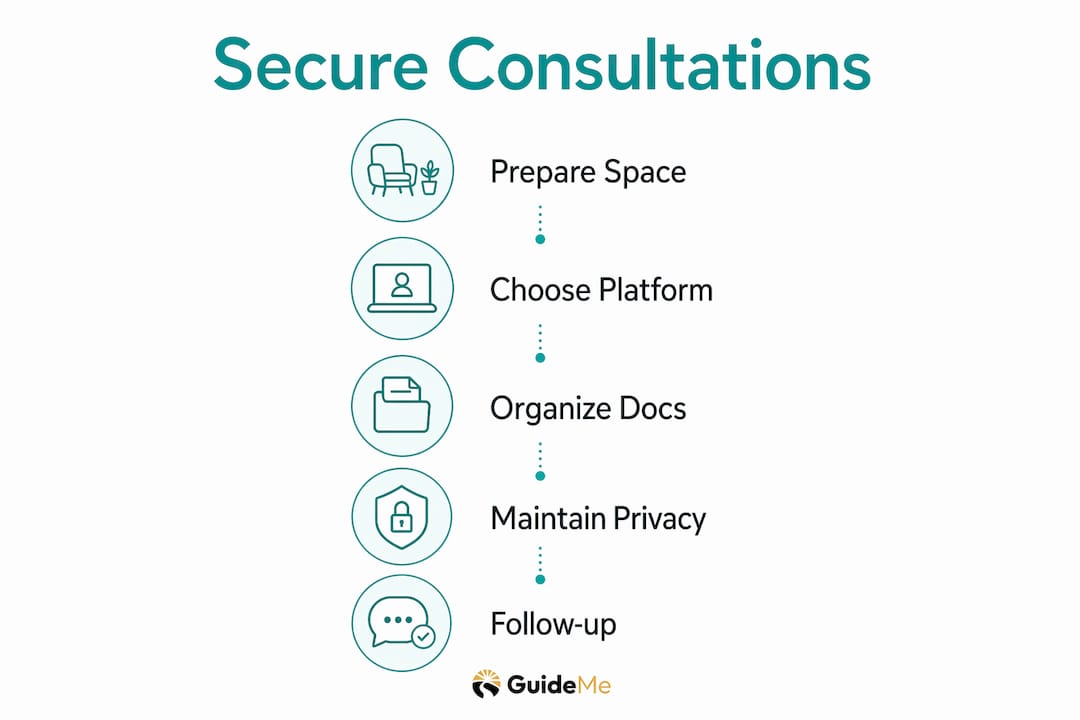
Preparation is the difference between a productive session and one where you hold back. A secure consultation requires attention to your environment, your documents, and your technology.

Setting up a private environment
Your physical space matters as much as your digital one. Use a private room with a closed door. If you are in a shared space, wear headphones to prevent others from hearing the professional's responses. Switch off smart speakers such as Amazon Echo or Google Nest before the call. Secure platform practices also include using a personal device rather than a work computer, which may be monitored by an employer.
Choosing the right platform
Not every encrypted platform meets legal compliance standards. VPNs alone do not guarantee HIPAA or GDPR compliance. True data protection requires the platform provider to sign legal agreements such as a Business Associate Agreement (BAA) under HIPAA, or a Data Processing Agreement (DPA) under GDPR. Before your consultation, ask the provider for documentation of their security assessments and legal data handling agreements.
Documents to bring
Organising your documents before the session saves time and improves the quality of advice you receive. For legal or whistleblower matters, a chronological timeline is more effective than a pile of unorganised papers. Timelines help the professional identify key triggers and assess your situation accurately from the first meeting. For financial consultations, bring account statements, correspondence, and any relevant contracts. For therapy, a brief written summary of your concerns can help you stay focused.
Pro Tip: Write your timeline or notes on paper rather than in a shared cloud document. This keeps sensitive information off platforms you do not fully control.
| Consultation type | Key documents | Platform requirement |
|---|---|---|
| Therapy | Written summary of concerns, GP referral if relevant | GDPR-compliant, BAA or DPA signed |
| Legal | Chronological timeline, contracts, correspondence | End-to-end encryption, legal data agreement |
| Financial | Account statements, tax records, contracts | FCA-regulated provider, GDPR-compliant |
How are confidential consultations protected legally and ethically?
Legal and ethical frameworks do not wait for you to sign a contract. Protection begins the moment you seek advice.
Solicitor-client privilege and legal duty
Attorney-client privilege covers the initial consultation without payment or formal engagement. You do not need to hire the solicitor for the protection to apply. This means you can speak candidly about your situation from the very first call. The duty of confidentiality is separate from privilege and covers all information shared in a professional capacity, even after the relationship ends.
Healthcare confidentiality
The NHS Code of Practice on Confidential Information sets the standard for healthcare providers in England. Therapists and counsellors registered with the BACP or the UK Council for Psychotherapy (UKCP) are bound by their professional codes to protect everything you share. Confidentiality is not absolute, however. Professionals may disclose information without your consent in cases of imminent harm or when required by law. These circumstances are limited and well-defined, not open to interpretation.
Financial services confidentiality
Financial advisers regulated by the FCA operate under GDPR, which gives you the right to know how your data is stored, shared, and deleted. The legal compliance requirements for digital health and financial platforms are detailed and enforceable. A reputable adviser will explain their data handling policy before the session begins.
Confidentiality is a two-way street. Clients should feel empowered to request private rooms, confirm that no one is overhearing, and ask directly how their information will be stored and used. Healthcare professionals are trained to avoid unintentional disclosure, but your voice matters in setting those boundaries.
Step-by-step: how to have a confidential consultation securely
Follow these steps to protect your privacy and get the most from any private professional session.
-
State your intent clearly. For legal consultations, explicitly stating you are seeking legal advice at the start of the call activates solicitor-client privilege. The phrase "I am seeking legal advice regarding a potential matter" documents your intent and triggers formal protections.
-
Verify credentials and privacy policies. Check the professional's registration with the relevant body: the Solicitors Regulation Authority (SRA) for solicitors, the BACP or UKCP for therapists, or the FCA for financial advisers. Ask to see their confidentiality policy before sharing any sensitive information.
-
Confirm platform security. Request written confirmation that the platform uses end-to-end encryption and holds the appropriate legal data agreements. End-to-end encryption and multi-factor authentication are the baseline requirements for any secure remote consultation.
-
Disclose information gradually. You do not need to share everything at once. Building trust gradually allows you to verify the professional's duties and approach before revealing the most sensitive details. This is not evasion. It is good practice.
-
Communicate your privacy preferences. Tell the professional if you have specific concerns about how your information is stored or shared. Ask whether session notes are kept, who can access them, and how long they are retained.
-
Manage follow-ups securely. After the session, store any shared documents in a password-protected folder. Avoid emailing sensitive files without encryption. Use the platform's secure messaging function if one is available.
Pro Tip: After the consultation, delete any temporary files or browser history related to the session from shared or work devices. This prevents accidental disclosure to others who use the same device.
Common mistakes in confidential consultations and how to avoid them
The most common privacy failures in consultations are not caused by professional negligence. They come from client-side oversights that are easy to prevent.
- Using unsecured platforms. Free video calling tools without end-to-end encryption are not appropriate for confidential consultations. Always confirm the platform's compliance status before the session.
- Misunderstanding the limits of confidentiality. Many people assume confidentiality is absolute. It is not. Professionals are required to disclose information in cases of imminent risk to life or when ordered by a court. Knowing this in advance prevents confusion and distress.
- Failing to verify credentials. A professional who cannot confirm their registration or refuses to share their confidentiality policy is a warning sign. Always check before you share.
- Disorganised documents. Arriving at a consultation without organised information wastes time and reduces the quality of advice. A clear timeline or summary helps the professional assess your situation accurately.
- Ignoring third-party risks. If a family member, colleague, or friend is present during your consultation, confidentiality may be compromised. Keep all sessions strictly private.
- Overlooking follow-up security. The consultation itself may be secure, but emails, texts, or printed documents shared afterwards may not be. Apply the same standards to all communication related to the session.
Healthcare professionals are trained to avoid unintentional disclosure, but clients must also take responsibility for their side of the exchange. Confidentiality works best when both parties actively maintain it.
What are the benefits of confidential consultations?
Confidential consultations produce better outcomes because they create the conditions for honest communication. When you know your information is protected, you share more fully. When you share more fully, the professional can give you more accurate and useful advice.
The psychological safety that comes from a genuinely private session is not a minor benefit. In therapy, it is the foundation of the entire process. Clients who feel safe disclose more, engage more deeply, and make faster progress. In legal matters, full disclosure allows a solicitor to build the strongest possible case. In financial advice, complete information leads to better planning and fewer costly surprises.
Pro Tip: If you feel uncertain about sharing something, tell the professional directly. Saying "I am not sure whether this is relevant" opens the door without committing you to full disclosure before you are ready.
| Field | Key benefit | Practical outcome |
|---|---|---|
| Therapy | Psychological safety | Deeper engagement and faster progress |
| Legal | Full disclosure protection | Stronger case preparation from the start |
| Financial | Complete information sharing | More accurate planning and risk assessment |
Confidential consultations also reduce the fear of stigma or retaliation. Whistleblowers, people experiencing mental health difficulties, and those in financial distress all face real risks if their situation becomes known prematurely. A formally protected consultation removes that risk and gives you the freedom to seek help without fear.
Key takeaways
Confidential consultations are legally protected from the first contact, and preparing your environment, documents, and platform choice determines how effectively that protection holds.
| Point | Details |
|---|---|
| Protection starts immediately | Solicitor-client privilege and professional duties apply from the first interaction, before any contract is signed. |
| Platform compliance matters | End-to-end encryption alone is insufficient; platforms must hold signed legal data agreements such as a BAA or DPA. |
| Gradual disclosure is sound practice | You do not need to share everything at once; verify the professional's duties before revealing sensitive details. |
| Document organisation improves outcomes | A chronological timeline helps professionals assess complex legal or financial situations accurately from the outset. |
| Confidentiality has defined limits | Professionals may disclose information in cases of imminent harm or legal requirement; knowing this prevents confusion. |
My view on confidentiality: it only works if you use it
I have spoken with many people who walked into a confidential consultation and still held back. Not because they distrusted the professional, but because they did not fully understand what protection they actually had. That gap between having a right and feeling safe enough to use it is where most consultations fall short.
The legal frameworks are genuinely strong. Solicitor-client privilege, GDPR, and professional codes of conduct are not vague promises. They are enforceable duties. But they only protect what you share. If you withhold the most important information because you are unsure whether it is truly safe, the consultation loses most of its value.
The technology side worries me more than the legal side. People assume that because a platform looks professional, it is compliant. That assumption is wrong often enough to matter. I always recommend asking for written confirmation of a platform's data handling agreements before the first session. It takes two minutes and removes a significant source of uncertainty.
The other thing I have noticed is that people rarely ask about follow-up security. The session itself may be perfectly protected, but then the notes get emailed in plain text or stored in an unsecured folder. The consultation is only as secure as its weakest link. Treat every document, message, and file related to the session with the same care you gave the session itself.
— Yetty
Guidemetherapy: private, professional support when you need it
Finding the right therapist is already a personal decision. Knowing your conversations are fully protected makes it possible to be honest from the start.
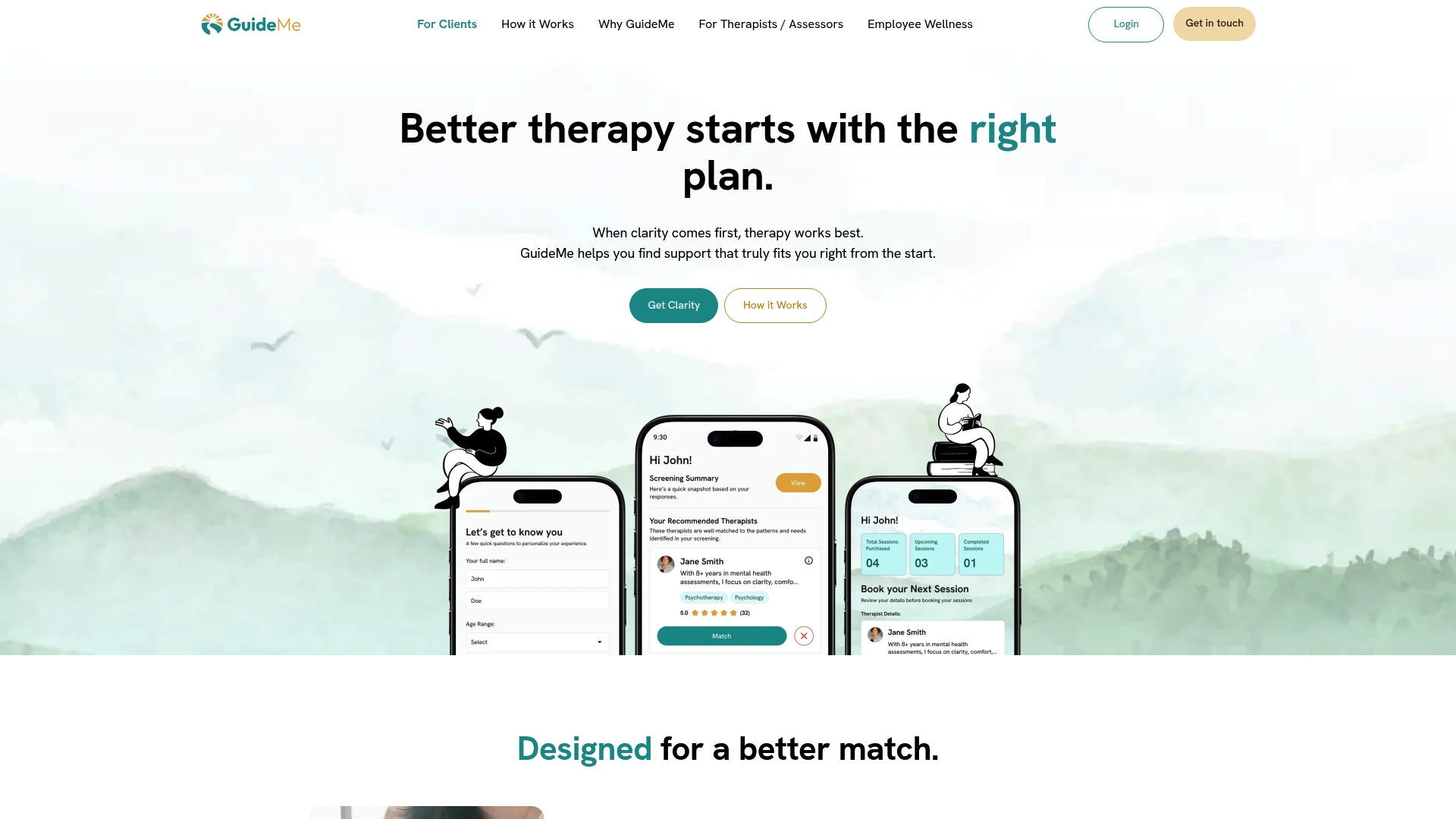
Guidemetherapy matches you with vetted, registered therapists through a process that is both AI-powered and human-led. Every therapist on the platform operates under professional confidentiality duties, and the platform is built with privacy at its core. You get a personalised therapy plan, a careful match with the right professional, and the reassurance that your information stays yours. If you are ready to take that step, find your therapist through Guidemetherapy and begin with confidence.
FAQ
What does confidential consultation mean?
A confidential consultation is a private meeting with a professional where everything you share is protected by legal and ethical duties. These protections apply from the first contact, before any formal agreement is signed.
Does attorney-client privilege apply to the first consultation?
Yes. Attorney-client privilege covers the initial consultation even without payment or a formal engagement letter. Stating your intent to seek legal advice at the start of the call activates this protection.
Is online therapy confidential?
Online therapy is confidential when delivered through a GDPR-compliant platform with end-to-end encryption and a signed Data Processing Agreement. Always verify the platform's compliance status before your first session.
Can a therapist or solicitor break confidentiality?
Confidentiality is not absolute. Professionals may disclose information without consent in cases of imminent risk to life or when required by a court order. These circumstances are strictly defined and rarely apply.
How do I know if a consultation platform is truly secure?
Ask the provider for written documentation of their security assessments and legal data handling agreements. A VPN or basic encryption is not sufficient on its own; the platform must hold a BAA under HIPAA or a DPA under GDPR to meet compliance standards.