

TL;DR:
- You do not need a diagnosis or crisis to start therapy; persistent distress over weeks is sufficient.
- Choosing a therapist based on fit and alliance is more important than specific techniques or modalities.
Deciding whether you need therapy, and what kind, is rarely straightforward. If you have been feeling off for weeks but are unsure whether it is "serious enough" to seek help, you are not alone. Knowing how to evaluate therapy needs is one of the most useful things you can do for your mental health. 1 in 5 adults in the UK live with a mental illness, which means therapy is far more common than many people realise. This guide will walk you through assessing therapy requirements clearly, so you can make confident decisions about your own support.
Table of Contents
- Key takeaways
- How to evaluate therapy needs: recognising the signs
- Types of therapy and what they address
- Assessing your personal goals for therapy
- Finding the right therapist for your needs
- Monitoring whether your therapy needs are being met
- My honest perspective on evaluating therapy needs
- How Guidemetherapy can support you
- FAQ
Key takeaways
| Point | Details |
|---|---|
| No severity threshold needed | You do not need a diagnosis or crisis to begin therapy. Persistent distress over several weeks is enough reason to seek support. |
| Therapist fit matters most | Therapeutic alliance is a stronger predictor of success than the type of therapy used. |
| Goals evolve over time | Initial therapy goals often shift as you progress, so flexibility and self-reflection are part of the process. |
| Intake is collaborative | Your first session is not a test. It is a shared conversation to clarify your needs and set a direction together. |
| Progress needs monitoring | Regularly reviewing how you feel in therapy helps you decide whether to continue, adjust, or try a different approach. |
How to evaluate therapy needs: recognising the signs
Many people wait far longer than necessary before considering therapy. Part of the reason is a persistent belief that something must be severely wrong before you "qualify" for support. That belief is not accurate.
Persistent negative emotions lasting several weeks, especially when they start affecting your sleep, appetite, relationships, or ability to work, are meaningful indicators that talking to someone could help. These do not need to be extreme feelings. Prolonged low mood, ongoing worry, irritability that will not lift, or a sense of disconnection from things you used to enjoy are all worth paying attention to.
Here are some common signs that identifying therapy needs is worth doing now:
- Sadness, anxiety, or anger that feels persistent and hard to shift
- Withdrawing from friends, family, or activities that previously mattered to you
- Difficulty concentrating, making decisions, or completing everyday tasks
- Changes in sleep or appetite sustained over several weeks
- A sense that you are coping but only just, without any room left over
- Recurring thoughts you find distressing or hard to manage alone
You do not need a formal diagnosis to start therapy. Therapists are trained to help clarify your needs during the process itself, not before it begins. Waiting for a label before seeking support often delays help that could make a real difference.
Types of therapy and what they address
Once you decide to look into support, evaluating counselling options can feel overwhelming. There are many approaches, and the right one depends on what you are experiencing and what you hope to get out of therapy.
Here is a brief overview of common therapy types and the situations they tend to suit:
| Therapy type | Best suited for |
|---|---|
| Cognitive Behavioural Therapy (CBT) | Anxiety, depression, phobias, OCD, and managing unhelpful thought patterns |
| Person-centred therapy | General emotional support, self-esteem, identity, and personal growth |
| Psychodynamic therapy | Exploring deeper patterns rooted in past experiences or relationships |
| Acceptance and Commitment Therapy (ACT) | Building psychological flexibility and values-based living |
| Couples or family therapy | Relationship difficulties and communication challenges |
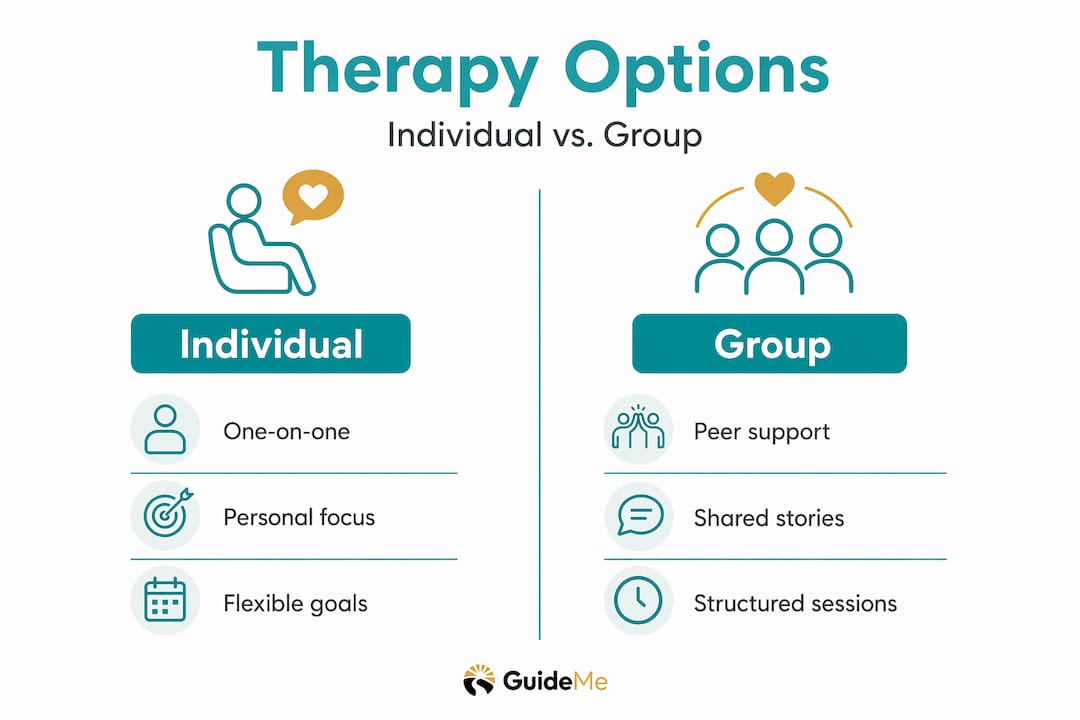
Beyond these, there are group therapy programmes, mental health coaching, and peer support groups that can complement or, in some cases, replace one-to-one therapy. Medication is another option, often used alongside therapy rather than instead of it.
What matters most, though, is not which modality you choose. Research consistently shows that therapeutic alliance is the strongest predictor of positive outcomes. In other words, feeling understood and respected by your therapist matters more than the specific technique they use.
There is also an important distinction between therapy and formal assessment. Therapy focuses on symptom relief and improving daily functioning, while a formal assessment clarifies diagnosis and is used when documentation or high diagnostic uncertainty is involved. If you are simply feeling distressed and want support, therapy is usually where to start.
Pro Tip: If you are unsure which type of therapy suits you, mention this during an initial consultation. A good therapist will explain their approach and whether it fits your situation before you commit.
Assessing your personal goals for therapy
Before your first session, spending time on honest self-reflection can make the whole process more productive. Assessing therapy requirements is not only about deciding whether you need support. It is about understanding what kind of support you are actually looking for.
Work through these questions at your own pace:
- What is troubling you most right now? Try to describe it in one or two sentences without filtering or minimising.
- How long has this been affecting you? A few days is different from a few months.
- What does improvement look like to you? This might be sleeping better, feeling less anxious, or being able to manage conflict without shutting down.
- Are you looking for symptom relief, emotional support, practical tools, or deeper self-understanding? These are all valid goals, but they may point to different approaches.
- Is there anything you have already tried? Knowing what has or has not helped is useful information for a therapist.
The answers to these questions give you a starting point, not a fixed plan. Therapy goals often start broad and then shift into more specific emotional or relational territory as the work deepens. That is normal and healthy.
Your first session, known as an intake session, plays a key role in refining all of this. Intake sessions are collaborative conversations, not evaluations. The therapist gathers background, discusses your concerns, and works with you to begin shaping goals. You can read more about what to expect from this first meeting before you go.

Keeping a simple journal during the early weeks of therapy also helps. Writing down how you feel before and after sessions, and noting what comes up between them, gives you material to reflect on and share with your therapist.
Pro Tip: Your therapy goals do not need to be perfectly formed on day one. Arriving with a rough sense of what feels wrong is enough. Clarity tends to come from the process itself.
Finding the right therapist for your needs
Knowing how to choose therapy type is only part of the picture. The therapist you work with matters just as much. Here is how to approach the search practically:
- Check credentials. Look for a therapist registered with a professional body such as the British Association for Counselling and Psychotherapy (BACP) or the UK Council for Psychotherapy (UKCP).
- Read about their approach. Most therapists describe the modalities they use on their profile or website. If the language feels aligned with what you are looking for, that is a good sign.
- Use initial consultations. Many therapists offer a short introductory call. Use it to ask how they typically work, what experience they have with your concerns, and how they handle goals that change over time.
- Assess how you feel during the conversation. Do you feel heard? Do they ask thoughtful questions? First impressions are not everything, but they matter.
- Consider practicalities. Think about availability, session frequency, cost, and whether teletherapy or in-person sessions work better for your life.
Changing therapists when a fit does not feel right is not only acceptable but sometimes the best decision you can make. A few sessions is usually enough to gauge whether the relationship is working. If you feel consistently misunderstood or uncertain about the direction, it is reasonable to try someone else. You can find a detailed walkthrough of selecting a therapist to help with this process.
Monitoring whether your therapy needs are being met
Starting therapy is not the end of the evaluation process. Monitoring how you are responding is an ongoing part of getting genuine value from your sessions.
Positive signs that therapy is working include:
- Noticing even small shifts in how you react to difficult situations
- Feeling more able to name or manage your emotions
- Reduced intensity or frequency of the symptoms that brought you to therapy
- A growing sense of clarity about what you want and why
Signs that something may need adjusting include:
- Feeling no different after several weeks with no explanation of why
- Dreading sessions in a way that feels unhelpful rather than challenging
- Sensing that the therapist does not quite understand your experience
- Goals feeling misaligned with what is actually being discussed
These are not signs of failure. They are information. Bring them into the conversation with your therapist directly. Most therapists welcome honest feedback and will adapt. If the relationship itself is the issue, revisiting how to find the right fit is a valid next step.
Pro Tip: After every few sessions, ask yourself one question: am I moving, even slowly, towards what I came here for? If the answer is consistently no, that is worth raising openly.
Therapy goal-setting works best when goals are specific enough to track but flexible enough to evolve. Learning how to set therapy goals with intention can make a significant difference to how useful your sessions feel over time.
My honest perspective on evaluating therapy needs
I have spoken with a lot of people at the point of deciding whether to try therapy. Almost universally, the thing holding them back is not a lack of need. It is a lack of certainty about what they need.
What I have learned is that this uncertainty is not a barrier to starting. It is actually where therapy begins. The intake process exists precisely because most people do not arrive knowing exactly what they are there to work on. That clarity comes later, and that is fine.
I have also seen how much the therapist relationship matters in practice. Someone can be working with a highly qualified professional using a well-evidenced approach and still feel stuck, simply because the personal fit is off. That is not the client's fault, and it does not mean therapy is not for them. It means they need a different therapist.
My honest take is this: if you are spending time reading an article like this one, you already have enough reason to take the next step. The evaluation does not have to be perfect before you begin. It just has to be honest.
— Yetty
How Guidemetherapy can support you
If you have been working through how to evaluate your therapy needs and want some structured help taking the next step, Guidemetherapy is built for exactly this moment.

Guidemetherapy combines human expertise with AI-powered matching to help you understand your mental health needs and connect with a therapist who suits your situation from the start. Rather than leaving you to sort through directories on your own, the platform creates a personalised therapy plan based on your goals, preferences, and circumstances. This means less guesswork, fewer false starts, and a more comfortable experience overall. Visit Guidemetherapy to begin your therapy assessment and get matched with the right support for you.
FAQ
Do I need a diagnosis before starting therapy?
No. Therapists help clarify needs during the process itself, so you do not need a formal diagnosis before your first session.
How do I know if I need therapy or a formal assessment?
Therapy focuses on symptom relief and daily functioning. A formal assessment is needed when you require a diagnosis for documentation purposes or when the cause of your difficulties is genuinely unclear.
What should I bring to my first therapy session?
You do not need to prepare a detailed account. A rough sense of what is troubling you and what you hope to get from the sessions is enough. Intake sessions are collaborative and designed to help you find that clarity together.
How long does it take to know if therapy is working?
Most people notice some shift within four to eight sessions, though this varies. If nothing feels different after several weeks, it is worth discussing this openly with your therapist or considering a different approach.
Is it acceptable to change therapists?
Absolutely. Changing therapists when the fit is not right is a reasonable and sometimes necessary decision, and a good therapist will support you in doing so.