

TL;DR:
- A mental wellness checklist is a structured daily routine that tracks emotional, physical, and social health through research-backed micro-actions. It emphasizes core components like mood, movement, reflection, connection, and flexibility, with personalization and safety escalation plans to ensure effective self-monitoring. Digital tools can support habit formation, but human connection remains crucial for lasting mental wellbeing.
A mental wellness checklist is a structured daily routine that helps you track emotional, physical, and social health with clear, research-backed steps for lasting wellbeing. Unlike vague self-help advice, a well-built mental health checklist gives you specific micro-actions across mood, movement, reflection, and connection. Tools like Beyond Blue's Self-Care Check and the PHQ-9 questionnaire show what rigorous self-assessment looks like in practice. The goal is not perfection. It is building self-awareness early enough to act before difficulties escalate.
1. What are the core components of a mental wellness checklist?
An effective mental wellness checklist covers five areas: mood tracking, physical self-care, reflective practice, social connection, and flexibility. Each area targets a different dimension of wellbeing, and leaving one out creates blind spots. Think of it as a daily health check, not a performance target.
Here is what each area should include:
- Mood tracking: Rate your mood on a 1 to 10 scale each morning and note any triggers. This creates a data trail you can review weekly rather than reacting to single bad days.
- Physical self-care: A 20-minute movement block, consistent sleep of 7 to 9 hours, and regular meals form the physical foundation of mental stability.
- Reflective practice: Journalling, mindfulness, or structured prompts like "What drained me today?" build the habit of noticing patterns before they become problems.
- Social connection: Even a brief text to a trusted person counts. Isolation amplifies low mood, and small regular contact counteracts it.
- Flexibility: When life feels heavy, a shorter checklist is better than an abandoned one. Build in permission to scale back.
Pro Tip: Vague items like "be positive" do not drive behavioural change. Replace them with clear, research-backed habits that name a specific action, time, and duration.
2. How to build a personalised mental wellness checklist

Personalisation is what separates a checklist you use from one you forget. Start by benchmarking your current mood baseline over three to five days before adding any new habits. This gives you a realistic starting point rather than an aspirational one.
Follow these steps to build a checklist that fits your actual life:
- Audit your schedule. Identify two quiet windows each day, one in the morning and one before bed, where a five-minute check-in is realistic.
- Choose three to five items maximum. A minimum viable day concept with a small number of core micro-actions reduces burnout and improves adherence far better than a 20-item list.
- Run a 7-day trial. Treat the first week as an experiment. Note which items you skipped and why, then adjust without judgement.
- Stack habits. Attach checklist items to existing routines. Mood rating after your morning coffee. A brief body scan before brushing your teeth at night.
- Remove barriers. If stigma makes written journalling feel uncomfortable, use a private notes app. If time pressure is the issue, cut items rather than abandon the whole checklist.
Reviewing and adjusting every two to four weeks keeps the checklist relevant as your circumstances change. A checklist that suited you in January may need updating by March.
3. What digital tools can enhance your self-care checklist?
Digital tools work best as reminders and data collectors, not as replacements for human connection or professional support. Apps that combine mood tracking, cognitive behavioural therapy prompts, and scheduled reminders can reinforce checklist habits between therapy sessions or during periods of self-management.
Key considerations when choosing a digital tool:
- Guided vs unguided formats: The WHO's Step-by-Step programme and the Doing What Matters model both use brief weekly helper support over approximately five weeks. This guided format delivers measurably better outcomes than unguided self-help alone.
- Integration with your checklist: Choose tools that let you log mood, set reminders, and export data. This makes your weekly pattern review far more useful.
- Cost and accessibility: Many NHS-approved apps are free. Paid apps may offer richer features but are not automatically more effective.
Pro Tip: Pairing a digital tool with even one human touchpoint each week, whether a friend, a counsellor, or a support group, significantly improves outcomes compared to app use alone.
The WHO model specifically uses 15-minute weekly helper sessions over five weeks, which you can adapt as a structured module within your own checklist. This is a practical way to bring guided psychological support into a self-managed routine without committing to full therapy from the outset.
4. How mental wellness checklists handle safety escalation
Safety escalation is a non-negotiable component of any mental health checklist. Without it, a checklist risks becoming a passive monitoring tool that delays urgent help. The PHQ-9 questionnaire is a validated 9-item screening tool that includes a self-harm question. Any positive response to that item requires same-day clinical contact, not passive monitoring.
Clear triggers for immediate escalation include:
- Thoughts of self-harm or suicide
- An overdose or physical self-injury
- Active risk to yourself or others
The UK NHS crisis pathway is straightforward. Call 999 or go to A&E for immediate risk. Use NHS 111 option 2 for urgent but non-life-threatening crises. Samaritans (116 123) and Shout (text 85258) offer free 24-hour support for anyone in distress.
Including a safety escalation plan in your checklist empowers you to act quickly rather than waiting to see if things improve. Write the relevant numbers into your checklist document itself. When you are in crisis, you should not have to search for them.
Knowing when to seek professional help is a skill, and your checklist can help you develop it. If your mood score stays below 4 for more than five consecutive days, that is a clear signal to contact a GP or therapist rather than continuing to self-manage.
5. Comparing checklist formats: traditional, app-supported, and guided journalling
Choosing the right format for your emotional wellness guide depends on your personality, available time, and the depth of insight you need. Each format has genuine strengths and real limitations.
| Format | Strengths | Limitations |
|---|---|---|
| Traditional (paper or notes app) | Low setup time, fully customisable, no cost | Risk of superficial entries, no reminders |
| App-supported | Automated reminders, data visualisation, CBT prompts | Monthly cost for premium features, screen fatigue |
| Guided journalling | Deeper reflection, structured prompts, lower burnout risk | Higher time commitment, requires consistent motivation |
The ideal format is the one you will actually use consistently. A paper checklist completed daily beats a sophisticated app opened twice a week. That said, app-supported formats work particularly well for people who respond to data and visual feedback on their mood patterns.
Guided journalling suits people who find open-ended reflection difficult and benefit from structured prompts. Prompts like "What did I do today that aligned with my values?" or "What would I tell a friend in my situation?" produce richer insight than a simple mood score alone.
The most practical approach is to start with a traditional format for the first two weeks, then layer in an app or guided prompts once the habit is established. Changing format is not failure. It is adaptation, and adaptation is exactly what a good self-care checklist should encourage.
Key takeaways
A mental wellness checklist works when it combines daily mood tracking, physical self-care, reflective practice, social connection, and a clear safety escalation plan into one consistent routine.
| Point | Details |
|---|---|
| Five core areas | Mood, movement, reflection, connection, and flexibility form the evidence-based foundation. |
| Minimum viable day | Three to five micro-actions beat a 20-item list for long-term adherence. |
| Safety escalation | Include NHS 111, 999, and Samaritans numbers directly in your checklist document. |
| Guided self-help | WHO-backed helper support over five weeks improves outcomes beyond unguided app use. |
| Weekly pattern review | Separating daily tracking from weekly reviews prevents overreaction to short-term mood swings. |
What I have learnt from using mental wellness checklists every day
I spent years treating a mental wellness checklist as an all-or-nothing commitment. Either I completed every item or I felt I had failed. That thinking is the single biggest reason most people abandon their checklists within a fortnight.
The shift that changed everything for me was separating daily state tracking from weekly pattern reviews. Daily entries are just data points. They are not verdicts. The real insight comes when you look back across seven or ten days and notice that your mood consistently drops on Sunday evenings, or that your energy is reliably higher on days when you moved your body before noon. That kind of pattern is invisible if you only read one day at a time.
I also stopped treating technology as the answer. Apps are useful for reminders and data. They are not useful for the human connection that actually sustains mental wellbeing. The most consistent improvement I have seen, both personally and in conversations with people navigating therapy, comes from pairing a simple checklist with at least one real human touchpoint each week.
The other thing I would tell anyone starting out: do not wait for a crisis to seek professional support. A checklist is a monitoring tool, not a treatment. If your scores are consistently low, that is the checklist doing its job. Act on what it tells you.
— Yetty
How Guidemetherapy can support your mental wellness routine
A mental wellness checklist tells you what is happening. Guidemetherapy helps you do something about it.
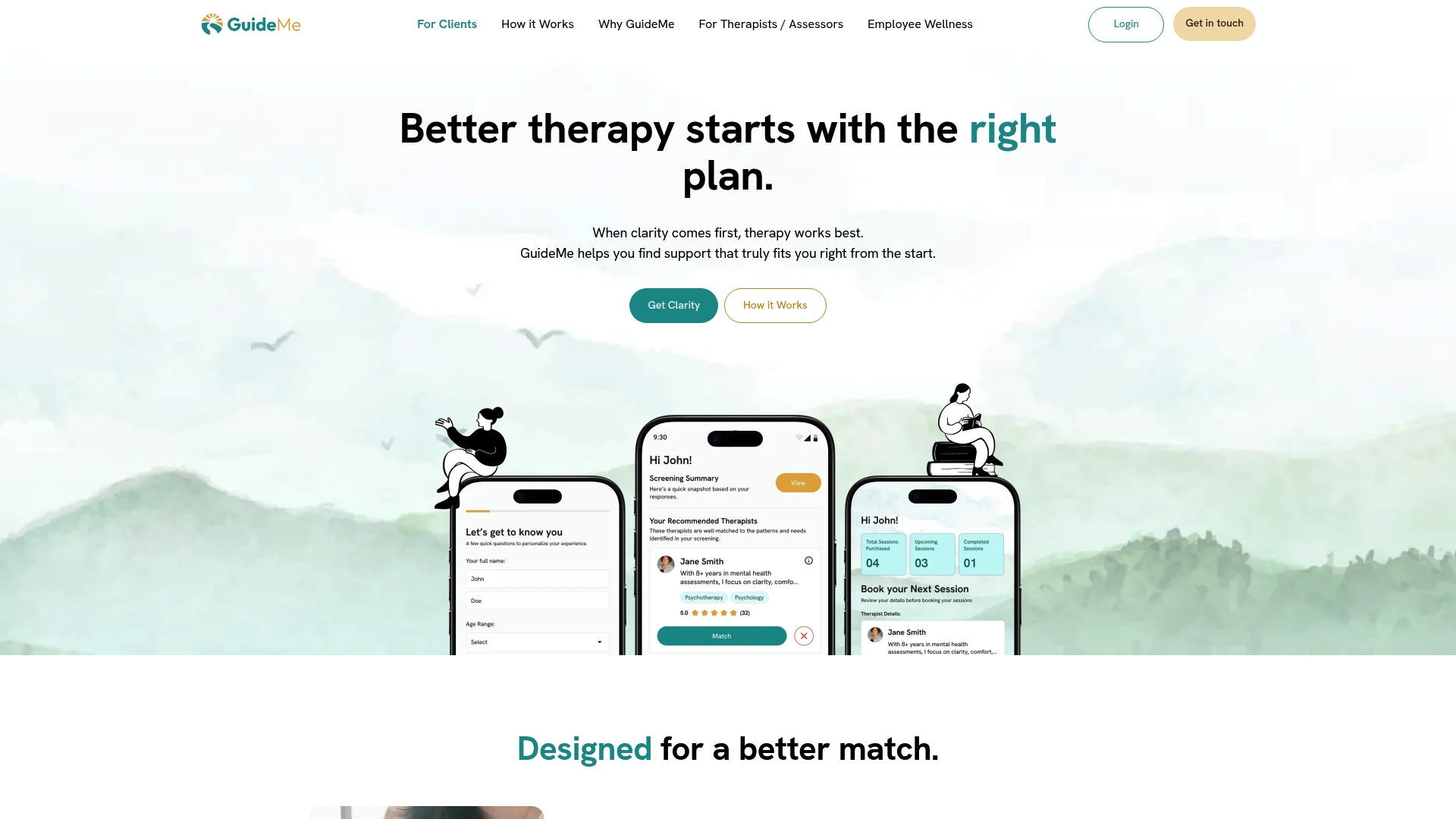
Guidemetherapy is a therapy navigation platform that combines human expertise with AI-powered matching to connect you with the right therapist from the start. If your checklist is flagging persistent low mood, anxiety, or stress, Guidemetherapy creates a personalised therapy plan based on your specific needs and then matches you with a therapist who fits. There is no guesswork and no wasted first sessions. Explore personalised therapy support at Guidemetherapy and take the next step from self-monitoring to professional care.
FAQ
What should a mental wellness checklist include?
A mental wellness checklist should cover mood tracking, physical self-care, reflective practice, social connection, and a safety escalation plan. Research confirms these five areas form the evidence-based foundation of effective daily self-assessment.
How is a mental health checklist different from a clinical diagnosis?
A mental health checklist is a structured self-monitoring tool, not a diagnostic instrument. Validated tools like the PHQ-9 can indicate depression severity, but a clinical diagnosis requires assessment by a qualified healthcare professional.
How often should I review my mental wellness checklist?
Complete daily entries for mood and self-care, then conduct a full pattern review every seven to fourteen days. Separating daily tracking from weekly reviews prevents overreaction to single difficult days and reveals meaningful trends over time.
When should a checklist prompt me to seek professional help?
If your mood score stays consistently low for five or more days, or if any self-harm thoughts arise, contact a GP or therapist promptly. Your checklist should include NHS crisis contacts so you can act immediately rather than waiting to see if things improve.
Can digital apps replace a traditional mental wellness checklist?
Apps enhance a checklist through reminders and data tracking but do not replace it. The WHO's guided self-help model shows that structured human support alongside digital tools produces better outcomes than app use alone.