

TL;DR:
- Effective self-care is personalized, connecting five core areas: physical, mental, emotional, social, and spiritual. Tailoring approaches through deep listening and small, consistent actions improves adherence and overall wellbeing. Professionals emphasize scheduling, tracking, and collaborative planning to help clients sustain their self-care routines long-term.
Self-care is defined as the practice of individuals managing their own health and wellbeing through deliberate, evidence-based choices. The most effective self-care tips for clients are not generic checklists. They are personalised, simple, and connected to each person's daily life. According to WHO guidance, self-care empowers people to manage their health independently through lifestyle changes and evidence-based tools. That means the best client self-care advice starts with understanding the individual, not prescribing a one-size-fits-all routine. Whether you are working with a therapist or building your own wellness practice, the strategies that stick are the ones built around your real life.
What are the five pillars of self-care for clients?
A comprehensive self-care plan is best organised across five areas: physical, mental, emotional, social, and spiritual. Professional guidelines identify these five pillars as the foundation for reducing stress, increasing happiness, and improving relationships. Focusing on all five, rather than just one or two, produces the most lasting results.
Each pillar addresses a different dimension of wellbeing:
- Physical: Sleep, nutrition, hydration, and gentle movement. These form the biological base for everything else.
- Mental: Cognitive stimulation, hobbies, mindful pauses, and learning. Mental self-care keeps the mind engaged and resilient.
- Emotional: Recognising feelings, setting boundaries, and practising relaxation. Emotional self-care builds the capacity to cope with difficulty.
- Social: Meaningful relationships, community involvement, and connection. Social bonds protect against isolation and low mood.
- Spiritual: Personal values, gratitude, and connection with nature or belief. Spiritual self-care provides a sense of meaning and direction.
| Pillar | Core focus | Example activity |
|---|---|---|
| Physical | Body health and energy | 30-minute walk, consistent sleep schedule |
| Mental | Cognitive engagement | Reading, learning a new skill |
| Emotional | Feeling and coping | Journalling, breathing exercises |
| Social | Connection and belonging | Weekly call with a friend |
| Spiritual | Meaning and values | Gratitude practice, time in nature |
No single pillar carries the full load. Clients who focus only on physical self-care often find their emotional or social needs go unmet, which limits overall progress.
How to tailor self-care strategies for diverse client needs
Generic self-care advice does more harm than good. Premature or generic recommendations can alienate clients, particularly those who are neurodivergent or in acute distress, by seeming dismissive of their real struggles. The first step is always deep, active listening.
Therapists and supporters should delay advice until they have a clear picture of the client's current capacity, sensory needs, and daily routine. Tailoring self-care to executive function and current energy levels is critical, especially for neurodivergent clients. A plan that works for one person may feel impossible for another.
Practical ways to personalise self-care strategies include:
- Ask the client what has worked before, even briefly.
- Identify existing daily habits that could anchor new self-care actions.
- Co-create the plan together rather than presenting it as a prescription.
- Start with one change, not five.
- Frame self-care as collaborative data gathering rather than graded homework. This removes performance pressure and encourages honesty.
Pro Tip: Use an "if-then" prompt tied to an existing habit. For example: "If I make my morning coffee, then I will take three slow breaths before I drink it." This micro-habit approach dramatically improves adherence without adding extra time to the day.
For clinicians looking to deepen their approach, supporting therapy clients through collaborative self-care planning produces better outcomes than top-down advice.
1. Prioritise sleep as a non-negotiable foundation
Sleep is the single most impactful physical self-care practice. WHO guidelines identify sufficient sleep as a key component of stress reduction and overall wellbeing. Poor sleep undermines every other self-care effort, from emotional regulation to physical health.
Practical sleep hygiene includes keeping a consistent bedtime, avoiding screens for 30 minutes before sleep, and keeping the bedroom cool and dark. These are not complicated changes. They are consistent ones.
2. Move your body gently and regularly
Gentle physical activity reduces stress hormones and lifts mood. This does not require a gym membership or a structured fitness plan. A 20-minute walk, stretching in the morning, or dancing in the kitchen all count. The key is regularity over intensity.

Clients who struggle with motivation benefit from pairing movement with something they already enjoy, such as listening to a podcast or calling a friend while walking.
3. Hydrate and eat with intention
Hydration and balanced nutrition directly affect mood, concentration, and energy. Clients often underestimate how much dehydration contributes to low mood and poor focus. Drinking water consistently throughout the day is one of the simplest and most underused wellness tips for clients.
Eating with intention does not mean following a strict diet. It means noticing hunger cues, eating regularly, and choosing foods that provide sustained energy rather than quick spikes.
4. Build mental self-care into daily life
Mental self-care keeps the mind active and resilient. Hobbies, creative activities, and learning new skills all serve this function. Even a 10-minute mindful pause, where you step away from screens and simply notice your surroundings, counts as mental self-care.
Clients who feel mentally depleted often benefit most from activities that absorb attention without pressure, such as puzzles, gardening, or cooking a new recipe. These create a state of gentle focus that rests the anxious mind.
Pro Tip: Schedule one "no-agenda" hour per week. No tasks, no screens, no obligations. This protected time trains the nervous system to rest, which is a skill many people have lost.
5. Practise emotional self-care through boundaries and expression
Emotional self-care involves setting boundaries, expressing feelings safely, and using relaxation techniques. These actions build coping skills and resilience when tailored to the client's readiness and preference.
Setting a boundary does not require confrontation. It can be as simple as saying no to one commitment per week, or turning off notifications after 8PM. Small boundaries protect emotional energy over time.
Journalling, creative expression, and talking to a trusted person all provide safe outlets for feelings. Clients who suppress emotions consistently report higher stress levels and poorer physical health outcomes.
6. Invest in social connection
Social connectedness meaningfully complements other self-care pillars, offering resilience and enhanced life satisfaction. Spending time with people who feel safe and supportive is one of the most protective things a person can do for their mental health.
Social self-care does not require large social events. It includes:
- A weekly phone call with a friend or family member.
- Joining a local group around a shared interest.
- Volunteering in the community.
- Simply sitting with someone without an agenda.
For clients who find socialising draining, the goal is quality over quantity. One meaningful connection per week is more valuable than several superficial ones.
7. Explore spiritual self-care on your own terms
Spiritual self-care is the most frequently overlooked pillar. It is not limited to religious practice. Spiritual self-care includes anything that connects a person to a sense of meaning, purpose, or something larger than themselves.
Practical options include:
- A daily gratitude practice, writing down three specific things each morning.
- Spending time in nature without a phone.
- Reflecting on personal values and whether daily choices align with them.
- Meditation, prayer, or quiet contemplation.
Tailoring spiritual self-care to diverse client backgrounds matters. For some clients, nature is the most accessible route. For others, community or creative expression serves the same function. The goal is personal meaning, not a prescribed format.
8. Prioritise self-care when managing stress or mental health challenges
Self-care is a clinical practice for emotional regulation, not an optional luxury. Licensed clinical mental health counsellors stress that self-care must be scheduled and tracked with the same intentionality as a professional appointment. That framing changes everything.
When stress or mental health challenges are acute, the most effective approach is to identify one non-negotiable self-care commitment per day. This might be a 10-minute walk, a glass of water before breakfast, or five minutes of slow breathing. Small and consistent beats ambitious and sporadic.
Tracking emotional shifts alongside self-care activities helps clients and their supporters identify what is working. A simple daily note, rating mood from 1–10 and recording what self-care was practised, provides useful data for adjusting the plan. A mental wellness checklist can provide a structured starting point for this kind of tracking.
Pro Tip: Treat your daily self-care commitment like a medical appointment. Put it in your calendar, set a reminder, and do not reschedule it unless there is a genuine emergency. Consistency is the mechanism, not the size of the action.
Starting with small, realistic actions paired to existing habits improves consistency and avoids the trap of trying to change everything at once. Professional support helps clients build these routines over time and adjust them as circumstances change.
Key takeaways
Effective self-care is a personalised, evidence-based practice built on five pillars, and the strategies that clients actually sustain are simple, specific, and tied to their real daily lives.
| Point | Details |
|---|---|
| Five pillars structure self-care | Physical, mental, emotional, social, and spiritual needs all require attention for lasting wellbeing. |
| Personalisation prevents disengagement | Generic advice alienates clients; co-created, specific plans produce genuine adherence. |
| Small actions outperform grand plans | One realistic daily commitment, tied to an existing habit, builds consistency over time. |
| Self-care is a clinical commitment | Schedule and track self-care like a professional appointment, not an optional extra. |
| Social and spiritual pillars matter | Meaningful connection and personal values are as protective as physical health habits. |
What I have learned about self-care advice that actually lands
I have seen well-meaning advice fall flat more times than I can count. The pattern is almost always the same. Someone receives a list of self-care suggestions, nods politely, and then does none of them. Not because they are lazy or resistant, but because the advice did not fit their life.
The most common mistake is offering self-care tips before truly understanding what a person is carrying. When someone is in crisis or exhausted, being told to "try yoga" or "get more sleep" can feel dismissive, even insulting. The advice is not wrong. The timing and delivery are.
What actually works is starting with curiosity. What does this person's day look like? What do they already do that helps, even a little? What feels possible right now, not in an ideal world? From those answers, you build something real. One small action, tied to something familiar, practised consistently.
I also think we underestimate how much framing matters. When self-care is presented as something you should be doing, it becomes another item on a list of ways you are failing. When it is framed as something you are experimenting with, something you are collecting information about, the pressure lifts. Clients become curious rather than guilty. That shift is where real change begins.
Self-care is not a destination. It is a skill you keep refining. The clients who benefit most are the ones who learn to notice what they need and respond to it, imperfectly and consistently, over time. That is the goal worth working towards.
— Yetty
How Guidemetherapy supports your self-care and mental wellness
Building a self-care practice is easier when you have the right professional support alongside it.
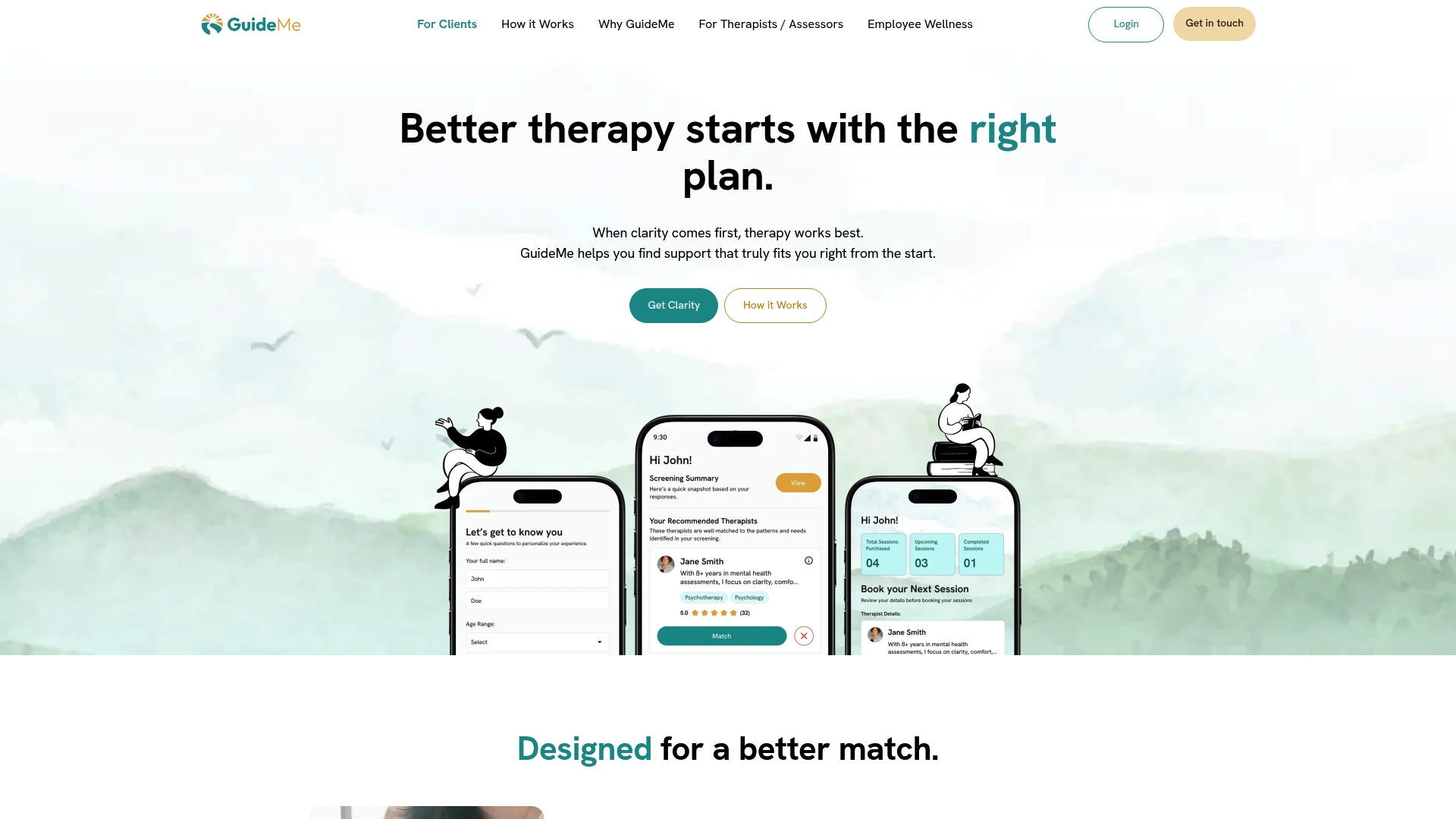
Guidemetherapy is a therapy navigation platform that matches you with the right therapist from the start, using both human expertise and AI to create a more comfortable and supportive experience. Rather than searching alone and hoping for the best, you receive an in-depth therapy plan tailored to your needs. That plan becomes the foundation for self-care strategies that are genuinely yours, not borrowed from a generic guide. If you are ready to build a sustainable wellness routine with professional guidance, find your therapist through Guidemetherapy today.
FAQ
What are the most effective self-care tips for clients?
The most effective self-care tips are personalised, simple, and tied to existing daily habits. Professional guidelines recommend addressing all five pillars: physical, mental, emotional, social, and spiritual.
How do therapists recommend self-care without seeming dismissive?
Therapists should listen deeply before offering any advice, and co-create plans with clients rather than prescribing them. Framing self-care as collaborative exploration removes the pressure that makes clients disengage.
How can clients stick to a self-care routine long term?
Radical simplicity produces the highest adherence. One small, specific "if-then" prompt tied to a familiar daily moment is more sustainable than a multi-step routine.
Is self-care relevant for people with serious mental health challenges?
Self-care is a clinical practice for emotional regulation, not a luxury reserved for mild stress. Licensed counsellors recommend scheduling and tracking self-care with the same commitment as any medical appointment.
How does social self-care differ from simply spending time with people?
Social self-care is intentional. It focuses on meaningful connection rather than quantity of social contact, prioritising relationships that feel safe, supportive, and genuinely nourishing.