

TL;DR:
- Mental health services include therapy, medication, crisis support, and peer programs that vary by care level. Choosing the appropriate service depends on symptom severity, personal preference, and available options, with different therapy modalities targeting specific conditions. Combining care levels, therapy types, and supportive services offers the most effective approach to mental health treatment.
Mental health services are defined as structured forms of care and support designed to assess, treat, and maintain psychological well-being. The most common examples of mental health services include psychotherapy, psychiatric medication, crisis intervention, support groups, and case management. Psychotherapy paired with medication is the most effective way to promote recovery from mental illness. Knowing the full range of options matters because the right service depends entirely on the severity of your symptoms, your circumstances, and what is available to you. This guide covers every major category, from NHS talking therapies and cognitive behavioural therapy (CBT) to the 988 Suicide and Crisis Lifeline and behavioural health urgent care.
1. What are examples of mental health services by care level?

Mental health care is organised into levels based on how much supervision and daily structure a person needs. Care levels range from outpatient to inpatient, with intensive outpatient programmes and partial hospitalisation sitting in between. Understanding these levels before choosing a therapy type prevents people from starting at the wrong point.
The four main levels are:
- Routine outpatient care. Weekly or fortnightly appointments with a counsellor, psychologist, or psychiatrist. This is the most common starting point for mild to moderate symptoms.
- Intensive outpatient programmes (IOP). Structured sessions running three to five days per week over four to six weeks. IOPs suit people who need more support than standard weekly therapy but do not require overnight care.
- Partial hospitalisation programmes (PHP). Five to seven days per week, approximately six hours per day. PHPs provide near-daily clinical contact while allowing people to return home each evening.
- Inpatient acute care. 24-hour supervised care in a hospital setting. Reserved for people in immediate danger or those whose symptoms cannot be safely managed in the community.
Pro Tip: Before selecting a therapy type, identify which care level matches your current symptom severity. Starting at too low a level can delay recovery; starting at too high a level can feel unnecessarily restrictive.
Publicly funded programmes, including NHS services and Medi-Cal in the United States, cover specialty outpatient, day treatment, crisis intervention, residential, and inpatient services. Eligibility criteria vary, so checking coverage before committing to a service is a practical first step.
2. What are the most common therapy modalities in mental health services?
Therapy modalities are the specific psychological approaches used within any care level. The NHS talking therapies programme offers CBT, interpersonal therapy, eye movement desensitisation and reprocessing (EMDR), and mindfulness-based cognitive therapy (MBCT) via in-person, video, or online guided self-help formats. That breadth reflects how different conditions respond to different methods.
The most widely used evidence-based therapy types include:
- Cognitive behavioural therapy (CBT). Targets unhelpful thought patterns and behaviours. Recommended for depression, anxiety, OCD, and PTSD.
- Dialectical behaviour therapy (DBT). Combines CBT with acceptance strategies. Particularly effective for borderline personality disorder and chronic self-harm.
- Exposure therapy. Gradual, structured exposure to feared situations or memories. The primary treatment for phobias, social anxiety, and PTSD.
- Interpersonal therapy (IPT). Focuses on relationship patterns and life transitions. Commonly used for depression and eating disorders.
- Couples therapy. Addresses communication and conflict within relationships. Can be delivered alongside individual therapy.
- EMDR. Uses bilateral stimulation to process traumatic memories. NICE-recommended for PTSD.
- Mindfulness-based cognitive therapy (MBCT). Combines mindfulness practice with CBT techniques. Recommended for people with recurrent depression.
- Guided self-help. Structured workbooks or online programmes, often the first step in NHS stepped care before progressing to face-to-face therapy.
The NHS recommends guided self-help as an initial step, moving to more intensive therapies if symptoms persist. This stepped approach means treatment adapts to you rather than remaining fixed. For a fuller breakdown of how these approaches differ, the Guidemetherapy guide on therapy modalities is a useful reference.
3. What supportive and alternative mental health services are available?
Supportive services sit alongside psychotherapy and medication, and they are not optional extras. Mental Health America classifies support groups, peer support, case management, complementary and alternative medicine (CAM), and self-help plans as distinct mental health service categories in their own right.
- Medication management. A psychiatrist or GP prescribes and monitors psychiatric medication. Antidepressants, mood stabilisers, antipsychotics, and anxiolytics each target different conditions. Medication works best when combined with therapy rather than used alone.
- Support groups. Facilitated gatherings of people sharing a common condition or experience. Groups for depression, addiction, grief, and anxiety are widely available through charities such as Mind and Rethink Mental Illness in the UK.
- Peer support. People with lived experience guide others toward recovery. Peer support workers are now embedded in many NHS community mental health teams.
- Case management. A named professional coordinates care across multiple services. This is particularly valuable for people with complex needs who see several clinicians.
- Complementary and alternative therapies. Yoga, acupuncture, art therapy, and mindfulness retreats are used alongside clinical treatment. Evidence varies by modality, so discussing options with a clinician first is advisable.
- Self-help plans. Written or digital plans that help people identify triggers, coping strategies, and when to seek further help. Often developed collaboratively with a therapist.
Pro Tip: Peer support and support groups are frequently underused. They cost nothing, require no referral in most cases, and provide a form of understanding that clinical appointments alone cannot replicate.
4. How do mental health crisis and urgent care services work?
Crisis services are designed for situations where a person's safety is at immediate risk. The 988 Suicide and Crisis Lifeline is a national crisis phone system in the United States, available 24 hours a day, seven days a week, routing callers to appropriate local services. In the UK, the equivalent is the Samaritans helpline on 116 123, available around the clock.
Beyond phone lines, behavioural health urgent care (BHUC) centres provide a walk-in alternative to emergency departments. Ohio State's BHUC model illustrates how these services work:
- Initial nursing triage on arrival
- Assessment by a mental health clinician
- Short-term therapy and medication management
- Follow-up care for up to two months after the initial visit
Crisis services are not just for the most severe cases. Behavioural health urgent care is designed for people who need more than a GP appointment but do not require hospitalisation. That gap in care is where many people fall through, and BHUC models exist specifically to close it.
Crisis teams in the NHS operate similarly, providing home-based assessment and short-term intensive support as an alternative to inpatient admission. The goal in every model is the same: stabilise the person, then connect them to ongoing care without a gap.
5. How to compare and choose among mental health care options
Choosing the right mental health service depends on three factors: symptom severity, personal preference, and what is available to you. Differentiating care levels from therapy modalities is the clearest way to make that choice. Levels tell you how much support you need; modalities tell you what kind of therapy fits your condition.
| Care level | Typical example | Best suited for |
|---|---|---|
| Routine outpatient | Weekly CBT or counselling | Mild to moderate anxiety or depression |
| Intensive outpatient (IOP) | Three to five sessions per week | Moderate symptoms needing more structure |
| Partial hospitalisation (PHP) | Six hours daily, five to seven days | Severe symptoms, step-down from inpatient |
| Inpatient acute | 24-hour supervised hospital care | Immediate safety risk |
| Crisis and urgent care | Walk-in BHUC or 988 lifeline | Acute crisis without inpatient need |
Recovery plans rarely involve a single service. Step-up and step-down pathways sequence service levels and therapy types rather than treating each appointment in isolation. A person might begin with guided self-help, step up to weekly CBT, and later add a support group as they stabilise.
NHS services are free at the point of access but may involve waiting times. Private therapy offers faster access and greater choice of modality, though costs vary. Many people use both, accessing NHS care for medication and private therapy for specialist modalities such as EMDR or DBT.
Pro Tip: When speaking to a GP or referral service, ask specifically about choosing the right therapy approach for your diagnosis rather than accepting the first available appointment. The modality matters as much as the care level.
Key takeaways
The most effective mental health care combines the right level of supervision with the right therapy modality, planned as a sequence rather than a single appointment.
| Point | Details |
|---|---|
| Care levels define intensity | Outpatient, IOP, PHP, and inpatient care differ by supervision and daily structure, not just setting. |
| Modalities target specific conditions | CBT, DBT, EMDR, and MBCT each address different diagnoses and should be matched accordingly. |
| Supportive services are not optional | Peer support, case management, and self-help plans complement therapy and improve outcomes. |
| Crisis services bridge critical gaps | The 988 lifeline and behavioural health urgent care centres provide structured support between GP and hospital. |
| Stepped care improves outcomes | Sequencing services from guided self-help to intensive therapy produces better results than fixed single treatments. |
Why the distinction between levels and modalities changed how I think about mental health care
People often arrive at therapy having chosen a modality before they have established what level of care they actually need. Someone in acute crisis booking a weekly CBT session is not wrong to want therapy. They are simply starting at the wrong point in the sequence. The level of care has to come first, because it determines whether the therapy can even work.
What I find most underappreciated is the role of crisis follow-up. The period immediately after a crisis or hospital discharge is when people are most vulnerable to relapse, and it is also when continuity of care is most frequently broken. Models like behavioural health urgent care exist precisely because that gap is dangerous. The two-month follow-up window is not a courtesy. It is clinically necessary.
The other thing worth saying plainly: peer support is not a lesser form of care. For many people, speaking to someone who has lived through the same experience carries a weight that no clinical appointment can replicate. Combining peer support with professional therapy is not a compromise. It is often the most effective combination available.
If you are feeling lost about where to start, the honest answer is to identify your current symptom severity first, then match a care level, and only then choose a modality. Professional guidance helps enormously with that sequence.
— Yetty
Finding the right mental health service with Guidemetherapy
Knowing the categories of mental health care is one thing. Finding the right therapist within those categories is another challenge entirely.
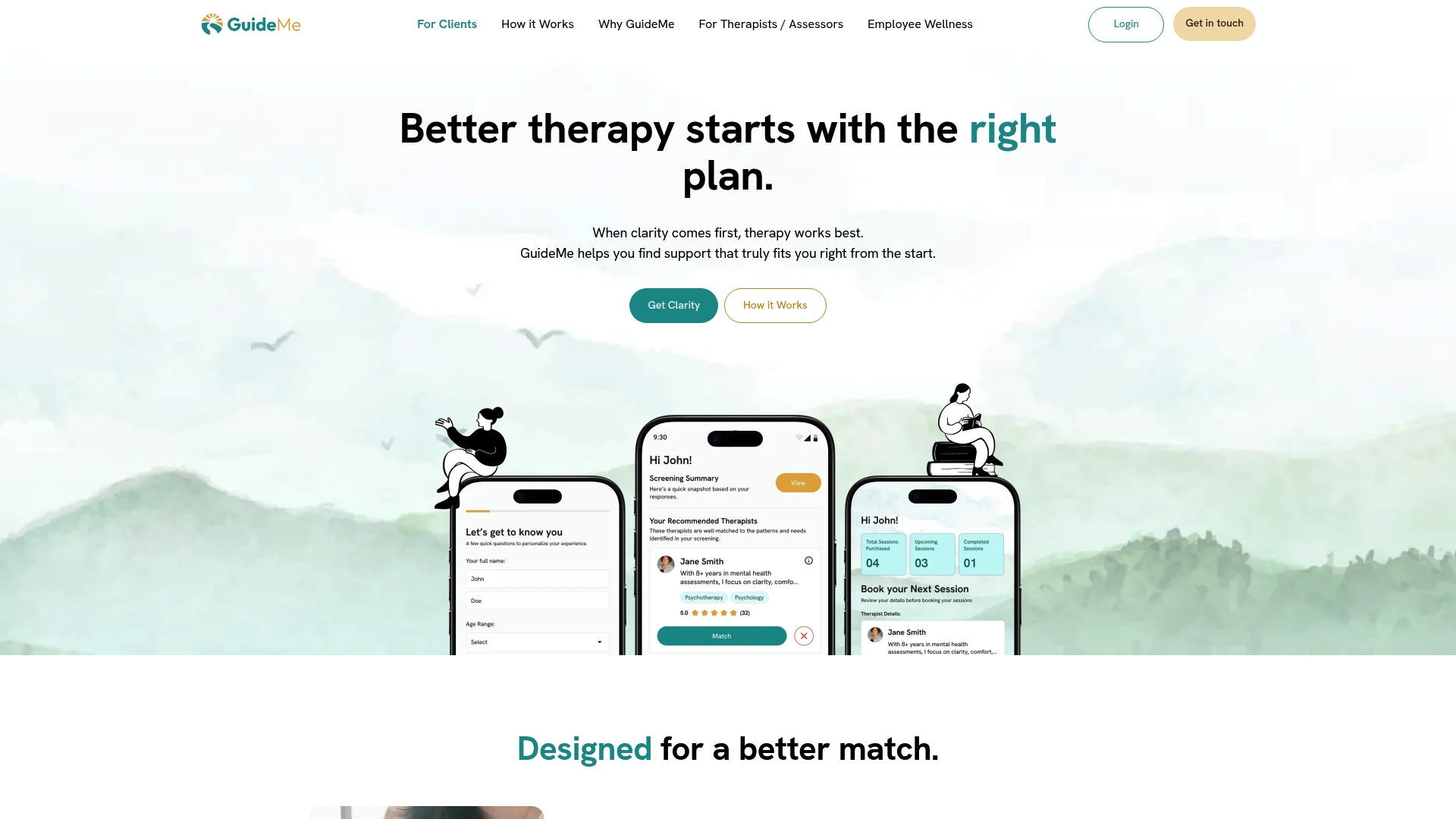
Guidemetherapy is a therapy navigation platform that helps you understand your mental health needs through an in-depth therapy plan, then matches you with a therapist suited to your specific situation. The process is both human-led and AI-powered, which means you get thoughtful matching from the start rather than guesswork. Whether you are looking for CBT, DBT, EMDR, or a specialist in a particular area, Guidemetherapy helps you find the right fit without the confusion of searching alone.
FAQ
What are mental health services?
Mental health services are structured forms of care designed to support psychological well-being, including psychotherapy, medication management, crisis intervention, peer support, and case management. They are organised by care level and therapy type to match individual needs.
What is the difference between outpatient and inpatient mental health care?
Outpatient care involves scheduled appointments without overnight stays, while inpatient care provides 24-hour supervised treatment in a hospital setting for people with immediate safety needs.
Which therapy type is most commonly used in mental health services?
Cognitive behavioural therapy (CBT) is the most widely used psychotherapy, recommended by the NHS for depression, anxiety, OCD, and PTSD across outpatient and online formats.
What is a stepped care model in mental health?
A stepped care model starts with the least intensive intervention, such as guided self-help, and moves to more intensive therapies if symptoms do not improve. The NHS talking therapies programme uses this approach.
How do I access crisis mental health services in the UK?
In the UK, you can contact the Samaritans on 116 123 at any time. NHS crisis teams also provide home-based assessment and short-term intensive support as an alternative to hospital admission.