

TL;DR:
- Evidence-based therapy leverages scientifically proven approaches like CBT, EMDR, and ACT, tailored to individual needs. It emphasizes measurable progress, clinical expertise, and client preferences to ensure effective mental health treatment. Choosing a transparent, skilled therapist committed to ongoing assessment enhances treatment outcomes and personal recovery.
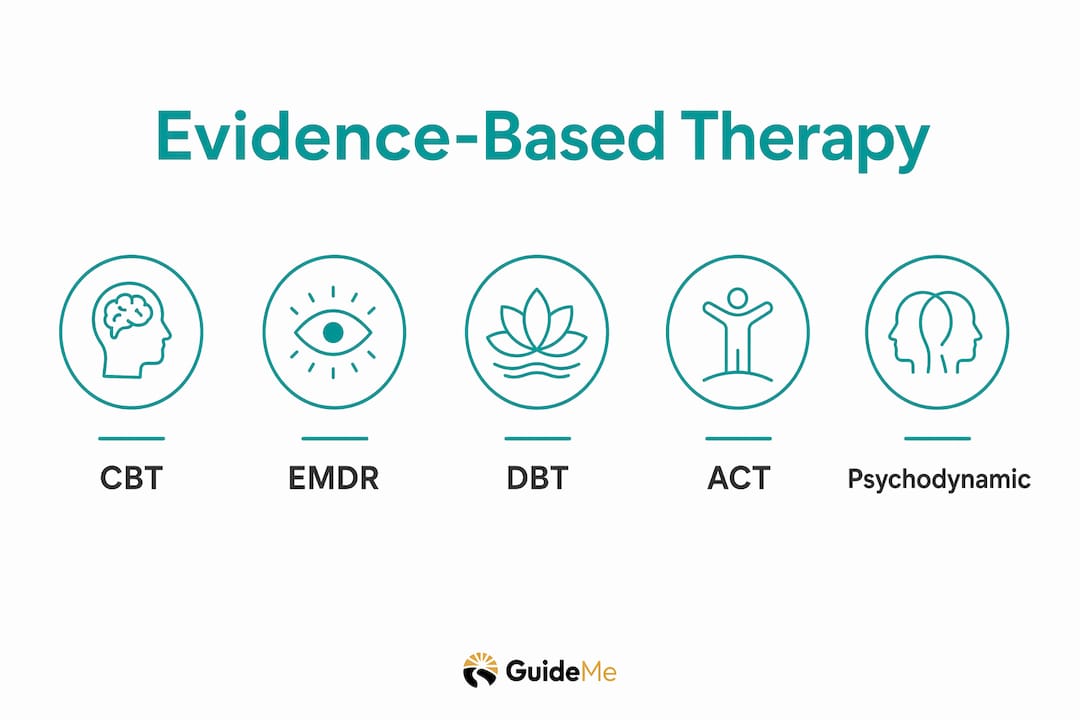
Evidence-based therapy is defined as any therapeutic approach proven effective through rigorous scientific research and deliberately integrated with clinical expertise and individual client preferences. Rather than relying on tradition or intuition alone, it draws on the best available evidence to guide treatment decisions. Common examples include Cognitive Behavioural Therapy (CBT), Dialectical Behaviour Therapy (DBT), Eye Movement Desensitisation and Reprocessing (EMDR), and Acceptance and Commitment Therapy (ACT). Each of these has been tested across thousands of clinical trials. For anyone considering therapy, understanding what evidence-based practice means is the first step towards making a confident, informed choice about your mental health care.
What is evidence-based therapy and why does it matter?
Evidence-based therapy combines rigorous research-supported techniques with clinical expertise and individual preferences to improve mental health effectively. The term comes from the broader field of evidence-based medicine, which the Merck Manual describes as integrating patient values, costs, and individual circumstances rather than applying a fixed protocol to everyone. This distinction matters because it means your therapist is not simply following a script. They are drawing on science while adapting to your specific needs.

The importance of this approach lies in accountability. When a therapy has been tested in randomised controlled trials and peer-reviewed studies, there is a measurable basis for expecting it to work. Without that foundation, it becomes much harder to distinguish genuinely helpful treatment from approaches that simply feel supportive but produce little lasting change. For someone new to therapy, that difference can mean months of progress versus months of uncertainty.
The American Psychological Association (APA) defines evidence-based practice in psychology as the integration of research, expertise, and client needs, with all three elements carrying equal weight. This framework, sometimes abbreviated as EBP, is now the standard expectation in NHS services, private practice, and international clinical guidelines.
What types of evidence-based therapy are there?
Several therapies carry strong evidence bases and are widely recommended by bodies such as the NHS and the National Institute for Health and Care Excellence (NICE). Each targets specific conditions and symptom profiles.
- Cognitive Behavioural Therapy (CBT): The most widely used evidence-based approach, recommended for depression, anxiety disorders, OCD, and PTSD. It focuses on identifying and changing unhelpful thought patterns and behaviours.
- Dialectical Behaviour Therapy (DBT): Originally developed for Borderline Personality Disorder (BPD), DBT combines CBT techniques with mindfulness and distress tolerance skills.
- Eye Movement Desensitisation and Reprocessing (EMDR): NICE-recommended for PTSD. It uses bilateral stimulation to help the brain process traumatic memories.
- Exposure and Response Prevention (ERP): The gold-standard treatment for OCD, involving gradual exposure to feared situations while resisting compulsive responses.
- Acceptance and Commitment Therapy (ACT): Effective for anxiety, depression, and chronic pain, ACT focuses on psychological flexibility and values-based living.
- Cognitive Processing Therapy (CPT): Designed specifically for PTSD, CPT helps clients challenge and reframe trauma-related beliefs.
| Therapy | Primary conditions | Core focus |
|---|---|---|
| CBT | Depression, anxiety, PTSD | Thought and behaviour patterns |
| DBT | BPD, self-harm, emotional dysregulation | Skills training and mindfulness |
| EMDR | PTSD, trauma | Memory reprocessing |
| ERP | OCD | Gradual exposure and response prevention |
| ACT | Anxiety, depression, chronic pain | Psychological flexibility |
| CPT | PTSD | Trauma belief restructuring |
NHS resources and NICE guidelines recommend CBT and EMDR as first-line treatments for PTSD, which means these therapies have cleared the highest bar of clinical scrutiny available in the UK. You can explore a broader overview of these approaches in this guide to counselling approaches for mental health.
Pro Tip: If you are unsure which therapy type suits your situation, ask a prospective therapist to explain which approach they would recommend for your specific symptoms and why. A therapist confident in evidence-based practice will answer this clearly.
How does evidence-based therapy work in practice?
The process of evidence-based therapy is structured but not rigid. It follows a framework that combines research knowledge with ongoing clinical judgement and your personal goals. Here is how a typical course of treatment unfolds:
- Assessment: Your therapist conducts a thorough assessment of your symptoms, history, and goals to identify which evidence-based approach best fits your needs.
- Treatment planning: A clear plan is agreed, including which therapy will be used, what problems it targets, and how progress will be measured.
- Active treatment: Sessions follow the core components of the chosen therapy, such as thought records in CBT or trauma processing in EMDR, while the therapist adapts delivery to your responses.
- Progress monitoring: Standardised measures, such as the PHQ-9 for depression or the PCL-5 for PTSD, are used regularly to track change. This is known as measurement-based care.
- Treatment adaptation: If progress stalls, the therapist adjusts the approach rather than continuing unchanged. This prevents ineffective treatment from continuing unnecessarily.
- Review and closure: At the end of treatment, outcomes are reviewed against the original goals, and a relapse prevention plan is typically developed.
Measurement-based monitoring is a core feature of evidence-based care, used to track progress and adjust treatment based on how a client is responding. This is what separates evidence-based therapy from approaches that rely solely on a therapist's subjective impression of how sessions are going. For a deeper look at how this works, the Guidemetherapy guide on assessing therapy progress covers the key tools and methods in plain language.
Therapist-assisted online psychological therapies have also demonstrated strong evidence, with a 2025 UK randomised controlled trial showing that internet-delivered trauma-focused cognitive therapy (iCT-PTSD) produced significantly greater reductions in PTSD symptoms than stress-management CBT, with dropout rates below 10%. This means evidence-based therapy is not confined to a therapy room. It can be delivered effectively online without sacrificing clinical rigour.
Pro Tip: Ask your therapist at the outset how they will measure your progress. If they cannot name a specific tool or method, that is worth exploring further before committing to a course of treatment.
What are the benefits and limitations of evidence-based therapy?
The benefits of evidence-based approaches are well documented. They offer structured, measurable treatment with a clear rationale, practical skills that clients can use independently, and outcomes that have been tested across diverse populations.
A 2026 systematic review and meta-analysis of 149 randomised trials for autism spectrum disorder found that nonpharmacological interventions produced significantly larger effect sizes than pharmacological treatments (Hedges' g = 0.70 versus 0.20). This finding confirms that psychological, evidence-based interventions can outperform medication for certain conditions, which is a significant consideration for anyone weighing their treatment options.
Real-world NHS data reinforces this picture. An 11-year evaluation of NHS Talking Therapies found that CT-PTSD and EMDR achieved similar recovery rates of approximately 41 to 44%, with CT-PTSD showing slightly greater reductions in anxiety and depression symptoms. This means that for PTSD, two different evidence-based therapies can produce comparable outcomes, making personal preference and therapist relationship important factors in choosing between them.
| Benefit | What it means for you |
|---|---|
| Scientifically validated | Treatment has been tested in clinical trials, not just anecdotal reports |
| Measurable outcomes | Progress is tracked with standardised tools, not guesswork |
| Practical skills | You leave therapy with techniques you can apply independently |
| Adaptable delivery | Can be delivered face-to-face, online, or in group formats |
Evidence-based therapy does have limitations worth acknowledging. Outcomes vary across individuals, and heterogeneity in trial results means that what works well on average may not work as well for every person. The Merck Manual notes that evidence-based medicine must account for patient values and individual circumstances, which is why clinical expertise and the therapeutic relationship remain critical alongside the research evidence.
"The absence of an 'evidence-based' label does not automatically mean a therapy is ineffective. It does mean there is less certainty about its outcomes, and that matters when you are investing time, money, and emotional energy in treatment."
Pro Tip: When evaluating a therapist, ask directly which evidence-based approaches they are trained in and how they stay current with new research. A good therapist will welcome this question.
How to choose the right evidence-based therapy for you
Choosing the right approach starts with understanding your own situation. A formal diagnosis or a clear description of your primary symptoms gives a therapist the information needed to recommend the most appropriate evidence-based method. Someone experiencing PTSD, for example, would be best served by a trauma-focused therapy such as EMDR or CPT rather than a general anxiety management programme.
Several practical factors also shape the decision. These include your preference for individual or group therapy, whether you want face-to-face or online sessions, your cultural background and communication preferences, and the availability of specific therapists in your area. The APA's evidence-based practice framework explicitly includes client characteristics and preferences as equal partners alongside research evidence and clinical expertise.
Before committing to a therapist, consider asking the following questions:
- Which evidence-based approaches do you use, and are they recommended for my specific concerns?
- How will you measure my progress throughout treatment?
- How long would a typical course of therapy last, and what would indicate it is working?
- What happens if I am not making progress after a set number of sessions?
- Are you open to adjusting the approach if it is not meeting my needs?
These questions are not confrontational. They are a reasonable expectation of any professional offering evidence-based care. A therapist who is transparent about their methods, tracks your progress, and adapts when needed is one who takes the evidence seriously. You can also explore the Guidemetherapy guide on types of therapists to understand which professional background and training best aligns with your needs.
Ongoing assessment matters throughout treatment, not just at the start. Effective evidence-based therapists explain therapy targets, active treatment components, and use progress measurement to adapt care as needed. Treatment plans should be reviewed regularly, and you should feel informed and involved at every stage.
Key takeaways
Evidence-based therapy works because it combines scientific research, clinical expertise, and your personal preferences to produce measurable, reliable mental health outcomes.
| Point | Details |
|---|---|
| Clear definition | Evidence-based therapy integrates research, clinical skill, and client preferences rather than tradition alone. |
| Major therapy types | CBT, DBT, EMDR, ERP, ACT, and CPT each target specific conditions and are supported by clinical trials. |
| Progress tracking | Measurement-based care uses standardised tools to monitor outcomes and adjust treatment when needed. |
| Comparable outcomes | For conditions like PTSD, different evidence-based therapies can achieve similar recovery rates, making personal fit important. |
| Informed choice | Asking therapists about their evidence base and progress measurement methods is a reasonable and worthwhile step. |
Why evidence-based therapy changed how I think about mental health treatment
I used to assume that a good therapist was simply one who listened well and made you feel understood. That matters, of course. But after years of working in and around mental health services, I have come to believe that warmth without structure is not enough. The clients who make the most sustained progress are almost always those whose therapists can name exactly what they are doing, why they are doing it, and how they will know if it is working.
The most common misconception I encounter is that evidence-based therapy is cold or mechanical, as though following research means ignoring the person in front of you. The opposite is true. The APA's EBP framework places client preferences and individual characteristics at the centre of treatment decisions. The research tells you what is likely to work. The therapist and client together decide how to apply it.
I also think people underestimate how much the evolving nature of research works in their favour. Therapies are updated as new evidence emerges. iCT-PTSD, for example, did not exist a decade ago. The fact that therapists trained in evidence-based approaches actively engage with new findings means your treatment reflects current knowledge, not methods from thirty years ago.
My honest advice: go into therapy informed. Know what approach your therapist is using, understand why it is recommended for your situation, and expect your progress to be tracked. You are not being demanding by asking these things. You are being a good advocate for yourself.
— Yetty
Find the right evidence-based therapist with Guidemetherapy
Starting therapy feels clearer when you know what to look for. Guidemetherapy is a therapy navigation platform that helps you understand your mental health needs and get matched with a therapist who uses approaches that are right for your situation.

The platform combines human expertise with AI-powered matching to connect you with therapists trained in evidence-based methods such as CBT, EMDR, and DBT. You receive a personalised therapy plan before you even speak to a therapist, so you arrive at your first session with context and confidence rather than uncertainty. Progress tracking is built into the process, so you and your therapist can see what is working and adjust when needed. Start with Guidemetherapy and take the first step towards treatment that is grounded in evidence and tailored to you.
FAQ
What is evidence-based therapy in simple terms?
Evidence-based therapy is any therapeutic approach that has been proven effective through scientific research and is applied with clinical expertise and consideration of the client's individual needs and preferences.
How is evidence-based therapy different from traditional therapy?
Traditional therapy may rely on a therapist's training, experience, or theoretical orientation without a formal research foundation. Evidence-based therapy requires that the approach has been tested in clinical trials and shown to produce measurable improvements for specific conditions.
Which evidence-based therapy is best for anxiety?
CBT is the most widely recommended evidence-based therapy for anxiety disorders, supported by NICE guidelines and extensive clinical trial data. ACT is also strongly evidenced for anxiety, particularly where psychological flexibility and avoidance are central issues.
Can evidence-based therapy be delivered online?
Yes. A 2025 UK randomised controlled trial found that internet-delivered trauma-focused therapy produced significant reductions in PTSD symptoms with dropout rates below 10%, demonstrating that online delivery does not reduce clinical effectiveness.
How do I know if my therapist is using evidence-based methods?
Ask your therapist directly which evidence-based approach they are using for your specific concerns and how they will measure your progress. A therapist practising evidence-based care will be able to answer both questions clearly and specifically.