

Therapist-led holistic therapy is professional psychotherapeutic care that treats you as a whole person, addressing mind, behaviour, emotions, and lifestyle together, rather than focusing on a single symptom in isolation. It is delivered by qualified, registered therapists and sits firmly within clinical mental health care. It is not reflexology, aromatherapy, or any spa-based treatment. If you are ready to take the next step:
- Verify accreditation — check any therapist's registration with BACP, UKCP, or HCPC before booking.
- Prepare a brief description of your main concerns, key triggers, and what you hope to change.
- Book an initial call or use Guidemetherapy to get matched with a verified therapist who works with whole-person approaches.
Table of Contents
- What does therapist-led holistic therapy actually include?
- What happens in a holistic therapy session?
- How does holistic therapy fit with clinical and medical treatment?
- Which UK professionals offer this care, and how do you verify them?
- How to find and match with a holistic therapist in the UK
- Research and expert insights that support this approach
- Key takeaways
- Guidemetherapy helps you find a verified holistic therapist
What does therapist-led holistic therapy actually include?
The clinical term most practitioners use is integrative or person-centred therapy, and it describes a structured approach where a qualified therapist draws on multiple evidence-based methods to address your psychological, behavioural, and lifestyle needs together. The holistic model in mental health combines psychological therapies, physical health awareness, social support, and mind-body practices to support long-term wellbeing.
What it does not include is equally important. The table below makes the boundary clear.
| Dimension | Therapist-led holistic therapy | Complementary/spa treatments |
|---|---|---|
| Who delivers it | Registered psychotherapist, counsellor, or psychologist | Complementary practitioner (no clinical registration required) |
| Regulatory oversight | BACP, UKCP, HCPC, BPS | None mandatory in the UK |
| Core methods | CBT, trauma-informed therapy, transdiagnostic formulation, somatic techniques | Massage, Reiki, aromatherapy, reflexology |
| Goal | Lasting psychological change and functional improvement | Relaxation or symptomatic relief |
| Suitable for | Anxiety, depression, trauma, relational difficulties, complex presentations | General wellness |
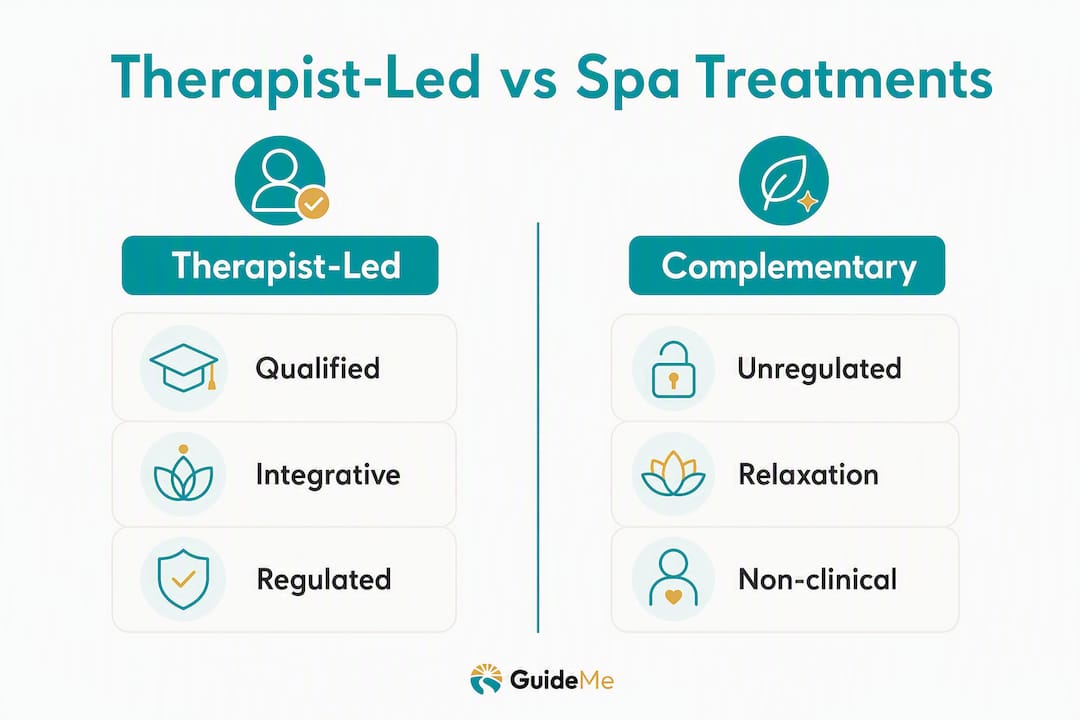
Common components a therapist might integrate include talk therapy modalities, lifestyle and sleep planning, social support coordination, and somatic or mindfulness techniques where clinically indicated. Read more about the range of approaches in this overview of counselling approaches for better mental health.

What happens in a holistic therapy session?
The first appointment is an assessment, not a treatment session. Your therapist gathers a picture of your history, current difficulties, and goals. From that, they build a collaborative formulation: a shared explanation of what is maintaining your distress and what factors, psychological, social, and lifestyle-related, need to be addressed.
Ongoing sessions follow a rhythm:
- Assessment (usually sessions 1–2): history, risk, goals, and initial formulation.
- Intervention phase: agreed therapeutic work using evidence-based methods. Transdiagnostic, trauma-informed frameworks allow clinicians to address root contributors across diagnostic categories, enabling highly personalised plans rather than treatment by label alone.
- Regular reviews: progress is measured against shared goals, and the plan is adjusted.
- Ending and relapse prevention: a planned conclusion with strategies to maintain gains.
Modalities commonly woven into this work include Cognitive Behavioural Therapy (CBT), trauma-informed approaches such as EMDR, person-centred and psychodynamic methods, and somatic techniques where appropriate. Your role throughout is active: you give feedback, co-set goals, and flag when something is not working. The therapeutic relationship itself is a primary predictor of good outcomes, so your comfort and sense of safety in sessions genuinely matters.
How does holistic therapy fit with clinical and medical treatment?
Therapist-led integrative care complements, rather than replaces, medical treatment. Whole-person strategies add lifestyle and body awareness to conventional therapy to build sustainable wellbeing, but they work alongside medication and specialist services, not instead of them.
There are clear situations where involving your GP, a psychiatrist, or crisis services is the right call:
- Severe or rapidly worsening mood disorders where medication may be indicated
- Any presentation involving suicidal ideation or risk of harm
- Psychosis, bipolar disorder, or eating disorders requiring specialist input
- Medication changes that need medical supervision
NICE guidelines provide evidence-based recommendations for specific conditions, and NHS talking therapies (formerly IAPT) offer a structured pathway for depression and anxiety. A good therapist will know their scope of practice and refer proactively when clinical need exceeds what therapy alone can address.
Which UK professionals offer this care, and how do you verify them?
In the UK, anyone can legally call themselves a counsellor or psychotherapist without formal training. Checking professional body membership is the only reliable way to confirm training, ethics, and supervised clinical experience.
| Practitioner title | What it indicates | Register or body to check |
|---|---|---|
| Counsellor / Psychotherapist | Trained in talk therapy; scope varies by modality | BACP or UKCP member directory |
| Clinical or Counselling Psychologist | Doctoral-level training; broad clinical scope | HCPC register (protected title) |
| CBT Therapist | Trained specifically in Cognitive Behavioural Therapy | BABCP accreditation |
| Mental Health and Wellbeing Practitioner | New NHS role focused on guided self-help and low-intensity work | NHS employer or HCPC |
| Integrative Psychotherapist | Trained across multiple modalities | UKCP or BACP |
At first contact, ask these three questions:
- "Are you registered with BACP, UKCP, or HCPC, and can you share your membership number?"
- "Do you receive regular clinical supervision?"
- "What is your experience working with whole-person or integrative approaches?"
How to find and match with a holistic therapist in the UK
Finding the right therapist takes a few deliberate steps. Rushing straight to a booking without screening first is where many people lose time and money.
- Decide NHS or private. NHS talking therapies are free but carry waiting times. Private therapy offers faster access but comes at a cost; check BACP guidance or Guidemetherapy for current private fee ranges, as these vary by location and practitioner experience.
- Search verified directories — Use the BACP therapist directory, the UKCP Find a Therapist tool, or Guidemetherapy's matched search.
For a detailed matching checklist, the step-by-step guide to choosing the right therapist on the Guidemetherapy blog covers sample questions and what good responses sound like.
Red flags to watch for: a therapist who cannot name their professional body, who discourages you from seeking a second opinion, who promises a cure or a fixed number of sessions without assessment, or who blurs professional boundaries.
How to prepare for your first appointment
Bring a brief written summary of your main concerns (three to five bullet points is enough), any current medication, and a rough sense of what you want to be different after therapy. You do not need a diagnosis or a polished explanation.
When describing your difficulties, focus on themes and triggers rather than a full history. "I've been struggling with low mood and withdrawing from people since a difficult period at work last year" gives a therapist more to work with than a detailed chronology.
Pro Tip: Use the first session to notice how the therapist responds to you, not just what they say. Do they reflect back what you have shared accurately? Do you feel heard? That sense of being understood is one of the strongest early indicators of a productive working relationship.
Research and expert insights that support this approach
The evidence base for integrative, transdiagnostic, and trauma-informed practice has grown considerably. Cambridge research published in the BJPsych Bulletin demonstrates that trauma-informed, transdiagnostic approaches personalise care and address root causes across presentations, rather than treating diagnostic labels in isolation.
BACP and UKCP both emphasise that the therapeutic relationship, not the modality alone, drives outcomes. Their accreditation standards require ongoing clinical supervision and continuing professional development (CPD) as non-negotiable conditions of membership.
Yetty, author and contributor at Guidemetherapy, has written practical explainers on integrative therapy and personalised therapy planning to help readers understand how these approaches work in practice.
Key takeaways
Therapist-led integrative care treats mind, behaviour, and lifestyle together, and finding a verified, well-matched practitioner is the single most important step you can take.
| Point | Details |
|---|---|
| Verify accreditation first | Check BACP, UKCP, or HCPC membership before booking any therapist. |
| Scope matters | Therapist-led holistic therapy is clinical psychotherapeutic care, not complementary or spa treatment. |
| Therapeutic relationship predicts outcomes | If the fit feels wrong after a few sessions, seeking a different therapist is standard practice. |
| NHS and private routes both exist | NHS talking therapies are free with waiting times; private therapy offers faster access at a cost. |
| Guidemetherapy matches you to verified therapists | The platform screens for qualifications, integrative approach, supervision, and relevant experience. |
A note on why this guide exists
At Guidemetherapy, we see how often people arrive at therapy feeling lost, unsure whether the person they have found is qualified, or whether the approach will actually address what they are going through. This guide exists because clarity at the start of the process makes a real difference. We built the platform around clinical verification and personalised matching precisely because a good therapeutic fit is not a nice extra; it is what makes therapy work. If you try a therapist and the fit is not right, that is not a failure. It is part of finding the right support, and we are here to help you do that safely.
Guidemetherapy helps you find a verified holistic therapist
Feeling clearer about what you need is only useful if you can act on it. Guidemetherapy takes the search work off your plate: the platform combines AI-assisted screening with human-led matching to connect you with therapists who have been verified for qualifications, integrative approach, clinical supervision, and relevant experience.
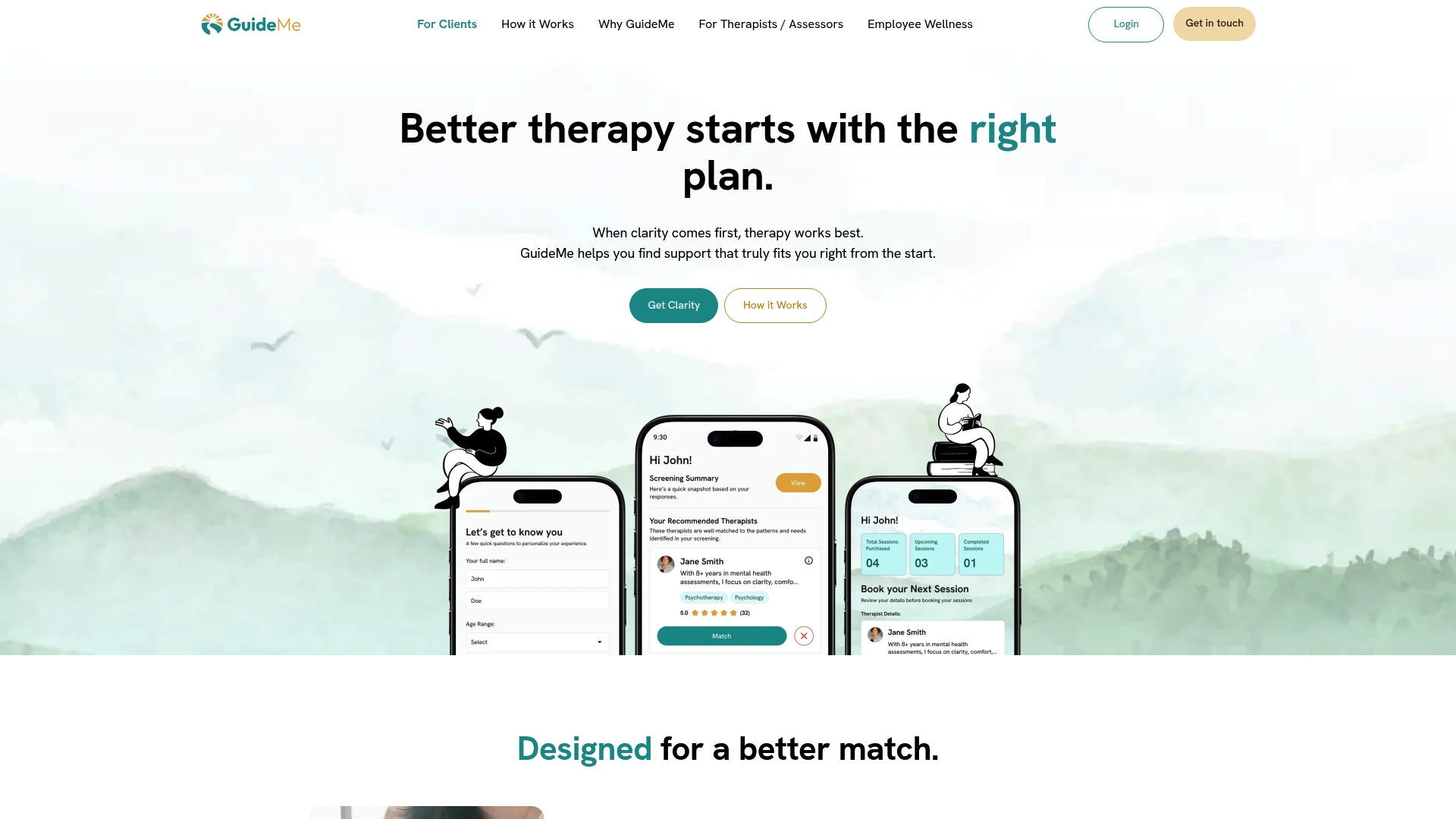
Getting started takes three steps:
- Complete a short intake screening so the platform understands your needs and goals.
- Receive matched therapist options, each verified for BACP, UKCP, or HCPC membership where applicable.
- Book your initial assessment session directly through the platform.
Guidemetherapy also supports organisations looking for employee mental health solutions, with corporate packages that give teams access to verified, whole-person care. Start your match at Guidemetherapy and move from uncertainty to a therapist who is right for you.
Authoritative UK sources and further reading
These official sources are worth bookmarking. They are regularly updated and carry the authority of professional bodies or the NHS.
- BACP therapist directory — search accredited counsellors and psychotherapists; the directory confirms current membership status.
- HCPC register — the statutory register for clinical psychologists and other protected titles; check here before booking a psychologist.
- NHS talking therapies — the NHS pathway for depression and anxiety; self-referral is available in most areas of England.
- NICE mental health guidelines — evidence-based recommendations by condition; useful for understanding what treatments are recommended for specific presentations.
Always check a therapist's registration directly on the relevant register rather than relying on self-claimed titles alone.
This article provides general information about therapist-led holistic therapy and is not a substitute for professional clinical advice. Please consult a qualified mental health professional or your GP for guidance specific to your situation.