

TL;DR:
- Therapy enhances diversity and inclusion by addressing mental health barriers rooted in systemic disadvantages.
- Effective therapy requires cultural competence, ongoing training, and attention to social determinants impacting employee wellbeing.
Therapy is a direct tool for advancing diversity and inclusion by addressing the mental health barriers that prevent employees from fully participating in workplace life. The role of therapy in diversity and inclusion goes beyond symptom management. It requires culturally competent practice, sometimes called multicultural counselling, that accounts for race, identity, and systemic disadvantage. Over 80% of people with psychosis report loneliness, which shows how deeply social exclusion damages mental health. For HR leaders, this is not a clinical concern alone. It is an organisational one. When employees feel excluded, their wellbeing and performance suffer. Therapy, structured correctly, addresses both.
How does therapy support cultural competence and racial trauma at work?

Cultural competence is the foundation of effective therapy in diverse workplaces. Without it, therapy can cause harm rather than help. Dr Kenneth Hardy describes this risk as racial malpractice, a term for the damage done when therapists engage clients of colour without the skills to do so responsibly. That framing should concern any HR leader commissioning mental health support for a diverse workforce.
Clients of colour carry intersecting identities that compound their risk and limit their access to care. Race intersects with gender, sexuality, disability, immigration status, religion, and class. A therapist who treats these as separate issues, or ignores them entirely, misses the full picture of what the client is experiencing.
Hardy identifies six relational skills, which he calls "relational muscles," that therapists must develop to work effectively with racial trauma:
- Initiating conversations about race without waiting for the client to raise it
- Tolerating the discomfort that comes with discussing racism openly
- Understanding how systemic racism shapes individual experience
- Recognising their own racial identity and its effect on the therapeutic relationship
- Holding space for grief, anger, and loss connected to racial harm
- Responding to emergent racial content throughout the therapy process, not just at the start
Pro Tip: When commissioning employee mental health support, ask providers directly whether their therapists have training in racial trauma. Vague answers about "cultural sensitivity" are not sufficient.
The concept of "broaching" is equally important. Broaching means the therapist actively raises cultural and racial topics rather than waiting for the client to do so. Effective broaching improves client empowerment and therapeutic outcomes. It signals to the client that their full identity is welcome in the room. For employees from marginalised groups, that signal matters enormously.
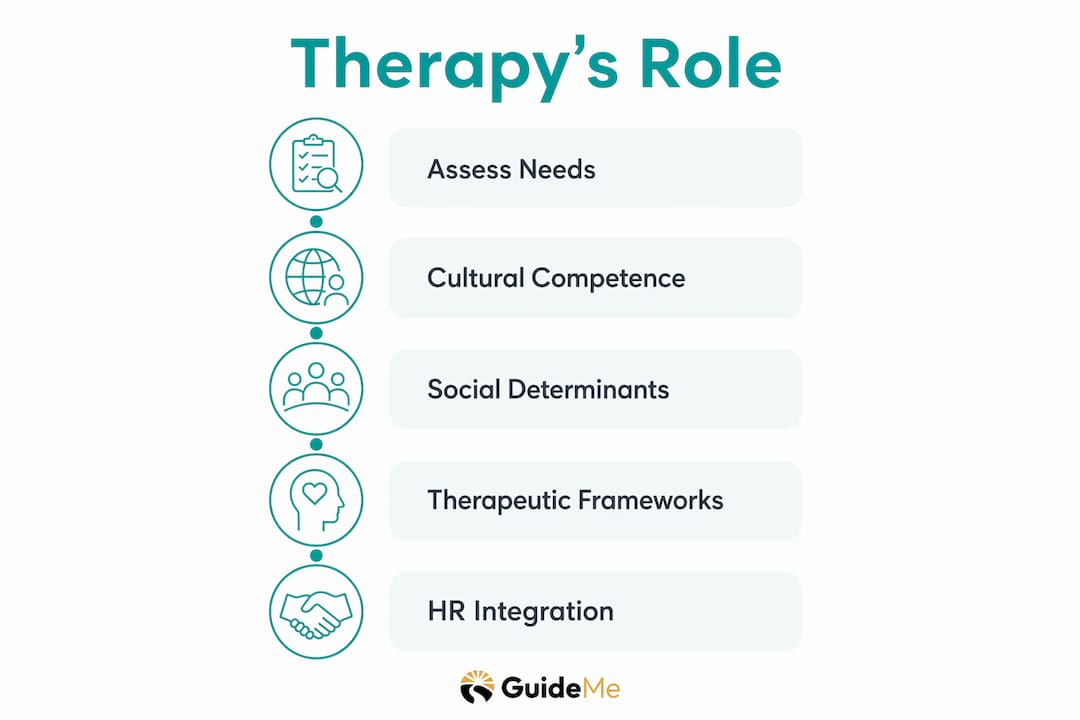
Why do social determinants of mental health matter for inclusion?
Social determinants of mental health, often abbreviated as SDoMH, are the conditions outside the clinic that shape a person's psychological wellbeing. Housing stability, economic security, community participation, and employment quality all affect mental health directly. Therapy that ignores these factors treats symptoms without addressing causes.
For HR leaders, this has a practical implication. Mental health support that focuses only on individual coping skills will not close equity gaps in a workforce where some employees face structural disadvantages others do not. 33% of households with a person experiencing severe mental illness face food insecurity, double the rate of the general population. That statistic shows how economic exclusion and mental health are inseparable.
Frameworks like the Motivational Model of Broaching Behaviour (MMBB) give therapists a structured way to address SDoMH within sessions. The MMBB approach involves four steps:
- Assess the client's social context, including housing, finances, and community ties
- Contextualise their lived experience within systemic factors, not personal failings
- Address emergent needs as they arise throughout the therapeutic relationship
- Reflect on progress and adjust the approach based on the client's changing circumstances
| Social determinant | Impact on mental health | Therapy's role |
|---|---|---|
| Housing instability | Increases anxiety and chronic stress | Contextualise within sessions; connect to support services |
| Economic insecurity | Linked to depression and reduced help-seeking | Address shame; support access to financial resources |
| Community exclusion | Drives loneliness and low self-worth | Build social confidence; validate identity |
| Employment quality | Poor conditions worsen psychological safety | Explore workplace dynamics; support boundary-setting |
Mental health support must be a cross-sectoral strategy that treats housing, employment, and community participation as prerequisites for wellbeing. Therapy alone cannot fix structural problems, but it can equip employees to navigate them and give HR leaders clearer insight into where systemic change is needed.
Pro Tip: Ask your therapy provider whether their practitioners are trained to identify and respond to social determinants. If the answer is "we focus on the individual," that is a gap worth addressing.
Which therapeutic frameworks best support diversity and inclusion outcomes?
Several therapeutic frameworks address the impact of therapy on diversity with varying degrees of effectiveness in organisational settings. Understanding the differences helps HR leaders make informed decisions about which models to commission.
The Integrated Multicultural Counselling and Psychotherapy (IMCAP) framework is one of the most evidence-backed options. Structured, culturally adapted psychotherapy like IMCAP improves treatment adherence and reduces symptoms in diverse populations. It combines community collaboration with continuous monitoring, which makes it well suited to workplace settings where employees may be reluctant to engage with mental health support.
Multicultural counselling, as shaped by the multicultural and social justice counselling movement, has reshaped therapy practice significantly. The multicultural turn in psychotherapy has brought genuine benefits but also created tensions around philosophical humility and empirical integrity. Some practitioners find the ideological framing challenging to balance with client-centred practice. HR leaders should be aware that not all therapists navigate this balance equally well.
Integrative therapy draws on multiple modalities and adapts to the individual client's needs. This flexibility makes it particularly useful for diverse workforces where no single approach fits every employee. The limitation is that quality depends heavily on the individual therapist's training and self-awareness.
Workplace-focused therapy programmes that embed therapists within organisational structures, rather than referring employees to external services, tend to produce stronger engagement. Proximity reduces the barrier of seeking help. Employees are more likely to use support that feels part of their working environment rather than separate from it.
What practical steps can HR leaders take to embed therapy in D&I strategies?
Embedding therapy into diversity and inclusion strategies requires deliberate planning, not just a referral to an employee assistance programme. The following steps give HR leaders a clear path forward.
- Audit current provision. Map what mental health support already exists and identify who is using it. If uptake is low among employees from marginalised groups, that is a signal that the provision is not meeting their needs.
- Set cultural competence standards. Require therapy providers to demonstrate that their practitioners have specific training in racial trauma, intersectionality, and SDoMH. Generic counselling qualifications are not sufficient for diverse workforces.
- Train line managers. Managers are often the first point of contact for employees in distress. Training them to recognise signs of exclusion-related stress and to signpost support without stigma is a practical step that costs relatively little.
- Create feedback loops. Collect anonymised data on therapy engagement and outcomes, broken down by demographic group. Use this to identify equity gaps and adjust provision accordingly.
- Integrate, do not silo. Mental health support and inclusion initiatives should inform each other. A D&I team that does not speak to the mental health provider is missing critical information about employee experience.
Equity-centred care requires explicit reflection on power, bias, and structural barriers within health services. That principle applies directly to how organisations commission and deliver therapy. Reflective practice and active listening to diverse voices reduce inequities in mental health outcomes.
Pro Tip: Run a short anonymous survey asking employees from underrepresented groups whether they feel current mental health support reflects their experience. The responses will tell you more than any utilisation report.
Breaking barriers to therapy access is not just about removing cost. It is about removing cultural distance. Employees need to believe that the therapist they see will understand their world. That belief starts with the organisation's choices about who it commissions.
Key takeaways
Therapy advances diversity and inclusion when it is culturally competent, addresses social determinants of mental health, and is embedded deliberately within organisational strategy rather than treated as a standalone benefit.
| Point | Details |
|---|---|
| Cultural competence is non-negotiable | Therapists without racial trauma training risk causing harm to clients of colour. |
| Social determinants shape outcomes | Housing, economic security, and community exclusion directly affect employee mental health. |
| Framework choice matters | IMCAP and integrative approaches improve adherence in diverse populations more than generic counselling. |
| Audit and feedback close equity gaps | Anonymised demographic data on therapy uptake reveals where provision is failing. |
| Integration beats siloing | D&I and mental health strategies must inform each other to produce equitable outcomes. |
Where organisations get this wrong: a perspective from experience
Working with organisations on mental health and inclusion, the same mistake appears repeatedly. Leaders treat the two as parallel tracks that never meet. The D&I team runs awareness campaigns. The HR team commissions an employee assistance programme. Neither team talks to the other. The result is a workforce where marginalised employees receive generic therapy that does not reflect their experience, and inclusion initiatives that do not account for the psychological weight of exclusion.
The most damaging version of this is what researchers call "colour-blind" policy. Leaders believe that offering the same support to everyone is fair. It is not. An employee navigating racial trauma at work needs something different from an employee managing workload stress. Treating those needs as equivalent does not create equity. It widens the gap.
What I have seen work is when a senior leader, usually the HR Director or Chief People Officer, takes personal ownership of the connection between mental health and inclusion. They ask the therapy provider hard questions. They review demographic data on uptake. They fund training for managers that goes beyond awareness into genuine skill-building. That level of engagement changes the culture, not just the policy.
The broaching technique is a useful indicator of quality. When a therapist raises cultural and racial topics proactively, it signals that the employee's full identity is welcome. When they wait for the employee to raise it, or never do, the message is the opposite. HR leaders can ask providers directly how their therapists approach this. The answer reveals a great deal about the quality of care on offer.
Culturally competent therapy is not a niche requirement for large organisations with diverse workforces. It is the baseline standard for any organisation that takes inclusion seriously.
— Yetty
How Guidemetherapy helps organisations connect employees with the right support
Matching employees with a therapist who genuinely understands their background and needs is harder than it sounds. Most referral processes rely on availability rather than fit, and that mismatch is one of the main reasons employees disengage from mental health support.
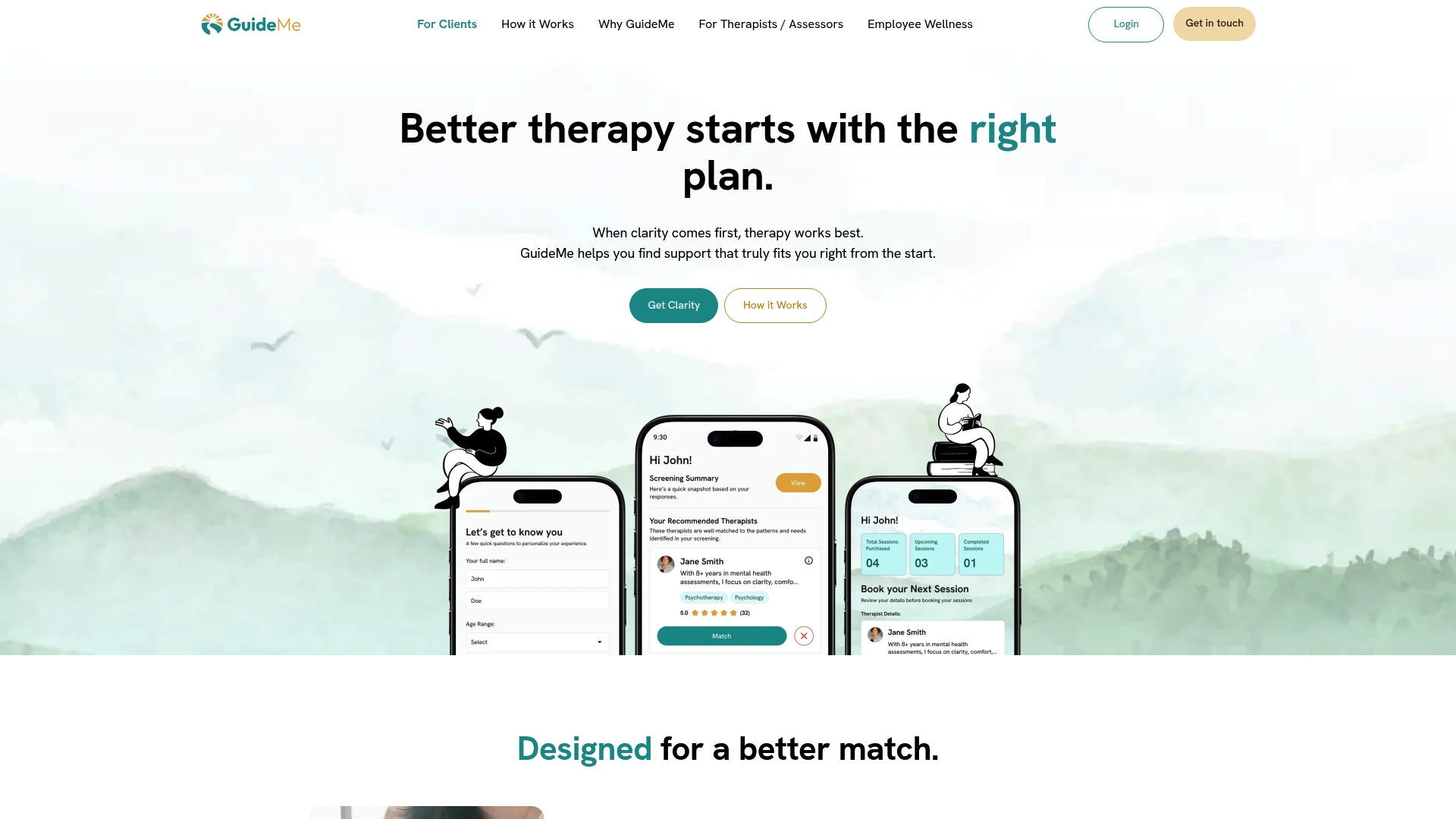
Guidemetherapy takes a different approach. The platform combines human expertise with AI-powered matching to connect employees with therapists who are suited to their specific needs, including cultural background, lived experience, and the type of support they are seeking. HR leaders working to embed therapy in workplace inclusion strategies can use Guidemetherapy to move beyond generic provision and offer support that employees from all backgrounds are more likely to use and benefit from. The process starts with an in-depth therapy plan, so employees arrive at their first session with clarity rather than confusion.
FAQ
What is the role of therapy in diversity and inclusion?
Therapy supports diversity and inclusion by providing culturally competent mental health care that addresses racial trauma, social exclusion, and systemic disadvantage. When delivered well, it improves employee wellbeing and strengthens belonging across diverse workforces.
What is racial malpractice in therapy?
Racial malpractice refers to the harm caused when a therapist engages a client of colour without the skills to address race and racial trauma responsibly. Dr Kenneth Hardy identifies six relational skills therapists must develop to avoid this risk.
How do social determinants of mental health affect workplace inclusion?
Social determinants such as housing instability, economic insecurity, and community exclusion directly shape an employee's mental health and capacity to engage at work. Therapy that addresses these factors produces better outcomes than approaches focused solely on individual coping.
Which therapeutic approaches work best for diverse workforces?
Culturally adapted frameworks such as IMCAP and integrative therapy show stronger results in diverse populations than generic counselling. IMCAP in particular improves treatment adherence through community collaboration and continuous monitoring.
How can HR leaders assess whether their therapy provision is equitable?
Collect anonymised data on therapy uptake and outcomes broken down by demographic group. If engagement is lower among employees from marginalised groups, the provision is likely not meeting their cultural or contextual needs.