

TL;DR:
- Counseling enhances team cohesion by fostering trust, communication, and strong relational bonds.
- Managers can apply learnable counseling techniques like active listening and open questions daily for better teamwork.
Counseling is defined as a structured process that builds trust, improves communication, and strengthens the relational bonds that hold teams together. For managers, understanding the role of counseling in team cohesion means recognising it as a practical leadership tool, not just a welfare provision. Behavioural health programmes deliver a 507% return on investment, with a 90% therapeutic alliance rate and measurable reductions in anxiety, depression, and absenteeism. That figure tells you counseling is not a cost. It is one of the highest-returning investments a team leader can make. The industry term for this applied approach is organisational counseling, and it sits at the intersection of therapeutic practice and team development.
What evidence supports counseling's impact on improving team cohesion?
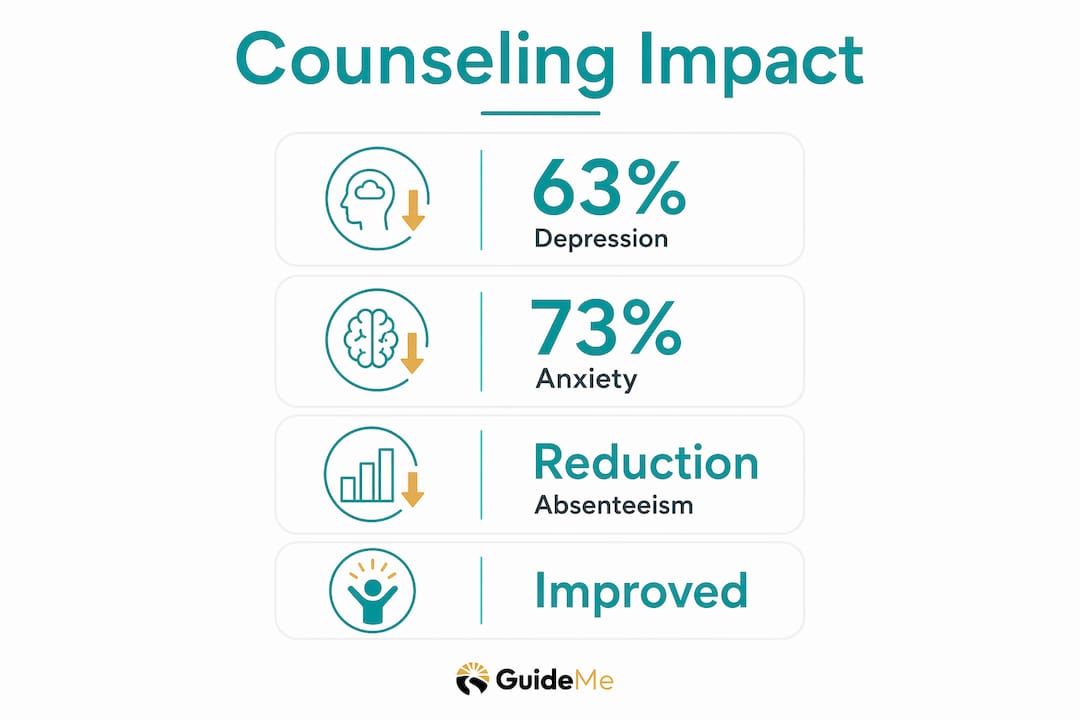
The business case for counseling in teams is clear and quantified. Workplace counseling programmes show a 63% improvement in depression, a 73% reduction in anxiety, and a 76% drop in absenteeism. Each of those numbers represents a team member who shows up, engages, and contributes rather than withdrawing or underperforming.
Skill gaps compound the problem. A study of 156 professionals found that only 23.1% demonstrated high readiness.2026.361265) for collaborative interaction, with 48.7% showing low reflexive-analytical skills and 41% showing low cognitive-creative capacity. Those gaps directly limit a team's ability to solve problems together. Counseling addresses them by building self-awareness, improving interpersonal communication, and developing the reflective thinking that underpins effective collaboration.
Research also links counseling with stronger interpersonal support and greater participation in team tasks. When team members feel heard and psychologically supported, they contribute more openly. That shift from passive attendance to active participation is the foundation of genuine cohesion.
Pro Tip: Track absenteeism rates and self-reported stress levels before and after introducing a counseling programme. Concrete before-and-after data makes the case for continued investment far more persuasively than anecdote alone.
| Metric | Reported improvement |
|---|---|
| Depression | 63% improvement |
| Anxiety | 73% reduction |
| Absenteeism | 76% reduction |
| Therapeutic alliance | 90% rate achieved |
| Return on investment | 507% |
What counseling competencies are critical for team cohesion?
Not all counseling support produces the same results. Four core competency dimensions determine whether group counseling actually improves team dynamics or simply occupies calendar time.
- Relational competence. The counsellor or manager-as-facilitator builds genuine rapport, manages group dynamics, and holds a safe space for honest dialogue. Without this, sessions become performative rather than productive.
- Intrapersonal and multicultural competence. The facilitator recognises their own biases and adapts to the cultural and personal backgrounds of each team member. Teams are rarely homogeneous, and a one-size approach fails the people who need support most.
- Technical and reflective competence. This covers the practical skills of active listening, structured feedback, and reflective practice. It also includes the ability to adapt techniques as the team's needs evolve over time.
- Digital competence. Remote and hybrid teams require counseling support delivered across digital platforms. The facilitator must be as effective in a video call as in a room.
These competencies matter because they directly influence the therapeutic alliance between the counsellor and the team. A strong alliance predicts better outcomes. A weak one produces resistance, disengagement, and wasted sessions. Managers who develop even basic versions of these competencies become far more effective at reading and responding to team dynamics.
How does trust develop through counseling to influence team cohesion?
Trust does not arrive fully formed. It builds in a specific sequence, and counseling accelerates that sequence when applied correctly. Research shows that cognitive trust precedes affective trust and is the critical mediator between transformational leadership and task cohesion.
Understanding the difference between the two types of trust is practical, not theoretical.
- Cognitive trust is based on competence and reliability. Team members trust a colleague because that person consistently delivers, follows through, and behaves predictably. This type of trust is built through transparent communication, clear expectations, and demonstrated accountability.
- Affective trust is emotional. It develops when team members feel genuinely cared for, understood, and safe to be vulnerable. This type of trust deepens relationships and enables the kind of candid dialogue that resolves conflict before it escalates.
- The sequence matters. Building trust follows a cognitive-to-affective path. Attempting to build emotional closeness before establishing competence-based trust often backfires. Team members who do not yet trust each other's reliability will resist emotional openness.
- Counseling accelerates both. Structured sessions create the conditions for cognitive trust by making expectations and roles explicit. They then create space for affective trust to develop through guided, supported disclosure.
Pro Tip: When introducing counseling support to a new or fractured team, spend the first sessions on clarity: roles, goals, and working agreements. Emotional depth comes later, once the cognitive foundation is solid.
Managers who understand this sequence stop trying to fast-track team bonding through social events alone. Social connection without relational trust is superficial. Counseling builds the structural layer that makes genuine connection possible.
Which communication techniques from counseling can managers use daily?
Training in therapeutic communication increased team cohesion by up to 30% within six months in studied workplace settings. That result comes from specific, learnable techniques, not from personality or natural charisma.
The most transferable techniques for managers include:
- Active listening with reflective silence. Most managers listen to respond, not to understand. Reflective silence after a speaker finishes signals genuine attention and encourages deeper sharing. Pausing for three to five seconds before responding is one of the most underused tools in workplace communication.
- Paraphrasing and summarising. Restating what a team member has said in your own words confirms understanding and prevents misinterpretation. It also signals that their contribution has been heard and valued.
- "I-statements" over "you-statements." Framing feedback as "I noticed the deadline was missed and I felt concerned" rather than "you missed the deadline" removes accusation from the conversation. It opens dialogue rather than triggering defensiveness.
- Open-ended questions. Questions that cannot be answered with yes or no invite fuller responses. "What would make this process work better for you?" generates far more useful information than "Are you happy with the process?"
- Psychological safety through consistent behaviour. Leaders who model candid communication and respond to risk-taking without punishment create the conditions for genuine team participation. Psychological safety is not a soft ideal. It is a structural requirement for high-performing teams.
Conflict resolution also draws directly from therapeutic practice. When disagreements arise, the counseling-informed approach focuses on underlying needs rather than stated positions. A team member who resists a new process may not be obstructive. They may feel unheard or uncertain. Addressing the need beneath the behaviour resolves the conflict at its source. You can read more about how these approaches work in practice in this guide to workplace counselling benefits.
Key takeaways
Counseling builds team cohesion by developing cognitive trust first, then affective trust, supported by specific communication techniques that managers can practise daily.
| Point | Details |
|---|---|
| Counseling delivers measurable ROI | Workplace programmes show a 507% return, with significant reductions in anxiety and absenteeism. |
| Skill gaps limit team cohesion | Only 23.1% of professionals show high readiness for collaboration; counseling addresses the deficit directly. |
| Trust builds in sequence | Cognitive trust must precede affective trust; rushing emotional closeness without reliability undermines cohesion. |
| Four competencies determine success | Relational, intrapersonal, technical, and digital skills define whether counseling support actually works. |
| Communication techniques are learnable | Reflective silence, "I-statements," and open-ended questions can increase team cohesion by up to 30% in six months. |
What I have learned from applying counseling thinking to team leadership
I spent years watching managers try to fix team problems with process changes. New workflows, restructured meetings, updated communication tools. The problems persisted because the tools addressed the surface, not the source.
The shift that actually changed things was treating the organisation as a living relational system, not a machine to be adjusted. When you stop asking "what process is broken?" and start asking "what relationship is strained?", you find the real answers. That reframe is the core of organisational counseling, and it requires patience that most managers have not been trained to exercise.
The most common pitfall I see is the rush to resolution. A manager notices tension in a team, brings in a facilitator for a single session, and expects the problem to be resolved. Trust does not work on that timeline. Cognitive trust takes weeks of consistent behaviour to establish. Affective trust takes months. Managers who understand this stop measuring success by whether a session felt productive and start measuring it by whether behaviour has changed over time.
The other pitfall is applying techniques without the underlying mindset. "I-statements" used to manipulate rather than connect are immediately recognised as hollow. Reflective silence used as a tactic rather than genuine attention produces the same result. The techniques work when they come from a real commitment to understanding your team, not from a desire to appear empathetic.
Tolerating ambiguity is the hardest part. Teams in transition are messy. Relationships that are being rebuilt do not follow a clean arc. The managers who build the most cohesive teams are the ones who stay present through the discomfort rather than retreating to process fixes when things feel uncertain.
— Yetty
How Guidemetherapy supports managers building stronger teams
Knowing the theory is one thing. Finding the right support to put it into practice is another.
Guidemetherapy is a therapy navigation platform that matches individuals and teams with the right therapist from the start, using a combination of human expertise and AI-powered matching. For managers who want to build team counseling support into their leadership approach, Guidemetherapy creates a personalised therapy plan that removes the guesswork from finding qualified support. Whether you are addressing team conflict, building psychological safety, or supporting a team member through a difficult period, the right therapist makes the process more effective and more sustainable. You can also explore the broader context of how therapy shapes workplace culture to understand where counseling fits within your wider leadership strategy.
FAQ
What is the role of counseling in team cohesion?
Counseling builds team cohesion by developing trust, improving communication, and addressing the interpersonal barriers that prevent genuine collaboration. It works at both the cognitive and emotional levels of team relationships.
How does psychological safety relate to team counseling?
Psychological safety is a structural condition that counseling helps create. When leaders model open communication and team members feel safe to speak honestly, collaboration and performance improve significantly.
Can managers use counseling techniques without being trained therapists?
Yes. Techniques such as active listening, reflective silence, "I-statements," and open-ended questions are learnable skills. Research shows these methods can increase team cohesion by up to 30% within six months when applied consistently.
How long does it take for counseling to improve team cohesion?
Cognitive trust, which is the foundation of task cohesion, develops over weeks of consistent behaviour. Affective trust and deeper relational cohesion typically take several months of sustained counseling support to establish.
What is the difference between cognitive trust and affective trust in teams?
Cognitive trust is based on reliability and competence. Affective trust is emotional and develops once cognitive trust is established. Building trust in sequence is critical; skipping the cognitive stage and pushing for emotional closeness too early often produces resistance rather than connection.