

TL;DR:
- Therapy helps people change how they engage in conflict by focusing on emotional regulation and communication skills. It acts as a neutral facilitator that maps patterns, encourages responsibility, and promotes repair efforts to enable lasting change. Different formats including individual, couples, family, or group therapy are suitable; the right choice depends on the conflict context and engagement level.
Therapy is defined as a structured process that transforms hostile interactions into constructive dialogue through emotional regulation and communication skills. The role of therapy in conflict resolution is not to eliminate disagreement but to change how people engage with it. Techniques developed by the Gottman Institute, protocols from positivepsychology.com, and frameworks used in family and workplace counselling all share one goal: helping people break repetitive, blame-driven patterns and repair ruptures faster. Whether you are navigating a difficult relationship, a family dispute, or a workplace disagreement, therapy gives you the tools to respond rather than react.
What therapeutic techniques work best for conflict resolution?
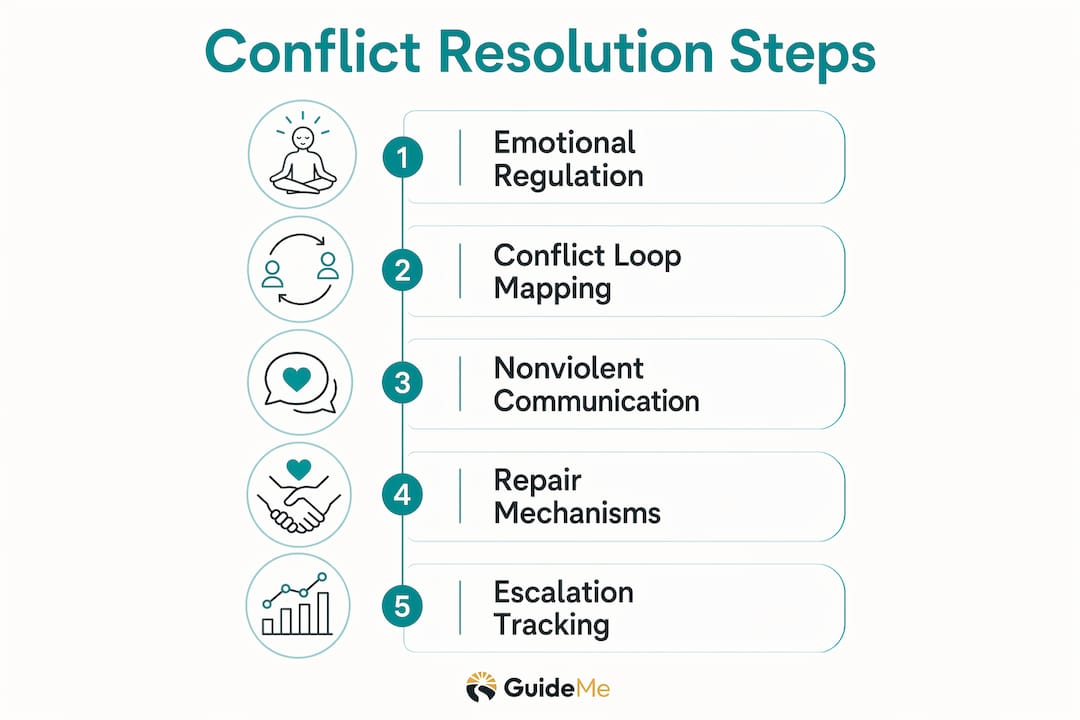
Therapy for conflict management begins with emotional regulation, not communication. Before any productive dialogue can happen, the threat response must be reduced. When people feel attacked, the brain shifts into a defensive state, and reasoning becomes difficult. Phase one of most conflict resolution therapy protocols focuses entirely on calming that response before any discussion of the actual dispute begins.

Once emotional regulation is established, the therapist introduces conflict loop mapping. This technique helps clients identify repetitive patterns in their arguments rather than focusing on the content of any single fight. The goal is pattern awareness. When you can see the loop, you can interrupt it before it escalates.
The Gottman Institute identifies six core skills for conflict management: softened startup, accepting influence, making and receiving repair attempts, de-escalation, psychological soothing, and compromise. Softened startups reduce defensiveness significantly in the first three minutes of a difficult conversation. That early window is where most conflicts either escalate or stabilise.
Nonviolent communication, developed by Marshall Rosenberg, is another widely used framework in conflict resolution therapy. It structures expression around observations, feelings, needs, and requests rather than accusations. This shifts the conversation from blame to need, which is where resolution actually becomes possible.
- Emotional regulation first. Practise grounding or breathing techniques before any difficult conversation.
- Map the loop. Write down the sequence of your last three arguments. Look for the trigger, the reaction, and the escalation point.
- Use softened startups. Begin with "I feel" rather than "You always."
- Identify the need. Ask yourself what you actually need from the other person, not just what you want them to stop doing.
- Repair early. A short repair attempt mid-argument is more effective than a long apology afterwards.
Pro Tip: Track your escalation level on a simple 1–10 scale during a disagreement. Therapists use this to help clients recognise their personal threshold before they lose the ability to listen.
Individual, couples, family, or group therapy: which format works best?
Different conflict settings call for different therapy formats. Choosing the wrong format is one of the most common reasons therapy does not produce lasting change.
| Format | Best suited for | Key strength | Limitation |
|---|---|---|---|
| Individual therapy | Personal conflict patterns, workplace disputes | Builds self-awareness and regulation skills | Does not address the other party directly |
| Couples therapy | Relationship conflict, communication breakdown | Works on repair mechanisms and shared patterns | Requires both parties to engage honestly |
| Family therapy | Parent-child conflict, sibling disputes, home tension | Addresses underlying unmet needs driving arguments | Complex dynamics can slow progress |
| Group therapy | Co-parenting conflict, workplace teams, community disputes | Peer learning and shared accountability | Less personalised than individual work |
Systematic reviews show that group interventions for interparental conflict are more effective than individual delivery, particularly for intact couples. Group formats improve relationship quality, co-parenting behaviour, and parental wellbeing simultaneously. That breadth of impact is difficult to achieve in one-to-one sessions alone.
Couples therapy focuses on communication patterns and repair mechanisms rather than resolving individual arguments. The therapist helps both people see the cycle they are caught in. Family therapy goes one step further by addressing the emotional needs that sit beneath the surface argument. A teenager's aggression at home is rarely about the argument itself. It is usually about feeling unheard or unseen.
Workplace conflict benefits from a mediated dialogue format, which draws on both individual and group therapy principles. A neutral facilitator helps colleagues separate intent from impact and move from accusatory to collaborative communication.
Pro Tip: If both parties are willing to attend, couples or family therapy almost always produces faster results than individual therapy alone. The dynamic changes when the other person is in the room.
What is the therapist's role during conflict resolution sessions?
The therapist's role in conflict resolution is to act as a neutral facilitator, not a judge. This surprises many people. Clients often arrive expecting the therapist to validate their position or tell the other party they are wrong. Therapists avoid taking sides because doing so would undermine the entire process.
A therapist's core responsibilities in conflict sessions include:
- Mapping conflict dynamics. The therapist tracks the sequence of reactions, not just the content of arguments, to identify where the loop begins.
- Encouraging ownership. Each party is guided to take responsibility for their own reactions rather than focusing on the other person's behaviour.
- Creating a safe space. The therapist sets ground rules that allow both parties to speak without interruption or retaliation.
- Avoiding the rebuttal trap. Abandoning the "winning" mindset is a prerequisite for progress. The therapist actively redirects clients away from point-scoring.
- Facilitating repair. The therapist introduces repair attempts during sessions and coaches clients to use them independently.
Therapist-client rapport is the foundation that makes all of this possible. Without trust in the therapist, clients will not take the risk of being vulnerable in front of the person they are in conflict with. That vulnerability is precisely what creates breakthroughs.
The therapist also tracks progress using measurable markers: escalation levels, listening quality, and the speed of repair after a rupture. These measures tell both the therapist and the client whether the work is producing real change.
How therapy applies across relationships, families, and workplaces
Therapy's practical applications differ depending on the setting, but the core mechanism is the same: shift from reactive to responsive communication.
In personal relationships, therapy helps couples manage differences rather than eliminate them. The Gottman Institute's research makes clear that managing conflict constructively is about repairing ruptures quickly, not avoiding disagreement altogether. A couple who can recover from an argument within hours is in a healthier position than a couple who never argues but never resolves anything either.
Family therapy targets the emotional drivers behind recurring arguments. A parent and child arguing about screen time are rarely arguing about screens. Therapy moves the conversation from the surface issue to the unmet need beneath it. Once the need is named, the argument often loses its charge. Techniques like reframing and interest-based negotiation unearth hidden motivations that neither party had previously articulated.
"Therapy does not ask who started it. It asks what keeps it going."
Workplace conflict is one of the most underserved areas for therapeutic intervention. Mediated dialogue sessions, often run by a counsellor or organisational psychologist, help colleagues separate personal grievances from professional disagreements. Emotional regulation skills learned in therapy transfer directly to high-pressure meetings, performance reviews, and team disputes.
Therapy also builds prevention plans. Once clients understand their conflict loop, they can identify early warning signs and intervene before escalation. This is the difference between conflict management and conflict resolution. Management handles the immediate problem. Resolution changes the pattern.
For professionals dealing with legal disputes, psychotherapy in dispute resolution provides a structured way to reduce the emotional charge that often derails mediation. A person who has done therapeutic work before entering a legal mediation is better equipped to listen, negotiate, and reach agreement.
Key takeaways
Therapy resolves conflict by interrupting blame-driven patterns, building emotional regulation skills, and equipping people with repair mechanisms that work across personal, family, and workplace settings.
| Point | Details |
|---|---|
| Emotional regulation comes first | Reduce the threat response before attempting any difficult conversation. |
| Format matters | Group therapy outperforms individual delivery for interparental and co-parenting conflicts. |
| Therapists stay neutral | Side-taking undermines client responsibility and prevents lasting change. |
| Underlying needs drive conflict | Therapy addresses the emotional need beneath the argument, not just the argument itself. |
| Repair speed is the measure | How quickly ruptures are repaired matters more than how often conflict occurs. |
Why the therapist's neutrality is the most underrated part of the process
People come to conflict therapy wanting an ally. I understand that impulse completely. When you have been in a painful, repetitive argument cycle for months or years, you want someone to finally see your side. The moment a therapist refuses to do that, many clients feel let down.
What I have seen, though, is that this neutrality is exactly what makes the work effective. When the therapist maps the dynamic rather than judging it, something shifts. Clients stop performing for the therapist and start actually looking at themselves. That is where real change begins.
The other thing I have noticed is how quickly people underestimate the value of skill acquisition over insight alone. Knowing why you argue is useful. Knowing how to interrupt the loop in real time is transformative. Techniques like softened startups and repair attempts sound simple on paper. Practising them under pressure, with a therapist holding the space, is a different experience entirely.
The clients who make the most progress are not the ones who arrive most motivated. They are the ones who are willing to stop trying to win. That shift, from winning to understanding, is the real work of conflict resolution therapy. It cannot be rushed, but it can absolutely be learned.
— Yetty
Therapy for conflict: finding the right support with Guidemetherapy
Knowing that therapy can help with conflict is one thing. Finding the right therapist for your specific situation is another.
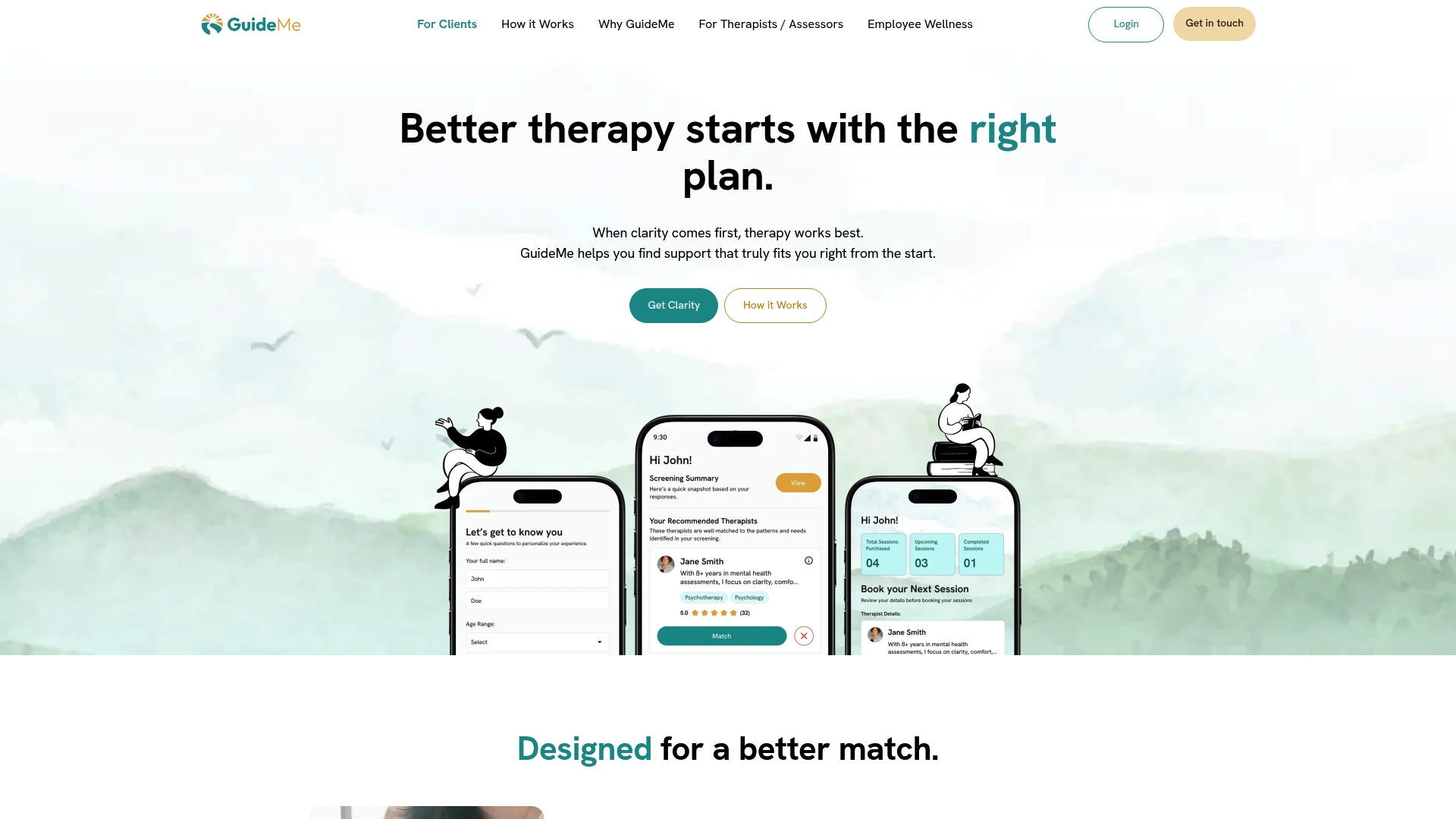
Guidemetherapy matches people with therapists who specialise in the exact type of conflict they are facing, whether that is a relationship breakdown, a family dispute, or a workplace situation. The platform combines human expertise with AI-powered matching to create a therapy plan before you even book your first session. That means you arrive with clarity, not confusion. If you are ready to stop repeating the same arguments and start building something different, find your therapist through Guidemetherapy today.
FAQ
What is the role of therapy in conflict resolution?
Therapy helps people interrupt repetitive conflict patterns by building emotional regulation skills and improving communication. The therapist acts as a neutral facilitator, not a judge, guiding clients toward mutual understanding and faster repair.
What therapy techniques are most effective for resolving conflict?
Softened startups, conflict loop mapping, nonviolent communication, and repair mechanisms are among the most effective techniques. The Gottman Institute's six-skill framework is one of the most widely used and researched approaches.
Is group or individual therapy better for conflict resolution?
Systematic reviews show group therapy is more effective than individual delivery for interparental and co-parenting conflicts, with broader improvements in relationship quality and wellbeing. Individual therapy remains valuable for building personal self-awareness and regulation skills.
Can therapy help with workplace conflict?
Yes. Mediated dialogue sessions and emotional regulation techniques used in therapy transfer directly to workplace disputes. A counsellor or organisational psychologist can help colleagues separate personal grievances from professional disagreements.
How long does conflict resolution therapy take?
The timeline varies depending on the complexity of the conflict and the format used. Many clients notice meaningful change in communication patterns within a few weeks of consistent practice, though deeper pattern work often takes longer.