

TL;DR:
- A therapy engagement workflow keeps clients involved through automated, personalized communication. It reduces premature dropout by including intake automation, reminders, between-session check-ins, and re-engagement sequences. Proper implementation improves attendance, clinical outcomes, and practice stability.
A therapy engagement workflow is defined as the systematic process that keeps patients actively involved in their mental health treatment through continuous, personalised communication and automation. Without a structured patient engagement process, clients disengage, miss appointments, and drop out of care before achieving meaningful progress. Research shows that 30–50% of therapy clients discontinue prematurely. That figure represents not just lost revenue for practices, but real people who needed support and did not receive it. A well-designed workflow for therapy providers closes that gap by embedding consistent, caring touchpoints into every stage of the client relationship.
What are the essential components of a therapy engagement workflow?
A therapy engagement workflow is built from five core elements: intake automation, scheduling, reminders, between-session engagement, and re-engagement sequences. Each component serves a distinct purpose, and removing any one of them weakens the whole system. The industry term for this integrated approach is continuous care management, and it sits at the heart of modern therapy session management.

Intake automation handles the administrative work that typically delays a client's first session. Digital intake forms, consent documents, and insurance verification can all be completed before the first appointment. This reduces friction for the client and frees the therapist to focus on clinical work from the very first session. Therapy intake preparation is often where client commitment is first tested, so a smooth process matters enormously.
Scheduling tools allow clients to book, reschedule, and cancel without calling the practice. This self-service model reduces administrative burden and gives clients a sense of control over their care. Most solo practitioners can onboard basic scheduling and reminder automation within one day. Full group practices may require up to one week. That is a modest investment for a system that runs continuously once it is in place.
The table below outlines the core workflow components and their primary purposes.
| Component | Purpose |
|---|---|
| Intake automation | Collects client information and consent before the first session |
| Scheduling tools | Enables self-service booking and reduces administrative calls |
| Automated reminders | Reduces no-show rates through timed, personalised alerts |
| Between-session engagement | Maintains client progress and motivation between appointments |
| Re-engagement sequences | Recovers lapsed clients through warm, structured outreach |
Pro Tip: Distinguish clearly between psychoeducational touchpoints and clinical advice in all automated messages. Psychoeducational content, such as mood tracking prompts or journaling exercises, is safe to automate. Clinical guidance must always come directly from the therapist.
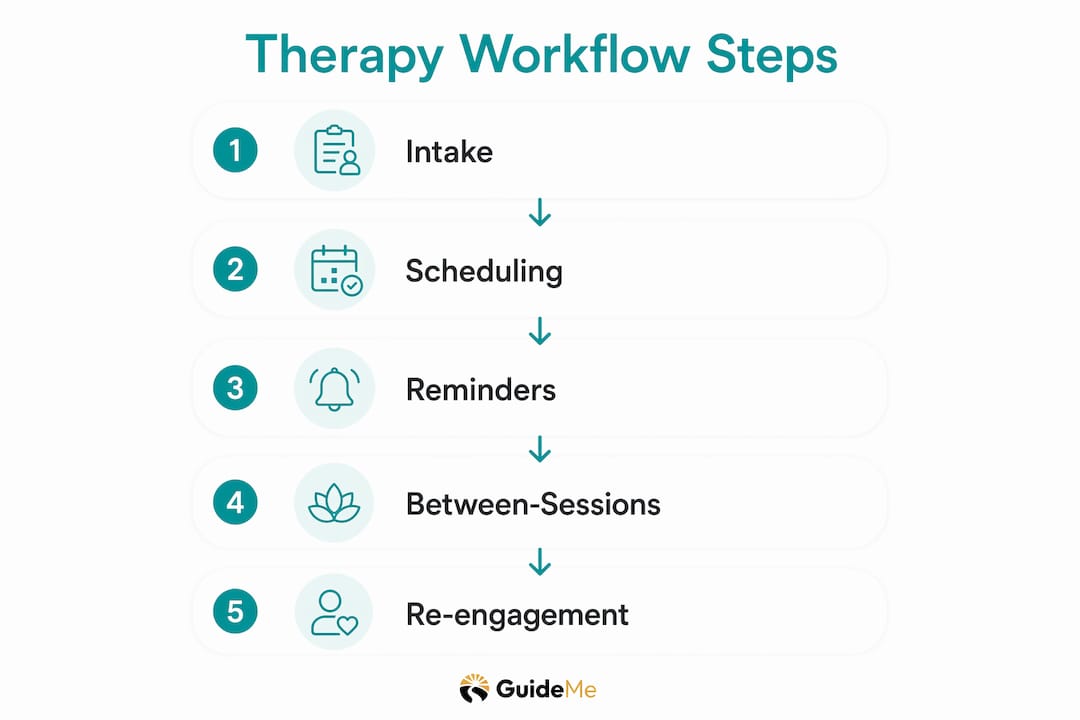
How to design between-session engagement that supports continuous care
Between-session engagement is the part of the workflow most therapists underestimate. The period between appointments is where clients either consolidate their progress or lose momentum. Psychoeducational continuity using brief check-ins allows therapists to focus session time on active clinical work rather than catching up on the previous week.
The most effective between-session strategies are brief, targeted, and modality-aligned. A therapist using Cognitive Behavioural Therapy (CBT) might send a short thought-record prompt mid-week. A Dialectical Behaviour Therapy (DBT) practitioner might share a skills reminder tied to the previous session's content. Acceptance and Commitment Therapy (ACT) workflows often include brief values-reflection prompts. Each of these takes under two minutes for the client to engage with, yet they reinforce the therapeutic work meaningfully.
Common between-session activities include:
- Mood tracking prompts: A simple daily or twice-weekly check-in asking clients to rate their mood and note one contributing factor.
- Homework reminders: A gentle nudge to complete any exercises assigned during the session, sent 24–48 hours after the appointment.
- Journaling prompts: Open-ended questions aligned to the client's current therapeutic goals, sent mid-week.
- Psychoeducational resources: Short articles, audio clips, or worksheets relevant to the client's treatment focus.
Between-session engagement with 2–3 brief, non-intrusive touches weekly outperforms frequent notifications, which can increase client anxiety rather than reduce it. That finding is counterintuitive for practices that assume more contact equals more engagement. Quality and relevance matter far more than volume.
Pro Tip: Set a weekly contact limit of three automated messages per client. Review this limit quarterly using session attendance and client feedback as your primary indicators.
What best practices reduce no-show rates through workflow automation?
No-shows are one of the most costly problems in mental health practice. They waste therapist time, disrupt clinical momentum, and signal that the client's commitment to treatment is weakening. Standardised automated reminders sent at 72 hours, 24 hours, and 1 hour before a session cut no-show rates from 22–28% down to 8–12%. That reduction translates directly into more consistent care and a more financially stable practice.
The key to effective reminders is tone. Transactional alerts, such as "Your appointment is tomorrow at 3PM," perform worse than warm, personalised messages that acknowledge the client by name and reference their progress. A message that reads "Hi Sarah, your session with Dr. Ahmed is tomorrow at 3PM. We look forward to seeing you" carries a fundamentally different emotional weight.
To set up a scheduling and reminder workflow, follow these steps:
- Choose a scheduling platform that supports automated, timed reminders and integrates with your practice management system.
- Set the three-touch reminder cadence: 72 hours before, 24 hours before, and 1 hour before each session.
- Personalise each message template with the client's first name, therapist name, and session time.
- Add a one-click confirmation or cancellation link so clients can respond without calling the practice.
- Configure a waitlist trigger so that a cancellation automatically offers the slot to another client.
- Review no-show data monthly and adjust message timing or wording if rates remain above 12%.
How to schedule therapy effectively is a skill that combines the right tools with the right tone. Automation handles the timing; the therapist's voice and warmth must come through in every message template.
How to implement lapsed client re-engagement workflows
Premature dropout is a clinical and operational problem that most practices address too late, or not at all. A structured re-engagement workflow changes that by creating a planned, sensitive outreach sequence for any client who misses two or more consecutive sessions without explanation.
The 30/60/90-day re-engagement workflow is the most widely used framework. It includes three distinct phases of outreach, each calibrated to the client's level of disengagement.
Key message types and timing considerations include:
- Day 30 (warm check-in): A brief, non-pressuring message acknowledging the client's absence and expressing genuine care. This message should not reference missed payments or rescheduling directly. Its sole purpose is to signal that the therapist noticed and cares.
- Day 60 (resource share): A message offering a relevant psychoeducational resource, such as a self-care guide or a link to a support article. This keeps the practice visible without applying pressure.
- Day 90 (final outreach): A respectful closing message that leaves the door open for the client to return at any time. This message should explicitly respect the client's autonomy and avoid any language that could feel coercive.
All re-engagement messages require clinical supervision before deployment. A template that feels appropriate for one client may be inappropriate for another, particularly where safeguarding concerns exist. Practical ways to support lapsed clients always begin with sensitivity, not sales logic.
Automated workflows for intake, billing, and follow-up reduce administrative overhead costs by 25–35% within the first year. Re-engagement sequences contribute to that saving by recovering clients who would otherwise require a full new intake process if they returned months later.
Key takeaways
A structured therapy engagement workflow, combining intake automation, timed reminders, between-session touchpoints, and re-engagement sequences, is the most reliable method for reducing dropout and improving clinical outcomes.
| Point | Details |
|---|---|
| Define the workflow clearly | A therapy engagement workflow covers intake, scheduling, reminders, between-session contact, and re-engagement. |
| Use the three-touch reminder cadence | Reminders at 72h, 24h, and 1h before sessions reduce no-show rates to 8–12%. |
| Limit between-session contact | Two to three brief, relevant touches weekly outperform high-frequency notifications. |
| Apply the 30/60/90-day framework | Warm outreach at 30, 60, and 90 days recovers many clients who disengage prematurely. |
| Automate with clinical oversight | All automated messages, especially re-engagement templates, require therapist review before use. |
My view on where most therapy workflows go wrong
I have spoken with enough therapists to know that the biggest mistake is not a lack of tools. It is a lack of structure. Practices invest in scheduling software and then use it only for booking, leaving the reminder, engagement, and re-engagement functions untouched. That is like buying a car and only using the horn.
The second mistake is treating automation as a replacement for the therapeutic relationship. It is not. Automation handles the operational layer so that the therapist can be fully present during sessions. When a client arrives having already completed their mood tracking and homework reminder, the session starts at a deeper level. That is the real clinical value of a well-built patient engagement process.
The third mistake is setting up a workflow and never reviewing it. Clinical metrics, specifically attendance rates, session completion rates, and client-reported engagement, should inform every quarterly review of your workflow. A workflow that worked well for a CBT-focused practice may need significant adjustment if the practice expands into trauma-informed care or group therapy.
The therapy discovery workflow is where engagement actually begins, before the first session is even booked. Practices that treat discovery and intake as separate from engagement are missing the earliest and most critical window for building client commitment. Get that right, and everything downstream becomes easier.
— Yetty
How Guidemetherapy supports your therapy engagement needs
Guidemetherapy is a therapy navigation platform that combines human expertise with AI to match clients with the right therapist from the very beginning.
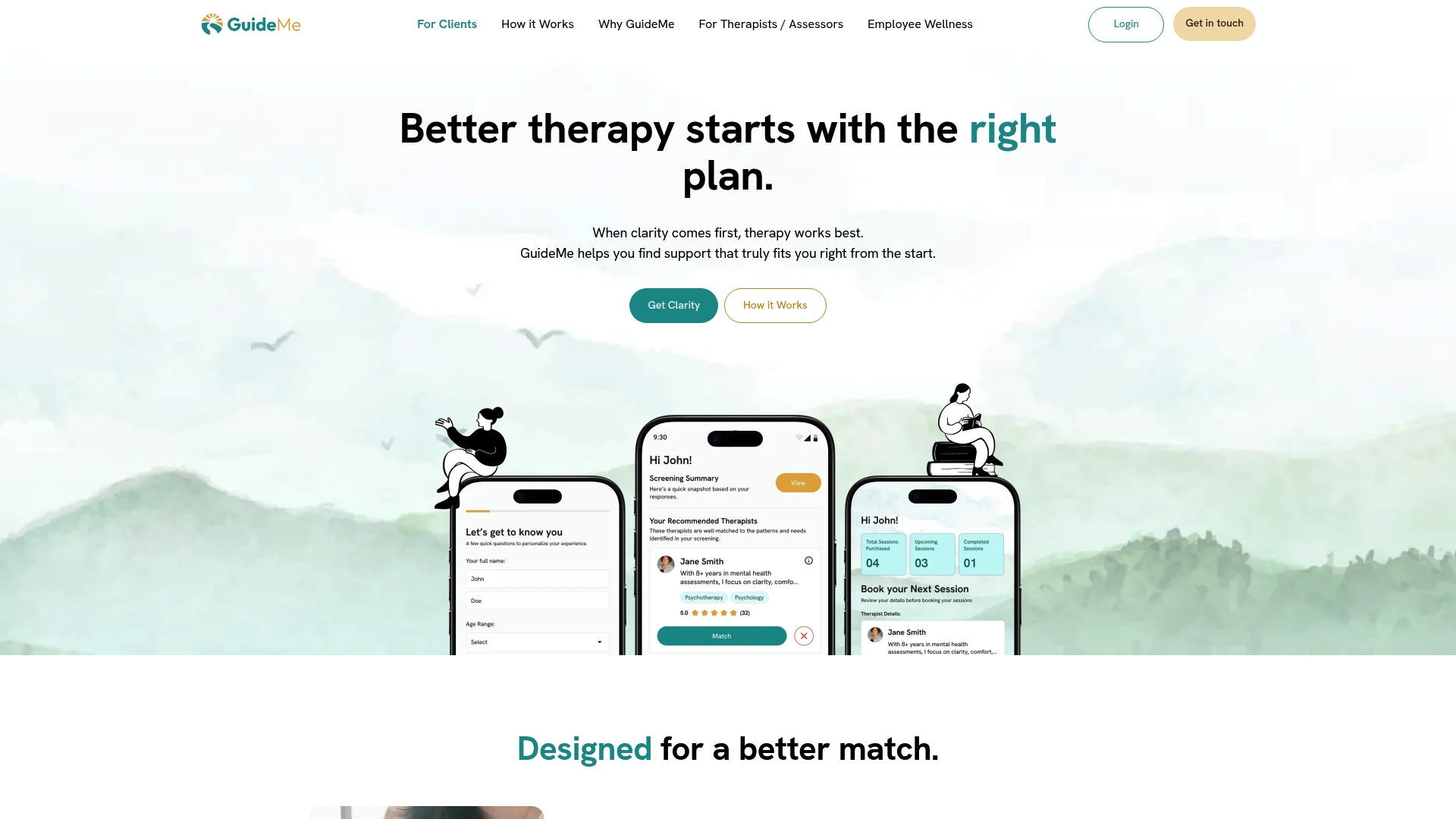
Finding the right therapist is the first step in any effective patient engagement process. Guidemetherapy creates an in-depth therapy plan for each person, so the match is based on genuine clinical fit rather than availability alone. That foundation makes every subsequent engagement touchpoint more meaningful, because the client is already in the right therapeutic relationship. Visit Guidemetherapy to see how the platform supports both clients and practitioners at every stage of the therapy engagement process.
FAQ
What is a therapy engagement workflow?
A therapy engagement workflow is the structured system a practice uses to keep clients actively involved in their treatment. It covers intake, scheduling, reminders, between-session contact, and re-engagement for lapsed clients.
How many reminders should a practice send before each session?
Three reminders, sent at 72 hours, 24 hours, and 1 hour before the session, represent the most effective cadence. This approach reduces no-show rates from the typical 22–28% range down to 8–12%.
How often should therapists contact clients between sessions?
Two to three brief, relevant touchpoints per week is the recommended frequency. More frequent contact can increase client anxiety rather than support their progress.
What is the 30/60/90-day re-engagement workflow?
The 30/60/90-day framework is a structured outreach sequence for clients who have disengaged. It includes a warm check-in at 30 days, a resource share at 60 days, and a respectful closing message at 90 days.
How long does it take to set up therapy workflow automation?
Solo practitioners can typically set up basic scheduling and reminder automation within one day. Full group practices may require up to one week to complete onboarding and integration.