

TL;DR:
- A therapy discovery workflow is a structured process that guides individuals through self-assessment, research, evaluation, and preparation stages to find suitable therapy. Using a clear workflow improves therapist matches and reduces wasted time and sessions.
A therapy discovery workflow is a structured process that guides you through identifying your mental health needs, researching suitable therapy types, evaluating therapists, and preparing for your first session. Most people who feel lost when starting therapy are not lacking motivation. They are lacking a clear process. Guidemetherapy is built around exactly this idea: that a well-defined workflow produces better matches, fewer false starts, and a more comfortable experience from the very beginning. Understanding the stages before you pick up the phone or fill in a form makes every step that follows easier.
What are the essential stages in a therapy discovery workflow?
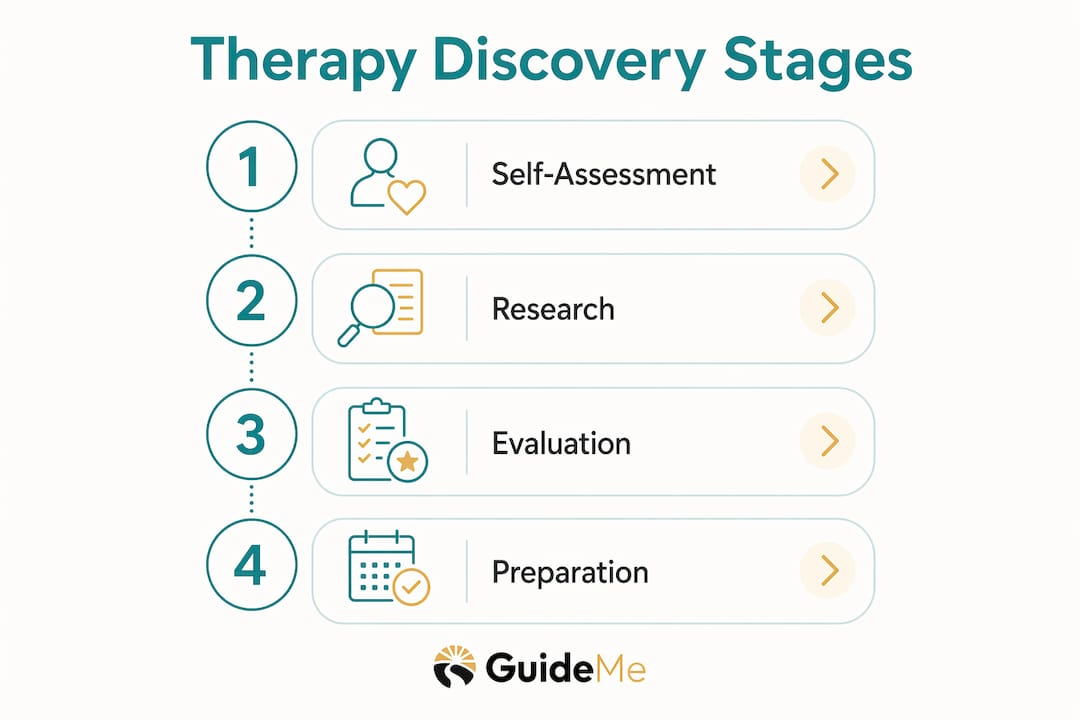
A therapy discovery workflow moves through four core stages: self-assessment, research, evaluation, and preparation. Skipping any stage tends to produce the same outcome as poor initial hit quality in clinical research: repeated attempts, wasted time, and frustration. Each stage builds directly on the one before it.

The table below maps each stage to its typical actions and expected outcomes.
| Stage | Typical actions | Expected outcome |
|---|---|---|
| Self-assessment | Reflect on symptoms, goals, and therapy preferences | Clear picture of what you need from therapy |
| Research | Review therapy types, modalities, and provider options | Shortlist of relevant therapy approaches |
| Evaluation | Check therapist credentials, specialisms, and availability | Confident shortlist of two or three therapists |
| Preparation | Write questions, confirm logistics, complete intake forms | Productive and calm first session |
Self-assessment is the stage most people skip. Without it, you are choosing a therapist based on availability rather than fit. Spend time identifying whether you are dealing with anxiety, low mood, relationship difficulties, or something else. That clarity shapes every decision that follows.
Research means more than a quick internet search. You need to understand the difference between cognitive behavioural therapy (CBT), person-centred therapy, psychodynamic therapy, and other modalities before you can judge whether a therapist's approach suits your needs. The role of screening in therapy is to filter options early, so you spend your energy on genuinely suitable candidates.
Evaluation is where most people slow down unnecessarily. Checking a therapist's registration with the British Association for Counselling and Psychotherapy (BACP) or the UK Council for Psychotherapy (UKCP) takes under five minutes. Doing it protects you from wasting sessions with someone unqualified.
Pro Tip: Write down your top three therapy goals before you begin researching. Use them as a filter at every stage. If a therapist's stated specialism does not address at least two of your three goals, move on.
Which tools and resources support effective therapy discovery?
The right tools reduce the time between deciding to seek therapy and actually sitting in a session. The wrong ones add noise and delay.
The most useful resource types are:
- Online therapist directories (such as the BACP's "Find a Therapist" tool or Psychology Today's UK listings): these let you filter by location, specialism, and fee range
- Therapy matching platforms like Guidemetherapy, which combine AI-powered matching with human guidance to produce a personalised therapy plan before you speak to anyone
- Self-assessment quizzes from NHS-approved sources, which help you articulate symptoms in clinical language that therapists recognise
- GP referrals, which remain the most reliable route to NHS Talking Therapies (formerly IAPT) for conditions including depression and anxiety
- Employee Assistance Programmes (EAPs), which many UK employers offer and which typically include a set number of free counselling sessions
When evaluating any resource, apply these criteria:
- Does it verify therapist credentials against a recognised UK body such as BACP, UKCP, or the British Psychological Society (BPS)?
- Does it allow you to filter by therapy modality, not just location?
- Does it offer a free initial consultation or a clear cancellation policy?
- Is the cost transparent before you commit?
The limitation of self-directed directories is that they place the entire evaluation burden on you. You are comparing profiles without the context to judge them well. Matching platforms address this by using structured intake information to narrow the field before you see any names. Choosing the right therapist is a skill, and good tools teach it rather than just listing options.
Pro Tip: Before your first contact with any therapist, check their registration number on the BACP or UKCP public register. It takes two minutes and confirms they are bound by a professional code of ethics.
How to schedule and manage the initial therapy process effectively?
Scheduling is where many people stall. The gap between finding a suitable therapist and actually booking a session is where motivation fades. A clear sequence prevents that.
- Contact two or three therapists simultaneously. Waiting lists are common. Contacting only one at a time adds weeks to your timeline.
- Prepare five questions before your initial consultation. Ask about their therapeutic approach, experience with your presenting issue, session frequency, fees, and cancellation policy.
- Confirm all practical details in writing. Session length, location or video platform, and payment method should be agreed before your first appointment.
- Complete intake forms promptly. Most therapists send paperwork before the first session. Completing it in advance means the session focuses on you, not administration.
- Plan your first session as a two-way assessment. You are evaluating the therapist as much as they are assessing you. This framing reduces anxiety and improves the quality of information you share.
Understanding what diagnosis in therapy involves helps you prepare for the intake process. Many people arrive at a first session unsure what to expect. Knowing that the therapist is gathering information to build a treatment plan, not judging you, changes how you show up.
The table below compares key scheduling considerations for private and NHS therapy routes.
| Consideration | Private therapy | NHS therapy (Talking Therapies) |
|---|---|---|
| Waiting time | Typically days to weeks | Weeks to several months |
| Cost | £50–£120 per session on average | Free at point of use |
| Therapist choice | You select from available practitioners | Assigned based on clinical need |
| Session number | Flexible, agreed with therapist | Usually 6–20 sessions |
| Referral required | No | GP referral or self-referral online |
Scheduling therapy effectively requires you to treat the process as a practical project. Set a deadline for making first contact. Put it in your calendar. Treat it with the same seriousness you would give a medical appointment.
What common challenges arise in therapy discovery and how do you overcome them?
The most common reason people abandon their research workflow in therapy is not cost or availability. It is information overload combined with emotional hesitation. Both are solvable.
Integrated end-to-end workflows outperform fragmented, sequential approaches in clinical research. The same principle applies here. When your therapy discovery process is coordinated rather than scattered across multiple unconnected sources, you make faster and better decisions.
The challenges most people face, and how to address them:
Information overload. Hundreds of therapist profiles, dozens of therapy types, and conflicting advice create paralysis. Fix this by deciding on one therapy modality before you search. If you are unsure which modality suits you, a structured intake assessment through a platform like Guidemetherapy narrows this down before you browse.
Emotional hesitation. Seeking therapy requires admitting you need support. That feels uncomfortable for many people. Recognise that hesitation is normal and does not mean you are not ready. Setting a single small action, such as completing one self-assessment quiz today, builds momentum without requiring a large commitment.
Accessibility barriers. Cost, geography, and disability can all limit options. NHS Talking Therapies accepts self-referrals online and covers most of England. Many private therapists now offer video sessions, which removes travel as a barrier.
Cost concerns. Private therapy is a real financial commitment. Check whether your employer offers an EAP. Ask therapists directly whether they offer a sliding scale fee. Some charitable organisations, including Mind and the Samaritans, offer low-cost or free support.
Do's and don'ts for maintaining momentum:
- Do set a specific date by which you will make first contact with a therapist
- Do keep a short written record of your self-assessment findings to reference during consultations
- Do treat the first session as exploratory, not definitive
- Don't wait until you feel "ready enough." That moment rarely arrives on its own
- Don't rely on a single resource. Cross-reference therapist credentials independently
- Don't dismiss a therapist after one session without reflecting on whether the discomfort is about the process rather than the person
Starting therapy is rarely a single decision. It is a series of small, manageable steps. Treating it that way makes the whole process far less daunting.
Key takeaways
A structured therapy discovery workflow, covering self-assessment, research, evaluation, and preparation, produces better therapist matches and fewer wasted sessions than an unplanned approach.
| Point | Details |
|---|---|
| Start with self-assessment | Identify your goals and symptoms before searching for a therapist. |
| Use credentialled resources | Verify therapists against BACP, UKCP, or BPS registers before booking. |
| Contact multiple therapists | Reach out to two or three simultaneously to avoid delays from waiting lists. |
| Treat scheduling as a project | Set a deadline for first contact and confirm all practical details in writing. |
| Address hesitation directly | Break the process into single small actions to build momentum without pressure. |
My honest view on what actually makes therapy discovery work
I have seen a lot of people approach therapy discovery the same way they approach buying a new phone: they read reviews, compare features, and then delay the decision indefinitely. The problem is that therapy is not a product. The fit between you and a therapist is relational, and no amount of profile-reading fully predicts it.
What actually works is committing to a process rather than searching for a perfect outcome. The people who find good therapy quickly are not the ones who research the most. They are the ones who move through the stages methodically, accept that the first therapist might not be the right one, and treat the whole thing as a learning process rather than a one-shot decision.
The parallel with flexible discovery strategies in clinical research is worth noting. Rigid frameworks fail. Adaptive ones succeed. Your therapy discovery workflow should be a guide, not a script. If a stage is not working for you, adjust it. If a therapist does not feel right after two sessions, that is useful information, not a failure.
The one thing I would tell anyone starting this process: write down what you want from therapy before you speak to anyone. Not a vague sense of "feeling better," but specific outcomes. That single act of clarity will do more for your therapy discovery than any directory or quiz.
— Yetty
How Guidemetherapy supports your therapy discovery workflow
Finding the right therapist is genuinely hard without the right structure behind you. Guidemetherapy combines AI-powered matching with human-led guidance to give you a personalised therapy plan before you speak to a single therapist.
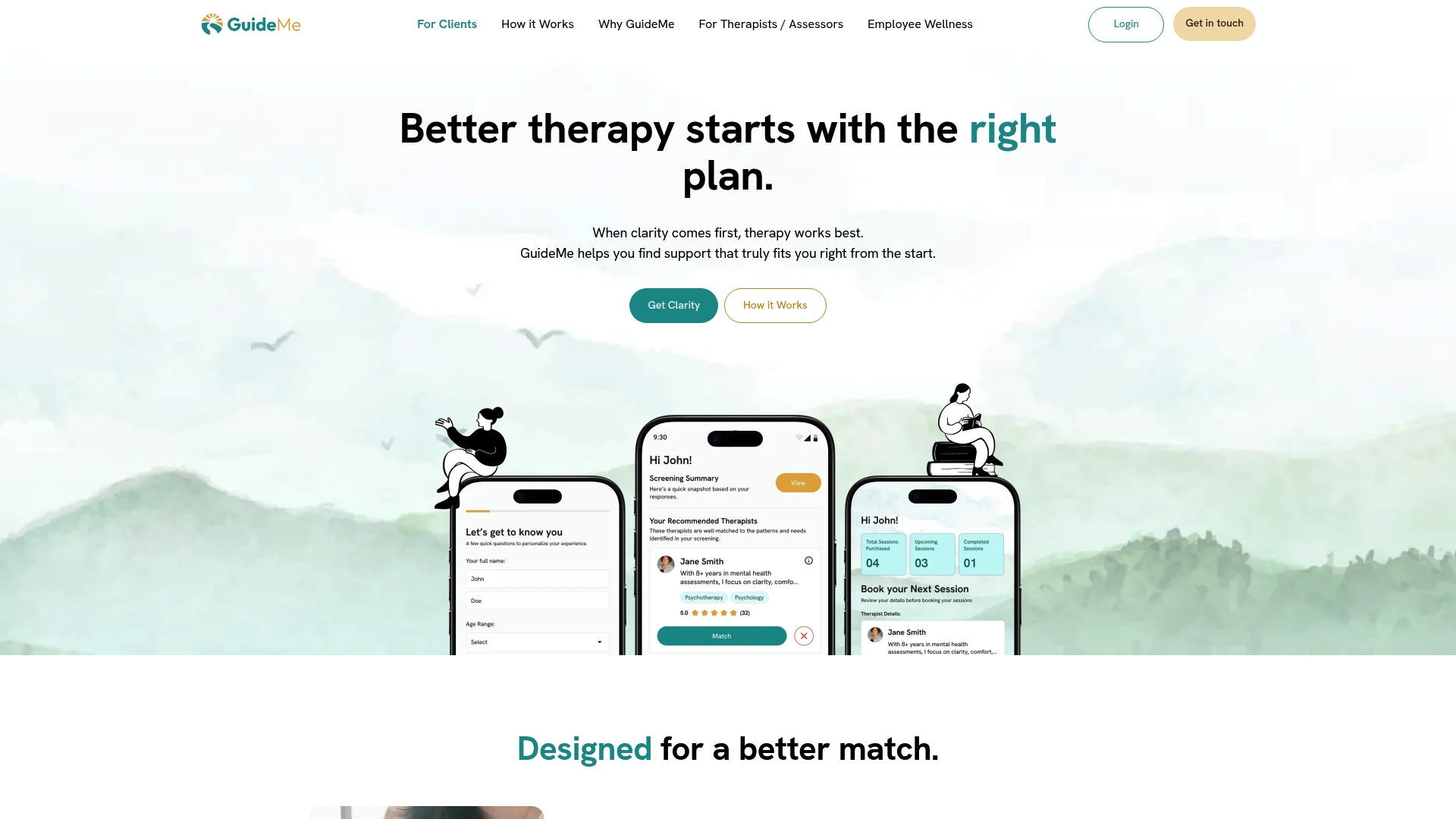
The platform takes you through an in-depth intake process that identifies your needs, preferences, and goals. It then matches you with therapists whose approach, specialism, and availability align with what you have shared. You do not have to cross-reference credentials manually or wade through dozens of profiles. Guidemetherapy does that work for you, so your first session starts from a place of confidence rather than guesswork. Find your therapist match and take the first step with clarity.
FAQ
What is a therapy discovery workflow?
A therapy discovery workflow is a structured sequence of steps covering self-assessment, research, therapist evaluation, and session preparation. It helps individuals find and start therapy that suits their specific mental health needs.
How long does the therapy discovery process take?
The timeline varies depending on your route. Private therapy can move from first contact to a booked session within days. NHS Talking Therapies typically involves a waiting period of several weeks to months after referral.
How do I know which type of therapy is right for me?
A self-assessment that identifies your presenting issues, such as anxiety, depression, or relationship difficulties, points you toward relevant modalities. CBT is the most widely evidenced approach for anxiety and depression. A structured intake assessment through a platform like Guidemetherapy can narrow this down further.
What should I ask a therapist before booking?
Ask about their therapeutic approach, their experience with your specific concerns, session frequency, fees, and cancellation policy. These five questions give you enough information to make a confident decision.
Is it normal to try more than one therapist?
Yes. Therapist-client fit is a significant factor in outcomes. If the relationship does not feel right after two or three sessions, it is reasonable to try someone else. This is part of the process, not a sign that therapy will not work for you.