

TL;DR:
- Career counselling is a structured process that helps individuals understand their values and make informed career decisions. It focuses on self-discovery and long-term resilience, rather than quick fixes or external skills. Seeking counselling early can address issues like dissatisfaction, burnout, or identity confusion effectively.
Career counselling is defined as a structured, collaborative process that helps individuals understand themselves and their career options to make confident, informed decisions across their working lives. A 2025 meta-analysis confirms career counselling improves both vocational decision-making and mental health outcomes. Whether you are weighing a career change, feeling stuck in your current role, or struggling with work-related anxiety, professional career guidance services offer a clear, evidence-based path forward.
What is career counselling and how does it differ from a chat with a mentor?
Career counselling is a professional service delivered by a trained counsellor who holds a degree in psychology, counselling, or human development. It is not informal advice from a well-meaning colleague. The process addresses the full lifespan of work, from choosing a first career to managing late-career transitions, and it draws on psychological frameworks to help you understand your values, identity, and motivations. The career counselling meaning extends well beyond CV writing or job search tactics. It starts with who you are, not what the job market currently wants.

The counsellor's role is to facilitate self-discovery, not to hand you a list of suitable job titles. Sessions use formal assessments, reflective exercises, and structured dialogue to surface patterns you may not have noticed on your own. This is what separates career counselling from a mentor conversation or a careers fair chat.
How does career counselling work?
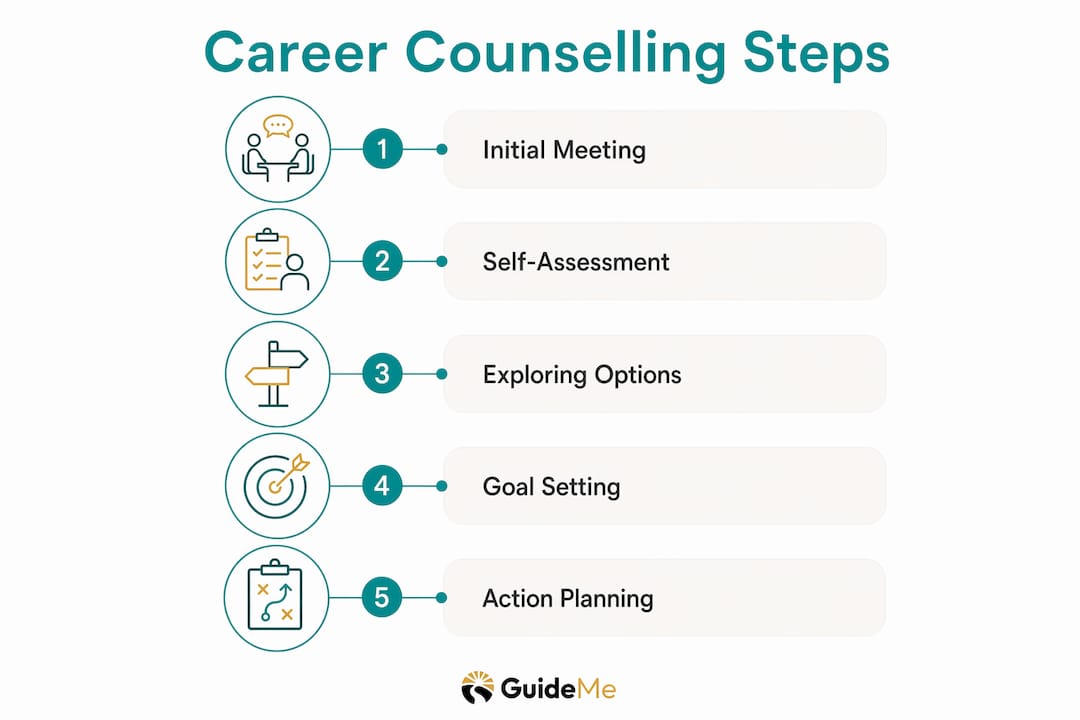
Career counselling follows a clear process, though the pace varies depending on your situation.
- Initial assessment. The counsellor gathers your work history, values, interests, and goals. Formal tools such as personality inventories, values assessments, and interest tests are common at this stage.
- Reflection and exploration. You examine what is and is not working in your current or past roles. The counsellor helps you identify patterns and blind spots.
- Goal setting. Together, you define realistic career goals grounded in your self-assessment rather than external pressure.
- Action planning. The counsellor supports you in building a concrete plan, which may include informational interviews, short projects, or skills development.
- Review and adjustment. Progress is reviewed across sessions, and the plan is refined as you gather new information about yourself and the market.
Typical sessions last 45–60 minutes. Short-term work runs to 3–5 sessions for focused questions, while complex situations such as burnout recovery or major career pivots may require longer engagement. Between sessions, you will often complete preparatory work: journalling, research, or structured reflection exercises.
Pro Tip: Bring a brief timeline of your work history to your first session. Note the roles you found energising and those that drained you. This gives your counsellor a concrete starting point and saves significant session time.
When should you seek career guidance services?
Recognising the right moment to seek support is itself a skill. Career-related stress significantly impacts sleep, mood, and overall well-being, which means the effects of a misaligned career rarely stay confined to working hours.
Seek career counselling when you notice any of the following:
- Persistent dissatisfaction. You dread Monday mornings consistently, not just occasionally.
- Burnout symptoms. Exhaustion, cynicism, and reduced effectiveness at work are signs your current path needs examination.
- Career change contemplation. You are seriously considering a different field but feel paralysed by uncertainty.
- Work-related anxiety. Worry about your career is affecting your concentration, relationships, or physical health.
- Identity confusion. Your work no longer feels connected to who you are or what you value.
- Major life transitions. Redundancy, returning from parental leave, or relocating can all destabilise a previously settled career identity.
Work is a fundamental pillar of identity. When it feels misaligned, the effects spread into relationships, self-esteem, and physical health. Waiting until a crisis point makes the process harder. Seeking support at the first signs of sustained discomfort produces better outcomes.
Career counselling vs coaching vs guidance: what is the difference?
These three terms are often used interchangeably, but they describe meaningfully different services. Choosing the wrong one wastes time and money.
| Service | Qualifications | Primary focus | Typical outcome |
|---|---|---|---|
| Career counselling | Degree in psychology, counselling, or human development | Identity, values, psychological well-being | Clarity, confidence, and resilience in career decisions |
| Career coaching | Industry certifications, no regulated standard | Performance, skills, goal attainment | Improved interview technique, promotion readiness |
| Career guidance | Varies widely; often information-based | Occupational information and options | Awareness of available career paths |
Career counsellors hold regulated qualifications and focus on psychological well-being and identity. Career coaches hold industry certifications and focus on performance and actionable steps. Career guidance is broader and more informational, often delivered in educational or public employment settings.
The practical rule is straightforward. If your challenges are internal, rooted in anxiety, identity, or values conflict, career counselling is the right fit. If your challenges are external, such as interview skills or salary negotiation, coaching may serve you better. For those experiencing severe burnout or anxiety linked to work, a licensed mental health professional who specialises in career therapy offers the most comprehensive support. You can read more about coaching versus therapy to clarify which approach fits your situation.
What are the benefits of career counselling?
The benefits of career counselling extend well beyond landing a new job. The process produces lasting changes in how you think about work and yourself.
- Increased self-awareness. Formal assessments and guided reflection reveal values, strengths, and working styles you may have never articulated. This clarity makes every future career decision easier.
- Reduced stress. Naming and understanding the source of career dissatisfaction reduces anxiety and restores a sense of agency.
- Better decision-making. Counselling teaches a repeatable decision-making process that works under uncertainty, not just for the immediate question you brought to the first session.
- Coping strategies. You leave with practical tools for managing work-related stress and preventing future burnout.
- Alignment between career and identity. When your work reflects your values, life satisfaction rises across multiple domains, not just professionally.
- Career resilience. Clients who actively participate and reflect during counselling build adaptability that serves them through future transitions.
Therapy also supports career growth in ways that go beyond the counselling room, particularly when work stress is affecting mental health more broadly.
Pro Tip: Manage your expectations from the start. Career counselling is a process of self-discovery, not a service that delivers a ready-made answer. Clients who approach it with curiosity rather than urgency consistently report better outcomes.
Key takeaways
Career counselling is the most effective support for individuals whose career challenges are rooted in identity, values, or psychological well-being rather than surface-level skill gaps.
| Point | Details |
|---|---|
| Clear definition | Career counselling is a structured, collaborative process focused on self-discovery and informed decision-making. |
| Session structure | Sessions last 45–60 minutes; short-term work covers 3–5 sessions, complex cases take longer. |
| Right time to seek help | Persistent dissatisfaction, burnout, anxiety, or identity confusion are all valid reasons to start. |
| Counselling vs coaching | Counselling addresses identity and well-being; coaching targets performance and external skills. |
| Core benefit | Clients gain a repeatable decision-making process and career resilience, not just a one-time answer. |
What I have learned from watching people use career counselling well
The single biggest misconception I encounter is that career counselling is directive. People arrive expecting the counsellor to say, "You should be a project manager." That is not how it works, and honestly, it is not what you want either. A counsellor who hands you an answer has simply transferred their own assumptions onto your life.
The clients who get the most from the process are the ones who treat it as active work, not passive reception. They complete the exercises between sessions. They sit with uncomfortable realisations rather than rushing past them. They bring specific examples from their working lives rather than vague feelings.
The other insight worth sharing is about low-cost experiments. One of the most effective techniques in career counselling is testing a potential direction through an informational interview or a short voluntary project before committing to it. This reduces the anxiety of big decisions dramatically. You stop treating career choices as permanent and irreversible, and you start treating them as hypotheses to test. That shift alone changes how people relate to uncertainty.
Career counselling is not a one-time fix. It is a tool for building the kind of self-knowledge that makes every future career decision less frightening. The people who return to it at different life stages, not just in crisis, are the ones who navigate their careers with the most confidence.
— Yetty
Finding the right support for your career and mental health
Career counselling and mental health support often overlap, particularly when work stress is affecting your sleep, relationships, or sense of self. Guidemetherapy is a therapy navigation platform that helps you understand your mental health needs and get matched with the right therapist from the start.
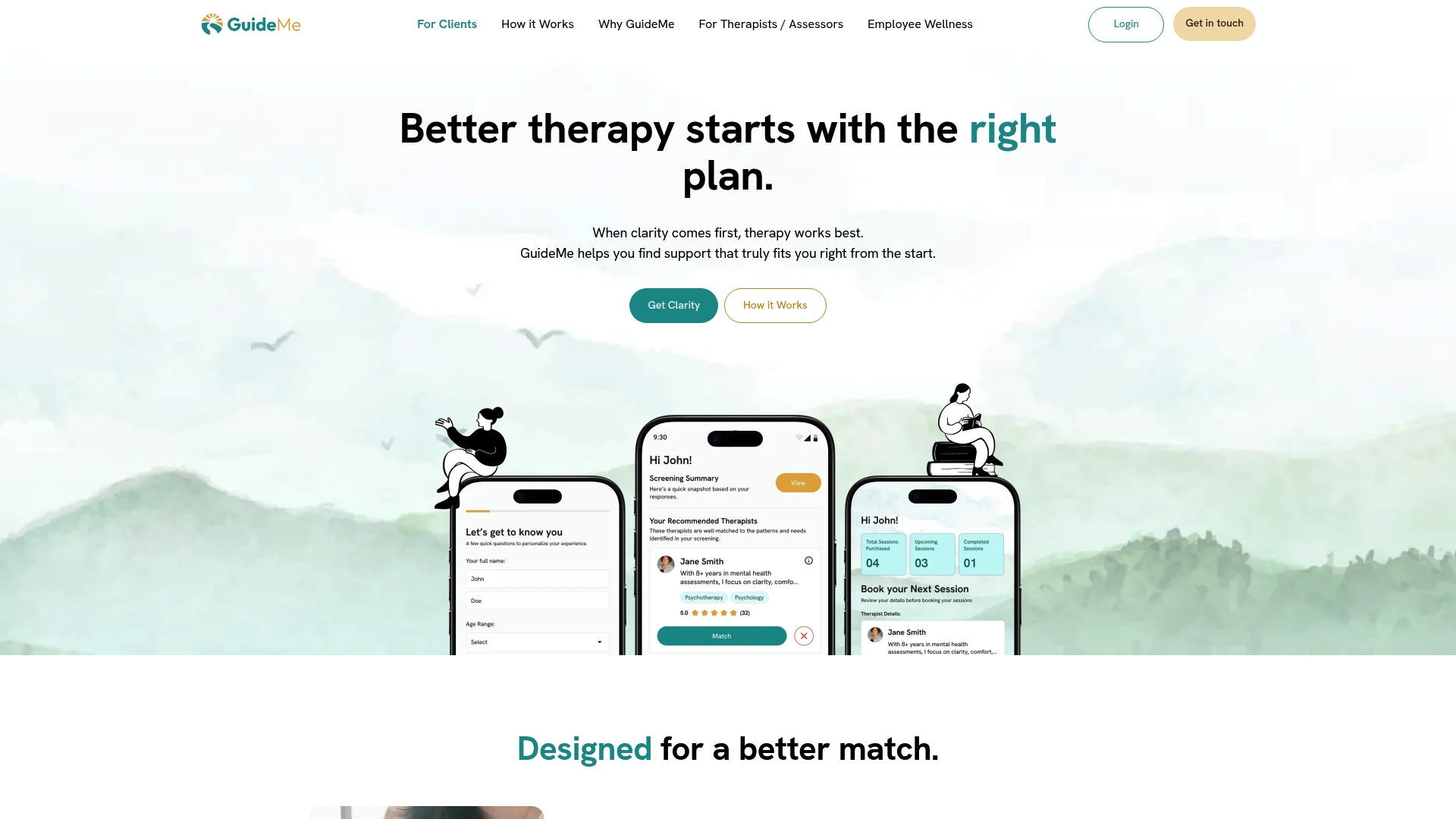
The process is human-led and AI-powered, which means your matching is based on a thorough understanding of your situation, not a generic questionnaire. If career-related anxiety, burnout, or identity questions are affecting your well-being, Guidemetherapy can help you find a therapist with the right expertise. Visit Guidemetherapy to receive a personalised therapy plan and take the first step towards clearer, more confident career decisions.
FAQ
What is the purpose of career counselling?
The purpose of career counselling is to help individuals understand their values, strengths, and identity so they can make confident, informed career decisions. It also builds a repeatable decision-making process that supports long-term career resilience.
How many sessions does career counselling take?
Short-term career counselling typically covers 3–5 sessions for focused questions, while complex situations such as burnout or major career changes may require longer engagement across several months.
Is career counselling the same as therapy?
Career counselling and therapy are related but distinct. Career counselling focuses on work-related identity and decision-making, while therapy addresses broader mental health concerns. When severe burnout or anxiety is present, a licensed mental health professional who specialises in career therapy offers the most comprehensive support.
Who should consider career counselling for students?
Students facing decisions about further education, graduate employment, or early career direction benefit significantly from career counselling. It helps them identify values and strengths before committing to a path, rather than defaulting to external expectations.
How is career counselling different from career coaching?
Career counsellors hold degrees in psychology or counselling and focus on identity and psychological well-being. Career coaches hold industry certifications and focus on performance, skills, and goal attainment. The right choice depends on whether your challenges are internal or external.