

TL;DR:
- Therapy onboarding, or client intake, prepares clients for productive sessions by building trust and aligning expectations. Effective onboarding involves paperwork, assessment, and careful therapist matching based on needs and preferences. Starting therapy with proper preparation and understanding boosts progress and ensures a better therapeutic relationship.
Starting therapy is a positive step, but it can feel uncertain when you don't know what to expect. A therapy onboarding guide exists to close that gap. In the industry, the formal term for this process is client intake, and it covers everything from your first contact with a therapist to the early sessions where goals are set and trust is built. Effective onboarding reduces anxiety by setting clear expectations and introducing client-centred care from the very start. This guide walks you through every stage so you can arrive prepared, feel at ease, and spend less time wondering and more time making progress.
Key takeaways
| Point | Details |
|---|---|
| Onboarding starts before your first session | Completing forms, preparing questions, and arranging a private space all happen before you sit down with a therapist. |
| Intake sessions follow a clear structure | First sessions typically run 45 to 60 minutes and cover your background, concerns, and early goals. |
| Therapist fit matters more than availability | Matching by needs, symptoms, and preferred approach leads to better outcomes than booking whoever has a free slot. |
| You control the pace of disclosure | You are never required to share everything on day one. Good therapists build trust gradually and follow your lead. |
| Reviewing fit is part of the process | Assessing how you feel after the first few sessions is normal, expected, and encouraged. |
What therapy onboarding actually involves
The mental health onboarding process is the structured sequence of steps that connects you to the right therapist and prepares you both for productive work together. Onboarding covers everything from initial contact through a comprehensive intake assessment, gathering your history, concerns, and goals before therapy formally begins.
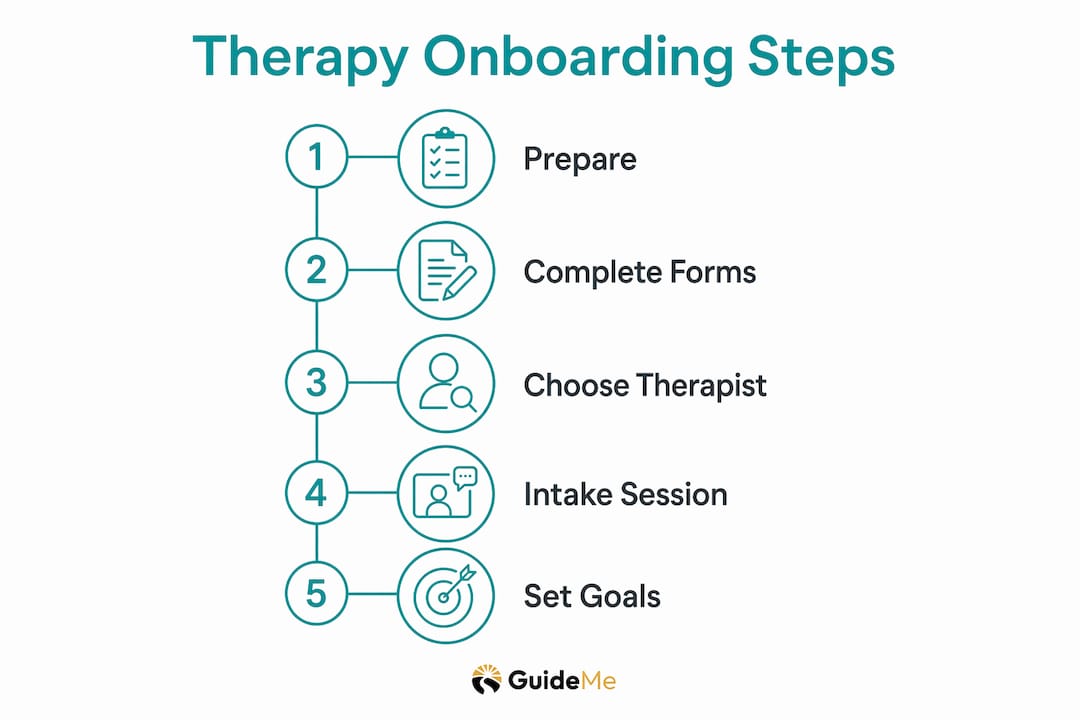
In practical terms, that sequence usually looks like this:
- Initial contact: You reach out by phone, email, or an online platform. The practice confirms availability, fees, and basic fit.
- Intake paperwork: You complete forms covering personal details, mental health history, current concerns, medication, and payment or insurance information.
- Consent and confidentiality review: You read and sign documents explaining your rights, the limits of confidentiality, and how the therapist works.
- Scheduling: Your first appointment, often called an intake or assessment session, is booked.
- Preparation: You gather your thoughts, note any questions, and arrange a suitable space for the session.
Completing paperwork before your first appointment matters more than most people realise. Paperwork submitted in advance means the session itself stays focused on conversation, consent review, and goal setting rather than admin. You get more from the time you have paid for.
If you are attending via telehealth, put some extra thought into your setting. Close the door, use headphones if others are nearby, and test your connection beforehand. A little preparation removes the small practical anxieties that can distract from the conversation itself.

Pro Tip: Prepare a concise list of your main concerns, any current medications, and three to five practical questions before your intake appointment. Preparing this information in advance consistently improves how productive that first session feels.
What happens during the intake session
The intake session, sometimes called an assessment session, is typically your first appointment lasting 45 to 60 minutes. It is not a test. It is a structured conversation that helps your therapist understand who you are and what you need.
Here is how a typical intake session unfolds:
- Introduction and logistics (5 to 10 minutes). The therapist introduces themselves, confirms how the session will run, and briefly reviews your consent forms and confidentiality policy.
- Presenting concerns (15 to 20 minutes). They ask what brought you to therapy now. You describe your current difficulties in your own words. There is no right or wrong answer.
- Background and history (15 to 20 minutes). Therapists ask about mood, sleep, medical history, substance use, relationships, and family background. These questions build context, not judgement.
- Goal setting and next steps (10 to 15 minutes). Towards the end of the session, goals and a tentative treatment plan are discussed. Some therapists may also suggest a small task or reflection to try before the next appointment.
It helps to understand what you are not required to do. You do not have to share every detail of your history on day one. Therapists use intake to map your situation and understand urgency and strategy, not to extract a full disclosure all at once. This is especially relevant if you have experienced trauma, where pacing is a clinical priority, not an afterthought. Trauma-sensitive intake phases disclosure gradually, with stabilisation and your comfort coming first.
Telehealth and in-person sessions follow the same structure. The main difference is environment. In-person sessions offer a clear boundary between your daily life and the therapy space. Telehealth offers convenience and accessibility, but requires you to create that boundary yourself.
Pro Tip: Before your intake session, write down your top three concerns and your most important question for the therapist. If the conversation goes in a different direction, having these written down means you won't leave without raising what matters most.
Finding the right therapist fit
Therapist-client matching is where many people get stuck. The instinct is to book whoever is available soon. That is understandable. But matching by availability alone increases the risk of a mismatch, which leads to early drop-off and the frustration of starting all over again.
Effective matching takes into account:
- Your presenting concerns and symptoms. A therapist who specialises in anxiety is not always the best choice for grief, and vice versa.
- Preferred therapeutic modality. Whether you respond better to cognitive approaches, body-based work, or structured skills training matters.
- Practical factors. Fees, insurance, session format (in-person or online), and scheduling availability all affect whether therapy is sustainable for you.
- Demographic preferences. Age, gender, cultural background, and lived experience can all influence how safe and understood you feel.
Many therapists offer a free 15 to 20 minute consultation before committing to a full intake. Use it. Ask about their approach, their experience with your specific concerns, and how they typically work with clients. Notice how you feel during the call. A felt sense of safety and hope during that initial conversation is often a more reliable sign of good fit than credentials alone.
| Matching based on availability only | Matching based on fit |
|---|---|
| Fast to book | Takes slightly more time upfront |
| Higher risk of early dropout | Stronger therapeutic alliance from the start |
| May not address your specific needs | Tailored to your symptoms and preferences |
| Generic approach | Modality aligned to how you respond best |
If the first therapist does not feel right after two or three sessions, that is not failure. It is information. You can raise it directly with your therapist, which is itself a therapeutic skill, or you can request a change through your platform or practice. Good therapist matching is not about luck. It is about knowing what to look for and being willing to advocate for yourself.
After onboarding: what comes next
Once the intake session is complete, you and your therapist will typically agree on a session frequency, most commonly weekly or fortnightly to begin with. The early sessions build on what was established at intake, deepening the conversation and refining goals as you both learn more about what you need.
There are clear signs that the fit is working well:
- You feel heard and understood, even when sessions are challenging.
- You leave sessions with a clearer sense of where you are heading.
- The therapist remembers details from previous conversations and follows threads.
- You feel safe enough to be honest, including about things that are difficult to say.
If those signs are absent after several sessions, it is worth reflecting on whether the fit needs to be reviewed. Some questions to ask yourself: Do I feel comfortable being honest with this person? Does their approach seem suited to my actual concerns? Is there a sense that things are moving, even slowly?
Setting clear therapy goals collaboratively is one of the most underused parts of the early process. Bring your own sense of what you want to change or understand. A good therapist will refine that with you, not replace it with their own agenda. If your goals shift over time, which is common, say so. Therapy is a working relationship and it benefits from honest communication on both sides.
If you decide to change therapists, you do not owe an explanation. You can simply request a change, or move to a different practice entirely. Clarity about what did not work will help you find a better match the second time.
My honest take on the intake process
I've spoken with a lot of people who went into their first therapy session expecting it to feel like an interview. They prepared answers. They worried about saying the wrong thing. And then they were surprised by how much a good intake conversation can feel like genuine relief rather than interrogation.
What I've come to believe is this: the intake session is not about proving anything. It is, as one counsellor described it to me, map-making. The therapist is gathering enough information to understand the terrain, not demand a full tour of it on day one. The clients who get the most from it are the ones who come with their own genuine questions rather than just prepared answers.
I've also noticed that people often underestimate how much preparation changes the quality of that first session. Not over-preparation, just a clear list of your current concerns and what you hope to feel differently about in six months. That clarity gives the therapist something concrete to work with.
And on therapist fit: don't dismiss a mismatch too quickly, but don't stay with the wrong therapist out of politeness either. The research on therapeutic alliance is clear. The relationship is the treatment, not just the context for it. Getting that right is worth a little extra effort at the start.
— Yetty
How Guidemetherapy supports your onboarding
Starting therapy should not feel like a puzzle you have to solve alone. Guidemetherapy is a therapy navigation platform that combines human expertise with AI-powered matching to connect you with the right therapist from the beginning.
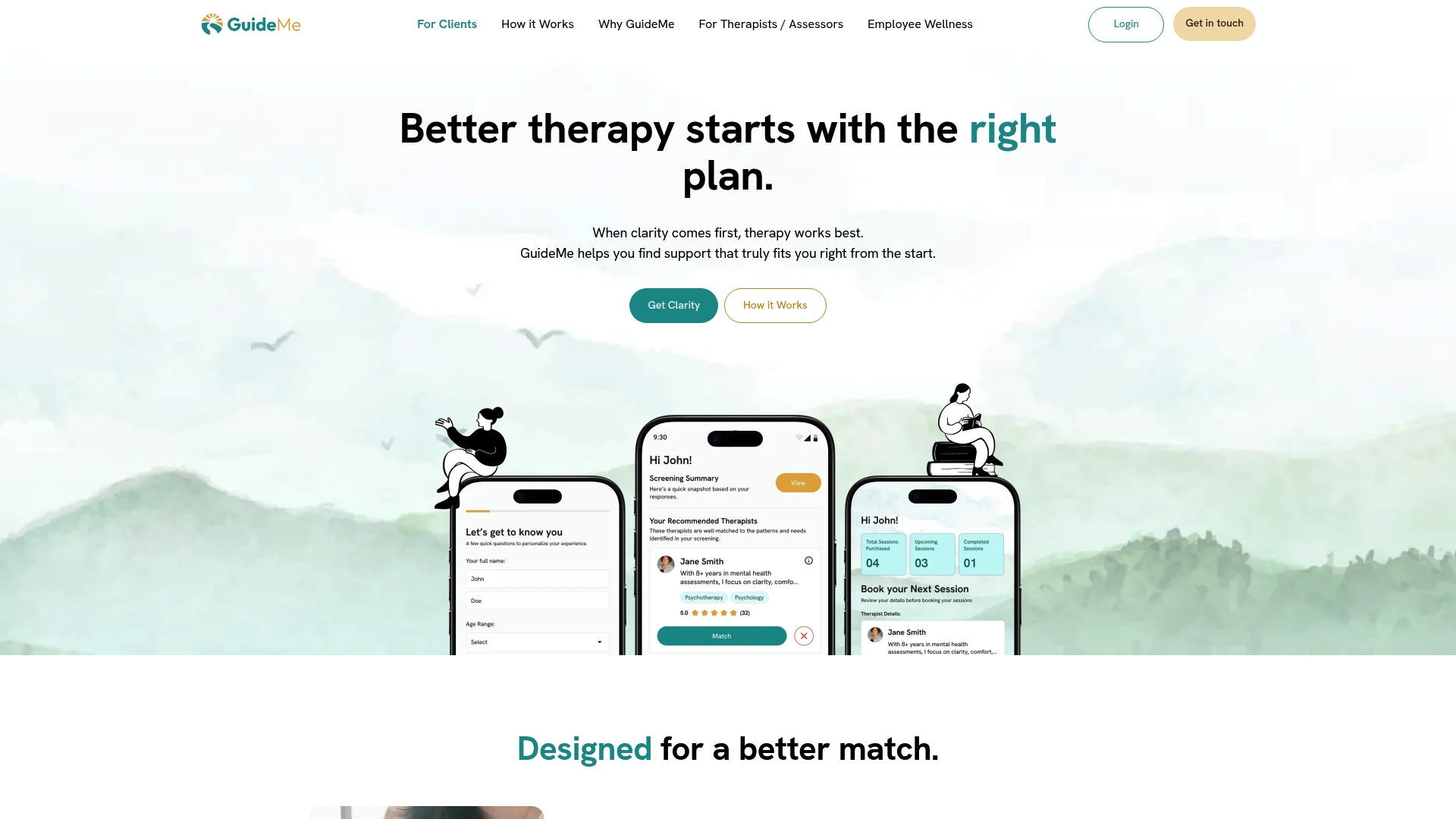
When you join Guidemetherapy, you receive an in-depth therapy plan that reflects your specific needs, symptoms, and preferences, not just your postcode and availability. The platform takes care of therapist matching and scheduling, so the administrative part of onboarding feels manageable rather than overwhelming. Therapist profiles include fit indicators, making it easier to assess compatibility before you even book. Whether you are completely new to therapy or returning after a difficult experience elsewhere, Guidemetherapy is designed to make the process feel clearer and more supported from day one.
FAQ
What is therapy onboarding?
Therapy onboarding, formally known as the client intake process, is the sequence of steps that prepares a new client for therapy. It typically includes paperwork, an assessment session, consent review, and early goal setting before regular sessions begin.
How long does a therapy intake session last?
Most intake sessions last between 45 and 60 minutes. This time is used to discuss your presenting concerns, personal history, and initial goals for therapy.
Do I have to share everything in my first session?
No. You are never required to disclose everything at once. Therapists understand that trust builds over time, and a good intake process follows your pace rather than demanding full disclosure on day one.
How do I know if a therapist is the right fit?
A free intro call before your first appointment is a reliable starting point. Notice whether you feel at ease, whether the therapist's approach makes sense for your concerns, and whether you leave the conversation feeling hopeful rather than unsettled.
What should I prepare before my first therapy session?
Bring a brief list of your main concerns, any current medications, and a few questions for the therapist. Completing intake forms in advance also means your session time can focus on conversation rather than paperwork.